• Home
  • Latest
  • Fortune 500
  • Finance
  • Tech
  • Leadership
  • Lifestyle
  • Rankings
  • Multimedia
SuccessSpotify

Big tech CEOs like Zuckerberg, Pichai and Ek are all ‘taking full responsibility’ for massive layoffs—here’s why they’re all using the same language and what effect it has

Orianna Rosa Royle
By
Orianna Rosa Royle
Orianna Rosa Royle
Associate Editor, Success
Down Arrow Button Icon
Orianna Rosa Royle
By
Orianna Rosa Royle
Orianna Rosa Royle
Associate Editor, Success
Down Arrow Button Icon
January 24, 2023, 11:59 AM ET
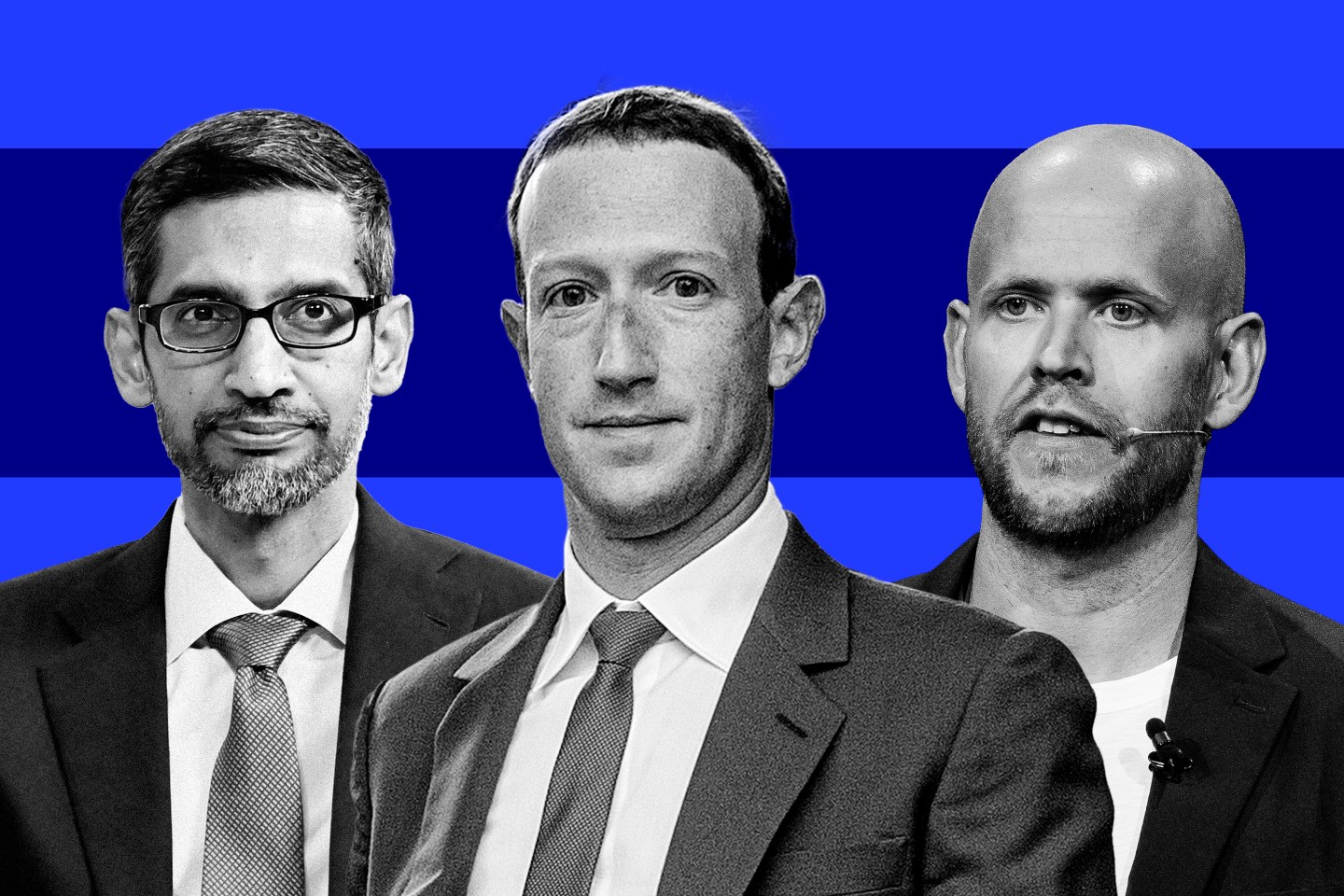
Sundar Pichai, Mark Zuckerbeg and Daniel Ek on a blue background.
Big tech CEOs like Zuckerberg, Pichai and Ek are all ‘taking full responsibility' for massive layoffs—here's why they're all using the same language and what effect it has.Sajjad Hussain—AFP/Getty Images; David Paul Morris—Bloomberg/Getty Images; Drew Angerer—Getty Images

“I take full accountability for the moves that got us here today,” Spotify’s CEO Daniel Ek confessed while announcing that 6% of the company was being laid-off.

Ek gave employees a heads-up that around 600 of them were about to have one-on-one conversations about their future at the firm, in a post on the streaming giant’s blog on Monday.

He used the update on “organizational changes” to hold his hands up for his failure to rein in costs and thank the outgoing workers for “everything they’ve done”.  

“In hindsight, I was too ambitious in investing ahead of our revenue growth,” Ek admitted. 

The memo is a far cry from generations of the “it’s not personal, it’s business” corporate catchall for bad news. He is part of a growing number of CEOs “taking full responsibility” for the mounting layoffs across the tech industry.

Earlier this month, Google announced that it was laying off 12,000 employees.

“This will mean saying goodbye to some incredibly talented people we worked hard to hire and have loved working with. I’m deeply sorry for that,” Sundar Pichai, CEO of parent company Alphabet Inc, said. “The fact that these changes will impact the lives of Googlers weighs heavily on me, and I take full responsibility for the decisions that led us here.”

Mark Zuckerberg similarly publicly held himself accountable for the first major layoff in Meta’s 18-year history, which saw more than 11,000 employees lose their job.

“I want to take accountability for these decisions and for how we got here,” Zuckerberg wrote in a note to staff in November. “I got this wrong, and I take responsibility for that,” he added.

Stripe cofounders Patrick and John Collison, and Twitter’s founder Jack Dorsey, also offered a mea culpa to water down news of company failings, massive layoffs, and poor performance. 

Why are CEOs taking responsibility for layoffs? 

President Harry S. Truman frequently used the phrase “the buck stops here”. He even had the motto turned into a sign for his desk to remind himself that he was ultimately responsible for the actions of his administration.

Likewise in the long and short of it, when a business fails or has to scale back it falls down to the person running it: The CEO.

“Big tech CEOs are paid the big bucks, in good times and in bad. It is perhaps to be expected that when the chips are down, they step up and take responsibility,” says Debbie Zaman, CEO and founder of the PR agency With. 

And the nearly identical language used between them is no accident.

Zaman says that statements of “taking full responsibility” are carefully crafted to balance strong leadership with empathy. 

“Just as data breaches have been called ‘glitches’ or inappropriateness in governance labeled ‘missteps’, it is not uncommon for multiple companies to reach similar conclusions on what this message looks like”, she adds.

Art Shaikh, serial entrepreneur and CEO of the tech firm Digital Will more cynically echoes that in the first instance, “claiming responsibility for layoffs might seem like a noble move”, but in reality, “it is advice given by PR professionals”.

“CEO’s are attempting to let the public know that the buck stops with them,” he adds. 

Accepting blame or taking credit?

Society has a trust problem.

Nearly 6 in 10 say their default tendency is to distrust something until they see evidence it is trustworthy. Meanwhile, around 40% of people don’t trust businesses, according to Edelman’s 2022 trust barometer.

By accepting blame, leaders can appear to be honest and trustworthy – both to the public and to those still working for them. 

“An open and full apology can help CEOs to connect with different audiences to show they have a human and authentic side to them,” Will Harvey, professor of leadership at the University of Bristol Business School says. 

By taking the rap, CEOs are also able to protect the trust between their workers and the remaining leadership team.

It’s unlikely that many workers report directly to the top boss, so by appearing as the single point of failure in the organization, it reduces the chance that workers will direct their resentment toward their direct management (for letting go of their work buddy, for example) by voting with their feet. 

“While this might be noble, it could prove foolish on a personal level because some audiences may then consider the CEO as the reason for the problem and could pressurize the Board to let them go”, Harvey adds.

Then again, claiming accountability for cost-saving measures could be more to do with showing authority to stakeholders, than authenticity to the public. 

Shaikh suggests that the move signals to shareholders that the CEO is making decisions in the interest of increasing profits.

“Shareholders and investors are clamoring for tech companies to do ‘more with less’ and this is a way for a CEO to effectively let them know that they made the call,” he says while adding “the responsibility they are claiming isn’t necessarily accepting the blame, but rather taking credit.”

What are the consequences of accepting blame?

Unfortunately for CEOs, employees are seeing through their blanket “I take full responsibility” response to layoffs.

“What does taking full responsibility entail?,” one disgruntled Google employee asked ahead of its town hall. They added that “responsibility without consequence seems like an empty platitude” while taking aim at executive pay.

“The employees who have been made redundant know one thing really well: Talk is cheap,” warns leadership branding coach and TED Speaker, Shivangi Walke.

Instead of making your workers feel like the blame of being made redundant is off their shoulders, an admission of fault could instill feelings of “disappointment, anger and betrayal”.

She advises leaders against making any accountability statements for the sole purpose of maintaining the company’s reputation in the public eye.

“It will backfire,” she says while adding that it’s relatively easy to spot which leaders “really mean what they say or only want to sound compassionate.”

So when leaders take the blame for poor performance and job cuts, they must follow their statement with actions if they don’t want to look performative.

Support in the form of re-skilling initiatives, extended notice periods, and going beyond statutory severance packages, shows genuineness. 

“When a CEO takes full responsibility in the aftermath of job cuts, it is only worthwhile if they walk their talk,” Walke adds.

In the end, admitting fault doesn’t make the redundancy sting any less for those involved. 

“Considering ways of delivering some greater degree of transparency rather than the fallback line of ‘full responsibility’ can help give a sense of treating teams with respect,” Zaman advises. 

Honestly explaining the reason behind the layoffs and the steps being taken next for those leaving and those remaining, might go down better with employees than a carbon copy statement of accountability.

Harvey adds an alternative to “taking responsibility” for layoffs is to highlight the magnitude of threats facing the industry. With a global recession on the horizon, job cuts may be the only way the business – along with the peers of those let go – will survive. 

“Explain how this strategy will create better long-term outcomes, even if the pain is acute in the short-term,” he adds.

Learn how to navigate and strengthen trust in your business with The Trust Factor, a weekly newsletter examining what leaders need to succeed. Sign up here.
About the Author
Orianna Rosa Royle
By Orianna Rosa RoyleAssociate Editor, Success
Instagram iconLinkedIn iconTwitter icon

Orianna Rosa Royle is the Success associate editor at Fortune, overseeing careers, leadership, and company culture coverage. She was previously the senior reporter at Management Today, Britain's longest-running publication for CEOs. 

See full bioRight Arrow Button Icon

Latest in Success

Finance
Lorem ipsum dolor sit amet, consectetur adipiscing elit, sed do eiusmod tempor incididunt ut labore et dolore magna aliqua. Ut enim ad minim veniam
By Fortune Editors
October 20, 2025
Finance
Lorem ipsum dolor sit amet, consectetur adipiscing elit, sed do eiusmod tempor incididunt ut labore et dolore magna aliqua. Ut enim ad minim veniam
By Fortune Editors
October 20, 2025
Finance
Lorem ipsum dolor sit amet, consectetur adipiscing elit, sed do eiusmod tempor incididunt ut labore et dolore magna aliqua. Ut enim ad minim veniam
By Fortune Editors
October 20, 2025
Finance
Lorem ipsum dolor sit amet, consectetur adipiscing elit, sed do eiusmod tempor incididunt ut labore et dolore magna aliqua. Ut enim ad minim veniam
By Fortune Editors
October 20, 2025
Finance
Lorem ipsum dolor sit amet, consectetur adipiscing elit, sed do eiusmod tempor incididunt ut labore et dolore magna aliqua. Ut enim ad minim veniam
By Fortune Editors
October 20, 2025
Finance
Lorem ipsum dolor sit amet, consectetur adipiscing elit, sed do eiusmod tempor incididunt ut labore et dolore magna aliqua. Ut enim ad minim veniam
By Fortune Editors
October 20, 2025

Most Popular

Finance
Lorem ipsum dolor sit amet, consectetur adipiscing elit, sed do eiusmod tempor incididunt ut labore et dolore magna aliqua. Ut enim ad minim veniam
By Fortune Editors
October 20, 2025
Finance
Lorem ipsum dolor sit amet, consectetur adipiscing elit, sed do eiusmod tempor incididunt ut labore et dolore magna aliqua. Ut enim ad minim veniam
By Fortune Editors
October 20, 2025
Finance
Lorem ipsum dolor sit amet, consectetur adipiscing elit, sed do eiusmod tempor incididunt ut labore et dolore magna aliqua. Ut enim ad minim veniam
By Fortune Editors
October 20, 2025
Finance
Lorem ipsum dolor sit amet, consectetur adipiscing elit, sed do eiusmod tempor incididunt ut labore et dolore magna aliqua. Ut enim ad minim veniam
By Fortune Editors
October 20, 2025
Finance
Lorem ipsum dolor sit amet, consectetur adipiscing elit, sed do eiusmod tempor incididunt ut labore et dolore magna aliqua. Ut enim ad minim veniam
By Fortune Editors
October 20, 2025
Finance
Lorem ipsum dolor sit amet, consectetur adipiscing elit, sed do eiusmod tempor incididunt ut labore et dolore magna aliqua. Ut enim ad minim veniam
By Fortune Editors
October 20, 2025
Rankings
  • 100 Best Companies
  • Fortune 500
  • Global 500
  • Fortune 500 Europe
  • Most Powerful Women
  • Future 50
  • World’s Most Admired Companies
  • See All Rankings
Sections
  • Finance
  • Leadership
  • Success
  • Tech
  • Asia
  • Europe
  • Environment
  • Fortune Crypto
  • Health
  • Retail
  • Lifestyle
  • Politics
  • Newsletters
  • Magazine
  • Features
  • Commentary
  • Mpw
  • CEO Initiative
  • Conferences
  • Personal Finance
  • Education
Customer Support
  • Frequently Asked Questions
  • Customer Service Portal
  • Privacy Policy
  • Terms Of Use
  • Single Issues For Purchase
  • International Print
Commercial Services
  • Advertising
  • Fortune Brand Studio
  • Fortune Analytics
  • Fortune Conferences
  • Business Development
About Us
  • About Us
  • Editorial Calendar
  • Press Center
  • Work At Fortune
  • Diversity And Inclusion
  • Terms And Conditions
  • Site Map
  • Facebook icon
  • Twitter icon
  • LinkedIn icon
  • Instagram icon
  • Pinterest icon

Latest in Success

taylor
Politicsphilanthropy
Rural America is getting a bailout, but not from Trump—billionaires are riding to the rescue
By Nick LichtenbergJanuary 14, 2026
10 hours ago
John Mackey, standing on stage, has his head turned downward with both hands touching his lips.
C-Suitechief executive officer (CEO)
Whole Foods cofounder says his hardest ever business decision was firing his father from his company board: ‘That was when my mentorship was over’
By Sasha RogelbergJanuary 14, 2026
14 hours ago
Jensen Huang
SuccessProductivity
The job market is broken, but Nvidia CEO Jensen Huang is ‘fairly confident’ that AI will increase productivity and therefore, hiring—but there’s a catch
By Preston ForeJanuary 14, 2026
16 hours ago
Academy Award-winning actress Zoe Saldaña
SuccessMillionaires
Zoe Saldaña has been crowned the highest-grossing actor, with a $15.5 billion Hollywood portfolio—beating Scarlett Johansson and Samuel L. Jackson to the top spot
By Emma BurleighJanuary 14, 2026
16 hours ago
Hubbard
Future of WorkJobs
Carhartt CEO says they always focused on blue-collar workers—but hipsters came anyway: ‘We welcome anyone … that wants to celebrate hard work’
By Nick LichtenbergJanuary 13, 2026
1 day ago
micro
Future of Workhybrid
‘Microshifting,’ an extreme form of hybrid working that breaks work into short, non-continuous blocks, is on the rise
By Nick LichtenbergJanuary 13, 2026
2 days ago

Most Popular

placeholder alt text
Personal Finance
Peter Thiel makes his biggest donation in years to help defeat California’s billionaire wealth tax
By Nick LichtenbergJanuary 14, 2026
15 hours ago
placeholder alt text
Success
Despite his $2.6 billion net worth, MrBeast says he’s having to borrow cash and doesn’t even have enough money in his bank account to buy McDonald’s
By Emma BurleighJanuary 13, 2026
2 days ago
placeholder alt text
AI
'Godfather of AI' says the technology will create massive unemployment and send profits soaring — 'that is the capitalist system'
By Jason MaJanuary 12, 2026
3 days ago
placeholder alt text
AI
Being mean to ChatGPT can boost its accuracy, but scientists warn you may regret it
By Marco Quiroz-GutierrezJanuary 13, 2026
2 days ago
placeholder alt text
Future of Work
'Microshifting,' an extreme form of hybrid working that breaks work into short, non-continuous blocks, is on the rise
By Nick LichtenbergJanuary 13, 2026
2 days ago
placeholder alt text
Economy
Goldman Sachs top economist says Powell probe won’t change the Fed: 'Decisions are going to be made based on employment and inflation'
By Sasha RogelbergJanuary 12, 2026
3 days ago

© 2025 Fortune Media IP Limited. All Rights Reserved. Use of this site constitutes acceptance of our Terms of Use and Privacy Policy | CA Notice at Collection and Privacy Notice | Do Not Sell/Share My Personal Information
FORTUNE is a trademark of Fortune Media IP Limited, registered in the U.S. and other countries. FORTUNE may receive compensation for some links to products and services on this website. Offers may be subject to change without notice.