• Home
  • News
  • Fortune 500
  • Tech
  • Finance
  • Leadership
  • Lifestyle
  • Rankings
  • Multimedia
Bill Ackman

Hong Kong’s peg to the U.S. dollar has survived for decades. Bill Ackman thinks it’s ‘only a matter of time before it breaks’

Nicholas Gordon
By
Nicholas Gordon
Nicholas Gordon
Asia Editor
Down Arrow Button Icon
Nicholas Gordon
By
Nicholas Gordon
Nicholas Gordon
Asia Editor
Down Arrow Button Icon
November 24, 2022, 5:00 AM ET
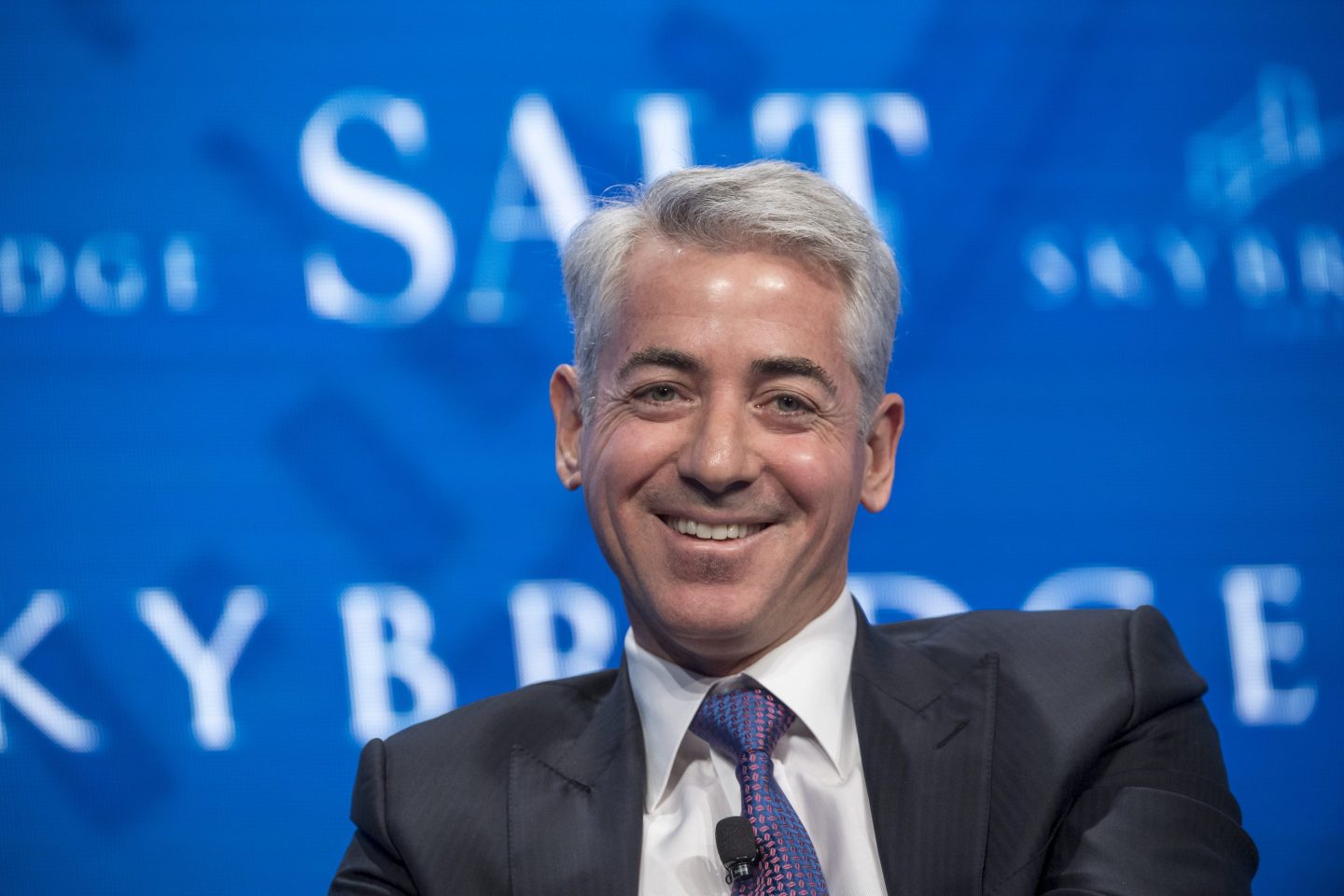
Bill Ackman, founder of Pershing Square Capital Management, in a suit at the 2017 SALT conference
Traders have predicted the end of the Hong Kong dollar's peg to the U.S. dollar before—and been proven wrong. David Paul Morris—Bloomberg via Getty Images

Bill Ackman, founder and CEO of hedge fund Pershing Square Capital Management, is betting against the Hong Kong dollar.

The Hong Kong dollar, the currency used by the semi-autonomous Chinese city, trades within a narrow band of 7.75 and 7.85 Hong Kong dollars to the U.S. dollar, in a peg that has survived for almost 40 years. Yet a weakening Hong Kong dollar, which has forced the city’s government to intervene in the currency market 40 times this year to preserve the peg, is leading some to think the peg will finally fall.

“The peg no longer makes sense for Hong Kong and it is only a matter of time before it breaks,” Ackman tweeted, revealing that his fund has a “large notional short position against the Hong Kong dollar.”

This is a very thoughtful piece and I agree. We have a large notional short position against the Hong Kong dollar through the ownership of put options. The peg no longer makes sense for Hong Kong and it is only a matter of time before it breaks. https://t.co/efp62TuB03

— Bill Ackman (@BillAckman) November 24, 2022

Ackman was responding to a Bloombergopinion column from fund manager Richard Cookson, which argued that the Hong Kong government would be forced to increase spending (and thus debt) to help its COVID-battered economy recover.

Pershing Square Capital Management did not immediately respond to a request for comment. 

Supporting the peg

The Hong Kong dollar has traded near the top of its band for much of the year, as traders sold the currency in favor of the higher-yield U.S. dollar. (The U.S. dollar has strengthened against many of the world’s currencies due to the U.S. Federal Reserve’s aggressive interest rate hikes to control inflation.) 

The Hong Kong Monetary Authority (HKMA)—the city’s de facto central bank—has had to tap into its foreign reserves to preserve the peg, selling its U.S. dollar assets in order to buy Hong Kong dollars on currency markets. The HKMA has bought HK$​​241.2 billion so far this year, in its most aggressive intervention policy ever.  

The currency peg has also forced the HKMA to raise interest rates in tandem with the U.S. Federal Reserve, to stop traders from ditching the local currency to pursue higher yields in the U.S.

Rising rates are bad news for Hong Kong’s economy, which shrank 4.5% in the third quarter year-on-year. The city’s government blamed the contraction on shrinking exports from a worsening global economy, yet Hong Kong’s business community also blames the city’s inbound travel restrictions for suppressing the city’s advantages as a financial center and tourist destination. 

Increasing rates are putting a damper on the city’s property market, which is the world’s most expensive. In October, Goldman Sachs predicted that housing prices could fall by as much as 30% by the end of 2023, compared to 2021 prices. 

‘You are bound to lose’

Despite this economic pressure, most observers think the Hong Kong dollar is not under threat. 

The reason is the HKMA’s reserves of U.S. dollars, which total $417.2 billion as of the end of September 2022, or about five times the total number of Hong Kong dollars in circulation. (That’s down from $496.8 billion at the end of 2021.) Hong Kong’s foreign exchange reserves are the world’s eight-largest.

“If you bet against the Hong Kong dollar, you are bound to lose,” Paul Chan, the city’s financial secretary, told a summit of global bankers in Hong Kong earlier this month. “You can verify my advice with certain hedge fund managers in the U.S. who have been wrong about the Hong Kong dollar time and again,” he continued.

The British colonial government pegged the Hong Kong dollar to the U.S. dollar in 1983 in a bid to restore economic certainty amidst negotiations to return the city to China. The peg has survived almost unchanged since.

The biggest threat to the peg came during the Asian Financial Crisis in 1997 and 1998, as short-sellers led by George Soros tried to target the Hong Kong dollar. In August 1998, the HKMA spent about $15 billion, or 18% of its reserves at the time, to fight off speculators. Soros later praised the HKMA, saying it “did a very good job defending the Hong Kong dollar.” 

Not the first time

Thursday’s revelation is not the first time Ackman has targeted Hong Kong’s peg to the U.S. dollar. In 2011, Ackman predicted that the Hong Kong government would be forced to revalue the Hong Kong dollar at HK$6 to the U.S. dollar, pending an eventual peg to the yuan. At the time, Hong Kong was forced to match low interest rates in the U.S. despite its booming economy, leading to consumer inflation and property speculation.

Pressure on the Hong Kong dollar has weakened in recent days. The Hong Kong dollar is trading at HK$7.8059 to the U.S. dollar, slipping from the top end of its trading band.

Our new weekly Impact Report newsletter will examine how ESG news and trends are shaping the roles and responsibilities of today's executives—and how they can best navigate those challenges. Subscribe here.

About the Author
Nicholas Gordon
By Nicholas GordonAsia Editor
LinkedIn iconTwitter icon

Nicholas Gordon is an Asia editor based in Hong Kong, where he helps to drive Fortune’s coverage of Asian business and economics news.

See full bioRight Arrow Button Icon

Latest in

man shooting at target bullseye and missing
NewslettersNext to Lead
The science of failing up: Why some leaders rise despite repeated screwups
By Ruth UmohDecember 8, 2025
17 minutes ago
Justin Hotard, CEO of Nokia
CommentaryGen Z
The workforce is becoming AI-native. Leadership has to evolve
By Justin HotardDecember 8, 2025
29 minutes ago
Ted Sarandos attends Netflix's "The New Yorker At 100" New York Screening at The Paris Theatre on December 04, 2025 in New York City.
NewslettersCEO Daily
Netflix needs Warner Bros.’s IP and franchises to remain the default streaming service
By Diane BradyDecember 8, 2025
31 minutes ago
Jerome Powell
EconomyMarkets
Stocks: Everything is on hold until the Fed delivers that rate cut on Wednesday
By Jim EdwardsDecember 8, 2025
37 minutes ago
Netflix Co-CEO Greg Peters speaks in Los Angeles on October 8, 2025. (Photo: Patrick T. Fallon/AFP/Getty Images)
NewslettersFortune Tech
So, about that $83 billion Netflix-Warner Bros deal
By Andrew NuscaDecember 8, 2025
1 hour ago
InnovationBrainstorm Design
Procurement execs often don’t understand the value of good design, experts say
By Angelica AngDecember 8, 2025
3 hours ago

Most Popular

placeholder alt text
Real Estate
The 'Great Housing Reset' is coming: Income growth will outpace home-price growth in 2026, Redfin forecasts
By Nino PaoliDecember 6, 2025
2 days ago
placeholder alt text
AI
Nvidia CEO says data centers take about 3 years to construct in the U.S., while in China 'they can build a hospital in a weekend'
By Nino PaoliDecember 6, 2025
2 days ago
placeholder alt text
Economy
The most likely solution to the U.S. debt crisis is severe austerity triggered by a fiscal calamity, former White House economic adviser says
By Jason MaDecember 6, 2025
2 days ago
placeholder alt text
Politics
Supreme Court to reconsider a 90-year-old unanimous ruling that limits presidential power on removing heads of independent agencies
By Mark Sherman and The Associated PressDecember 7, 2025
20 hours ago
placeholder alt text
Economy
JPMorgan CEO Jamie Dimon says Europe has a 'real problem’
By Katherine Chiglinsky and BloombergDecember 6, 2025
2 days ago
placeholder alt text
Uncategorized
Transforming customer support through intelligent AI operations
By Lauren ChomiukNovember 26, 2025
12 days ago
Rankings
  • 100 Best Companies
  • Fortune 500
  • Global 500
  • Fortune 500 Europe
  • Most Powerful Women
  • Future 50
  • World’s Most Admired Companies
  • See All Rankings
Sections
  • Finance
  • Leadership
  • Success
  • Tech
  • Asia
  • Europe
  • Environment
  • Fortune Crypto
  • Health
  • Retail
  • Lifestyle
  • Politics
  • Newsletters
  • Magazine
  • Features
  • Commentary
  • Mpw
  • CEO Initiative
  • Conferences
  • Personal Finance
  • Education
Customer Support
  • Frequently Asked Questions
  • Customer Service Portal
  • Privacy Policy
  • Terms Of Use
  • Single Issues For Purchase
  • International Print
Commercial Services
  • Advertising
  • Fortune Brand Studio
  • Fortune Analytics
  • Fortune Conferences
  • Business Development
About Us
  • About Us
  • Editorial Calendar
  • Press Center
  • Work At Fortune
  • Diversity And Inclusion
  • Terms And Conditions
  • Site Map

© 2025 Fortune Media IP Limited. All Rights Reserved. Use of this site constitutes acceptance of our Terms of Use and Privacy Policy | CA Notice at Collection and Privacy Notice | Do Not Sell/Share My Personal Information
FORTUNE is a trademark of Fortune Media IP Limited, registered in the U.S. and other countries. FORTUNE may receive compensation for some links to products and services on this website. Offers may be subject to change without notice.