Blank check companies had a moment—albeit a relatively brief one.
In 2020 and 2021, a record number of companies went public by merging with a special purpose acquisition company, or SPAC. The vehicle became a haven for many venture-backed companies to post lofty projections and garner interest from retail investors. Accordingly, the SPAC boom paved the way for a slew of unprofitable, and even zero-revenue, companies to hit the exchanges. In the worst of cases, these investment vehicles paved the way for fraud.
While SPACs may have helped deliver hundreds of millions of capital to companies that sorely needed it to keep their doors open, the reality of the public markets—and more specifically, 2022—has been less than forgiving. An ETF that offers exposure to companies that have gone public via SPAC mergers (the AXS De-SPAC ETF) is trading at $6.53 as I write this, down 66.25% from the beginning of this year, and nearly 75% since the ETF was formed in May 2021. Shares of several companies, including Bird Global or Hall of Fame Village, have fallen so low into penny-stock territory that they risk being de-listed from the New York Stock Exchange and the Nasdaq.
It’s a tough market to be unprofitable, and many of the hundreds of companies that have gone public in the last two years are exactly that.
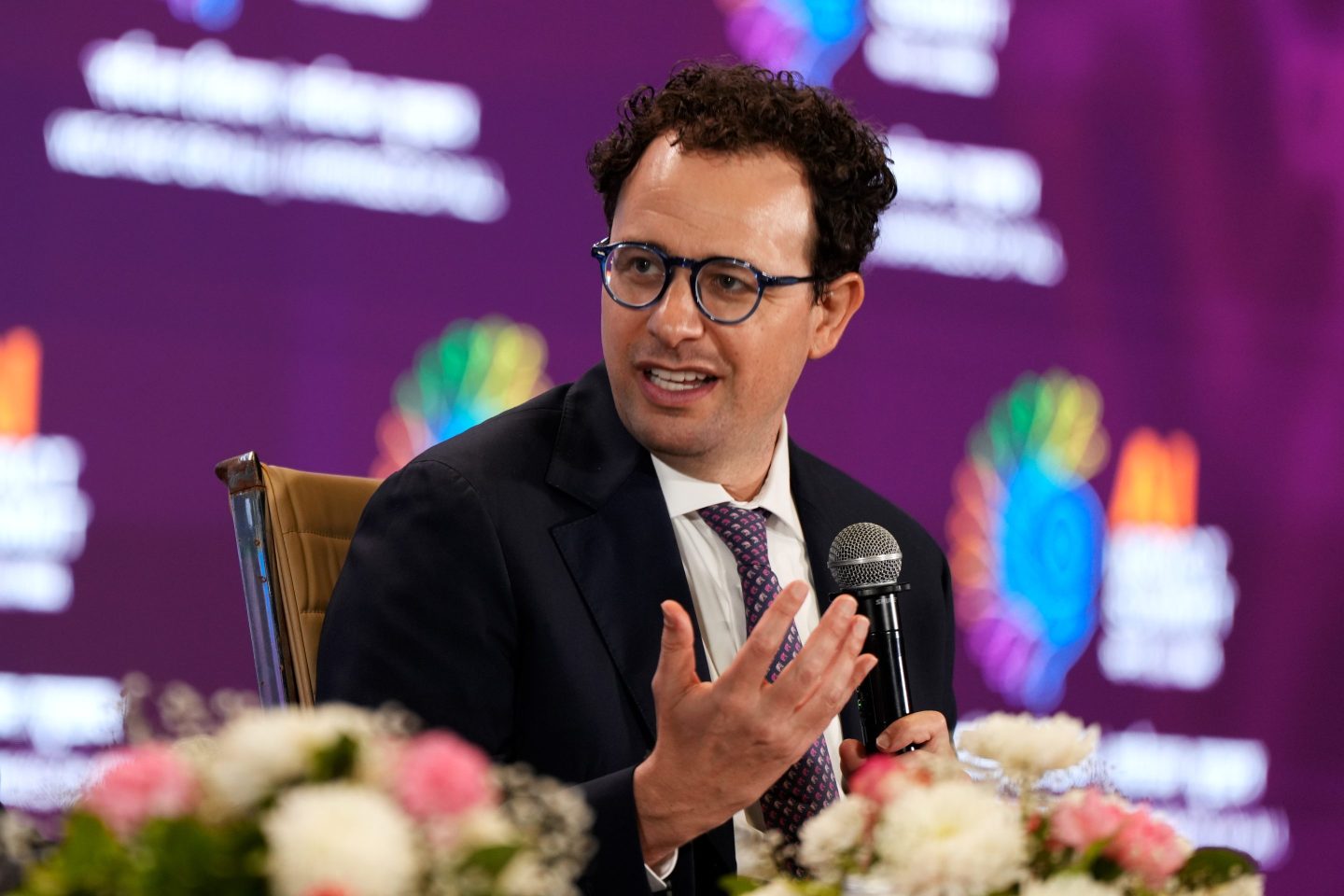
As you can imagine, short sellers have had a heyday the last two years (with the exception of some including Melvin Capital). I decided to sit down with Chris Drose, founder of the short-selling shop Bleecker Street Research, to talk about the SPAC boom and bust, and which companies he’s kept an eye on. We also talked about giraffes and football. I hope you find this conversation as intriguing, and potentially entertaining, as I did. (The following Q&A has been edited slightly for brevity and clarity.)
Term Sheet: Let’s talk about the SPAC boom. As a short seller, I imagine the past two years have been pretty exciting for you. Can you talk about that?
Drose: Being a short seller with these SPACs—it’s like drinking from a firehose. There’s so many…It was very interesting to have that kind of flood of capital. For the first part of the boom, something would go public that you might have concluded was not a very viable company or a very real company, and it would go up 50%-100% because it was a SPAC.
When I initially looked [at this one SPAC], I looked into the CEO’s background, and his [other] company had been charged with having an illegal giraffe as part of a Safari expedition he was running in Los Angeles.
A giraffe?
Yeah. The fact that that doesn’t stand out…How do you forget about that? There was so much insanity.
What company was that?
[Electric truck maker Xos, Inc.] There was just so much stuff happening, and so little of it was real.
Do you think that era is completely over, or do you think that we’ll see it again?
I hesitate to say that it’s over because they’re still happening, but I think these things are cyclical. They’ll come back eventually. They’ll be popular eventually. But for the time being, I think people have figured out that they’re really a vehicle to enrich the shareholders.
What are some of the key indicators you’re looking for in whether you short a company?
I guess it would be how completely divorced from reality their financial projections are. When Hall of Fame Village went public, they were telling people they would be generating $150 million in revenue by 2026. Twenty percent of that would come from an NFL-themed indoor water park in Canton, Ohio…which was going to be next to [the Pro Football Hall of Fame]. The Pro Football Hall of Fame got somewhere around 200,000 visitors a year, so that translated into $6 million, not $36 million.
It would be like if Apple came out and said: We’re going to sell 20 billion iPhones next year; everyone’s gonna buy three iPhones. It’s not gonna happen.
There’s a lack of regulatory oversight on these things. So they could kind of say whatever, and for the most part, they got away with it. So when we’re trying to find something to short, we’re trying to find stuff that is going to disappoint people.
I want to talk about the analysis you recently put out specifically on Joby Aviation, where you say you believe Joby has “severely overestimated what they can do” and they have posted “some of the most egregious guidance of any SPAC we have seen.” Can you tell us about some of your research on Joby?
Flying cars have been around for as long as there’s been flight. It’s kind of something that people get excited about. We don’t have flying cars, but that’s kind of what the futurists—[it’s] one of their long-running ideas. So Joby went public via SPAC…and we started doing research and really couldn’t find a lot of economic justification for their business.
What did you find?
[Joby] said that they were not only going to manufacture these air taxis, they’re going to operate them as part of an air taxi service. And the Uber-meets-Tesla in the sky is kind of an interesting idea. But the numbers that they were putting out there seemed pretty divorced from what was going to happen. It’s hard to get a new aircraft certified—they have one prototype right now. Their other prototype crashed in February. They have one prototype, and they’re telling the market they’re going to build 950 of these by 2026. That’s hard.
We shorted [Joby Aviation] in early 2021, and this year, we found some information about their manufacturing footprint that we felt implied that it was going be building a lot less of these than they told investors. Aircraft are hard to build. It’s hard to operate. There’s a reason why Boeing builds planes and Delta flies them, because it’s hard to do that. [Joby] was saying they were going to build 900 of these things by 2026. I think Boeing produced around 400 planes last year and I think there are something like 10,000 total helicopters in the United States. The largest helicopter manufacturers produce like 200 to 300 helicopters a year. That’s a giant manufacturing buildout that is going to happen very quickly for something that isn’t FAA-certified yet…
When Joby reported [last week] that they’re delaying commercialization until 2025, I think that’s the start. The one theme that came up over and over again when we talked to people in this industry, and just by using common sense, is that this stuff takes a long time. The FAA is not going to have 900 of these things taking off 100 times a day over L.A. without a lot of tests. And Joby thinks they can do it with $1 billion.
[Editor’s Note: Chris Drose’s report on Joby Aviation has been controversial. A Joby Aviation spokesperson disputes Drose’s analysis, stating that “much of the report is founded around a relative misconception regarding our communication with local authorities,” and provided an analyst note from Raymond James, which agrees that Joby’s timelines in 2021 investor decks were aggressive, but contests elements of his report, such as stating that Joby manufacturing projections are more “akin to high volume auto manufacturers than airplanes,” and stated that Drose used “hyperbolic and unrelated comparisons.” Raymond James remains “constructive on Joby’s production capabilities and vast experience in both the eVTOL space and related industries. Moreover, the longer-term profitability potential is attractive if Joby could execute on the vertical integration.”]
For new companies hitting the market, do you have any recommendations for data points or other things that retail investors should pay attention to before they buy stock?
I think the most simple things are using common sense. I understand that you want to believe what these people are telling you and believe that you’re about to buy the next Apple, but I think if you step back and just try to use common sense: Does this company have enough capital? What is their track record—how have they been a steward of this capital in the past? And I think most important is looking at the background [of the people running the company] and understanding: Have they treated shareholders fairly in the past? If this is their fourth company and the first three went bankrupt, maybe don’t invest in that one. But I think understanding what people have done in the past is a good way to predict what’s going to happen in the future. At the end of the day, you’re investing in a company, in a collection of people, and you have to try to understand: Are those people on your side? Are they trying to make you money? Are they trying to take your money?
Thanks for reading. See you tomorrow,
Jessica Mathews
Twitter: @jessicakmathews
Email: jessica.mathews@fortune.com
Submit a deal for the Term Sheet newsletter here.
Correction: This article has been updated to reflect that Xos has not filed for bankruptcy, as had been indicated in an answer from Chris Drose, and to fix a typo in his analogy regarding Apple selling iPhones.
Jackson Fordyce curated the deals section of today’s newsletter.
VENTURE DEALS
- Yassir, a San Francisco-based ride hailing, food and grocery delivery, banking and other services marketplace, raised $150 million in Series B funding. BOND led the round and was joined by investors including DN Capital, Dorsal Capital, Quiet Capital, Stanford Alumni Ventures, Y Combinator, and others.
- Yes Hearing, a New York-based hearing technology and audiology care provider, raised $10 million in Series A funding. Blue Heron Capital led the round and was joined by investors including Primetime Partners, Ensemble Innovation Ventures, Maccabee Ventures, and Gaingels.
- Carteav, a Rishon LeZion, Israel-based autonomous vehicle company, raised $6.5 million in funding. Investor Zohar Zisapel and Mobilion Ventures invested in the round.
PRIVATE EQUITY
- The Liberty Group, a portfolio company of The Halifax Group, acquired Apartment Advantage, a Bellevue, Wash.-based apartment staffing company. Financial terms were not disclosed.
OTHER
- HUMAN Security acquired clean.io, a Baltimore-based malvertising and e-commerce fraud protection company. Financial terms were not disclosed.
- Fisk Industries acquired Betty Beauty, a New York-based beauty brand. Financial terms were not disclosed.
FUNDS + FUNDS OF FUNDS
- Sumeru Equity Partners, a San Mateo, Calif.-based growth capital firm, raised $1.3 billion for a fund focused on providing growth capital to tech companies in North America and Europe.
This is the web version of Term Sheet, a daily newsletter on the biggest deals and dealmakers. Sign up to get it delivered free to your inbox.