• Home
  • News
  • Fortune 500
  • Tech
  • Finance
  • Leadership
  • Lifestyle
  • Rankings
  • Multimedia
Environmentfossil fuels

The world’s ‘fossil fuel addiction’ is killing 1.2 million people a year and leaving 100 million hungry, doctors say in huge new global study

By
Seth Borenstein
Seth Borenstein
and
The Associated Press
Down Arrow Button Icon
By
Seth Borenstein
Seth Borenstein
and
The Associated Press
Down Arrow Button Icon
October 26, 2022, 6:33 AM ET
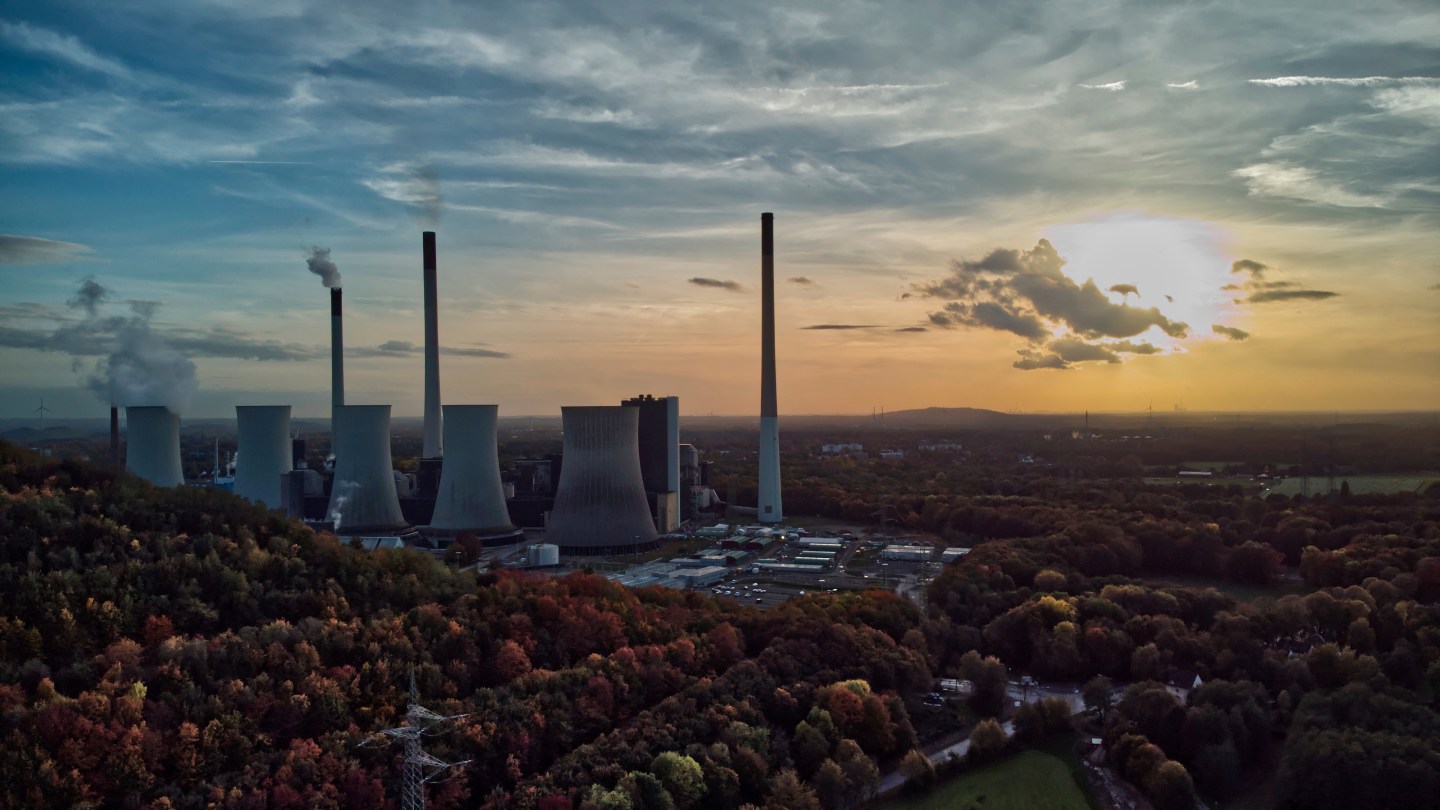
The sun sets behind a coal-fired power plant in Gelsenkirchen, Germany, Oct. 22, 2022. A new report from doctors and other health experts says the world's fossil fuel addiction is making the world sicker and is killing people.
The sun sets behind a coal-fired power plant in Gelsenkirchen, Germany, Oct. 22, 2022. A new report from doctors and other health experts says the world's fossil fuel addiction is making the world sicker and is killing people. Michael Sohn—AP Images

Extreme weather from climate change triggered hunger in nearly 100 million people and increased heat deaths by 68% in vulnerable populations worldwide as the world’s “fossil fuel addiction” degrades public health each year, doctors reported in a new study.

Worldwide the burning of coal, oil, natural gas and biomass forms air pollution that kills 1.2 million people a year, including 11,800 in the United States, according to a report Tuesday in the prestigious medical journal Lancet.

“Our health is at the mercy of fossil fuels,” said University College of London health and climate researcher Marina Romanello, executive director of the Lancet Countdown. “We’re seeing a persistent addiction to fossil fuels that is not only amplifying the health impacts of climate change, but which is also now at this point compounding with other concurrent crises that we’re globally facing, including the ongoing COVID-19 pandemic, the cost-of-living crisis, energy crisis and food crisis that were triggered after the war in Ukraine.”

In the annual Lancet Countdown, which looks at climate change and health, nearly 100 researchers across the globe highlighted 43 indicators where climate change is making people sicker or weaker, with a new look at hunger added this year.

“And the health impacts of climate change are rapidly increasing,” Romanello said.

In praising the report, United Nations Secretary-General Antonio Guterres put it even more bluntly than the doctors: “The climate crisis is killing us.”

New analysis in the report blamed 98 million more cases of self-reported hunger around the world in 2020, compared to 1981-2010, on “days of extreme heat increasing in frequency and intensity due to climate change.”

Researchers looked at 103 countries and found that 26.4% of the population experienced what scientists call “food insecurity” and in a simulated world without climate change’s effects that would have only been 22.7%, Romanello said.

“Can I say that every bit of food insecurity is due to climate change? Of course not. But we think that in this complex web of causes, it is a very significant contributor and it’s only going to get worse,” said pediatrician Dr. Anthony Costello, Lancet Countdown co-chair and head of the University College of London’s Global Health Institute.

Computerized epidemiology models also show an increase in annual heat related deaths from 187,000 a year from 2000 to 2004 to an annual average of 312,000 a year the last five years, Romanello said.

When there’s a heat wave, like the record-shattering 2020 one in the Pacific Northwest or this summer’s English heat wave, emergency room doctors know when they go to the hospital “we’re in for a challenging shift,” said study co-author Dr. Renee Salas, a Boston emergency room physician and professor at the Harvard School of Public Health.

The air pollution from burning coal, oil and gas also pollutes the air, causing about 1.2 million deaths a year worldwide from small particles in the air, the scientists and report said. The 1.2 million figure is based on “immense scientific evidence,” Harvard’s Salas said.

“Burning gas in cars or coal in electricity plants have been found to cause asthma in children and cause heart problems,” Salas said.

“Prescribing an inhaler isn’t going to fix the cause of an asthma attack for a young boy living next to a highway where cars are producing dangerous pollutants and climate change is driving increases in wildfire smoke, pollen and ozone pollution,” Salas said.

Both air pollution and heat deaths are bigger problems for the elderly and the very young and especially the poor, said University of Louisville environmental health professor Natasha DeJarnett, a study co-author.

Sacoby Wilson, a professor of environmental health at the University of Maryland who wasn’t part of the report, said the Lancet study makes sense and frames climate change’s effects on health in a powerful way.

“People are dying now as we speak. Droughts, desertification, not having food, flooding, tsunamis,” Wilson said. “We’re seeing what happened in Pakistan. What you see happening in Nigeria. ”

Both Wilson and emergency room physician and professor of medicine at the University of Calgary Dr. Courtney Howard, who wasn’t part of the study, said report authors are correct to call the problem an addiction to fossil fuels, similar to being addicted to harmful drugs.

The Lancet report shows the increasing deaths from air pollution and heat yet people are “continuing in habitual behavior despite known harms,” which is the definition of addiction, Howard said. “Thus far our treatment of our fossil fuel addiction has been ineffective.”

“This isn’t a rare cancer that we don’t have a treatment for,” Salas said. “We know the treatment we need. We just need the willpower from all of us and our leaders to make it happen.”

Sign up for the Fortune Features email list so you don’t miss our biggest features, exclusive interviews, and investigations.


About the Authors
By Seth Borenstein
See full bioRight Arrow Button Icon
By The Associated Press
See full bioRight Arrow Button Icon

Latest in Environment

coal
EnvironmentCoal
‘You have an entire culture, an entire community that is also having that same crisis’: Colorado coal town looks anxiously to the future
By Brittany Peterson, Jennifer McDermott and The Associated PressDecember 6, 2025
7 hours ago
data center
EnvironmentData centers
The rise of AI reasoning models comes with a big energy tradeoff
By Rachel Metz, Dina Bass and BloombergDecember 5, 2025
1 day ago
Jaguar
EnvironmentArizona
‘This species is recovering’: Jaguar spotted in Arizona, far from Central and South American core
By Susan Montoya Bryan and The Associated PressDecember 5, 2025
1 day ago
Steve Jobs holds up the first iPod Nano
Big TechApple
Apple is experiencing its biggest leadership shake-up since Steve Jobs died, with over half a dozen key executives headed for the exits
By Dave SmithDecember 5, 2025
1 day ago
Paul Atkins
CommentaryCorporate Governance
Turning public companies into private companies: the SEC’s retreat from transparency and accountability
By Andrew BeharDecember 5, 2025
1 day ago
Four years ago, BKV started buying up the two Temple power plants in Texas—located between Austin and Dallas—which now total 1.5 gigawatts of electricity generation capacity—enough to power more than 1.1 million homes, or a major data center campus. There is room to expand.
Energypower
How a Texas gas producer plans to exploit the ‘megatrend’ of power plants for AI hyperscalers
By Jordan BlumDecember 5, 2025
2 days ago

Most Popular

placeholder alt text
Economy
Two months into the new fiscal year and the U.S. government is already spending more than $10 billion a week servicing national debt
By Eleanor PringleDecember 4, 2025
2 days ago
placeholder alt text
Big Tech
Mark Zuckerberg rebranded Facebook for the metaverse. Four years and $70 billion in losses later, he’s moving on
By Eva RoytburgDecember 5, 2025
1 day ago
placeholder alt text
Success
Nvidia CEO Jensen Huang admits he works 7 days a week, including holidays, in a constant 'state of anxiety' out of fear of going bankrupt
By Jessica CoacciDecember 4, 2025
2 days ago
placeholder alt text
Success
‘Godfather of AI’ says Bill Gates and Elon Musk are right about the future of work—but he predicts mass unemployment is on its way
By Preston ForeDecember 4, 2025
2 days ago
placeholder alt text
Success
Nearly 4 million new manufacturing jobs are coming to America as boomers retire—but it's the one trade job Gen Z doesn't want
By Emma BurleighDecember 4, 2025
2 days ago
placeholder alt text
Asia
Despite their ‘no limits’ friendship, Russia is paying a nearly 90% markup on sanctioned goods from China—compared with 9% from other countries
By Jason MaNovember 29, 2025
7 days ago
Rankings
  • 100 Best Companies
  • Fortune 500
  • Global 500
  • Fortune 500 Europe
  • Most Powerful Women
  • Future 50
  • World’s Most Admired Companies
  • See All Rankings
Sections
  • Finance
  • Leadership
  • Success
  • Tech
  • Asia
  • Europe
  • Environment
  • Fortune Crypto
  • Health
  • Retail
  • Lifestyle
  • Politics
  • Newsletters
  • Magazine
  • Features
  • Commentary
  • Mpw
  • CEO Initiative
  • Conferences
  • Personal Finance
  • Education
Customer Support
  • Frequently Asked Questions
  • Customer Service Portal
  • Privacy Policy
  • Terms Of Use
  • Single Issues For Purchase
  • International Print
Commercial Services
  • Advertising
  • Fortune Brand Studio
  • Fortune Analytics
  • Fortune Conferences
  • Business Development
About Us
  • About Us
  • Editorial Calendar
  • Press Center
  • Work At Fortune
  • Diversity And Inclusion
  • Terms And Conditions
  • Site Map

© 2025 Fortune Media IP Limited. All Rights Reserved. Use of this site constitutes acceptance of our Terms of Use and Privacy Policy | CA Notice at Collection and Privacy Notice | Do Not Sell/Share My Personal Information
FORTUNE is a trademark of Fortune Media IP Limited, registered in the U.S. and other countries. FORTUNE may receive compensation for some links to products and services on this website. Offers may be subject to change without notice.