
• Home
  • Latest
  • Fortune 500
  • Finance
  • Tech
  • Leadership
  • Lifestyle
  • Rankings
  • Multimedia

Trendingnow

1

Egg companies made $1.22 billion in profit off a $6 carton — now they’re buying their way out of a price-fixing case with 53 million donated eggs

2

Meet the Zillennials: The luckiest micro-generation in the workforce, born between 1993 and 1998

3

Economists have found an answer to slowing cognitive decline: Avoid retiring early, study finds

1

Egg companies made $1.22 billion in profit off a $6 carton — now they’re buying their way out of a price-fixing case with 53 million donated eggs

2

Meet the Zillennials: The luckiest micro-generation in the workforce, born between 1993 and 1998

3

Economists have found an answer to slowing cognitive decline: Avoid retiring early, study finds
LeadershipView from the C-Suite

Fender’s CEO says guitars aren’t dead. And he credits the diversity of players and the pandemic for their revival: ‘We’re pushing a billion dollars in annual sales’

Phil Wahba
By
Phil Wahba
Phil Wahba
Senior Writer
Down Arrow Button Icon
Phil Wahba
By
Phil Wahba
Phil Wahba
Senior Writer
Down Arrow Button Icon
October 21, 2022, 7:45 AM ET
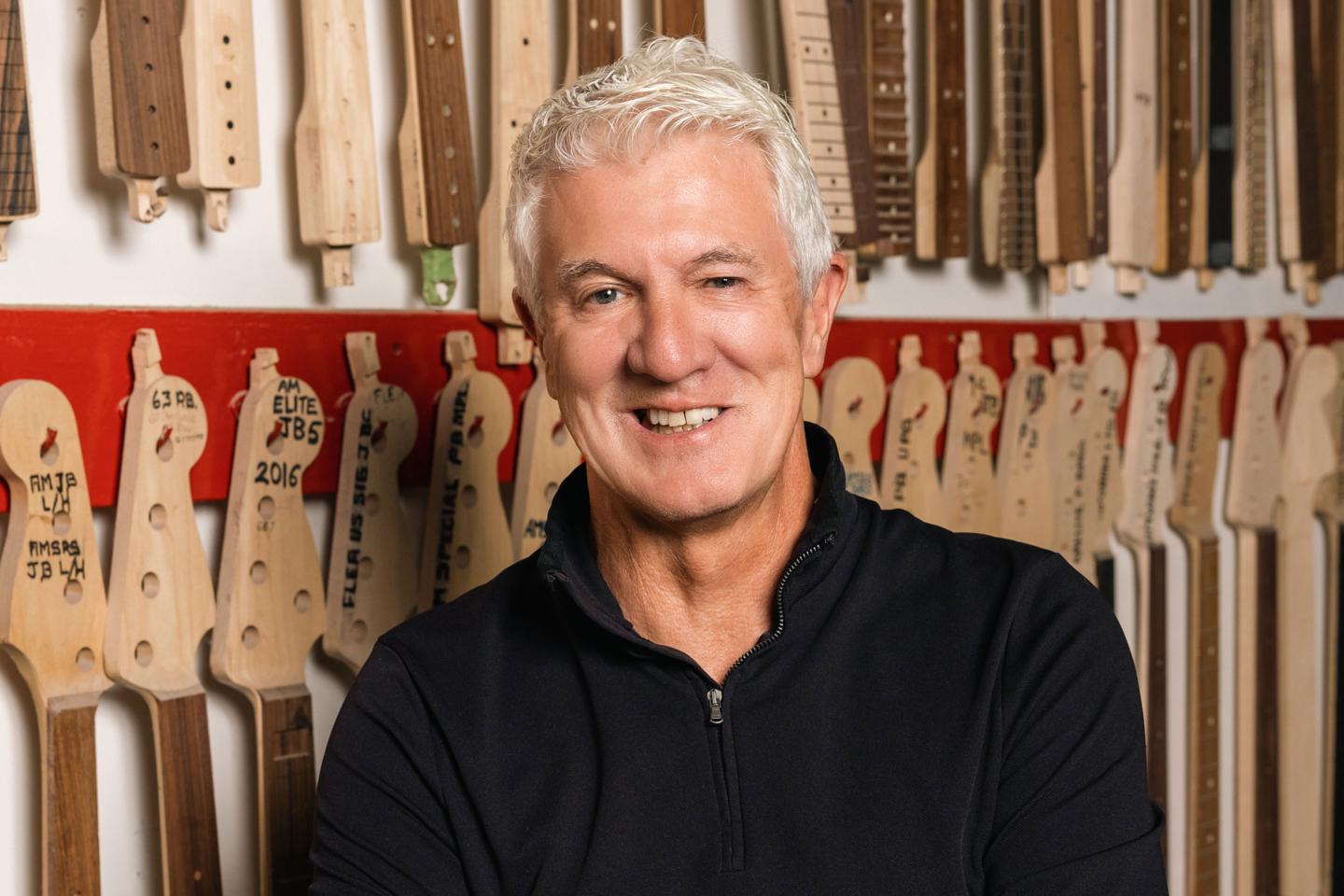
Andrew Mooney, CEO of Fender Musical Instruments Corp.
Andrew Mooney, CEO of Fender Musical Instruments Corp. Courtesy of Fender
Add Fortune on Google for similar content.

If you want to get under Andy Mooney’s skin, tell him that electric guitars are dead. A 2017 Washington Post article making that claim still gets him exercised even as he’s seen a renaissance in guitar sales at the company he leads, Fender Musical Instruments. That boom has been fueled partly by an increasingly diverse player base, as more women and people of color embrace an instrument long associated with white male fans of classic rock. 

Many have continued to proclaim the death of the guitar since that article’s publication, Mooney says with exasperation. “It was like in the days of John Travolta in Saturday Night Fever when disco came out and guitar rock didn’t die out.” Fender’s sales show the guitar remains popular.

About 60% of sales come from fretted instruments like guitars, basses, and ukuleles; the rest are from amps and music sheets. The company is poised to hit $1 billion in sales this year, a far cry from 2015 sales, which were less than half that. Fender tapped the 67-year-old Mooney that year to fix the struggling company, which was choking under a mountain of debt.

The pandemic had lots to do with buoying guitar sales analogous to the baking boom during quarantine. Many consumers purchased guitars and ukuleles to learn new skills, relax, and pass the time. But other trends have sustained Fender’s growth beyond the pandemic’s peak, Mooney says. “The guitar is being used in more genres by more people in more geographies than ever, and it’s used for more reasons than just wanting to be a rock star,” he says.

Mooney, who worked at Nike for 20 years and then at Disney before becoming CEO of Fender, was once himself an aspiring rock star, first drawn to the instrument as a fan of Deep Purple. A key ingredient in his turnaround has been reducing the instrument abandonment rate of new players, 90% of whom quit playing an instrument within a year of purchase. That’s a big problem when nearly half of Fender’s instrument sales are from first-timers.

In response, the 76-year-old company launched Fender Play, a guided virtual program with short lessons for beginner and intermediate players to sustain their interest and cultivate an online community. It’s not a big revenue maker, but Mooney believes it will keep guitar sales on the growth track for years. “People are using it to self-develop, relax, or just learn something new,” he says.

This interview has been edited and condensed for clarity.

There’s a perception that people are gravitating more toward hobbies like video games and away from playing music. What are you seeing?

There was an infamous story in the Washington Post around 2017, and the headline was, “The electric guitar is dead.” It was the same thing when disco came out, and it didn’t die then. Before COVID, [percentage] growth was in the middle single digits. Now we’re pushing a billion dollars in annual sales, and we estimate there are 16 million more players in the U.S. and 30 million worldwide since the pandemic started.

The jump in guitar sales seems counterintuitive given that rock music is no longer dominant on the charts, theoretically leading interest in electric guitars to wane.

At the dawn of the electric guitar, a lot of the growth was from people who wanted to be guitar heroes or virtuoso players like Jimmy Page, Eric Clapton, or Jimi Hendrix. There are still heaps of virtuoso players, but there are fewer guitar gods now. More people use guitars onstage, in the studio, and in other genres as compositional instruments, creating textures.

Is there a parallel in the guitar boom to how people got into baking during the pandemic, fueled by a desire to return to basic, tactile pleasures?

Yes. Like many of those activities, playing guitar is normalizing post-COVID. But we’re not going through the same thing as Peloton, meaning a massive decline in usage and the return of goods. 

So how do you hang on to all those new customers?

We recently surveyed customers, and the big “aha” was that 90% of first-time players abandoned the instrument in the first year. But the 10% who didn’t will have a lifetime value of $10,000 for us and will buy five or seven guitars in their lifetime, amplifiers, and all the other equipment. So in 2017, we created an online learning product called Fender Play, which aimed to reduce the abandonment rate at the height of COVID. We see it as a massive driver for bringing more people in and keeping them.

What did you immediately want to improve when you took the reins in 2015?

It was our research that pointed the way. We wanted to invest in building a community and digital ecosystem and monetize it. That’s essentially what Fender Play has become—one of our most important marketing components.

There was talk of a ukulele boom during the pandemic, with the instrument’s small size and relative simplicity proving to be a draw for legions of newbies. Has that held up?

The ukulele segment grew faster than any other fretted instruments pre-COVID but slowed down quickly. These things tend to be driven by personalities. For example, at that point, Billy Eilish was a big-time ukulele player, but she doesn’t use it as much onstage these days.

Many iconic guitar stores have closed in the past decade, and the big national chain, Guitar Center, struggled for years before finding its footing again. Does that change your view on the benefits of selling through stores versus your website?

In 2015, 70% of our business was done in brick-and-mortar stores and 30% online. Today, it’s the inverse. During the pandemic, a big shift was that consumers were predominantly buying online. They were not going into guitar stores, and that environment for new players can be pretty intimidating. Still, there’s always going to be a desire in consumers to touch, feel, and hear an instrument. But we don’t intend to enter the retail business, because our dealer base covers the landscape well.

Are you still dealing with supply-chain chaos and product shortages?

The biggest issue we’ve faced is more on the electronics side, such as vacuum tubes [devices that control electric current flow], many of which came out of Russia. Chips are still a dogfight. A chip we would’ve paid 30 cents for last year is going for $30 this year, and it’s priced some products totally out of the market for consumers.

What makes you think the boom in music instrument sales has legs?

I’m optimistic about the future because I’m sitting in my office here at home, and nobody’s returning to the office the way we once were. So I think people may have anywhere from 50% to 80% more available time to spend on things they want to do. And I think that people will continue to bake, exercise, fly-fish, and play music.

Get to know Mooney:

  • His favorite band is Deep Purple. It’s the first band he ever saw live, and the lead guitarist, Ritchie Blackmore, inspired him to pursue learning the instrument. The first riff he learned on guitar was “Paranoid” by Black Sabbath.
  • Mooney’s most prized guitar, out of about 40, is his 1955 Fender Stratocaster, but these days he’s playing his Fender Jim Root Jazzmaster, named for the Slipknot guitarist, and a Tom Morello Soul Power Fender more.
  • He was the chairman of Disney Consumer Products in 2000, and he spearheaded the creation of its Disney Princess franchise, a far cry from his heavy metal tastes.

Sign up for the Fortune Features email list so you don’t miss our biggest features, exclusive interviews, and investigations.

About the Author
Phil Wahba
By Phil WahbaSenior Writer
LinkedIn iconTwitter icon

Phil Wahba is a senior writer at Fortune primarily focused on leadership coverage, with a prior focus on retail.

See full bioRight Arrow Button Icon
Add Fortune on Google for similar content.

Latest in Leadership

Finance
Lorem ipsum dolor sit amet, consectetur adipiscing elit, sed do eiusmod tempor incididunt ut labore et dolore magna aliqua. Ut enim ad minim veniam
By Fortune Editors
October 20, 2025
Finance
Lorem ipsum dolor sit amet, consectetur adipiscing elit, sed do eiusmod tempor incididunt ut labore et dolore magna aliqua. Ut enim ad minim veniam
By Fortune Editors
October 20, 2025
Finance
Lorem ipsum dolor sit amet, consectetur adipiscing elit, sed do eiusmod tempor incididunt ut labore et dolore magna aliqua. Ut enim ad minim veniam
By Fortune Editors
October 20, 2025
Finance
Lorem ipsum dolor sit amet, consectetur adipiscing elit, sed do eiusmod tempor incididunt ut labore et dolore magna aliqua. Ut enim ad minim veniam
By Fortune Editors
October 20, 2025
Finance
Lorem ipsum dolor sit amet, consectetur adipiscing elit, sed do eiusmod tempor incididunt ut labore et dolore magna aliqua. Ut enim ad minim veniam
By Fortune Editors
October 20, 2025
Finance
Lorem ipsum dolor sit amet, consectetur adipiscing elit, sed do eiusmod tempor incididunt ut labore et dolore magna aliqua. Ut enim ad minim veniam
By Fortune Editors
October 20, 2025

Most Popular

Finance
Lorem ipsum dolor sit amet, consectetur adipiscing elit, sed do eiusmod tempor incididunt ut labore et dolore magna aliqua. Ut enim ad minim veniam
By Fortune Editors
October 20, 2025
Finance
Lorem ipsum dolor sit amet, consectetur adipiscing elit, sed do eiusmod tempor incididunt ut labore et dolore magna aliqua. Ut enim ad minim veniam
By Fortune Editors
October 20, 2025
Finance
Lorem ipsum dolor sit amet, consectetur adipiscing elit, sed do eiusmod tempor incididunt ut labore et dolore magna aliqua. Ut enim ad minim veniam
By Fortune Editors
October 20, 2025
Finance
Lorem ipsum dolor sit amet, consectetur adipiscing elit, sed do eiusmod tempor incididunt ut labore et dolore magna aliqua. Ut enim ad minim veniam
By Fortune Editors
October 20, 2025
Finance
Lorem ipsum dolor sit amet, consectetur adipiscing elit, sed do eiusmod tempor incididunt ut labore et dolore magna aliqua. Ut enim ad minim veniam
By Fortune Editors
October 20, 2025
Finance
Lorem ipsum dolor sit amet, consectetur adipiscing elit, sed do eiusmod tempor incididunt ut labore et dolore magna aliqua. Ut enim ad minim veniam
By Fortune Editors
October 20, 2025
Fortune Secondary Logo
Rankings
  • 100 Best Companies
  • Fortune 500
  • Global 500
  • Fortune 500 Europe
  • Most Powerful Women
  • World's Most Admired Companies
  • See All Rankings
  • Lists Calendar
Sections
  • Finance
  • Fortune Crypto
  • Features
  • Leadership
  • Health
  • Commentary
  • Success
  • Retail
  • Mpw
  • Tech
  • Lifestyle
  • CEO Initiative
  • Asia
  • Politics
  • Conferences
  • Europe
  • Newsletters
  • Personal Finance
  • Environment
  • Magazine
  • Education
Customer Support
  • Frequently Asked Questions
  • Customer Service Portal
  • Privacy Policy
  • Terms Of Use
  • Single Issues For Purchase
  • International Print
Commercial Services
  • Advertising
  • Fortune Brand Studio
  • Fortune Analytics
  • Fortune Conferences
  • Business Development
  • Group Subscriptions
About Us
  • About Us
  • Press Center
  • Work At Fortune
  • Terms And Conditions
  • Site Map
  • About Us
  • Press Center
  • Work At Fortune
  • Terms And Conditions
  • Site Map
  • Facebook icon
  • Twitter icon
  • LinkedIn icon
  • Instagram icon
  • Pinterest icon

Latest in Leadership

Before independence, America tried — and failed — to conquer Canada
North Americahistory
Before independence, America tried — and failed — to conquer Canada
By Sarah M.S. Pearsall and The ConversationJuly 4, 2026
2 hours ago
The 1964 box set that predicted Dylan going electric — and still explains American music today
Arts & EntertainmentMusic
The 1964 box set that predicted Dylan going electric — and still explains American music today
By Ted Olson and The ConversationJuly 4, 2026
2 hours ago
Ejay O'Donnell, Bart Szaniewski, and Grant Eastey wear Dad Gang hats in a factory
SuccessEntrepreneurship
Three dads started selling hats from a garage with $750—now they’ve sold $35 million worth, partnered with Gary Vee, and grown a community of fathers
By Preston ForeJuly 4, 2026
5 hours ago
loco
Travel & LeisureEntrepreneurship
The World Cup is just now discovering Middle America’s big heart. These Irish bingo kingpins built a $24 million business knowing it all along
By Nick LichtenbergJuly 4, 2026
6 hours ago
JPMorgan built a pipeline of female CEO candidates that was the envy of Wall Street. How did it fall apart?
MPWMost Powerful Women
JPMorgan built a pipeline of female CEO candidates that was the envy of Wall Street. How did it fall apart?
By Emma HinchliffeJuly 4, 2026
8 hours ago
Elon Musk with a black DOGE hat
SuccessWealth
Even as Elon Musk calls philanthropy ‘very hard,’ every day Americans gave a record $617 billion—despite feeling the squeeze over the cost of living
By Preston ForeJuly 4, 2026
8 hours ago

Most Popular

Egg companies made $1.22 billion in profit off a $6 carton — now they’re buying their way out of a price-fixing case with 53 million donated eggs
Law
Egg companies made $1.22 billion in profit off a $6 carton — now they’re buying their way out of a price-fixing case with 53 million donated eggs
By Wyatte Grantham-Philips and The Associated PressJuly 2, 2026
2 days ago
Meet the Zillennials: The luckiest micro-generation in the workforce, born between 1993 and 1998
AI
Meet the Zillennials: The luckiest micro-generation in the workforce, born between 1993 and 1998
By Nick LichtenbergJuly 3, 2026
1 day ago
Economists have found an answer to slowing cognitive decline: Avoid retiring early, study finds
Economy
Economists have found an answer to slowing cognitive decline: Avoid retiring early, study finds
By Sasha RogelbergJuly 2, 2026
2 days ago
On Wall Street, analysts increasingly don’t believe the U.S. government’s 'misleading' job numbers
Economy
On Wall Street, analysts increasingly don’t believe the U.S. government’s 'misleading' job numbers
By Jim EdwardsJuly 3, 2026
1 day ago
Even as Elon Musk calls philanthropy ‘very hard,’ every day Americans gave a record $617 billion—despite feeling the squeeze over the cost of living
Success
Even as Elon Musk calls philanthropy ‘very hard,’ every day Americans gave a record $617 billion—despite feeling the squeeze over the cost of living
By Preston ForeJuly 4, 2026
8 hours ago
$25 billion CEO says one-hour interviews are a waste of time—he puts candidates through six hours of tests and wants them to order wine at lunch
Success
$25 billion CEO says one-hour interviews are a waste of time—he puts candidates through six hours of tests and wants them to order wine at lunch
By Orianna Rosa RoyleJuly 3, 2026
1 day ago

© 2026 Fortune Media IP Limited. All Rights Reserved. Use of this site constitutes acceptance of our Terms of Use and Privacy Policy | CA Notice at Collection and Privacy Notice | Do Not Sell/Share My Personal Information
FORTUNE is a trademark of Fortune Media IP Limited, registered in the U.S. and other countries. FORTUNE may receive compensation for some links to products and services on this website. Offers may be subject to change without notice.