• Home
  • Latest
  • Fortune 500
  • Finance
  • Tech
  • Leadership
  • Lifestyle
  • Rankings
  • Multimedia
LeadershipView from the C-Suite

Why Olympus sold off its decades-old camera and microscope business to focus on medical tech: ‘We had to move before it became too late’

Phil Wahba
By
Phil Wahba
Phil Wahba
Senior Writer
Down Arrow Button Icon
Phil Wahba
By
Phil Wahba
Phil Wahba
Senior Writer
Down Arrow Button Icon
October 7, 2022, 6:00 AM ET
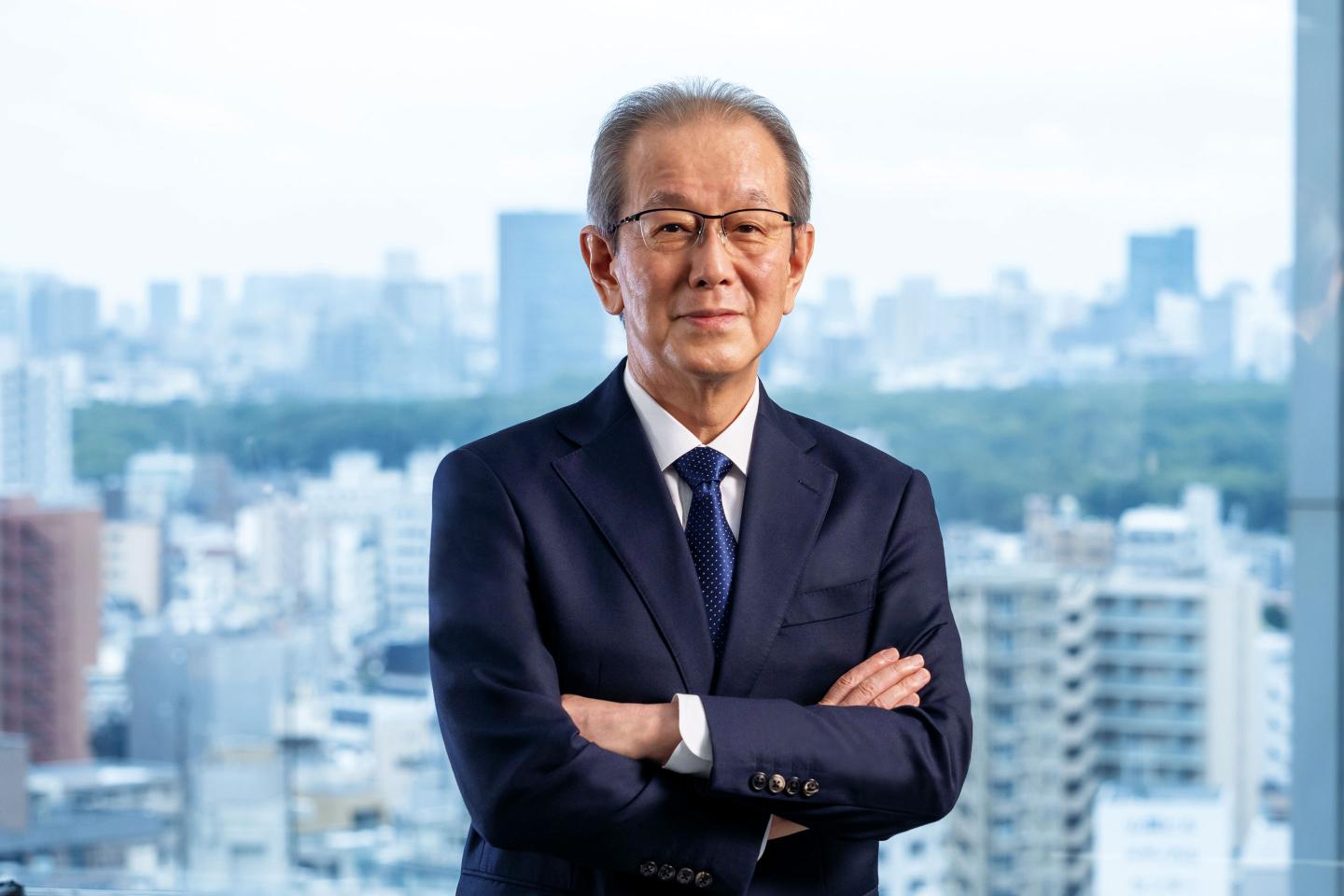
Yasuo Takeuchi, CEO of Olympus Corporation
Yasuo Takeuchi, CEO of Olympus CorporationCourtesy of Olympus

Olympus Corporation has long been synonymous with microscopes and digital cameras. But these businesses are no longer areas of focus as the Japanese company shifts to medical tech. These days, most consumer contact with Olympus products comes during a colonoscopy or an ear, throat, and nose examination performed with one of its machines.

That radical reinvention has taken place under the leadership of Olympus’s veteran chief executive Yasuo Takeuchi, who has worked to change the company’s product offerings, culture, and corporate governance. Olympus, in August, said it would sell its profitable microscope business, on which it had been founded in 1919, to private equity firm Bain for $3 billion. Two years ago, the company shed its money-losing camera business after struggling for years to compete with smartphones.

This transformation was mapped out in early 2019, when Takeuchi took the reins of a company that was bloated from chasing too many markets but at least stable after a massive 2011 corporate scandal over accounting regularities. In 2012, the Japan-born Takeuchi was called home after a three-year stint at Olympus’ offices in Hamburg, Germany, where he had been executive managing director, to help steady the ship under his mentor, Hiroyuki Sasa, whom Takeuchi later succeeded as CEO.

Takeuchi, who has spent one-third of his 42-year career at Olympus outside Japan, understood that the company would have to become more agile and international-minded to succeed in this re-engineering.

“One of my main tasks was to globalize the company more, not only in terms of geography,” he tells Fortune.

While Olympus had been a quintessentially Japanese company, with the home office calling the shots, Takeuchi wanted to expand the breadth and influence of international perspectives. To do that, he added the heads of Olympus’s Europe and U.S. businesses to the C-suite.

Takeuchi also restructured the board, tapping more outsiders, similar to Western companies, to help reset Olympus’s culture. One of his board appointments included the U.S.-based activist investor Value Act.

Under Takeuchi’s watch, company shares have tripled, and the CEO says Olympus is now ready to take on the competitive health tech sector.

This interview has been edited and condensed for clarity.

Fortune: You’re now the dominant maker of machines used in colonoscopies and plan to move more forcefully into medical tech with a focus on surgical devices and various video scopes. Why is health care where Olympus is landing?

Takeuchi: The GI (gastrointestinal) endoscopy business was born about 70 years ago, but it has grown gradually and steadily. Around the middle of 2010, the main Olympus business went from cameras to the GI endoscopy business. Not only for the sales price but also the profitability.

GI is a steady, profit-generating business, and we had to grow and develop the new business when our digital camera business started its sharp decline. We had to move before it became too late and those businesses became obsolete.

Selling off the camera and microscope businesses meant getting rid of units that were core to Olympus’s identity. What was the thought process there?

They have a right to survive business-wise and to have the right owner. It was unfortunate for them to have Olympus as their owner, and they can now have another future.

You dominate the endoscopy equipment market, with about 70% share in your key markets. Do you think you can have similar success elsewhere in the medtech market?

We started the endoscope business almost 70 years ago. The origin of the business was very similar to how we began the microscope business 104 years ago—based on customer demand. At the time, many Japanese people were dying from stomach cancer, so a professor at Tokyo University contacted manufacturers for a device to look inside the stomach. That was the beginning of the endoscopy business.

Diseases keep developing and changing, and we must keep providing medical solutions. The core functionality of our GI solution is key to many procedures and illnesses. People used to rely on open surgery only, and endoscopes provided the opportunity to avoid open (exploratory) surgery.

You spent several years working in the U.S. What’d you learn from that experience?

My earliest years in the U.S. were eye-opening. The workers at Olympus America were very professional and had a clear career path. In Japan, the recruitment and employment system introduced after the Second World War was very much about lifetime employment; if you were young, you had to be patient. You had to listen to me, a manager, and comply with my requests. Only if successful could you go to the next step, which takes at least three years. So I thought the U.S. system was much more competitive.

You later went to Europe (2009-2012), where the stereotype is that business culture is much more focused on consensus-building.

Before I went to Europe, I thought the U.S. way of doing things was the best standard in the world. But when I went to Europe, I learned a totally different way of building teams and setting up strategy and product management. But that was when we made a big mistake in the management team, and the corporate scandal happened. I was called back to the parent company in January 2012.

How did those experiences abroad inform your vision of where Olympus needed to go at that point?

IIn April 2012, I was the number two guy, and my predecessor, Mr. Sasa, was elected president. Our management team was somewhat mature, and we had to learn many things before changing the company, as we laid out in 2019. During those seven years, Mr. Sasa gave me a lot of education, and I learned how to strategize, financial planning, and how to further globalize the company.

One of the landmark changes you’ve help put in place is a board structure with more outsiders and foreigners, much like those found in the U.S. Why?

The main reason was that in a traditional Japanese governance system, the board is a decision-making entity, so we spent a lot of time making proposals that would get board approval. Many of those board members were the old Olympus executives. We decided to have the majority of board members be from outside the company and give it more of a monitoring role than quasi-executive

And in another rare move for a Japanese company, you invited an activist investor—and a foreign one at that—on to your board in 2019. What was thinking there?

When I started working with Mr. Sasa to transform the company, one of my key actions was increasing the diversity of thinking. But how do you do that? That was my biggest motivation to change the board structure. My management team was only Japanese, and the board needed to become international, too. I learned a lot from Rob as a private investor. We also have a former executive from [Olympus rival] Johnson & Johnson. We need to keep increasing the diversity of nationalities and expertise.

Get to know Takeuchi:

  • He indulged in sports when he was young but otherwise didn’t have a chance to explore hobbies as he would have liked. “But I was born 10 years after the Second World War and society was relatively poor,” he says.
  • Takeuchi spent four years as CFO before his CEO appointment in 2019.
  • He became chair of Olympus’s Europe and U.S. businesses after he returned to Japan to help the CEO fix the company.

Sign up for the Fortune Features email list so you don’t miss our biggest features, exclusive interviews, and investigations.

About the Author
Phil Wahba
By Phil WahbaSenior Writer
LinkedIn iconTwitter icon

Phil Wahba is a senior writer at Fortune primarily focused on leadership coverage, with a prior focus on retail.

See full bioRight Arrow Button Icon

Latest in Leadership

Finance
Lorem ipsum dolor sit amet, consectetur adipiscing elit, sed do eiusmod tempor incididunt ut labore et dolore magna aliqua. Ut enim ad minim veniam
By Fortune Editors
October 20, 2025
Finance
Lorem ipsum dolor sit amet, consectetur adipiscing elit, sed do eiusmod tempor incididunt ut labore et dolore magna aliqua. Ut enim ad minim veniam
By Fortune Editors
October 20, 2025
Finance
Lorem ipsum dolor sit amet, consectetur adipiscing elit, sed do eiusmod tempor incididunt ut labore et dolore magna aliqua. Ut enim ad minim veniam
By Fortune Editors
October 20, 2025
Finance
Lorem ipsum dolor sit amet, consectetur adipiscing elit, sed do eiusmod tempor incididunt ut labore et dolore magna aliqua. Ut enim ad minim veniam
By Fortune Editors
October 20, 2025
Finance
Lorem ipsum dolor sit amet, consectetur adipiscing elit, sed do eiusmod tempor incididunt ut labore et dolore magna aliqua. Ut enim ad minim veniam
By Fortune Editors
October 20, 2025
Finance
Lorem ipsum dolor sit amet, consectetur adipiscing elit, sed do eiusmod tempor incididunt ut labore et dolore magna aliqua. Ut enim ad minim veniam
By Fortune Editors
October 20, 2025

Most Popular

Finance
Lorem ipsum dolor sit amet, consectetur adipiscing elit, sed do eiusmod tempor incididunt ut labore et dolore magna aliqua. Ut enim ad minim veniam
By Fortune Editors
October 20, 2025
Finance
Lorem ipsum dolor sit amet, consectetur adipiscing elit, sed do eiusmod tempor incididunt ut labore et dolore magna aliqua. Ut enim ad minim veniam
By Fortune Editors
October 20, 2025
Finance
Lorem ipsum dolor sit amet, consectetur adipiscing elit, sed do eiusmod tempor incididunt ut labore et dolore magna aliqua. Ut enim ad minim veniam
By Fortune Editors
October 20, 2025
Finance
Lorem ipsum dolor sit amet, consectetur adipiscing elit, sed do eiusmod tempor incididunt ut labore et dolore magna aliqua. Ut enim ad minim veniam
By Fortune Editors
October 20, 2025
Finance
Lorem ipsum dolor sit amet, consectetur adipiscing elit, sed do eiusmod tempor incididunt ut labore et dolore magna aliqua. Ut enim ad minim veniam
By Fortune Editors
October 20, 2025
Finance
Lorem ipsum dolor sit amet, consectetur adipiscing elit, sed do eiusmod tempor incididunt ut labore et dolore magna aliqua. Ut enim ad minim veniam
By Fortune Editors
October 20, 2025
Fortune Secondary Logo
Rankings
  • 100 Best Companies
  • Fortune 500
  • Global 500
  • Fortune 500 Europe
  • Most Powerful Women
  • Future 50
  • World’s Most Admired Companies
  • See All Rankings
Sections
  • Finance
  • Fortune Crypto
  • Features
  • Leadership
  • Health
  • Commentary
  • Success
  • Retail
  • Mpw
  • Tech
  • Lifestyle
  • CEO Initiative
  • Asia
  • Politics
  • Conferences
  • Europe
  • Newsletters
  • Personal Finance
  • Environment
  • Magazine
  • Education
Customer Support
  • Frequently Asked Questions
  • Customer Service Portal
  • Privacy Policy
  • Terms Of Use
  • Single Issues For Purchase
  • International Print
Commercial Services
  • Advertising
  • Fortune Brand Studio
  • Fortune Analytics
  • Fortune Conferences
  • Business Development
  • Group Subscriptions
About Us
  • About Us
  • Editorial Calendar
  • Press Center
  • Work At Fortune
  • Diversity And Inclusion
  • Terms And Conditions
  • Site Map
  • About Us
  • Editorial Calendar
  • Press Center
  • Work At Fortune
  • Diversity And Inclusion
  • Terms And Conditions
  • Site Map
  • Facebook icon
  • Twitter icon
  • LinkedIn icon
  • Instagram icon
  • Pinterest icon

Latest in Leadership

yale
PoliticsColleges and Universities
Teacher, blame thyself: Yale report savages Ivy League schools for destroying American trust in higher education
By Nick LichtenbergApril 15, 2026
4 hours ago
People protesting against tax giants.
PoliticsTaxes
How a free tax filing system from the government went from 296,000 users to zero in just one year
By Catherina GioinoApril 15, 2026
6 hours ago
Boss has lunch with her workers outside
Successcompany culture
A $24 billion Dutch lender is cutting its workforce—and to get the remaining staff on board, the CEO is having sandwiches with them
By Emma BurleighApril 15, 2026
9 hours ago
Sal Khan
SuccessEducation
This CEO has teamed up with Google, Microsoft, and McKinsey to build an AI degree that could rival Harvard—and it will cost only $10,000 to attend
By Preston ForeApril 15, 2026
9 hours ago
Why insurance giant Travelers’ CTO is placing fewer, bigger bets on AI
NewslettersCIO Intelligence
Why insurance giant Travelers’ CTO is placing fewer, bigger bets on AI
By John KellApril 15, 2026
10 hours ago
horowitz
AIdisruption
A16z’s Ben Horowitz sees ‘AI anxiety’ consuming Silicon Valley founders. Workers’ fear of something else is killing adoption
By Nick LichtenbergApril 15, 2026
10 hours ago

Most Popular

Jeff Bezos pledged $10 billion for climate change. With the 2030 clock ticking, his wife, Lauren Sánchez Bezos, is leading the charge to spend it
Environment
Jeff Bezos pledged $10 billion for climate change. With the 2030 clock ticking, his wife, Lauren Sánchez Bezos, is leading the charge to spend it
By Fortune EditorsApril 15, 2026
10 hours ago
Billionaire philanthropist MacKenzie Scott has donated again—a week after gifting millions to a college, she's just given $70 million to Meals on Wheels America
Success
Billionaire philanthropist MacKenzie Scott has donated again—a week after gifting millions to a college, she's just given $70 million to Meals on Wheels America
By Fortune EditorsApril 13, 2026
2 days ago
Palantir CEO says working at his $316 billion software company is better than a degree from Harvard or Yale: ‘No one cares about the other stuff’
Success
Palantir CEO says working at his $316 billion software company is better than a degree from Harvard or Yale: ‘No one cares about the other stuff’
By Fortune EditorsApril 14, 2026
1 day ago
Retirees are facing a $345,000 bill they never saw coming — and most aren't prepared
Commentary
Retirees are facing a $345,000 bill they never saw coming — and most aren't prepared
By Fortune EditorsApril 14, 2026
2 days ago
Warren Buffett’s first tax return showed $7 owed to the IRS. The then paperboy and former Berkshire Hathaway CEO is now worth $143 billion
Success
Warren Buffett’s first tax return showed $7 owed to the IRS. The then paperboy and former Berkshire Hathaway CEO is now worth $143 billion
By Fortune EditorsApril 14, 2026
1 day ago
Economists warned California not to raise the minimum wage to $20. They were wrong in almost every way so far, another economist says
Economy
Economists warned California not to raise the minimum wage to $20. They were wrong in almost every way so far, another economist says
By Fortune EditorsApril 15, 2026
13 hours ago

© 2026 Fortune Media IP Limited. All Rights Reserved. Use of this site constitutes acceptance of our Terms of Use and Privacy Policy | CA Notice at Collection and Privacy Notice | Do Not Sell/Share My Personal Information
FORTUNE is a trademark of Fortune Media IP Limited, registered in the U.S. and other countries. FORTUNE may receive compensation for some links to products and services on this website. Offers may be subject to change without notice.