• Home
  • Latest
  • Fortune 500
  • Finance
  • Tech
  • Leadership
  • Lifestyle
  • Rankings
  • Multimedia
FinanceReal Estate

Falling home prices shouldn’t collapse the financial system, says hedge funder who made $4 billion betting on the 2008 housing crash

Will Daniel
By
Will Daniel
Will Daniel
Down Arrow Button Icon
Will Daniel
By
Will Daniel
Will Daniel
Down Arrow Button Icon
September 26, 2022, 5:55 PM ET
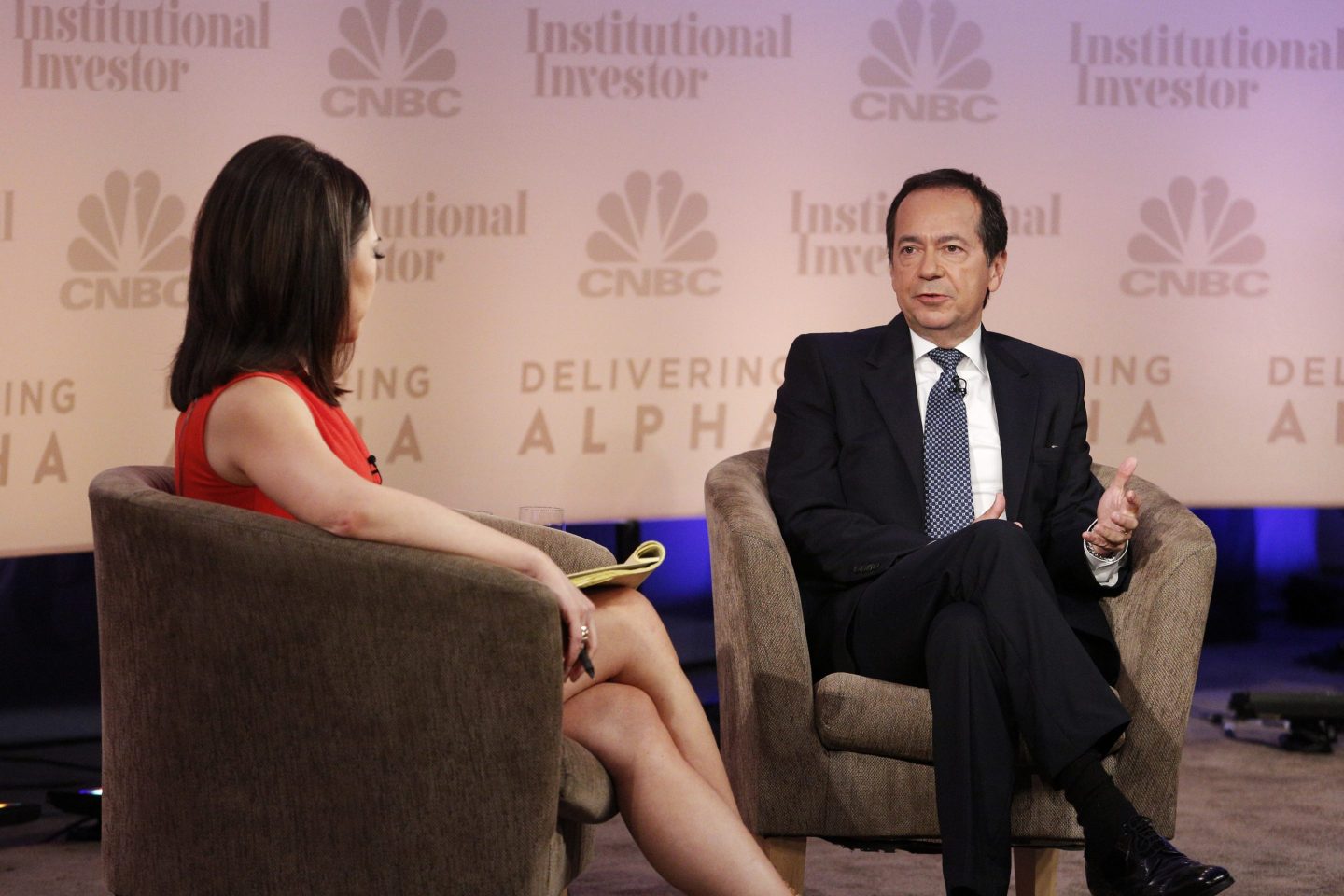
CNBC's Melissa Lee interviews John Paulson at the CNBC Institutional Investor Delivering Alpha Conference in New York in 2014.
CNBC's Melissa Lee interviews John Paulson at the CNBC Institutional Investor Delivering Alpha Conference in New York in 2014.Heidi Gutman/CNBC/NBCU photo bank/NBCUniversal via Getty Images

The U.S. housing market is experiencing one of the most rapid and dramatic shifts in its history.

The reason is pretty simple: Spiked mortgage rates are sidelining buyers across the country. 

And it’s far from over. Last week, Fed Chair Jerome Powell even went as far as to call it a “difficult correction.”

While the speed and breadth of the slowdown have some Americans worried about a repeat of the 2008 housing bust and subsequent global financial crisis, others aren’t as concerned. John Paulson, the hedge funder who famously pocketed $4 billion betting against the U.S. housing market in 2008, is among those who believe history isn’t repeating itself.

“We’re not at risk of a collapse today in the financial system like we were before,” Paulson told Bloomberg on Sunday. “Yeah, it’s true, housing may be a little frothy. So housing prices may come down or they may plateau, but not to the extent it happened [in 2008].”

A tale of two Wall Street oracles

Paulson, who started his hedge fund (which has since been converted to a family office), Paulson & Co., in 1994 and boasts a net worth of $3 billion, believes that the housing market is on stronger footing than it was at the start of the Great Financial Crisis.

“The underlying quality of the mortgages today is far superior. You don’t even have any subprime mortgages in the market,” he said. “In that period [2008], there was no down payments, no credit checks, very high leverage. And it’s just the opposite of what’s happening today. So you don’t have the degree of poor credit quality in mortgages that you did at that time.”

After the blow-up of the 2008 housing bubble and subsequent global financial crisis, senators passed the Dodd-Frank Wall Street Reform and Consumer Protection Act in order to ensure the stability of the U.S. financial system and improve the quality of U.S. mortgages.

The act created the Consumer Financial Protection Bureau (CFPB), which is tasked with preventing predatory mortgage lending. In the years since the CFPB’s creation, the average credit rating of homebuyers has improved dramatically. Leading up to the 2008 housing bust, U.S. homebuyers’ average credit rating was 707. In the first quarter of this year, it was 776, according to data from Bankrate.

Bank of America Research analysts led by Thomas Thornton also found that the portion of buyers with so-called “superprime” FICO scores of 720 or above hit 75% this summer. During the years preceding the 2008 housing bust, just 25% of buyers boasted similarly strong credit.

The Dodd-Frank Act also established the Financial Stability Oversight Council which monitors the health of major U.S. financial firms and sets reserve requirements for banks, and the Securities and Exchange Commission (SEC) Office of Credit Ratings which verifies the credit ratings of major firms after critics argued private agencies gave misleading ratings during the financial crisis. Both of these regulatory bodies have helped to improve the resiliency of the U.S. financial system and banks during times of economic stress.

Paulson noted on Sunday that banks were highly leveraged during the financial crisis and took risks that would be seen as unacceptable in today’s markets after the Dodd-Frank act established the Volcker Rule, which prevents banks from making some specific types of risky investments.

“The problem, in that period of time, was the banks were very speculative about what they were investing in. They had a lot of risky subprime, high-yield, levered loans. And when the market started to fall, the equity quickly came under pressure,” he said, noting that the average bank now has three to four times as much equity as they did during the Great Financial Crisis of 2008, which makes them less susceptible to default.

While Paulson isn’t worried about a repeat of 2008, hedge funder Michael Burry, who also rose to fame predicting and profiting from the Great Financial Crisis, as depicted in the book and movie “The Big Short,” has warned for years that he believes the global economy is in the “greatest speculative bubble of all time in all things.”

Burry argues that central banks created a bubble in everything from stocks to real estate with loose monetary policies after the Great Financial Crisis, and pandemic-era spending meant to boost the economy only made things worse.

Now, as central bank officials around the world shift stances to fight inflation and continue raising interest rates in unison, the hedge fund chief argues asset prices will fall dramatically.

“There is risk growing in many sectors. The unfettered narrative feeding itself until the absurdity explodes, revealing the folly to all and easily starting a revolution,” Burry said in a cryptic, since-deleted Sept. 21 tweet.

Sign up for the Fortune Features email list so you don’t miss our biggest features, exclusive interviews, and investigations.

About the Author
Will Daniel
By Will Daniel
LinkedIn iconTwitter icon
See full bioRight Arrow Button Icon

Latest in Finance

Finance
Lorem ipsum dolor sit amet, consectetur adipiscing elit, sed do eiusmod tempor incididunt ut labore et dolore magna aliqua. Ut enim ad minim veniam
By Fortune Editors
October 20, 2025
Finance
Lorem ipsum dolor sit amet, consectetur adipiscing elit, sed do eiusmod tempor incididunt ut labore et dolore magna aliqua. Ut enim ad minim veniam
By Fortune Editors
October 20, 2025
Finance
Lorem ipsum dolor sit amet, consectetur adipiscing elit, sed do eiusmod tempor incididunt ut labore et dolore magna aliqua. Ut enim ad minim veniam
By Fortune Editors
October 20, 2025
Finance
Lorem ipsum dolor sit amet, consectetur adipiscing elit, sed do eiusmod tempor incididunt ut labore et dolore magna aliqua. Ut enim ad minim veniam
By Fortune Editors
October 20, 2025
Finance
Lorem ipsum dolor sit amet, consectetur adipiscing elit, sed do eiusmod tempor incididunt ut labore et dolore magna aliqua. Ut enim ad minim veniam
By Fortune Editors
October 20, 2025
Finance
Lorem ipsum dolor sit amet, consectetur adipiscing elit, sed do eiusmod tempor incididunt ut labore et dolore magna aliqua. Ut enim ad minim veniam
By Fortune Editors
October 20, 2025

Most Popular

Finance
Lorem ipsum dolor sit amet, consectetur adipiscing elit, sed do eiusmod tempor incididunt ut labore et dolore magna aliqua. Ut enim ad minim veniam
By Fortune Editors
October 20, 2025
Finance
Lorem ipsum dolor sit amet, consectetur adipiscing elit, sed do eiusmod tempor incididunt ut labore et dolore magna aliqua. Ut enim ad minim veniam
By Fortune Editors
October 20, 2025
Finance
Lorem ipsum dolor sit amet, consectetur adipiscing elit, sed do eiusmod tempor incididunt ut labore et dolore magna aliqua. Ut enim ad minim veniam
By Fortune Editors
October 20, 2025
Finance
Lorem ipsum dolor sit amet, consectetur adipiscing elit, sed do eiusmod tempor incididunt ut labore et dolore magna aliqua. Ut enim ad minim veniam
By Fortune Editors
October 20, 2025
Finance
Lorem ipsum dolor sit amet, consectetur adipiscing elit, sed do eiusmod tempor incididunt ut labore et dolore magna aliqua. Ut enim ad minim veniam
By Fortune Editors
October 20, 2025
Finance
Lorem ipsum dolor sit amet, consectetur adipiscing elit, sed do eiusmod tempor incididunt ut labore et dolore magna aliqua. Ut enim ad minim veniam
By Fortune Editors
October 20, 2025
Rankings
  • 100 Best Companies
  • Fortune 500
  • Global 500
  • Fortune 500 Europe
  • Most Powerful Women
  • Future 50
  • World’s Most Admired Companies
  • See All Rankings
Sections
  • Finance
  • Leadership
  • Success
  • Tech
  • Asia
  • Europe
  • Environment
  • Fortune Crypto
  • Health
  • Retail
  • Lifestyle
  • Politics
  • Newsletters
  • Magazine
  • Features
  • Commentary
  • Mpw
  • CEO Initiative
  • Conferences
  • Personal Finance
  • Education
Customer Support
  • Frequently Asked Questions
  • Customer Service Portal
  • Privacy Policy
  • Terms Of Use
  • Single Issues For Purchase
  • International Print
Commercial Services
  • Advertising
  • Fortune Brand Studio
  • Fortune Analytics
  • Fortune Conferences
  • Business Development
About Us
  • About Us
  • Editorial Calendar
  • Press Center
  • Work At Fortune
  • Diversity And Inclusion
  • Terms And Conditions
  • Site Map
  • Facebook icon
  • Twitter icon
  • LinkedIn icon
  • Instagram icon
  • Pinterest icon

Latest in Finance

EconomyDebt
Deficits boost U.S. debt but also inflate corporate profits and stocks, so reducing red ink could trigger a financial crisis, analysts warn
By Jason MaJanuary 16, 2026
1 day ago
Investingsports betting
Betting stocks fall as NFL prediction bets gain on gambling apps
By Peyton Forte and BloombergJanuary 16, 2026
1 day ago
Stan Kroenke, wearing a blue suit and sunglasses, smiles.
InvestingWealth
Bill Gates isn’t even close to America’s largest private landowner. It’s ‘Silent Stan’ Kroenke, Walmart husband and LA Rams owner
By Sasha RogelbergJanuary 16, 2026
1 day ago
C-Suitechief executive officer (CEO)
When Jamie Dimon poached a top Berkshire exec, he called Warren Buffett, who said ‘If he’s going anywhere, at least he’s going to you’
By Marco Quiroz-GutierrezJanuary 16, 2026
1 day ago
trump
North Americafarming
How Trump became a death knell for the 85-year relationship between farmers and the federal government
By Peter Simons and The ConversationJanuary 16, 2026
1 day ago
North AmericaEducation
Community colleges, associate’s degrees and certificates: Young Americans are interested in everything but a bachelor’s
By Tristan BoveJanuary 16, 2026
1 day ago

Most Popular

placeholder alt text
Economy
America’s $38 trillion national debt is so big the nearly $1 trillion interest payment will be larger than Medicare soon
By Shawn TullyJanuary 15, 2026
3 days ago
placeholder alt text
Politics
The Nobel Prize committee doesn't want Trump getting one, even as a gift—but they treated Obama very differently
By Nick LichtenbergJanuary 16, 2026
1 day ago
placeholder alt text
Europe
Americans have been quietly plundering Greenland for over 100 years, since a Navy officer chipped fragments off the Cape York iron meteorite
By Paul Bierman and The ConversationJanuary 14, 2026
3 days ago
placeholder alt text
Politics
Anthony Scaramucci thinks Trump's 'hard-left' move to cap credit-card fees is because he's 'texting back and forth with Mayor Mamdani'
By Nick Lichtenberg and Eva RoytburgJanuary 16, 2026
1 day ago
placeholder alt text
Health
The head of marketing at Slate posted on LinkedIn requesting cleaning services as a benefit at her company. The next day, HR answered her call
By Sydney LakeJanuary 15, 2026
3 days ago
placeholder alt text
Success
Jensen Huang tells Stanford students their high expectations may make it hard for them to succeed: 'I wish upon you ample doses of pain and suffering'
By Orianna Rosa RoyleJanuary 16, 2026
1 day ago

© 2025 Fortune Media IP Limited. All Rights Reserved. Use of this site constitutes acceptance of our Terms of Use and Privacy Policy | CA Notice at Collection and Privacy Notice | Do Not Sell/Share My Personal Information
FORTUNE is a trademark of Fortune Media IP Limited, registered in the U.S. and other countries. FORTUNE may receive compensation for some links to products and services on this website. Offers may be subject to change without notice.