• Home
  • News
  • Fortune 500
  • Tech
  • Finance
  • Leadership
  • Lifestyle
  • Rankings
  • Multimedia
FinanceU.K.
Europe

King Charles is legally dodging millions in taxes because a 1990s prime minister didn’t want royal wealth to be ‘salami-sliced’ away

Tristan Bove
By
Tristan Bove
Tristan Bove
Down Arrow Button Icon
Tristan Bove
By
Tristan Bove
Tristan Bove
Down Arrow Button Icon
September 13, 2022, 2:27 PM ET
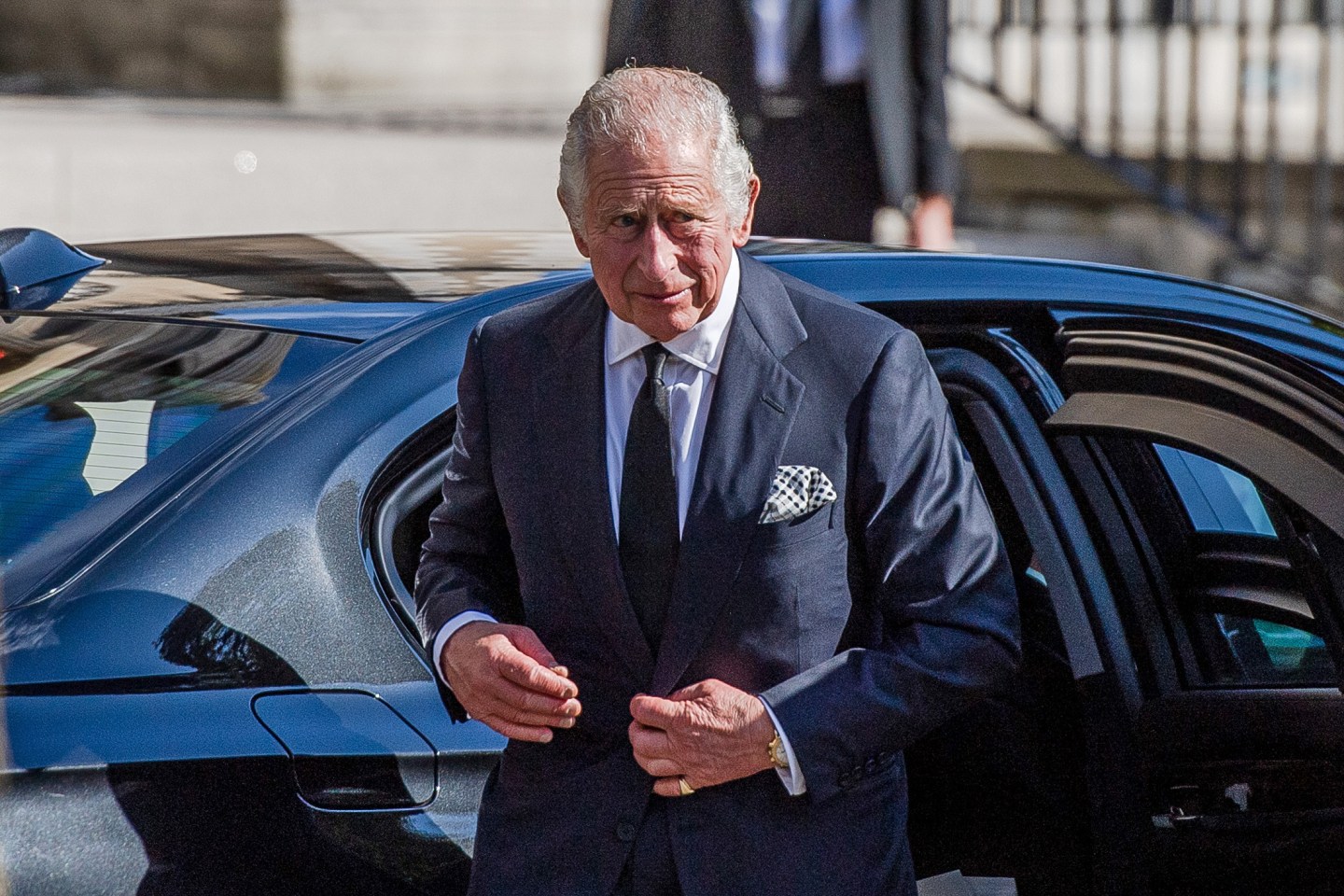
King Charles III after attending a service of reflection in memory of Queen Elizabeth II on September 13, 2022 in Belfast, Northern Ireland
A decades-old tax loophole means King Charles III will be avoiding a massive inheritance tax.Carrie Davenport—Getty Images

People in the U.K. pay a 40% inheritance tax for all the parts of an estate worth more than the country’s tax-free threshold of £325,000.

But not the reigning monarch.

In the wake of Queen Elizabeth II’s passing last week, the newly anointed King Charles III has ascended to the throne and taken ownership of his mother’s considerable estate. And he won’t have to give the government a penny for any of it.

Now that he is king, Charles automatically takes on the title of Duke of Lancaster and its corresponding duchy, valued at £641 million, or $750 million. The duchy was established in the 13th century to be passed from monarch to monarch and provide a stable source of income for the royal family. 

But while a sizable portion of the world’s ultrawealthy normally jump through considerable hoops to keep their inheritance tax payments at a minimum, a tweak in royal inheritance law means that King Charles III won’t have to deal with that particular headache, and it will be perfectly legal.

It all has to do with a law passed in the 1990s by then–Prime Minister John Major, who may not have anticipated that 30 years later, a queen in her nineties would die and be succeeded by a king in his seventies.

Inheritance loophole

In 1993, Prime Minister Major announced an amendment to royal inheritance law intended to protect the royal family’s assets from being erased in the event multiple monarchs were to die in quick succession.

The provision was first used in 2002, when Queen Elizabeth II’s mother passed away. The Queen Mother bequeathed to her daughter around £50 million worth of artwork, antiques, and racehorses, and thanks to the amendment, the Queen was able to save around £20 million in taxes.

At the time, Major called for inheritance laws to provide “specific exemptions for assets passing from one sovereign to his or her successor” in order to protect the monarchy’s fiscal independence.

Major said specific exemptions were needed to preserve the character of the monarchy.

“The danger of the assets of the monarchy being salami-sliced away by capital taxation through generations, thus changing the nature of the institution in a way that few people in this country would welcome,” Major said. 

Charles will still have to pay

While avoiding any tax on a $750 million estate is good news for King Charles III, the new monarch has had to give up a few big-ticket assets on his ascent to regenthood.

In taking on the title of Duke of Lancaster, Charles had to cede his previous title of Duke of Cornwall to his firstborn son, Prince William, and the Duchy of Cornwall—also designed as an additional income stream for its owners—is quite the valuable estate itself. 

Last year, the duchy was worth slightly more than £1 billion ($1.15 billion), and generated a personal annual income for Charles of £23 million ($26.5 million).

And while the new king may be avoiding any inheritance tax, he will likely continue to pay income tax, a tradition his mother began in the 1990s, a period shrouded in controversy when the monarchy was significantly less popular than it is today. 

In 1992, Queen Elizabeth II agreed to pay a voluntary tax on the income she received as Duke of Lancaster. As part of the arrangement, Prince Charles of Wales and Duke of Cornwall agreed to do the same.

That is not an insignificant tax payment, either, with the annual income from the duchy currently amounting to £24 million, or almost $28 million. 

Sign up for the Fortune Features email list so you don’t miss our biggest features, exclusive interviews, and investigations.
About the Author
Tristan Bove
By Tristan Bove
LinkedIn iconTwitter icon
See full bioRight Arrow Button Icon

Latest in Finance

EconomyEurope
JPMorgan CEO Jamie Dimon says Europe has a ‘real problem’
By Katherine Chiglinsky and BloombergDecember 6, 2025
10 hours ago
Elon Musk
Big TechSpaceX
SpaceX to offer insider shares at record-setting $800 billion valuation
By Edward Ludlow, Loren Grush, Lizette Chapman, Eric Johnson and BloombergDecember 6, 2025
11 hours ago
EconomyDebt
The most likely solution to the U.S. debt crisis is severe austerity triggered by a fiscal calamity, former White House economic adviser says
By Jason MaDecember 6, 2025
11 hours ago
SuccessWealth
The $124 trillion Great Wealth Transfer is intensifying as inheritance jumps to a new record, with one 19-year-old reaping the rewards
By Jason MaDecember 6, 2025
13 hours ago
Trump
PoliticsWhite House
Trump finally meets Claudia Sheinbaum face to face at the FIFA World Cup draw
By Will Weissert and The Associated PressDecember 6, 2025
17 hours ago
coal
EnvironmentCoal
‘You have an entire culture, an entire community that is also having that same crisis’: Colorado coal town looks anxiously to the future
By Brittany Peterson, Jennifer McDermott and The Associated PressDecember 6, 2025
17 hours ago

Most Popular

placeholder alt text
AI
Nvidia CEO says data centers take about 3 years to construct in the U.S., while in China 'they can build a hospital in a weekend'
By Nino PaoliDecember 6, 2025
15 hours ago
placeholder alt text
Big Tech
Mark Zuckerberg rebranded Facebook for the metaverse. Four years and $70 billion in losses later, he’s moving on
By Eva RoytburgDecember 5, 2025
2 days ago
placeholder alt text
Real Estate
The 'Great Housing Reset' is coming: Income growth will outpace home-price growth in 2026, Redfin forecasts
By Nino PaoliDecember 6, 2025
21 hours ago
placeholder alt text
Economy
The most likely solution to the U.S. debt crisis is severe austerity triggered by a fiscal calamity, former White House economic adviser says
By Jason MaDecember 6, 2025
11 hours ago
placeholder alt text
Success
Nvidia CEO Jensen Huang admits he works 7 days a week, including holidays, in a constant 'state of anxiety' out of fear of going bankrupt
By Jessica CoacciDecember 4, 2025
3 days ago
placeholder alt text
Asia
Despite their ‘no limits’ friendship, Russia is paying a nearly 90% markup on sanctioned goods from China—compared with 9% from other countries
By Jason MaNovember 29, 2025
7 days ago
Rankings
  • 100 Best Companies
  • Fortune 500
  • Global 500
  • Fortune 500 Europe
  • Most Powerful Women
  • Future 50
  • World’s Most Admired Companies
  • See All Rankings
Sections
  • Finance
  • Leadership
  • Success
  • Tech
  • Asia
  • Europe
  • Environment
  • Fortune Crypto
  • Health
  • Retail
  • Lifestyle
  • Politics
  • Newsletters
  • Magazine
  • Features
  • Commentary
  • Mpw
  • CEO Initiative
  • Conferences
  • Personal Finance
  • Education
Customer Support
  • Frequently Asked Questions
  • Customer Service Portal
  • Privacy Policy
  • Terms Of Use
  • Single Issues For Purchase
  • International Print
Commercial Services
  • Advertising
  • Fortune Brand Studio
  • Fortune Analytics
  • Fortune Conferences
  • Business Development
About Us
  • About Us
  • Editorial Calendar
  • Press Center
  • Work At Fortune
  • Diversity And Inclusion
  • Terms And Conditions
  • Site Map

© 2025 Fortune Media IP Limited. All Rights Reserved. Use of this site constitutes acceptance of our Terms of Use and Privacy Policy | CA Notice at Collection and Privacy Notice | Do Not Sell/Share My Personal Information
FORTUNE is a trademark of Fortune Media IP Limited, registered in the U.S. and other countries. FORTUNE may receive compensation for some links to products and services on this website. Offers may be subject to change without notice.