• Home
  • Latest
  • Fortune 500
  • Finance
  • Tech
  • Leadership
  • Lifestyle
  • Rankings
  • Multimedia
TechChips

Biden’s $270 billion semiconductor bill to battle China isn’t that big a deal, Goldman says. Unless there’s some kind of huge ‘international conflict’

By
Tristan Bove
Tristan Bove
Contributing Reporter
Down Arrow Button Icon
By
Tristan Bove
Tristan Bove
Contributing Reporter
Down Arrow Button Icon
September 6, 2022, 4:53 PM ET
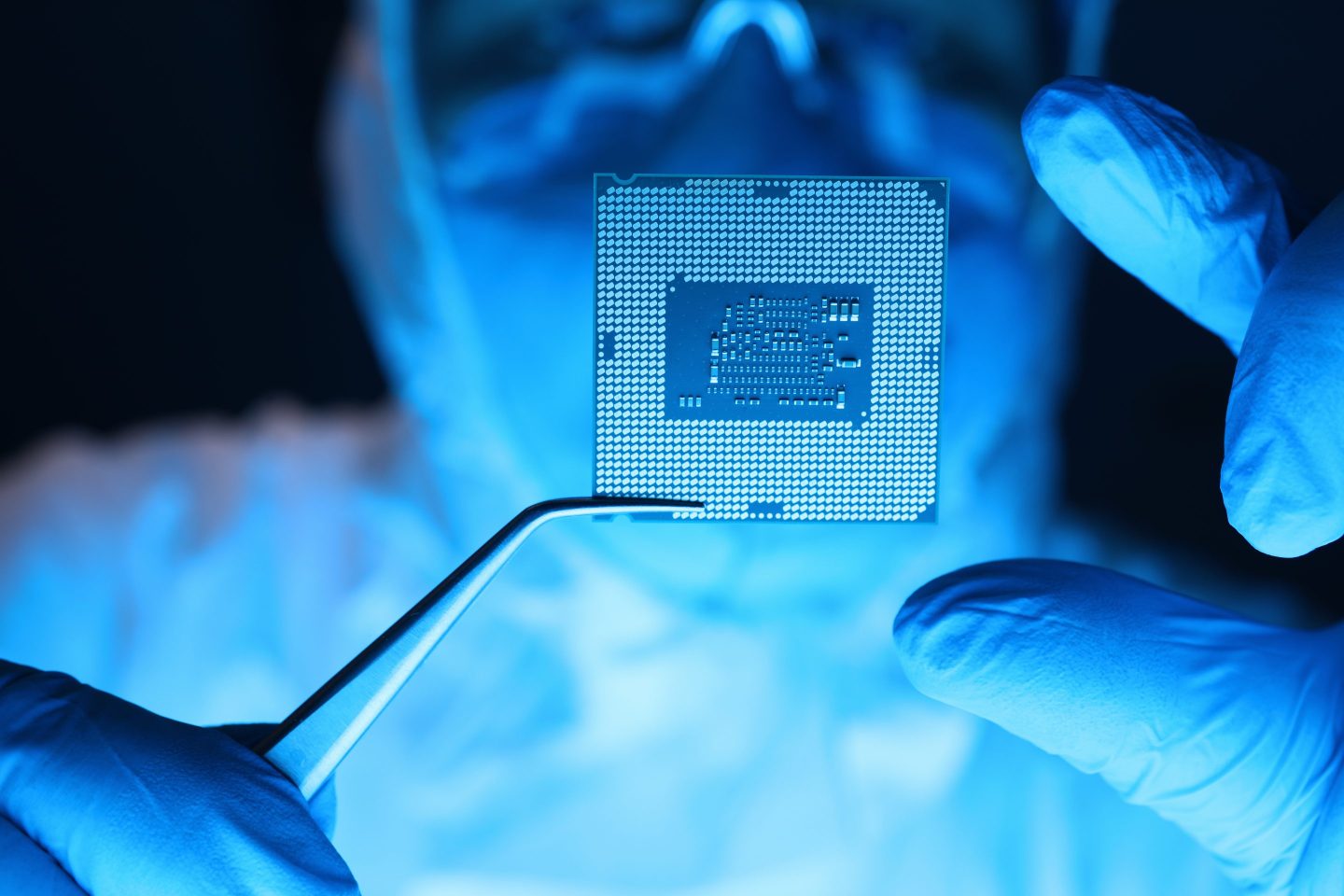
Man in a protective uniform holds a semiconductor microprocessing chip with a pair of forceps
The flashy new semiconductor bill may not do much to fix the global chip shortage, but there might be other big benefits in store for the U.S.Ivan Balvan—iStock/Getty Images

Last month, President Joe Biden signed into law the much-awaited CHIPS Act, a package that will funnel more than $70 billion into the American semiconductor industry and set aside approximately $200 billion for further scientific and technological research.

The bipartisan bill was seen as a huge legislative win for Biden, as he embarks on a mission to bring more manufacturing back stateside and to American companies looking to compete with foreign competitors, namely China.

But despite the plaudits, those expecting the bill to resolve the ongoing global semiconductor chip shortage are likely to be left disappointed, according to a note published last week by Goldman Sachs analysts.

Biden’s big win is likely not big enough to rid the global economy of its semiconductor supply-chain woes of the past few years, Goldman’s research team, led by the investment bank’s chief economist Jan Hatzius, found. But that could change quickly if, say, a major international conflict erupts between chipmaking countries given the “current concentration of production and expertise in Taiwan and Korea.”

CHIPS and chip shortages

The CHIPS Act is setting aside $77 billion in grants, subsidies, loans, and tax credits for the U.S. semiconductor industry over the next five to 10 years. Biden has said that the bill will create more high-tech jobs in the U.S. and help American companies catch up with direct competitors, mainly those based in China.

But for all its lofty goals, the CHIPS Act is unlikely to put a huge dent in the global chip shortage that has been plaguing the global economy since the early days of the pandemic, and has led to longer lead times and higher prices for everything from laptops to cars. “These funds look unlikely to meaningfully change global semiconductor investment or supply,” the Goldman analysts wrote.

Goldman’s research team estimates that the approved funding will only make up around 3% of the global semiconductor industry’s total expenditure next year.

While the new funding is “substantial” in the context of the U.S. semiconductor industry, they said it is much more modest when put up against the global market.

Combined with the fact that new chip manufacturing factories usually take around two years to build, Goldman analysts found that an immediate effect on the chip shortage is unlikely, and even once U.S. production hits full steam, the contribution to the global semiconductor industry will remain relatively small.

But while the CHIPS Act may not mean that the chip shortage will go away anytime soon, Goldman analysts recommended a different lens through which to observe the new law, one that focuses more on how Biden’s big win can boost the country’s geopolitical standing.

A geopolitical advantage

East Asia—including manufacturing hotspots in Taiwan, South Korea, and China—currently accounts for 75% of global semiconductor manufacturing. 

This geographic localization has directed the bulk of semiconductor investing away from the U.S., but the new bill, Goldman analysts argue, presents a possibility to change that.

While the CHIPS Act’s effect on increasing general investments in the U.S. is likely to be marginal, the impact it will have on boosting investments designated for the U.S. domestic chip industry are likely to be much higher.

“While the potential increase in overall business investment would be very small (<0.05% of GDP per year), the increase in domestic semiconductor investment could be more meaningful,” the Goldman analysts wrote.

But the biggest draw of the bill might be the opportunity for the U.S. chip supply chain to reduce its dependence on circumstances surrounding the relatively small number of countries who currently produce the most semiconductors.

“Overall, the new law should be viewed more in the context of U.S. geopolitical strategy—in coordination with Europe—hedging against future crises than as a macroeconomic policy designed to ease supply chains anytime soon,” the analysts wrote.

“As such, this law is likely to have meaningful economic effects only in the event of a major disruption to supply chains, such as an international conflict.”

Fears that an international conflict might cut into the global chip supply took on a renewed importance last month, after Taiwan-China tensions hit a new high in the wake of U.S. House Speaker Nancy Pelosi’s high-profile diplomatic visit to the island that China considers a breakaway state.

Just as Pelosi landed in Taiwan at the beginning of August, global chip stocks plunged, while Chinese chip stocks soared.

By boosting domestic manufacturing, the U.S. might be placing itself in a better position to weather a shortage storm, the Goldman analysts argue, should a calamity like a global conflict or another pandemic bad enough to induce lockdowns come to pass.


Sign up for the Fortune Features email list so you don’t miss our biggest features, exclusive interviews, and investigations.
About the Author
By Tristan BoveContributing Reporter
LinkedIn iconTwitter icon
See full bioRight Arrow Button Icon

Latest in Tech

Finance
Lorem ipsum dolor sit amet, consectetur adipiscing elit, sed do eiusmod tempor incididunt ut labore et dolore magna aliqua. Ut enim ad minim veniam
By Fortune Editors
October 20, 2025
Finance
Lorem ipsum dolor sit amet, consectetur adipiscing elit, sed do eiusmod tempor incididunt ut labore et dolore magna aliqua. Ut enim ad minim veniam
By Fortune Editors
October 20, 2025
Finance
Lorem ipsum dolor sit amet, consectetur adipiscing elit, sed do eiusmod tempor incididunt ut labore et dolore magna aliqua. Ut enim ad minim veniam
By Fortune Editors
October 20, 2025
Finance
Lorem ipsum dolor sit amet, consectetur adipiscing elit, sed do eiusmod tempor incididunt ut labore et dolore magna aliqua. Ut enim ad minim veniam
By Fortune Editors
October 20, 2025
Finance
Lorem ipsum dolor sit amet, consectetur adipiscing elit, sed do eiusmod tempor incididunt ut labore et dolore magna aliqua. Ut enim ad minim veniam
By Fortune Editors
October 20, 2025
Finance
Lorem ipsum dolor sit amet, consectetur adipiscing elit, sed do eiusmod tempor incididunt ut labore et dolore magna aliqua. Ut enim ad minim veniam
By Fortune Editors
October 20, 2025

Most Popular

Finance
Lorem ipsum dolor sit amet, consectetur adipiscing elit, sed do eiusmod tempor incididunt ut labore et dolore magna aliqua. Ut enim ad minim veniam
By Fortune Editors
October 20, 2025
Finance
Lorem ipsum dolor sit amet, consectetur adipiscing elit, sed do eiusmod tempor incididunt ut labore et dolore magna aliqua. Ut enim ad minim veniam
By Fortune Editors
October 20, 2025
Finance
Lorem ipsum dolor sit amet, consectetur adipiscing elit, sed do eiusmod tempor incididunt ut labore et dolore magna aliqua. Ut enim ad minim veniam
By Fortune Editors
October 20, 2025
Finance
Lorem ipsum dolor sit amet, consectetur adipiscing elit, sed do eiusmod tempor incididunt ut labore et dolore magna aliqua. Ut enim ad minim veniam
By Fortune Editors
October 20, 2025
Finance
Lorem ipsum dolor sit amet, consectetur adipiscing elit, sed do eiusmod tempor incididunt ut labore et dolore magna aliqua. Ut enim ad minim veniam
By Fortune Editors
October 20, 2025
Finance
Lorem ipsum dolor sit amet, consectetur adipiscing elit, sed do eiusmod tempor incididunt ut labore et dolore magna aliqua. Ut enim ad minim veniam
By Fortune Editors
October 20, 2025
Fortune Secondary Logo
Rankings
  • 100 Best Companies
  • Fortune 500
  • Global 500
  • Fortune 500 Europe
  • Most Powerful Women
  • Future 50
  • World’s Most Admired Companies
  • See All Rankings
Sections
  • Finance
  • Fortune Crypto
  • Features
  • Leadership
  • Health
  • Commentary
  • Success
  • Retail
  • Mpw
  • Tech
  • Lifestyle
  • CEO Initiative
  • Asia
  • Politics
  • Conferences
  • Europe
  • Newsletters
  • Personal Finance
  • Environment
  • Magazine
  • Education
Customer Support
  • Frequently Asked Questions
  • Customer Service Portal
  • Privacy Policy
  • Terms Of Use
  • Single Issues For Purchase
  • International Print
Commercial Services
  • Advertising
  • Fortune Brand Studio
  • Fortune Analytics
  • Fortune Conferences
  • Business Development
  • Group Subscriptions
About Us
  • About Us
  • Editorial Calendar
  • Press Center
  • Work At Fortune
  • Diversity And Inclusion
  • Terms And Conditions
  • Site Map
  • About Us
  • Editorial Calendar
  • Press Center
  • Work At Fortune
  • Diversity And Inclusion
  • Terms And Conditions
  • Site Map
  • Facebook icon
  • Twitter icon
  • LinkedIn icon
  • Instagram icon
  • Pinterest icon

Latest in Tech

The Navy confirmed an ‘abundant amount’ of Uncrustables when the Artemis II crew lands. Smucker’s just offered them a lifetime supply
PoliticsFood and drink
The Navy confirmed an ‘abundant amount’ of Uncrustables when the Artemis II crew lands. Smucker’s just offered them a lifetime supply
By Catherina GioinoApril 10, 2026
2 hours ago
Three people sit behind a desk and look at the phone screen of the person in the middle.
Future of WorkConsulting
Meet ‘trendslop,’ the new, AI-fueled scourge of workplace consultants everywhere
By Sasha RogelbergApril 10, 2026
2 hours ago
Amazon is still paying Jeff Bezos an $80,000 yearly salary—but $1.6 million for travel and security
Big TechCEO salaries and executive compensation
Amazon is still paying Jeff Bezos an $80,000 yearly salary—but $1.6 million for travel and security
By Marco Quiroz-GutierrezApril 10, 2026
4 hours ago
Kash Patel sits with his two fingers on lips
CybersecurityIran
First they went after medtech, then Kash Patel. Iranian hackers’ next target is likely ‘low-hanging fruit’ in water, energy, and tourism, experts say
By Jacqueline MunisApril 10, 2026
5 hours ago
scott bessent
CybersecurityFederal Reserve
The AI that found 27-year-old vulnerabilities no human ever caught before just forced an emergency meeting with every major Wall Street CEO
By Jake AngeloApril 10, 2026
6 hours ago
Ukraine will have the most important defense industrial base in the free world, former CIA chief predicts
InnovationDefense
Ukraine will have the most important defense industrial base in the free world, former CIA chief predicts
By Jason MaApril 10, 2026
9 hours ago

Most Popular

The U.S. government is spending $88 billion a month in interest on national debt—equal to spending on defense and education combined
Economy
The U.S. government is spending $88 billion a month in interest on national debt—equal to spending on defense and education combined
By Fortune EditorsApril 9, 2026
2 days ago
A Meta employee created a dashboard so coworkers can compete to be the company's No. 1 AI token user—and Zuckerberg doesn't even rank in the top 250
AI
A Meta employee created a dashboard so coworkers can compete to be the company's No. 1 AI token user—and Zuckerberg doesn't even rank in the top 250
By Fortune EditorsApril 9, 2026
2 days ago
Mark Cuban admits he made a mistake letting go of the Mavericks: 'I don't regret selling. I regret who I sold to'
Investing
Mark Cuban admits he made a mistake letting go of the Mavericks: 'I don't regret selling. I regret who I sold to'
By Fortune EditorsApril 9, 2026
1 day ago
Schools across America are quietly admitting that screens in classrooms made students worse off and are reversing years of tech-first policies
Innovation
Schools across America are quietly admitting that screens in classrooms made students worse off and are reversing years of tech-first policies
By Fortune EditorsApril 10, 2026
16 hours ago
'I hate working 5 days': Zoom CEO says traditional work schedules are becoming obsolete—and predicts a 3-day workweek by 2031
Success
'I hate working 5 days': Zoom CEO says traditional work schedules are becoming obsolete—and predicts a 3-day workweek by 2031
By Fortune EditorsApril 9, 2026
1 day ago
 The world's 500 richest people made more than a quarter trillion yesterday as volatile markets react to fragile Iran war ceasefire
Economy
 The world's 500 richest people made more than a quarter trillion yesterday as volatile markets react to fragile Iran war ceasefire
By Fortune EditorsApril 9, 2026
1 day ago

© 2026 Fortune Media IP Limited. All Rights Reserved. Use of this site constitutes acceptance of our Terms of Use and Privacy Policy | CA Notice at Collection and Privacy Notice | Do Not Sell/Share My Personal Information
FORTUNE is a trademark of Fortune Media IP Limited, registered in the U.S. and other countries. FORTUNE may receive compensation for some links to products and services on this website. Offers may be subject to change without notice.