• Home
  • Latest
  • Fortune 500
  • Finance
  • Tech
  • Leadership
  • Lifestyle
  • Rankings
  • Multimedia
Environmentclimate change
Europe

Why it’s so hard to get people to care about heat waves

By
Eamon Barrett
Eamon Barrett
Down Arrow Button Icon
By
Eamon Barrett
Eamon Barrett
Down Arrow Button Icon
July 19, 2022, 7:47 AM ET
The U.K. declared a national emergency over a heat wave that could cause death, blackouts, and flight cancellations. But many people want to enjoy the sun.
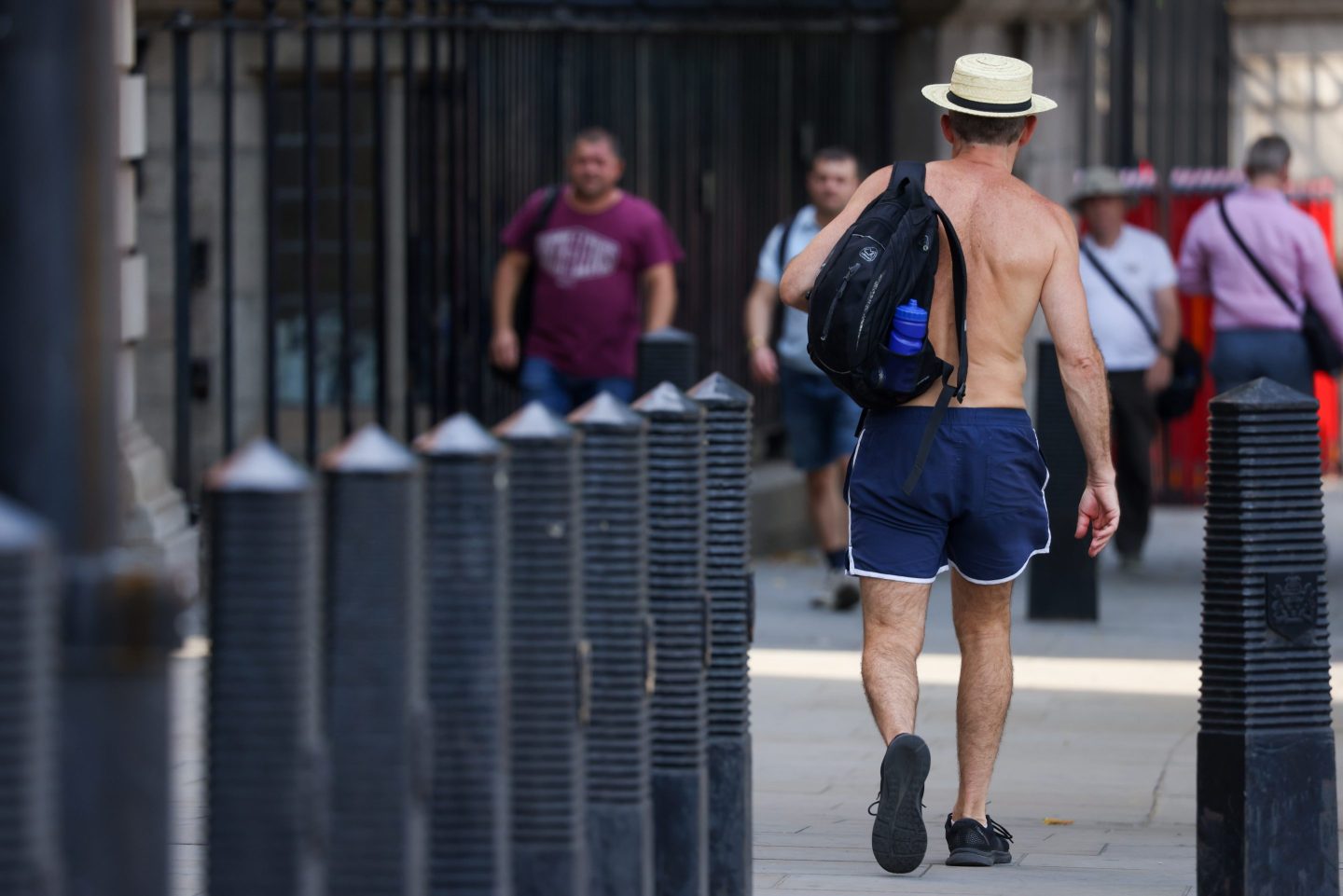
The U.K. declared a national emergency over a heat wave that could cause death, blackouts, and flight cancellations. But many people want to enjoy the sun.Hollie Adams—Bloomberg/Getty Images

The U.K. is enduring a blistering heat wave that provisionally delivered the country’s hottest day on record, as temperatures boiled to 104.4°F. The British government has declared the severe weather a national emergency, and the U.K. meteorological office issued its first ever “red extreme heat warning,” cautioning that the high temperatures could lead to death.

The U.K. is just the latest country enveloped by a sweltering heat wave that has swept over Europe, sparking wildfires in Spain, prolonging drought in Portugal, and warping runways in England, causing further flight delays at London’s Luton Airport.

Despite the dangerously high temperatures, public health officials find that their warnings about heat don’t resonate with the public the way alarms about other natural disasters do.

“With heat waves, the problem is that not everyone thinks of hot weather as bad,” says Wändi Bruine de Bruin, a professor of public policy and behavioral science at the University of Southern California.

Your perception of extreme heat risk depends on where you live

Bruine de Bruin says people who live in countries that are normally wet and cool, like the U.K., are likely to view excessively inclement weather—heavy rain, snow, and floods—as “bad” weather, but more likely to welcome hot weather as a respite from the common dreariness.

Conversely, people who live in persistently hot areas are more likely to recognize the potential risks of higher temperatures. Bruine de Bruin says, “If you have past experience with heatstroke or other unpleasant consequences of heat waves, you are probably more likely to protect yourself.”

Extreme heat is bad, both for public health and the economy. According to the U.S. Centers for Disease Control and Prevention (CDC), more people die each year owing to heat than any other extreme weather event in the U.S., including hurricanes and floods. 

Meanwhile, researchers at think tank the Atlantic Council estimate that heat waves stripped $100 billion off the U.S. economy in 2021, as scorching temperatures caused power outages and work stoppages—more than the $65 billion in economic loss caused by hurricanes the same year.

But the sluggish slowdown associated with intense heat doesn’t typically provide the same drama as 100 mph winds that rip roofs off houses and tear down power lines, which can make it difficult for people with little experience with intense heat to visualize it as a threat.

In 2015, researchers at Yale found that people living in the southern states of the U.S. were likely to rank heat as a greater personal risk than their compatriots in temperate northern states. But the research also showed that, even within hot states, the perception of heat risk could vary county to county, based on the demographics of those living there.

Marginalized groups are more likely to consider heat a health risk

Richer, white Americans were less likely than poorer people and people of color to see heat as a health risk, the researchers found. That disparity is because heat in the U.S. disproportionately harms poorer and non-white neighborhoods, where the public has less access to shade, AC, and other cooling measures.

Disadvantaged populations are also more likely to work jobs that place them at risk of heat exposure, which means they also disproportionately suffer the economic fallout of heat disruption. According to the Atlantic Council, Black and Hispanic residents in the U.S. lose “18% more in productivity than their White counterparts…because they live in higher percentages in heat-stressed locations.”

Public health experts should change their extreme heat messaging

The fact that people who are least accustomed to dealing with extreme heat are the least likely to recognize heat waves as a threat poses a conundrum for public health officials, tasked with persuading the public to protect themselves against heatstroke.

“Those who like the idea of warmer weather tend to be less likely to take recommended precautions when it gets hot, such as staying out of the sun during the hottest time of the day, avoiding exercise in the sun, or drinking lots of water,” Bruine de Bruin says.

“It might be better for messages to focus on how people can enjoy the sun, without putting themselves at risk for heatstroke or other unpleasant experiences,” Bruine de Bruin suggests. Warnings about how heat is dangerous “may not ring true” to people who have never suffered from it, she says.

It’s also true that the meaning of “heat wave” changes by location. Because heat waves are defined regionally, recorded as prolonged periods of temperature above the norm for a particular location at a particular time of year, a heat wave in the U.K. is usually not going to be as hot as a heat wave in Texas.

However, because climate change is increasing average temperatures in the U.K., the meteorological office raised its thresholds for declaring a heat wave in January this year. In London, the “heat wave” threshold is set at 82°F, yet temperatures in the city are expected to hit 104°F this week.


Sign up for the Fortune Features email list so you don’t miss our biggest features, exclusive interviews, and investigations.

About the Author
By Eamon Barrett
LinkedIn iconTwitter icon
See full bioRight Arrow Button Icon

Latest in Environment

Finance
Lorem ipsum dolor sit amet, consectetur adipiscing elit, sed do eiusmod tempor incididunt ut labore et dolore magna aliqua. Ut enim ad minim veniam
By Fortune Editors
October 20, 2025
Finance
Lorem ipsum dolor sit amet, consectetur adipiscing elit, sed do eiusmod tempor incididunt ut labore et dolore magna aliqua. Ut enim ad minim veniam
By Fortune Editors
October 20, 2025
Finance
Lorem ipsum dolor sit amet, consectetur adipiscing elit, sed do eiusmod tempor incididunt ut labore et dolore magna aliqua. Ut enim ad minim veniam
By Fortune Editors
October 20, 2025
Finance
Lorem ipsum dolor sit amet, consectetur adipiscing elit, sed do eiusmod tempor incididunt ut labore et dolore magna aliqua. Ut enim ad minim veniam
By Fortune Editors
October 20, 2025
Finance
Lorem ipsum dolor sit amet, consectetur adipiscing elit, sed do eiusmod tempor incididunt ut labore et dolore magna aliqua. Ut enim ad minim veniam
By Fortune Editors
October 20, 2025
Finance
Lorem ipsum dolor sit amet, consectetur adipiscing elit, sed do eiusmod tempor incididunt ut labore et dolore magna aliqua. Ut enim ad minim veniam
By Fortune Editors
October 20, 2025

Most Popular

Finance
Lorem ipsum dolor sit amet, consectetur adipiscing elit, sed do eiusmod tempor incididunt ut labore et dolore magna aliqua. Ut enim ad minim veniam
By Fortune Editors
October 20, 2025
Finance
Lorem ipsum dolor sit amet, consectetur adipiscing elit, sed do eiusmod tempor incididunt ut labore et dolore magna aliqua. Ut enim ad minim veniam
By Fortune Editors
October 20, 2025
Finance
Lorem ipsum dolor sit amet, consectetur adipiscing elit, sed do eiusmod tempor incididunt ut labore et dolore magna aliqua. Ut enim ad minim veniam
By Fortune Editors
October 20, 2025
Finance
Lorem ipsum dolor sit amet, consectetur adipiscing elit, sed do eiusmod tempor incididunt ut labore et dolore magna aliqua. Ut enim ad minim veniam
By Fortune Editors
October 20, 2025
Finance
Lorem ipsum dolor sit amet, consectetur adipiscing elit, sed do eiusmod tempor incididunt ut labore et dolore magna aliqua. Ut enim ad minim veniam
By Fortune Editors
October 20, 2025
Finance
Lorem ipsum dolor sit amet, consectetur adipiscing elit, sed do eiusmod tempor incididunt ut labore et dolore magna aliqua. Ut enim ad minim veniam
By Fortune Editors
October 20, 2025
Rankings
  • 100 Best Companies
  • Fortune 500
  • Global 500
  • Fortune 500 Europe
  • Most Powerful Women
  • Future 50
  • World’s Most Admired Companies
  • See All Rankings
Sections
  • Finance
  • Leadership
  • Success
  • Tech
  • Asia
  • Europe
  • Environment
  • Fortune Crypto
  • Health
  • Retail
  • Lifestyle
  • Politics
  • Newsletters
  • Magazine
  • Features
  • Commentary
  • Mpw
  • CEO Initiative
  • Conferences
  • Personal Finance
  • Education
Customer Support
  • Frequently Asked Questions
  • Customer Service Portal
  • Privacy Policy
  • Terms Of Use
  • Single Issues For Purchase
  • International Print
Commercial Services
  • Advertising
  • Fortune Brand Studio
  • Fortune Analytics
  • Fortune Conferences
  • Business Development
About Us
  • About Us
  • Editorial Calendar
  • Press Center
  • Work At Fortune
  • Diversity And Inclusion
  • Terms And Conditions
  • Site Map
  • Facebook icon
  • Twitter icon
  • LinkedIn icon
  • Instagram icon
  • Pinterest icon

© 2026 Fortune Media IP Limited. All Rights Reserved. Use of this site constitutes acceptance of our Terms of Use and Privacy Policy | CA Notice at Collection and Privacy Notice | Do Not Sell/Share My Personal Information
FORTUNE is a trademark of Fortune Media IP Limited, registered in the U.S. and other countries. FORTUNE may receive compensation for some links to products and services on this website. Offers may be subject to change without notice.


Most Popular

placeholder alt text
Success
In 2026, many employers are ditching merit-based pay bumps in favor of ‘peanut butter raises’
By Emma BurleighFebruary 2, 2026
2 days ago
placeholder alt text
Cybersecurity
Top AI leaders are begging people not to use Moltbook, a social media platform for AI agents: It’s a ‘disaster waiting to happen’
By Eva RoytburgFebruary 2, 2026
2 days ago
placeholder alt text
Politics
Meet the Palm Beach billionaire who paid $2 million for a private White House visit with Trump
By Tristan BoveFebruary 3, 2026
24 hours ago
placeholder alt text
Economy
President Trump just missed a key legal deadline for his spending plans—stoking economists’ fears over the $38.5 trillion national debt
By Eleanor PringleFebruary 3, 2026
1 day ago
placeholder alt text
Future of Work
‘You’re not a hero, you’re a liability’: Shark Tank’s Kevin O’Leary warns Gen Z founders to stop glorifying hustle culture
By Jacqueline MunisFebruary 2, 2026
2 days ago
placeholder alt text
Personal Finance
Current price of silver as of Monday, February 2, 2026
By Joseph HostetlerFebruary 2, 2026
2 days ago

Latest in Environment

rubio
EconomyTariffs and trade
JD Vance appeals to allies for new ‘trading bloc’ that keeps Trump’s tariffs in place, secures access to rare earths
By Didi Tang, Josh Funk, Matthew Lee and The Associated PressFebruary 4, 2026
1 hour ago
Aerial image of the first offshore wind farm in the U.S., off the coast of Rhode Island.
EnergyRenewables
Trump hates the way wind farms look. Too bad, America’s court system says
By Tristan BoveFebruary 3, 2026
21 hours ago
iguana
PoliticsWeather and forecasting
It’s so cold in Florida that iguanas are falling out of trees
By David Fischer and The Associated PressFebruary 2, 2026
2 days ago
Donald Trump with a frown.
Politicsmining
3 big hurdles undermine Trump’s plan to extract Greenland’s mineral wealth—and America’s fraying relationship with Europe is one of them
By Tristan BoveJanuary 30, 2026
5 days ago
EnvironmentInsurance
Asia is one of the world’s least insured places, even as it’s battered by climate change and natural disasters
By Angelica AngJanuary 29, 2026
6 days ago
africa
Environmentclimate change
Climate change mans Southern Africa got a year’s worth of rain in just 10 days, killing over 100 people
By Nick Lichtenberg, Mogomotsi Magome and The Associated PressJanuary 29, 2026
6 days ago