• Home
  • Latest
  • Fortune 500
  • Finance
  • Tech
  • Leadership
  • Lifestyle
  • Rankings
  • Multimedia
Commentary

Chipmaking CEOs say they need long-delayed CHIPS Act funding to save U.S. chip manufacturing. But it won’t work

By
Rakesh Kumar
Rakesh Kumar
Down Arrow Button Icon
By
Rakesh Kumar
Rakesh Kumar
Down Arrow Button Icon
July 13, 2022, 8:30 PM ET
Senator Maria Cantwell holds a model of a computer chip
Rakesh Kumar writes that the U.S. Chips Act is not going to be enough to bring chip manufacturing back to the U.S. Tom Williams—CQ-Roll Call, Inc via Getty Images

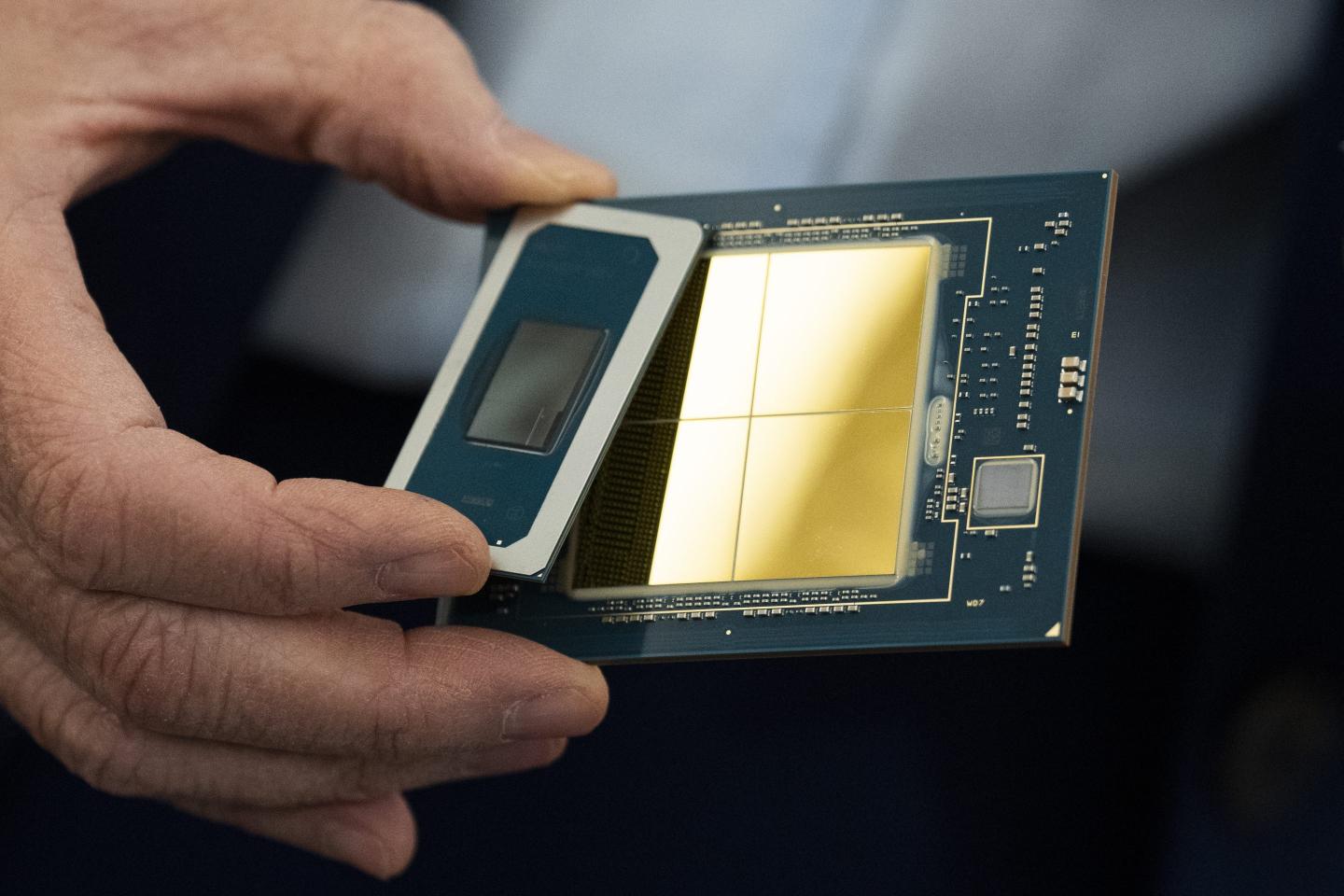
The CHIPS Act is the center of Washington’s attention. Chipmakers, from Intel Corporation to Taiwan Semiconductor Manufacturing Corporation, are not-so-subtly implying that their multi-billion-dollar projects are at risk if Congress doesn’t approve the $52 billion in subsidies they promised last year.

But the CHIPS Act, which intends to use the money to encourage the onshoring of semiconductor manufacturing, is focusing on the wrong problem.

It’s true that leading-edge manufacturing is done exclusively outside the U.S.—much of it in Taiwan—and that poses serious geopolitical risks. But onshoring can’t be a long-term goal for the U.S., given its high manufacturing costs. A one-time $50 billion economic incentive, divvied up into grants no bigger than $3 billion at a time, is not significant enough to motivate onshoring even in the short term, despite what CEOs claim.

There are several reasons why chipmakers moved leading-edge semiconductor manufacturing moved out of the U.S.

First, it’s now up to 50% cheaper and 25% faster to build a semiconductor fab in Asia. A one-time investment that’s only a small fraction of the tens of billions of dollars needed to build a leading-edge facility is not going to change that. The fundamental reasons for costly and slow manufacturing in the U.S.—regulations, labor costs, and so on—will continue to make American manufacturing untenable.

Second, there is little incentive for a semiconductor company to invest in leading-edge manufacturing, as capital requirements are high and profits are low. Instead, U.S. companies today focus on chip design, which is much less capital intensive and much more profitable compared to manufacturing. Again, a relatively small subsidy is not going to alter that, even in the medium term.

Third, the talent base needed to support leading-edge manufacturing just isn’t in the U.S. anymore, after many years of offshoring. Thus, even if economic incentives for onshoring existed, the U.S. can’t quickly create the manpower needed to run the chip factories.

CHIPS Act funding by itself doesn’t create any significant motivation for companies to realign their existing leading-edge supply chains, refined over the decades in pursuit of clear and significant economic gains.

One could argue that U.S. semiconductor companies have some non-economic incentives to consider onshoring—several companies have announced plans for domestic semiconductor manufacturing—and that the CHIPS Act could help tip their decisions. That’s certainly what chip CEOs are saying.

Yet this argument only works for manufacturing at the trailing edge, since it is cheaper. The level of sustained capital investment needed for leading-edge manufacturing simply cannot be supported by any government if the economic incentives don’t align.

But funding for even trailing-edge manufacturing doesn’t make sense, as it’s largely controlled by the U.S. and its allies already. It doesn’t help improve the U.S. economy or its national security. It doesn’t help with job creation, as semiconductor manufacturing is highly automated. It doesn’t help with solving today’s chip crisis, as it would take years for any funded fab to function at scale, let alone be profitable.

There is one argument that makes some sense—that developing and retaining some semiconductor manufacturing, however uncompetitive, in the U.S. could help with future innovations, including in stages of the value chain that the U.S. could later dominate.

But even this manufacturing-on-retainer strategy would require the state to make frequent investments at a level that may not be possible to sustain. It’s been a year-and-a-half since the programs of the CHIPS Act were passed on a bipartisan basis, yet funding still hasn’t made it through Congress, showing how little appetite the country has for such sustained investments. Industry may also balk at creating and supporting a white elephant without any assurances of sustained funding from the government.

Instead of chasing the mirage of U.S.-based leading-edge chip manufacturing, Washington should instead strengthen existing manufacturing by U.S. allies. For example, concerted government support through preferential policies and direct investment could help South Korea manufacture a greater share of leading-edge chips, reducing dependence on Taiwan. The U.S. could also piggyback off of Japan’s serious efforts to revitalize their chipmaking sector, fostering another alternative to Taiwan.

In exchange for cost-sharing and investments, the U.S. could ask for supply, quality, and security guarantees. This friend-shoring approach is a more cost-effective way to mitigate risk than on-shoring.

At home, the U.S. should focus on technological breakthroughs that might level the playing field with current leading-edge manufacturers. Today, no country has a meaningful advantage when it comes to alternatives to CMOS, the semiconductor technology used in today’s transistors. The U.S. should prioritize emerging chip manufacturing markets, such as quantum computing.

The CHIPS Act is targeting the wrong problem. It will create albatrosses that will require frequent bailouts just to survive. It’s focused on the near term and technologies that are already a lost cause.

Instead, Washington should focus on winning the future, investing in its manufacturing allies, and leveraging America’s formidable strengths in innovation.

Rakesh Kumar is a Professor in the Electrical and Computer Engineering department at the University of Illinois and author of Reluctant Technophiles: India’s Complicated Relationship with Technology.

The opinions expressed in Fortune.com Commentary pieces are solely the views of their authors, and do not reflect the opinions and beliefs of Fortune.

Sign up for the Fortune Features email list so you don’t miss our biggest features, exclusive interviews, and investigations.
About the Author
By Rakesh Kumar
See full bioRight Arrow Button Icon

Latest in Commentary

Finance
Lorem ipsum dolor sit amet, consectetur adipiscing elit, sed do eiusmod tempor incididunt ut labore et dolore magna aliqua. Ut enim ad minim veniam
By Fortune Editors
October 20, 2025
Finance
Lorem ipsum dolor sit amet, consectetur adipiscing elit, sed do eiusmod tempor incididunt ut labore et dolore magna aliqua. Ut enim ad minim veniam
By Fortune Editors
October 20, 2025
Finance
Lorem ipsum dolor sit amet, consectetur adipiscing elit, sed do eiusmod tempor incididunt ut labore et dolore magna aliqua. Ut enim ad minim veniam
By Fortune Editors
October 20, 2025
Finance
Lorem ipsum dolor sit amet, consectetur adipiscing elit, sed do eiusmod tempor incididunt ut labore et dolore magna aliqua. Ut enim ad minim veniam
By Fortune Editors
October 20, 2025
Finance
Lorem ipsum dolor sit amet, consectetur adipiscing elit, sed do eiusmod tempor incididunt ut labore et dolore magna aliqua. Ut enim ad minim veniam
By Fortune Editors
October 20, 2025
Finance
Lorem ipsum dolor sit amet, consectetur adipiscing elit, sed do eiusmod tempor incididunt ut labore et dolore magna aliqua. Ut enim ad minim veniam
By Fortune Editors
October 20, 2025

Most Popular

Finance
Lorem ipsum dolor sit amet, consectetur adipiscing elit, sed do eiusmod tempor incididunt ut labore et dolore magna aliqua. Ut enim ad minim veniam
By Fortune Editors
October 20, 2025
Finance
Lorem ipsum dolor sit amet, consectetur adipiscing elit, sed do eiusmod tempor incididunt ut labore et dolore magna aliqua. Ut enim ad minim veniam
By Fortune Editors
October 20, 2025
Finance
Lorem ipsum dolor sit amet, consectetur adipiscing elit, sed do eiusmod tempor incididunt ut labore et dolore magna aliqua. Ut enim ad minim veniam
By Fortune Editors
October 20, 2025
Finance
Lorem ipsum dolor sit amet, consectetur adipiscing elit, sed do eiusmod tempor incididunt ut labore et dolore magna aliqua. Ut enim ad minim veniam
By Fortune Editors
October 20, 2025
Finance
Lorem ipsum dolor sit amet, consectetur adipiscing elit, sed do eiusmod tempor incididunt ut labore et dolore magna aliqua. Ut enim ad minim veniam
By Fortune Editors
October 20, 2025
Finance
Lorem ipsum dolor sit amet, consectetur adipiscing elit, sed do eiusmod tempor incididunt ut labore et dolore magna aliqua. Ut enim ad minim veniam
By Fortune Editors
October 20, 2025
Fortune Secondary Logo
Rankings
  • 100 Best Companies
  • Fortune 500
  • Global 500
  • Fortune 500 Europe
  • Most Powerful Women
  • World's Most Admired Companies
  • See All Rankings
  • Lists Calendar
Sections
  • Finance
  • Fortune Crypto
  • Features
  • Leadership
  • Health
  • Commentary
  • Success
  • Retail
  • Mpw
  • Tech
  • Lifestyle
  • CEO Initiative
  • Asia
  • Politics
  • Conferences
  • Europe
  • Newsletters
  • Personal Finance
  • Environment
  • Magazine
  • Education
Customer Support
  • Frequently Asked Questions
  • Customer Service Portal
  • Privacy Policy
  • Terms Of Use
  • Single Issues For Purchase
  • International Print
Commercial Services
  • Advertising
  • Fortune Brand Studio
  • Fortune Analytics
  • Fortune Conferences
  • Business Development
  • Group Subscriptions
About Us
  • About Us
  • Press Center
  • Work At Fortune
  • Terms And Conditions
  • Site Map
  • About Us
  • Press Center
  • Work At Fortune
  • Terms And Conditions
  • Site Map
  • Facebook icon
  • Twitter icon
  • LinkedIn icon
  • Instagram icon
  • Pinterest icon

Latest in Commentary

valerie
CommentaryLayoffs
Tesla’s former HR chief: the AI layoff panic Is built on a false premise—here’s what most workers need to know
By Valerie Capers WorkmanMay 1, 2026
1 hour ago
tamas
CommentaryPolymarket
SEON CEO: Prediction markets can forecast the future. Can they survive their own manipulation problem?
By Tamas KadarMay 1, 2026
4 hours ago
sundar
Commentary250 Years of Innovation
America at 250: immigration and the making of an innovative nation
By Nasser KazeminyMay 1, 2026
6 hours ago
Derek Kilmer
CommentaryEconomics
The U.S. economy is booming — just not where 50 million Americans live
By Derek KilmerMay 1, 2026
6 hours ago
hegseth
CommentaryMilitary
America shot its arsenal empty in 2 wars. Now it needs Beijing’s permission to reload
By Steve H. Hanke and Jeffrey WengApril 30, 2026
21 hours ago
Duncan Tait, CEO of Inchcape
Europecar manufacturing
“Competition is good for the industry”. Inchcape CEO’s case for optimism in automotive’s next chapter
By Duncan TaitApril 30, 2026
1 day ago

Most Popular

China dominates the world's lithium supply. The U.S. just found 328 years' worth in its own backyard
North America
China dominates the world's lithium supply. The U.S. just found 328 years' worth in its own backyard
By Jake AngeloApril 30, 2026
21 hours ago
Apple cofounder Ronald Wayne—whose stake would be worth up to $400 billion had he not sold it in 1976—says that at 91, he has no regrets
Success
Apple cofounder Ronald Wayne—whose stake would be worth up to $400 billion had he not sold it in 1976—says that at 91, he has no regrets
By Preston ForeApril 27, 2026
4 days ago
Accenture's Julie Sweet blew up 50 years of company history. She says the hardest part is still ahead
Conferences
Accenture's Julie Sweet blew up 50 years of company history. She says the hardest part is still ahead
By Nick LichtenbergApril 29, 2026
2 days ago
America shot its arsenal empty in 2 wars. Now it needs Beijing's permission to reload
Commentary
America shot its arsenal empty in 2 wars. Now it needs Beijing's permission to reload
By Steve H. Hanke and Jeffrey WengApril 30, 2026
21 hours ago
Google Cloud revenue is now 18% of Alphabet's business. Is this the beginning of the end of Google's search identity?
Big Tech
Google Cloud revenue is now 18% of Alphabet's business. Is this the beginning of the end of Google's search identity?
By Alexei OreskovicApril 29, 2026
2 days ago
Exclusive: America's largest Black-owned bank launches podcast with mission to unlock hidden shame holding back generational wealth
Banking
Exclusive: America's largest Black-owned bank launches podcast with mission to unlock hidden shame holding back generational wealth
By Nick LichtenbergApril 29, 2026
2 days ago

© 2026 Fortune Media IP Limited. All Rights Reserved. Use of this site constitutes acceptance of our Terms of Use and Privacy Policy | CA Notice at Collection and Privacy Notice | Do Not Sell/Share My Personal Information
FORTUNE is a trademark of Fortune Media IP Limited, registered in the U.S. and other countries. FORTUNE may receive compensation for some links to products and services on this website. Offers may be subject to change without notice.