
• Home
  • Latest
  • Fortune 500
  • Finance
  • Tech
  • Leadership
  • Lifestyle
  • Rankings
  • Multimedia

Trendingnow

1

Bars, bowling alleys, and movie theaters cost too much to run and visit. Americans have run out of places to hang out and we're paying with our health

2

The labor market could become so backward that the economy will have to shed jobs to keep unemployment steady

3

Sam Altman says a 'cool use case' for ChatGPT is a daily AI podcast about your kids. The replies were brutal

1

Bars, bowling alleys, and movie theaters cost too much to run and visit. Americans have run out of places to hang out and we're paying with our health

2

The labor market could become so backward that the economy will have to shed jobs to keep unemployment steady

3

Sam Altman says a 'cool use case' for ChatGPT is a daily AI podcast about your kids. The replies were brutal
China

China collects so much information on its citizens that a massive data leak was inevitable, experts say, after a hacker stole the personal data of 1 billion people

Grady McGregor
By
Grady McGregor
Grady McGregor
Down Arrow Button Icon
Grady McGregor
By
Grady McGregor
Grady McGregor
Down Arrow Button Icon
July 8, 2022, 5:58 AM ET
Chinese surveillance collects so much information on citizens that the Shanghai data leak was inevitable.
Chinese surveillance collects so much information on citizens that the Shanghai data leak was inevitable. Nicolas Asfouri—AFP/Getty Images
Add Fortune on Google for similar content.

Last week, when it emerged that a hacker calling himself “China Dan” was offering to auction off the personal information of a billion Chinese citizens for the price of a souped-up Tesla, global data experts were quick to fault the carelessness of the Shanghai police department. But the report highlighted a broader weakness: China is acutely vulnerable to theft of confidential data. The problem isn’t just that data managers at a single municipal agency, albeit a large one, dropped their guard; rather, it’s that Chinese government officials at almost every level now collect such granular details about their countrymen on such a vast scale that efforts to protect that all that information simply can’t keep up.

“The authorities have been building massive personal profiles of citizens, using data that is far beyond what any one platform could possibly collect. This centrally held data then becomes an attractive target,” says Charlie Smith, the pseudonymous founder of the website Greatfire.org, which tracks Chinese censorship.

Jyh-An Lee, executive director of the Centre for Legal Innovation and Digital Society at the Chinese University of Hong Kong Faculty of Law, agrees. “The more personal data that you possess and process, the more risks that are involved…I actually thought this would happen sooner or later,” he says.

But Lee says the scale of the leak was shocking, even to him.

Last Thursday, a hacker called ChinaDan posted an advertisement on a hacker forum for a database that claimed to contain 23 terabytes of personal data on 1 billion Chinese citizens. The database contained sensitive personal information including names, addresses, phone numbers, and even birthplaces that experts say could make people vulnerable to phone scams or identity theft.

The hacker released a small portion of the database publicly, and CNN and the Wall Street Journal later verified a few dozen of the 750,000 entries that the hacker included. But the database had reportedly been floating on the dark web for over a year before the hacker put it for sale on the forum.

Tom Kelly, CEO of consumer privacy firm IDX, says the hack appears to have happened owing to the “careless” mistake of one Chinese government employee. “Someone inadvertently left a web portal unprotected, and accessing the database was as simple as scraping log-in information from the portal,” says Kelly. “Hackers are always looking for entry points, and all it takes is one wrong move and they’ll pounce.”

China’s government has barely acknowledged that the hack occurred at all and has censored news and social media posts about the data breach on China’s internet. But Lee says internally the hack may have served as a wake-up call for the government to take data security practices more seriously.

“This might be the first time a large-scale data breach has come from the government sector [in China],” says Lee. “So I don’t think that they were fully aware of this issue…and I think they are learning a lesson from this incident.”

On Thursday, at a cabinet meeting with China’s top government officials, vice premier Li Keqiang said that China’s government needed to better protect its citizens’ data, without referencing the hack.

“[China’s government should] improve security management provisions, raise protection abilities, protect personal information, privacy, and commercial confidentiality in accordance with the law,” Li said, according to a readout of the meeting from China’s state-run news service Xinhua.

But it may be difficult for China’s vast government bureaucracy to implement Li’s orders given competing objectives to surveil and monitor citizens and to collect as much data as possible.

Consultant and author Michael Frick says that the Ministry of Public Security (MPS), China’s national law enforcement agency that oversees the Shanghai police department where the leak originated, is China’s “most secretive and least scrutinized” government agency. The MPS may also be China’s most “data hungry” department, he says.

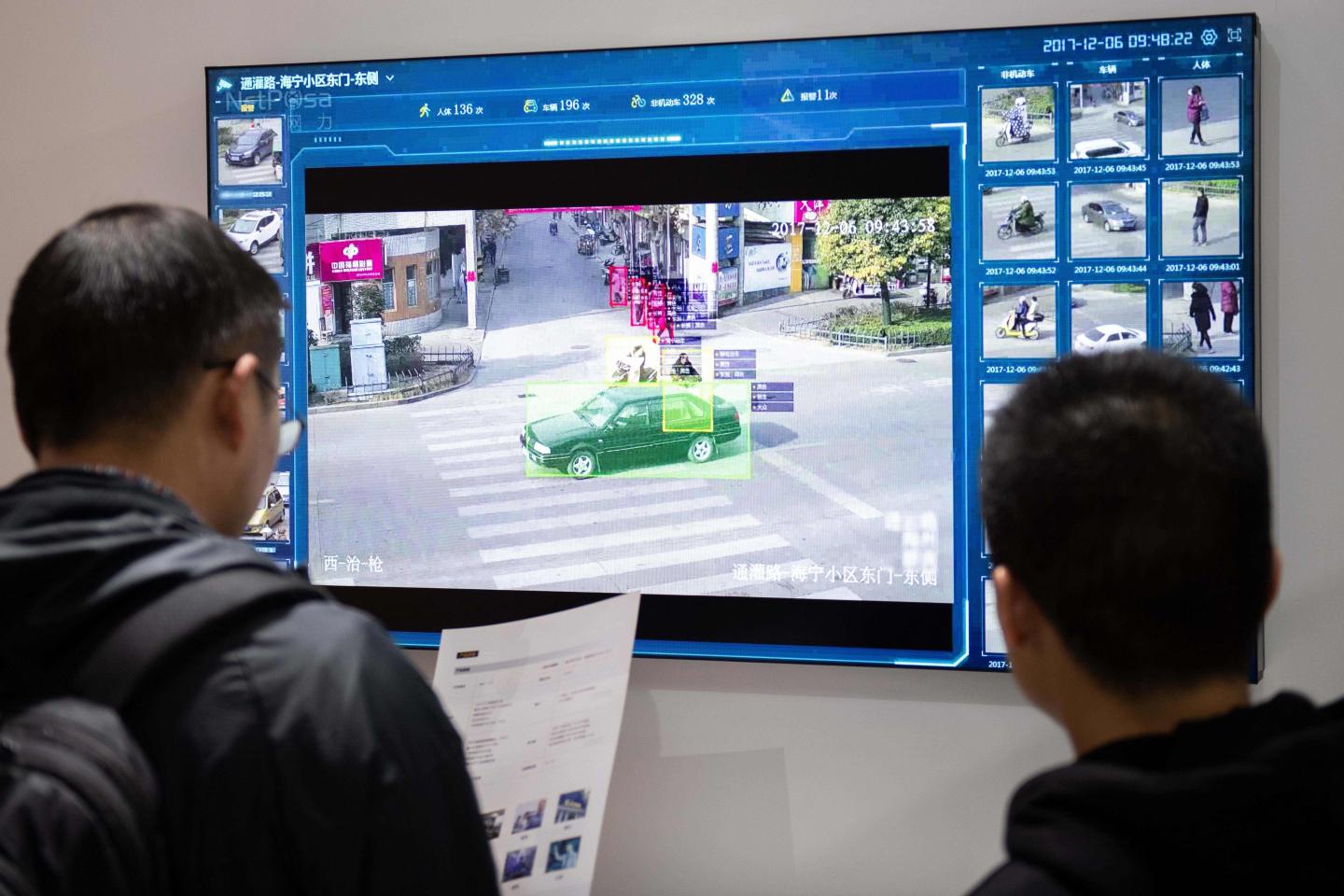
The MPS runs a nationwide surveillance network that includes facial recognition cameras that can track the identity of citizens as they walk down a street and collates numerous other digital and biological data points, via phone scanners and fingerprint databases, to build individual profiles of Chinese citizens.

The leak also puts the MPS in an awkward position because China’s government tasks the ministry with enforcing some cybersecurity laws, says Camille Boullenois, senior research analyst at Rhodium Group.

“The MPS is one of the agencies responsible for regulating cybersecurity in China, but it’s also the agency from which the leak occurred,” she says. “It will be a very good test case for how willing Beijing is to hold government agencies accountable for the protection of citizens’ data.”

China’s government has experience, at least, holding to account private sector companies, which operate under strict data security rules, adds Smith.

“China realized early on how private internet companies were using personal data, and they put in place measures that protect users. In many ways, laws in China are far more advanced than laws in the West when it comes to this issue,” Smith says.

On Nov. 1, 2021, China passed the country’s most sweeping data protection measures yet, implementing the Personal Information Protection Law to ensure a new level of consumer data privacy rights to China’s 1.4 billion citizens.

“Only the private sector is subject to that kind of personal data protection, but I think that concept is now changing…from this data breach incident,” says Lee.

Sign up for the Fortune Features email list so you don’t miss our biggest features, exclusive interviews, and investigations.

About the Author
Grady McGregor
By Grady McGregor
LinkedIn iconTwitter icon
See full bioRight Arrow Button Icon
Add Fortune on Google for similar content.

Latest in

Finance
Lorem ipsum dolor sit amet, consectetur adipiscing elit, sed do eiusmod tempor incididunt ut labore et dolore magna aliqua. Ut enim ad minim veniam
By Fortune Editors
October 20, 2025
Finance
Lorem ipsum dolor sit amet, consectetur adipiscing elit, sed do eiusmod tempor incididunt ut labore et dolore magna aliqua. Ut enim ad minim veniam
By Fortune Editors
October 20, 2025
Finance
Lorem ipsum dolor sit amet, consectetur adipiscing elit, sed do eiusmod tempor incididunt ut labore et dolore magna aliqua. Ut enim ad minim veniam
By Fortune Editors
October 20, 2025
Finance
Lorem ipsum dolor sit amet, consectetur adipiscing elit, sed do eiusmod tempor incididunt ut labore et dolore magna aliqua. Ut enim ad minim veniam
By Fortune Editors
October 20, 2025
Finance
Lorem ipsum dolor sit amet, consectetur adipiscing elit, sed do eiusmod tempor incididunt ut labore et dolore magna aliqua. Ut enim ad minim veniam
By Fortune Editors
October 20, 2025
Finance
Lorem ipsum dolor sit amet, consectetur adipiscing elit, sed do eiusmod tempor incididunt ut labore et dolore magna aliqua. Ut enim ad minim veniam
By Fortune Editors
October 20, 2025

Most Popular

Finance
Lorem ipsum dolor sit amet, consectetur adipiscing elit, sed do eiusmod tempor incididunt ut labore et dolore magna aliqua. Ut enim ad minim veniam
By Fortune Editors
October 20, 2025
Finance
Lorem ipsum dolor sit amet, consectetur adipiscing elit, sed do eiusmod tempor incididunt ut labore et dolore magna aliqua. Ut enim ad minim veniam
By Fortune Editors
October 20, 2025
Finance
Lorem ipsum dolor sit amet, consectetur adipiscing elit, sed do eiusmod tempor incididunt ut labore et dolore magna aliqua. Ut enim ad minim veniam
By Fortune Editors
October 20, 2025
Finance
Lorem ipsum dolor sit amet, consectetur adipiscing elit, sed do eiusmod tempor incididunt ut labore et dolore magna aliqua. Ut enim ad minim veniam
By Fortune Editors
October 20, 2025
Finance
Lorem ipsum dolor sit amet, consectetur adipiscing elit, sed do eiusmod tempor incididunt ut labore et dolore magna aliqua. Ut enim ad minim veniam
By Fortune Editors
October 20, 2025
Finance
Lorem ipsum dolor sit amet, consectetur adipiscing elit, sed do eiusmod tempor incididunt ut labore et dolore magna aliqua. Ut enim ad minim veniam
By Fortune Editors
October 20, 2025
Fortune Secondary Logo
Rankings
  • 100 Best Companies
  • Fortune 500
  • Global 500
  • Fortune 500 Europe
  • Most Powerful Women
  • World's Most Admired Companies
  • See All Rankings
  • Lists Calendar
Sections
  • Finance
  • Fortune Crypto
  • Features
  • Leadership
  • Health
  • Commentary
  • Success
  • Retail
  • Mpw
  • Tech
  • Lifestyle
  • CEO Initiative
  • Asia
  • Politics
  • Conferences
  • Europe
  • Newsletters
  • Personal Finance
  • Environment
  • Magazine
  • Education
Customer Support
  • Frequently Asked Questions
  • Customer Service Portal
  • Privacy Policy
  • Terms Of Use
  • Single Issues For Purchase
  • International Print
Commercial Services
  • Advertising
  • Fortune Brand Studio
  • Fortune Analytics
  • Fortune Conferences
  • Business Development
  • Group Subscriptions
About Us
  • About Us
  • Press Center
  • Work At Fortune
  • Terms And Conditions
  • Site Map
  • About Us
  • Press Center
  • Work At Fortune
  • Terms And Conditions
  • Site Map
  • Facebook icon
  • Twitter icon
  • LinkedIn icon
  • Instagram icon
  • TikTok icon
  • YouTube icon

Latest in

Alex Karp, wearing a hat, gives a peace sign
AIpalantir
Palantir CEO Alex Karp celebrates 93% revenue growth as stock soars after blockbuster earnings: ‘For the first time people believe us’
By Preston ForeAugust 3, 2026
3 hours ago
Sea’s MariBank wants to export its Singapore digital banking playbook: First stop, the Philippines
BankingBanks
Sea’s MariBank wants to export its Singapore digital banking playbook: First stop, the Philippines
By Angelica AngAugust 3, 2026
6 hours ago
Palantir CEO Alex Karp
AIpalantir
Palantir shares jump 13% as U.S. AI demand sends revenue soaring past targets
By Preston ForeAugust 3, 2026
7 hours ago
The Danube is running dry, and Europe’s power grid is suffering as a result
EnvironmentEuropean Union
The Danube is running dry, and Europe’s power grid is suffering as a result
By Justin Spike and The Associated PressAugust 3, 2026
7 hours ago
‘There is no Fund’: GOP holdouts back Blanche after DOJ scraps proposed $1.8 billion slush fund
PoliticsAmerican Politics
‘There is no Fund’: GOP holdouts back Blanche after DOJ scraps proposed $1.8 billion slush fund
By Mary Clare Jalonick, Alanna Durkin Richer and The Associated PressAugust 3, 2026
7 hours ago
Conventional vs. FHA home loans: Which is better for you?
Personal Financemortgages
Conventional vs. FHA home loans: Which is better for you?
By Joseph HostetlerAugust 3, 2026
7 hours ago

Most Popular

Bars, bowling alleys, and movie theaters cost too much to run and visit. Americans have run out of places to hang out and we're paying with our health
North America
Bars, bowling alleys, and movie theaters cost too much to run and visit. Americans have run out of places to hang out and we're paying with our health
By Catherina GioinoAugust 2, 2026
2 days ago
The labor market could become so backward that the economy will have to shed jobs to keep unemployment steady
Economy
The labor market could become so backward that the economy will have to shed jobs to keep unemployment steady
By Jason MaAugust 1, 2026
2 days ago
Sam Altman says a 'cool use case' for ChatGPT is a daily AI podcast about your kids. The replies were brutal
AI
Sam Altman says a 'cool use case' for ChatGPT is a daily AI podcast about your kids. The replies were brutal
By Holly Van Leuven and Morning BrewAugust 3, 2026
16 hours ago
Electric air taxis are finally ready for takeoff
Magazine
Electric air taxis are finally ready for takeoff
By Alexei OreskovicAugust 3, 2026
20 hours ago
Current price of oil as of August 3, 2026
Personal Finance
Current price of oil as of August 3, 2026
By Joseph HostetlerAugust 3, 2026
17 hours ago
As Trump balks again at escalating war, Iran smells ‘blood in the water’ and looks to exploit its newfound strategic advantage, experts say
Middle East
As Trump balks again at escalating war, Iran smells ‘blood in the water’ and looks to exploit its newfound strategic advantage, experts say
By Jason MaAugust 2, 2026
1 day ago

© 2026 Fortune Media IP Limited. All Rights Reserved. Use of this site constitutes acceptance of our Terms of Use and Privacy Policy | CA Notice at Collection and Privacy Notice | Do Not Sell/Share My Personal Information
FORTUNE is a trademark of Fortune Media IP Limited, registered in the U.S. and other countries. FORTUNE may receive compensation for some links to products and services on this website. Offers may be subject to change without notice.