• Home
  • Latest
  • Fortune 500
  • Finance
  • Tech
  • Leadership
  • Lifestyle
  • Rankings
  • Multimedia
FinanceHousing

A closer look at the 40 housing markets at risk of a 15% to 20% home price decline

By
Lance Lambert
Lance Lambert
Former Real Estate Editor
Down Arrow Button Icon
By
Lance Lambert
Lance Lambert
Former Real Estate Editor
Down Arrow Button Icon
June 30, 2022, 6:38 PM ET

Back in 2007, economist Edward Leamer published the now infamous research paper “Housing Is the Business Cycle.” It calculated that in the post–World War II era, eight recessions (out of 10) came after the U.S. housing market had entered into a “substantial” slowdown. Since then, we’ve had two more recessions: the Great Recession—which was set off by the bursting aughts housing bubble—and the COVID-19 recession, which did not come after a housing slowdown. So by the latest count, a housing slowdown has preceded nine out of the past 12 recessions.

That explains why so many economists are concerned: The U.S. housing market—a leading indicator of the broader U.S. economy—is slowing. Slowing fast. Spiked mortgage rates, which have climbed from 3.1% to 5.7% over the past six months, have pushed the U.S. housing market into what Moody’s Analytics chief economist Mark Zandi calls a “housing correction.” In Zandi’s eyes, this “housing correction” is very different from a full-blown housing bust. Instead of crashing, Zandi says, we’ve entered into a period where home sales will fall significantly and housing inventory will rise significantly. Nationally, he projects that this “housing correction” will see year-over-year home price growth decelerate to 0% by this time next year.

But that’s Zandi’s national outlook. The Federal Reserve’s inflation fighting plan, he says, has pushed some markets into the early innings of a price decline.

Every quarter, Moody’s Analytics assesses whether local fundamentals, including local income levels, can support local home prices. At the latest reading, Moody’s Analytics finds 183 of the nation’s 413 largest regional housing markets are “overvalued” by more than 25%. In some of those overvalued markets, Zandi says, buyers and sellers can expect to watch home prices fall by 5% to 10% amid this housing correction.

Those 5% to 10% home price declines could quickly worsen if cooling in rate-sensitive sectors, like real estate, ultimately pushes the U.S. economy into recession. If a recession hits, Zandi tells Fortune he expects national home prices to decline by around 5%. However, in America’s most overvalued housing markets, Zandi predicts a 15% to 20% home price decline.

Earlier this month, Fortune published a list of the 40 regional housing markets most likely to see a 15% to 20% home price decline amid a recession. At the top of the list, Zandi says, are Boise; Colorado Springs; Las Vegas; Coeur d’Alene, Idaho; Tampa; Atlanta; Fort Collins, Colo.; Sherman, Texas; Jacksonville; and Idaho Falls, Idaho.

This week, we’re diving deeper into the data. Fortune reached out to Moody’s Analytics to see if the financial intelligence company would provide us with historical data for the 40 markets they deem as being at risk of a 15% to 20% home price decline.

The finding? Among these 40 overvalued housing markets most at risk of a significant decline, 33 are overvalued by a higher degree now than in 2006. Among those 40 regional housing markets, the average was overvalued by 45% as of the first quarter of 2022. Among those same markets, the average was overvalued by 19% in the first quarter of 2006.

Let’s be clear: Just because a market like Boise is overvalued by 72% doesn’t mean home prices there will fall by 72%. It’s historically normal for a growth market to see home prices, statistically speaking, trading higher than local incomes would normally support. However, once a market gets too overvalued, a price correction often becomes warranted. That’s where Zandi says things now stand in those 40 significantly overvalued housing markets.

The vast majority of these at-risk markets are concentrated in fast-growing areas of the Mountain West and Sunbelt that benefited the most from the pandemic’s work-from-home boom. Renters in high-cost cities like Seattle and Boston simply couldn’t pass up the affordability of markets like Austin and Tampa. The ensuing pandemic housing boom saw markets like Austin and Tampa become overvalued by 61% and 45%, respectively.

In places like Austin, which was overvalued by just 7% in the first quarter of 2006, this feels very new. In other places, it looks eerily similar to 2006. Look no farther than Las Vegas and Phoenix, which Moody’s Analytics rates as being overvalued by 53% and 54% in the first quarter of 2006. Now, Phoenix and Las Vegas are overvalued by 51% and 54%. That’s not something that real estate professionals in those cities—two of the hardest-hit in the 2008 housing bust—want to hear.

While the pandemic housing boom has taken some regional housing markets to historically unaffordable levels, we shouldn’t anticipate a 2008-style crash. That bust was underpinned by a credit boom of subprime mortgages. As the market and economy slowed, those bad mortgages began to go belly-up. Ultimately, it set off a foreclosure crisis that lingered well past 2010.

This time around, Zandi says we don’t need to worry about bad loans. The Dodd–Frank Wall Street Reform and Consumer Protection Act passed in 2010 outlawed those shady mortgages. The pandemic housing boom, in his mind, wasn’t a credit-fueled boom. Instead, it was a mismatch between elevated demand (i.e., an influx of WFH, investor, and millennial buyers) and low inventory levels. When inventory levels in 2021 sank to a 40-year low, Zandi says homebuyers had little choice but to bid up prices.

Already, we’re starting to see many of these significantly overvalued housing markets slow. That ongoing slowdown is particularly swift in Western markets like Boise, Denver, and Phoenix.

“Many markets in the West are landlocked for one reason or another, whether the ocean, mountains, national parks, or growth boundaries. As a result, building is more limited in these markets compared to parts of the country with less regulation and more developable land. The strong demand over the past two years drove up home prices across the country, and it appears the West hit the pricing ceiling quicker than other markets, given the particular supply constraints,” Ali Wolf, chief economist at Zonda, tells Fortune.

While Wolf doesn’t think this is 2008 all over again, she says we can’t ignore that the market has shifted.

“I don’t think the market will face a Great Financial Crisis–like bust, given the different dynamics today around mortgage lending standards and strong builder balance sheets,” Wolf says. “We can’t ignore, however, that the market is already correcting. Higher home prices and higher mortgage rates rose to the point that demand seized up in many parts of the country. Home prices are already adjusting down, and we could see that continue until consumer confidence and affordability resets.”

The housing market is changing fast. To stay updated, follow me on Twitter at @NewsLambert.

Sign up for the Fortune Features email list so you don’t miss our biggest features, exclusive interviews, and investigations.

About the Author
By Lance LambertFormer Real Estate Editor
Twitter icon

Lance Lambert is a former Fortune editor who contributes to the Fortune Analytics newsletter.

See full bioRight Arrow Button Icon

Latest in Finance

Finance
Lorem ipsum dolor sit amet, consectetur adipiscing elit, sed do eiusmod tempor incididunt ut labore et dolore magna aliqua. Ut enim ad minim veniam
By Fortune Editors
October 20, 2025
Finance
Lorem ipsum dolor sit amet, consectetur adipiscing elit, sed do eiusmod tempor incididunt ut labore et dolore magna aliqua. Ut enim ad minim veniam
By Fortune Editors
October 20, 2025
Finance
Lorem ipsum dolor sit amet, consectetur adipiscing elit, sed do eiusmod tempor incididunt ut labore et dolore magna aliqua. Ut enim ad minim veniam
By Fortune Editors
October 20, 2025
Finance
Lorem ipsum dolor sit amet, consectetur adipiscing elit, sed do eiusmod tempor incididunt ut labore et dolore magna aliqua. Ut enim ad minim veniam
By Fortune Editors
October 20, 2025
Finance
Lorem ipsum dolor sit amet, consectetur adipiscing elit, sed do eiusmod tempor incididunt ut labore et dolore magna aliqua. Ut enim ad minim veniam
By Fortune Editors
October 20, 2025
Finance
Lorem ipsum dolor sit amet, consectetur adipiscing elit, sed do eiusmod tempor incididunt ut labore et dolore magna aliqua. Ut enim ad minim veniam
By Fortune Editors
October 20, 2025

Most Popular

Finance
Lorem ipsum dolor sit amet, consectetur adipiscing elit, sed do eiusmod tempor incididunt ut labore et dolore magna aliqua. Ut enim ad minim veniam
By Fortune Editors
October 20, 2025
Finance
Lorem ipsum dolor sit amet, consectetur adipiscing elit, sed do eiusmod tempor incididunt ut labore et dolore magna aliqua. Ut enim ad minim veniam
By Fortune Editors
October 20, 2025
Finance
Lorem ipsum dolor sit amet, consectetur adipiscing elit, sed do eiusmod tempor incididunt ut labore et dolore magna aliqua. Ut enim ad minim veniam
By Fortune Editors
October 20, 2025
Finance
Lorem ipsum dolor sit amet, consectetur adipiscing elit, sed do eiusmod tempor incididunt ut labore et dolore magna aliqua. Ut enim ad minim veniam
By Fortune Editors
October 20, 2025
Finance
Lorem ipsum dolor sit amet, consectetur adipiscing elit, sed do eiusmod tempor incididunt ut labore et dolore magna aliqua. Ut enim ad minim veniam
By Fortune Editors
October 20, 2025
Finance
Lorem ipsum dolor sit amet, consectetur adipiscing elit, sed do eiusmod tempor incididunt ut labore et dolore magna aliqua. Ut enim ad minim veniam
By Fortune Editors
October 20, 2025
Fortune Secondary Logo
Rankings
  • 100 Best Companies
  • Fortune 500
  • Global 500
  • Fortune 500 Europe
  • Most Powerful Women
  • Future 50
  • World’s Most Admired Companies
  • See All Rankings
Sections
  • Finance
  • Fortune Crypto
  • Features
  • Leadership
  • Health
  • Commentary
  • Success
  • Retail
  • Mpw
  • Tech
  • Lifestyle
  • CEO Initiative
  • Asia
  • Politics
  • Conferences
  • Europe
  • Newsletters
  • Personal Finance
  • Environment
  • Magazine
  • Education
Customer Support
  • Frequently Asked Questions
  • Customer Service Portal
  • Privacy Policy
  • Terms Of Use
  • Single Issues For Purchase
  • International Print
Commercial Services
  • Advertising
  • Fortune Brand Studio
  • Fortune Analytics
  • Fortune Conferences
  • Business Development
  • Group Subscriptions
About Us
  • About Us
  • Editorial Calendar
  • Press Center
  • Work At Fortune
  • Diversity And Inclusion
  • Terms And Conditions
  • Site Map
Fortune Secondary Logo
  • About Us
  • Editorial Calendar
  • Press Center
  • Work At Fortune
  • Diversity And Inclusion
  • Terms And Conditions
  • Site Map
  • Facebook icon
  • Twitter icon
  • LinkedIn icon
  • Instagram icon
  • Pinterest icon

Latest in Finance

Middle EastIran
U.S. hits military targets on Iran’s Kharg Island as war escalates
By Skylar Woodhouse, Catherine Lucey and BloombergMarch 13, 2026
8 hours ago
EnergyOil
U.S. officials have discussed trading oil futures, Burgum says
By Jennifer A. Dlouhy, Tyler Kendall and BloombergMarch 13, 2026
9 hours ago
Middle EastIran
All 6 crew members on KC-135 refueling plane that crashed in Iraq are dead, bringing U.S. death toll to at least 13 service members
By Konstantin Toropin, Ben Finley, Kim Tong-Hyung and The Associated PressMarch 13, 2026
10 hours ago
EconomyDebt
U.S. debt is like a Hallmark movie boyfriend who eventually gets dumped for a small town firefighter, budget watchdog warns 
By Jason MaMarch 13, 2026
13 hours ago
andrew yang
AITaxes
Ex-presidential candidate Andrew Yang says it’s time to ‘stop taxing labor’ and make AI foot the bill instead
By Jake AngeloMarch 13, 2026
14 hours ago
A man with a grocery cart peruses a dairy aisle in Costco.
LawTariffs
Americans are demanding refunds from the $180 billion in tariffs they paid for, and they’re suing companies like Costco to make it happen
By Sasha RogelbergMarch 13, 2026
15 hours ago

Most Popular

placeholder alt text
Personal Finance
The national debt isn't $39 trillion. One economist says it's actually $100 trillion
By Nick LichtenbergMarch 13, 2026
1 day ago
placeholder alt text
North America
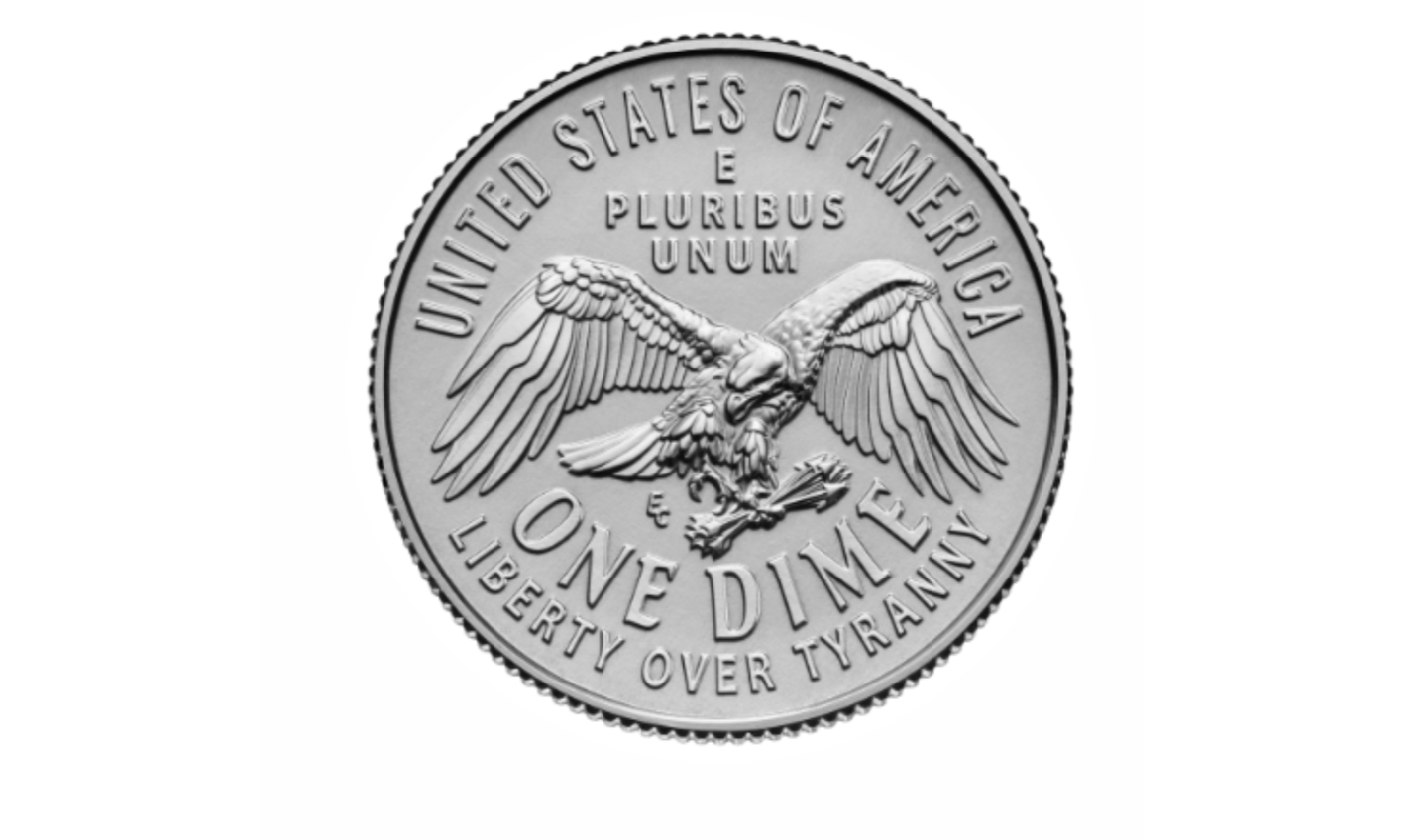
The U.S. Mint dropped the olive branch from the dime. What does that mean for the country?
By Catherina GioinoMarch 12, 2026
1 day ago
placeholder alt text
Success
When Jamie Dimon was fired from Citigroup, his daughters asked: 'Will we be homeless? Can I still go to college? Can I have your phone?'
By Eleanor PringleMarch 13, 2026
23 hours ago
placeholder alt text
Economy
'This cannot be sustainable': The U.S. borrowed $50 billion a week for the past five months, the CBO says
By Eleanor PringleMarch 10, 2026
4 days ago
placeholder alt text
AI
Morgan Stanley warns an AI breakthrough Is coming in 2026 — and most of the world isn't ready
By Nick LichtenbergMarch 13, 2026
1 day ago
placeholder alt text
Economy
Trump's immigration crackdown is backfiring by hurting the U.S.-born workers it was meant to help, data shows
By Sasha RogelbergMarch 10, 2026
4 days ago

© 2026 Fortune Media IP Limited. All Rights Reserved. Use of this site constitutes acceptance of our Terms of Use and Privacy Policy | CA Notice at Collection and Privacy Notice | Do Not Sell/Share My Personal Information
FORTUNE is a trademark of Fortune Media IP Limited, registered in the U.S. and other countries. FORTUNE may receive compensation for some links to products and services on this website. Offers may be subject to change without notice.