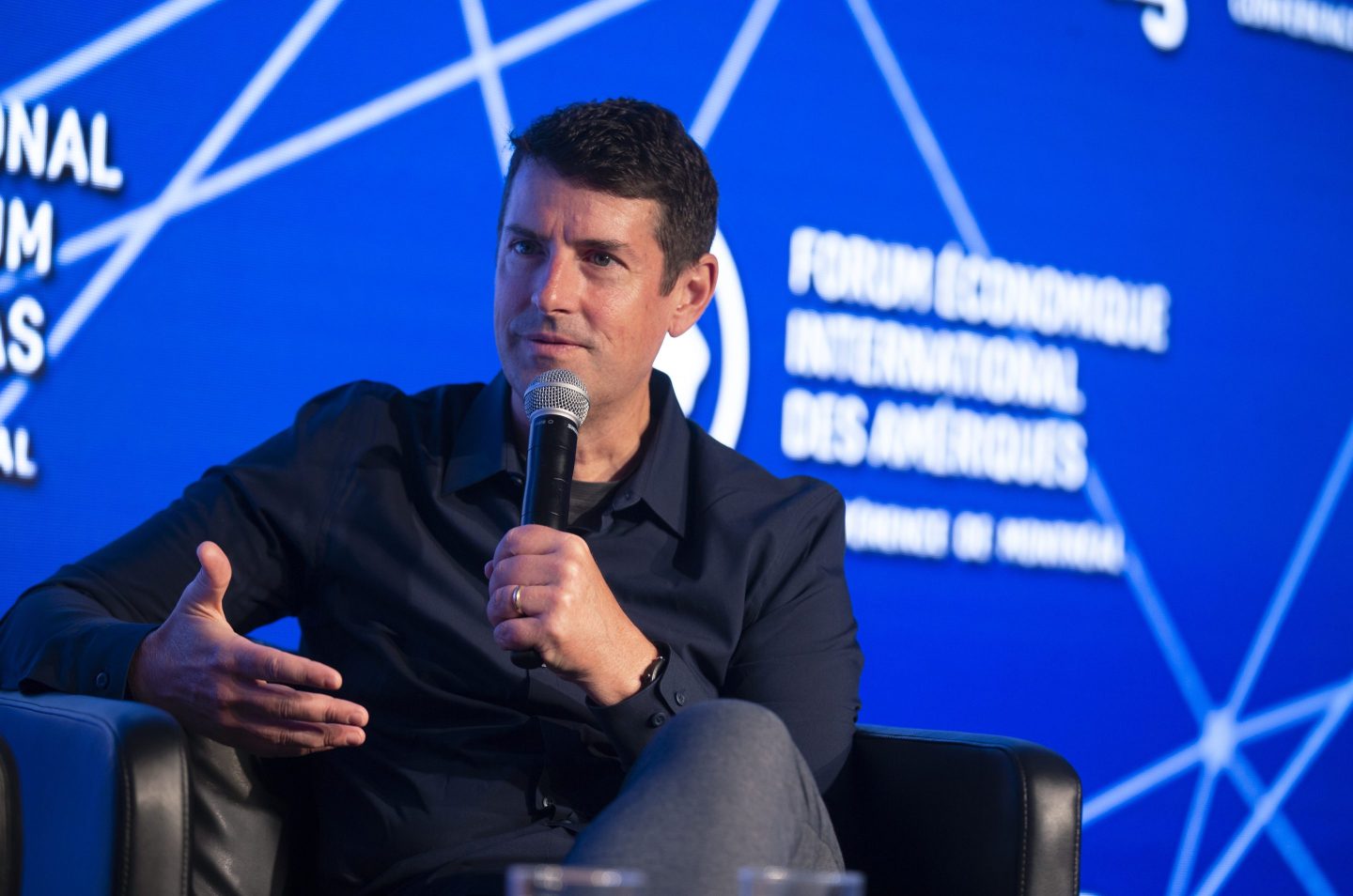
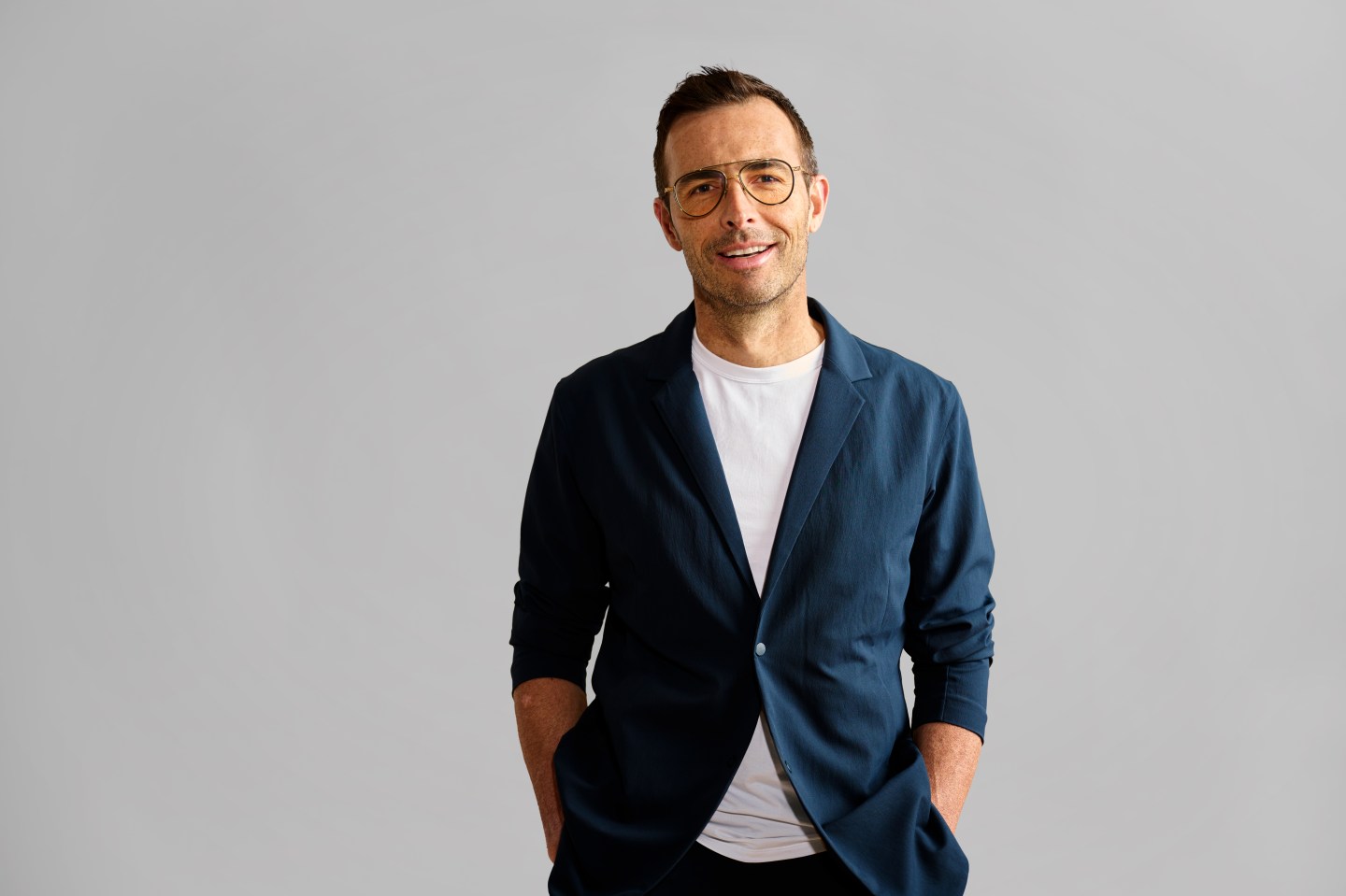
Lululemon Athletica CEO Calvin McDonald embodies the so-called sweat life that the company puts at the center of its brand identity—a life focused on being active, striving for self-improvement, and looking good while doing it.
McDonald, who took the reins in 2018, has completed two Ironman triathlons, a grueling endeavor that includes a 2.4-mile swim, followed by a 112-mile bike ride (his best discipline of the three), and a 26.2-mile run. The 49-year-old has also competed in many shorter-distance triathlons and run dozens of marathons.
The hard-charging traits characteristic of Ironman athletes also translate to the CEO role: goal-oriented, competitive, disciplined, and willing to put in the hard work. After a nearly four-year stint at Sephora Americas, McDonald joined Lululemon at a time when the apparel company was reeling from the departure of its previous CEO, owing to workplace misconduct, and facing questions about new avenues for business expansion. In response, McDonald set out an ambitious plan to double sales by 2023, ultimately delivering on that pledge a year early.
The Canadian executive got an assist during the pandemic as people, working out and working from home, increasingly craved comfort. Under McDonald’s watch, the Vancouver-based Lululemon has also gained traction in its men’s business and expanded abroad, continuing its robust growth and avoiding the fate of pandemic-boosted companies like Peloton and Netflix, which have seen their stocks tumble as COVID-19 recedes.
To be sure, there have been stumbles, such as the acquisition of smart at-home gym product Mirror, which has not yet paid off. But as the company looks to the future, its CEO says he’s committed to once again doubling Lululemon’s revenue over its 2021 levels, this time aiming for $12.5 billion by 2026. He plans to do that by quadrupling international sales, growing the male customer base, and entering new categories like footwear.
This interview has been edited and condensed for clarity.
Fortune: You’ve laid out an ambitious plan to double revenue in just five years, spurred by a surge in international sales. But Lululemon only began to ramp up its growth push beyond North America in 2017, so the targets seem lofty. Why did the company take a go-slow approach to international sales initially?
Calvin McDonald: We were doing the things that drive the business, which is community grass roots, building relationships, making sure the culture is right. Even though quadrupling revenue is ambitious, we’re going to continue to manage and ensure that culture, recruitment of talent, and relationships really dictate the pace at which we go. We’re not gonna throttle too much at the expense of those elements. There’s always a pitfall if you adopt a different playbook to go faster.
China plays an outsize role in your international plans, yet some rivals have at one point or another run into trouble there. What’s your approach as you enter that market?
Whenever you enter into different markets with different cultures, you just have to be mindful of that. Our China business, like other markets, is rooted in relationships. So we have strong relationships in the communities with local fitness instructors. We have a Shanghai office. We invest in the market to understand and build the culture. That’s not to say that other [companies] didn’t. But I think our approach has worked because it goes through relationship and respect.
Your men’s business is thriving, which is interesting because Lululemon was seen as a women’s brand for years. How did you make this work?
For us, it’s the opportunity around awareness. It’s rooted in creating an incredible product so that once he sees it, wears it, and tries it, it resonates. We’ve seen great performance in our men’s business, and we’ve doubled it [in sales] from our original plan. The opportunity ahead comes through awareness and getting more guys to understand the quality of the product.
One of your big breakthroughs with men was with your slightly sophomoric “anti–ball crushing” pants. How has your messaging to men changed?
We did a brand campaign last summer that was geared toward men—but definitely appealed to both genders—and it landed incredibly well. It stayed true to the ethos of the brand and was focused on well-being and mindfulness. There are some barriers around just the traditional male confidence and the attitude that goes with it. We approach it very differently through the mindfulness of sport versus sports being just about performance and winning.
Are men buying for themselves or still relying on the women in their lives?
We’re seeing significant growth in men buying for themselves. We continue to see her buying for him but as a ratio, it’s dropping. The majority of our men’s sales are him buying for himself, and we’re recruiting new male customers who see each other in gyms and see what others are wearing.
You recently announced your first-ever footwear line. Footwear is notoriously difficult to do well. Ask Under Armour. What’s your approach?
Our fundamental approach to innovation is through the lens of the guest and innovating unmet needs. We look to where we’re being pulled in versus pushing. We were being pulled into footwear by our guests. It was something we had tested a few years ago in a partnership with APL [the Athletic Propulsion Labs shoe brand], so we knew there was an audience that would purchase footwear from us. We don’t need footwear to achieve the $12.5 billion goal. Getting into footwear in a limited way is not what some of the other brands did. They went very broad, very wide. We’re very narrow. But it drives credibility in our running and training.
Mirror has hit a few bumps in the road. Any regrets on making the acquisition?
We entered into those acquisition conversations pre-pandemic. We were interested in the space and the spike that we saw in at-home fitness. I remain very excited about the vision we have around community relationship. It’s why we looked at it originally, and why the acquisition made sense. Lululemon’s strength has been building relationships and grass-roots marketing at the local community level, so we did a city membership test pilot that validated that if we put a program together where we organize “sweat” [sporting events], and give you access to those local studios, guests take to it. And the more our guests sweat, the more time and money they spend with us.
Lululemon is planting a flag in the re-commerce movement, where secondhand items are sold in a section of some of your stores. Any worries that resale is a fad?
I don’t think it’s a fad. It’s an exciting opportunity for us and an extension of the business. It resonates well with a generation and an age group that’s pushing for this. We tested it in two states, and it performed incredibly well.
You’ve competed in a number of grueling triathlons, which attract people with type A personalities. Forgive the stereotype, but how do you balance being hard-driving with creating a healthy, inclusive culture?
I’m an A-type who likes to win. But if anything, one of the things the Ironman teaches me is that I’m never going to hit the podium. So it teaches you humility, in terms of effort and performance, and redefining what success looks like. Even though it’s an individual sport, it’s a team sport. Everybody’s out there cheering and pushing for each other. So every time I race, I race against myself to be and do the best I can on that day. I like to win, but I always say how I win matters. And I want to win through others.
As a director at Disney, you’ve seen firsthand the challenges for a CEO when a company gets pulled into social debates. How do you pick when it’s right for Lululemon to speak out?
One of the significant changes from the pandemic is the expectation from both employees and customers that brands use their platform and CEOs as an extension of that brand. The lens I use is one based on values. We have certain core values in the organization. It’s an expectation, and it doesn’t come without risk. But saying nothing is no longer an option.
Lululemon is one of the biggest Canadian success stories ever. But in this remote, globalized world, what does being Canadian mean for Lululemon?
Canadians are better than any nation at being able to tell an American friend about somebody like Jim Carrey. Did you know he’s Canadian? [Laughs] As an organization, Lululemon will always remain founded in Canada. That’s our birthplace, and it is very uncommon for many Canadian brands to break beyond those borders. But we are on a global stage now, and that’s how we view ourselves—as a global company.
Get to know McDonald:
• He has completed two Ironman triathlons (2.4-mile swim, 112-mile bike ride, 26.2-mile run).
• Before Lululemon, he was CEO of Sephora Americas and Sears Canada, and spent 17 years at Loblaw Companies, the largest Canadian grocer.
• McDonald was named to the Walt Disney Co. board in 2021 and serves on its compensation committee.