Despite repeated net zero promises, green slogans, and heartfelt acknowledgements that carbon emissions must be curbed in order to avoid climate disaster, international banks still spent more than $1.5 trillion over the last three years financing coal projects—the highest carbon emitting and dirtiest energy source.
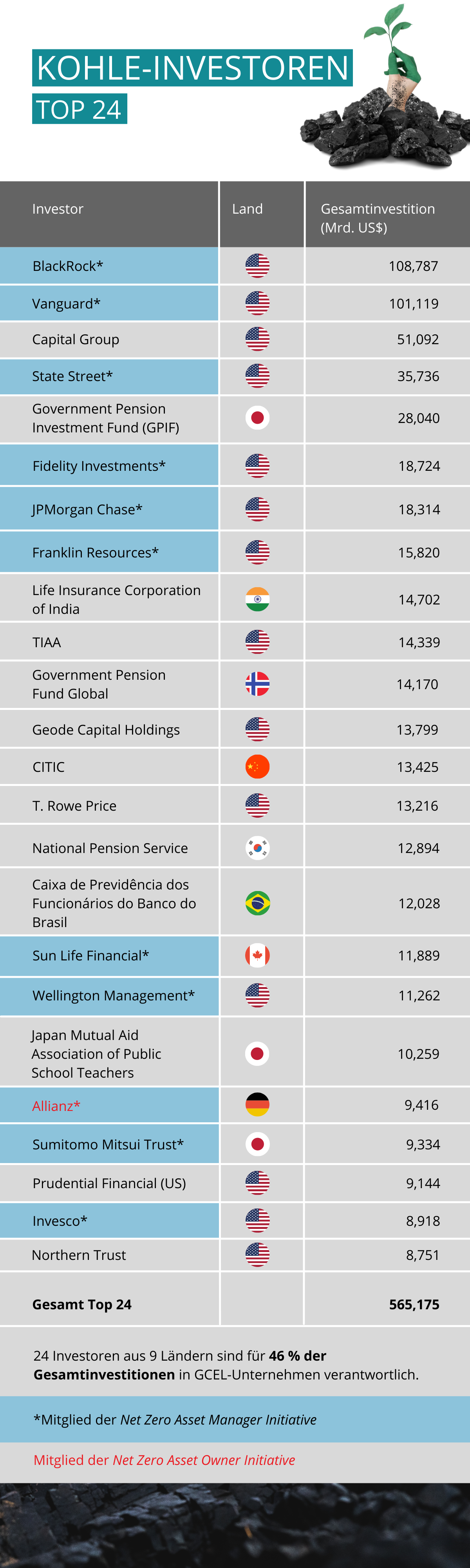
Institutional investors, which manage pensions and insurance payments, were almost as bad, channeling $1.2 trillion towards global coal industry stocks and bonds, according to a new report led by Urgewald and Reclaim Finance, two climate NGOs, published on Tuesday.
And while these financial institutions still have equity or debt in existing coal plants or are financing the cost of building new ones, many have publicly signed onto “net zero” pledges to curb carbon emissions.
While coal generates 40% of the world’s electricity needs, it produces 46% of global carbon emissions, according to the International Energy Agency (IEA), a watchdog group which has warned governments worldwide in the past that they must slash coal’s share of global power supply to less than 1% to stave off the worst effects of climate change.
“Banks like to argue that they want to help their coal clients transition, but the reality is that almost none of these companies are transitioning,” said Katrin Ganswindt, head of financial research at Urgewald. “They have no incentive to change if the financial industry continues to support them with blank cheques.”
Banks’ commitment claims to “Net Zero”?
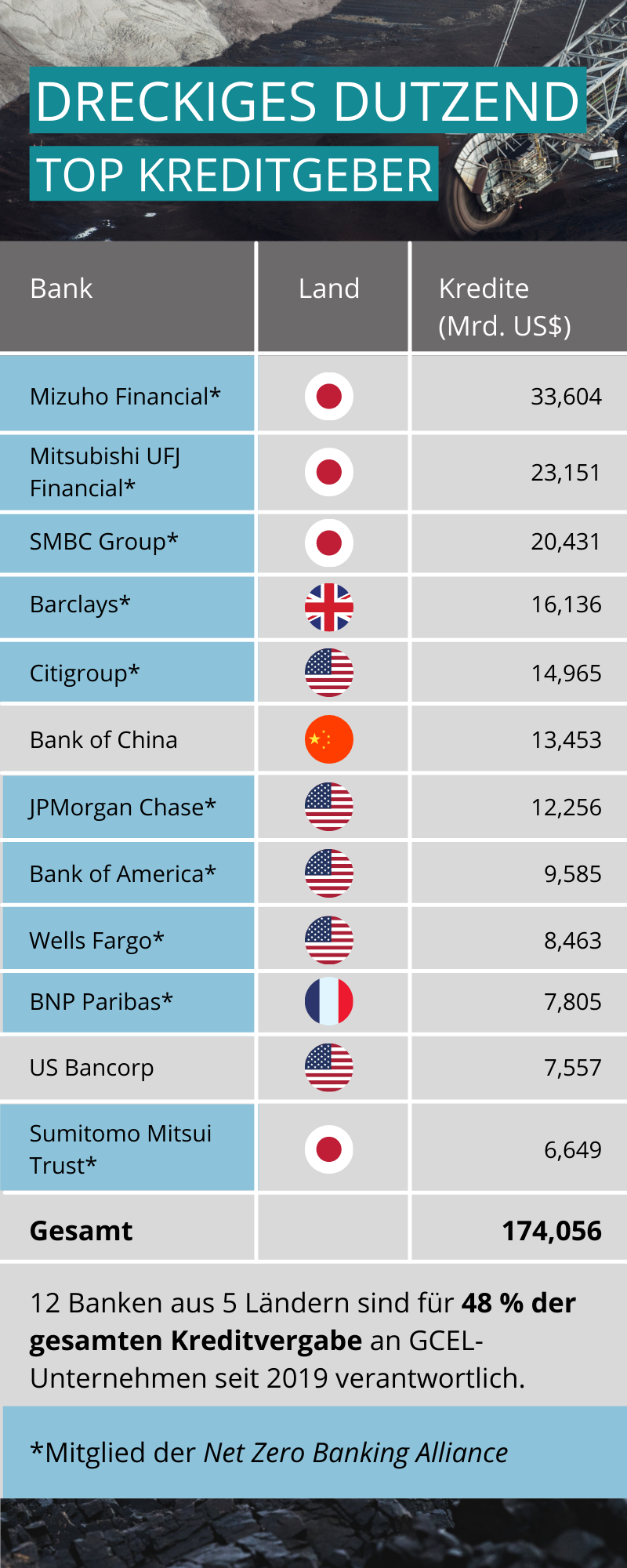
The banks that have the most money in coal were Japanese banks Mizuho Financial, Mitsubishi UFJ Financial and SMBC Group—which between them have $76 billion worth of coal projects on their balance sheets, according to the report. The U.K.’s Barclays bank came in fourth place, and U.S. bank Citigroup came in fifth.
Ironically, these five banks, as well as five others that the report cites as the top 12 coal lenders in the world, are all members of the Net Zero Banking Alliance (NZBA) an “industry-led, U.N.-convened” group of 43 banks from 23 countries that have said they are committed to achieving net-zero greenhouse gas emissions by 2050.
Almost all investment into new coal projects came from China, with only one non-Chinese company breaking into the top 10 —U.S. bank J.P. Morgan Chase, which is also a member of the NZBA. Chase also ranked seventh in terms of the largest bank lenders to the coal industry, according to the report.
The BlackRock problem
Aside from banks, a tiny number of institutional investors, including BlackRock and Vanguard, both of which are a part of the Net Zero Asset Manager Initiative, played an outsized role in keeping the coal industry afloat, according to the report.
The investment firm BlackRock was more invested in coal than any of the other nearly 5,000 companies researchers examined, and the company accounted for almost 9% global coal stock holdings with $109 billion of its equity in coal producing companies, according to the report.
BlackRock is also the leading global institutional investor in growing coal companies, with over $34 billion invested in companies building out new coal plants. The coal plant developers in BlackRock’s portfolio intend to build over 200 gigawatts of new coal capacity, according to the report—equal to the combined power capacity of coal in Russia, Japan, Indonesia, Poland and Germany.
That level of investment goes against initiatives laid out by BlackRock chief executive Larry Fink two years ago, in which the asset management giant promised to sell most of its shares in producers of thermal coal, with Fink calling environmental sustainability “a key goal for investment decisions,” in his annual letter to chief executives published on Jan. 14, 2020. In a client letter, BlackRock announced it would sell $500 million worth of coal-related assets, exiting all companies which generate more than a quarter of its revenues from coal production. It added it would no longer make “future direct investments” in these companies either.
While first heralded as a climate victory, the report’s authors say that this climate initiative provided BlackRock with a loophole to still hold shares in companies that earn less than a quarter of their revenues from coal, which still includes the world’s biggest coal miners and polluters, like Indian conglomerate Adani, the UK-listed commodities companies BHP and Glencore, and the German energy company RWE.
“One year on, it’s hard to see Larry Fink’s sustainability commitment as anything other than greenwashing,” Lara Cuvelier, a campaigner at Reclaim Finance told the Guardian last year.
BlackRock declined to comment to Fortune about this report.
Correction: A previous version of this article misstated what BlackRock specifically promised to divest in.
Never miss a story: Follow your favorite topics and authors to get a personalized email with the journalism that matters most to you.