As much as the world talks about the dark side of fashion, it isn’t the only industry facing intense scrutiny over its harmful impact on the environment today. The beauty business, with its heavy reliance on plastics and murky transparency practices, is another global polluter.
Since 1950, the beginning of large-scale plastic production, only 9% of the world’s plastic has been recycled. With an industry that generates more than 120 billion units of packaging every year, not only do most personal care and beauty products end up in landfills, their microplastics—fragments which break down into pieces smaller than five millimeters in diameter—are clogging up our oceans (14 million tons to be precise), our drinking water, and our food supply.
Some global personal care conglomerates such as Unilever and L’Oréal know they need to overhaul their packaging design to be part of the solution and have joined the U.S. Plastics Pact, a collaborative effort bringing together government agencies, NGOs, and brands within the Ellen MacArthur Foundation global Plastics Pact network. As part of the pact, the L’Oréal Group is working toward a 2025 goal of making all of its plastic packaging 100% reusable, recyclable, or compostable and committing to recycling or composting 50% of plastic packaging, among other objectives.
But here’s the rub: Two new studies published this month by the International Pollutants Elimination Network (IPEN) demonstrate that it’s not enough to focus on the waste created by plastics but their broader consequences. The studies reveal “the presence of toxic chemical additives and pollutants that pose multiple health threats to humans and the environment. The health effects include causing cancer or changing hormone activity (known as endocrine disruption), which can lead to reproductive, growth, and cognitive impairment.” What’s more, the chemical additives in plastics make them unfit for reuse, turning the idea of a circular economy for plastics into little more than an empty promise.
While big companies scramble to rethink their deeply embedded production models and organizations such as IPEN push chemical and plastics manufacturers to ban the use of toxic additives, smaller, more nimble brands designed to be sustainable and ethical have a chance to lead the way forward.
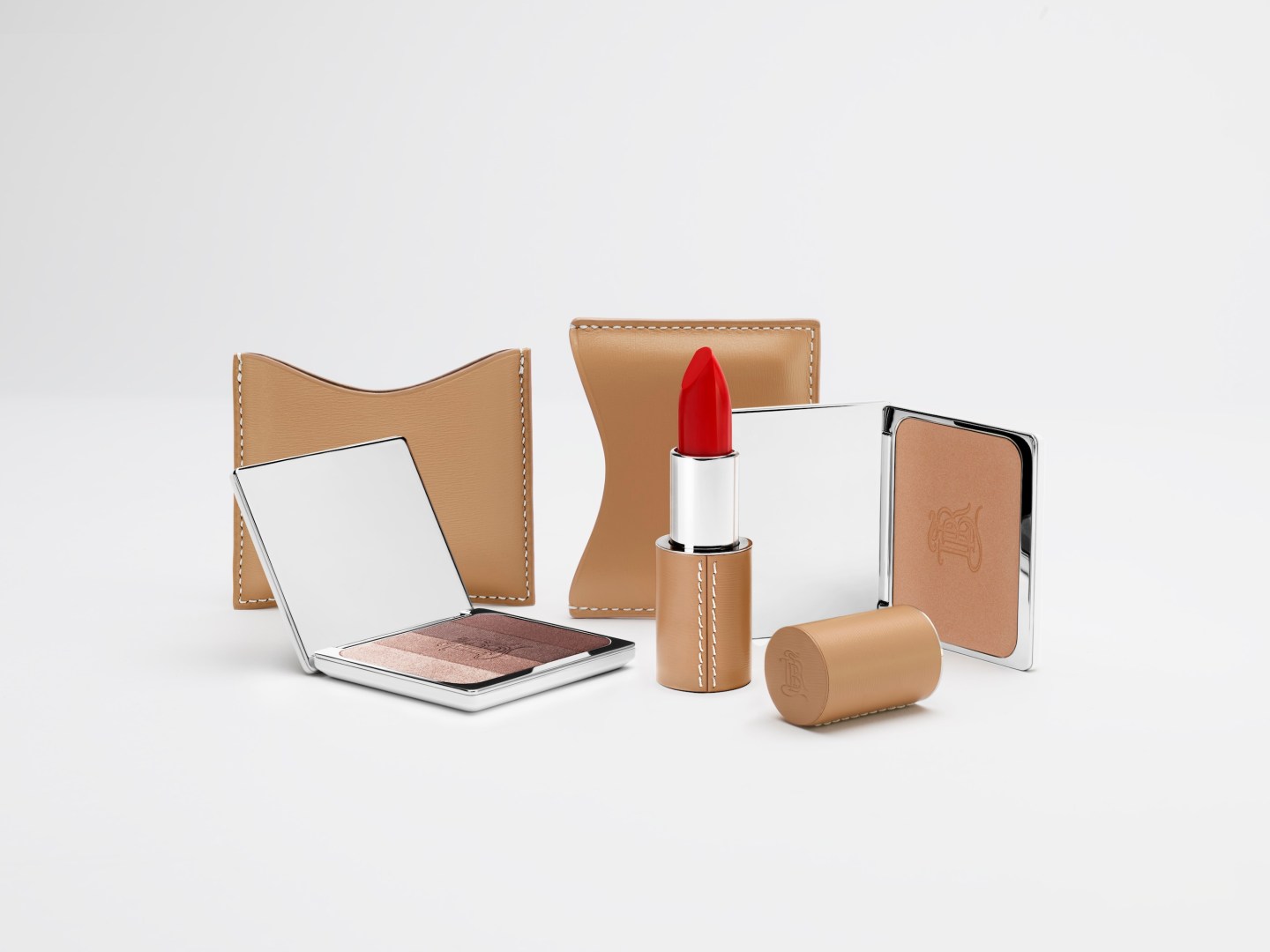
One such promising example is La Bouche Rouge, a four-year-old French makeup line that is free of petrochemical derivatives, silicones, and microplastics both in its formula and packaging. The cruelty-free line, which began with a single lipstick and expanded to include mascara, liners, eyeshadow, and accessories, come in refillable cases made from recycled metal and either upcycled leather from France’s renowned Tanneries du Puy or a vegan leather made from a recycled fiber material created by Stella McCartney.
The genesis of the idea came gradually to founder Nicolas Gerlier after having his first child and feeling overcome with self-doubt about his profession as he prepared to return to work. He had spent the bulk of his career rising up the ladder at L’Oréal until suddenly, the work no longer made sense. “It wasn’t just a question of sustainability, although that was certainly an obvious issue to me then. It was about meaning and values; it felt like what I was doing was completely devoid of it.”
Gerlier knew he’d have to make a big move, but first wanted to get “green beauty” experience. He turned down the stability and high salary of a job with L’Oréal in London to head up Phyto, France’s pioneering vegetal hair care brand but quickly discovered that while it was honorably green in its formula, its production and supply chain were not.
The search for meaning continued when Gerlier agreed to help transform Kookai from fast-fashion to green ready-to-wear. “I thought it would be an interesting opportunity. But in the year and a half I worked on the project, the holding company went belly up, and everything ended without launching,” he explained. “I wanted to align my personal values with my professional life, but society didn’t seem set up to accommodate that.”
In other words, Gerlier needed to create a project of his own with an ethical foundation he could defend through and through. His journey to create La Bouche Rouge coincided with a global wake-up call: China had begun refusing the West’s waste, and plastics were finally being discussed with greater urgency. Well-versed in the cosmetics business, Gerlier knew that’s where there was room to focus his attention.
“One billion tubes of lipstick are thrown out every year as well as 400 million single-use silicone molds used to print a logo on a stick that will wear off after application. These are all things that can’t be recycled,” Gerlier said of his decision to begin with lipstick.
It also happens to be part of an ever-growing market and an extremely visible everyday luxury, particularly on social media. With a strong manifesto, striking images, and a detailed list on its website of blacklisted ingredients, La Bouche Rouge was able to make a big splash, quickly positioning itself as France’s first eco-responsible luxury line. At $45 for the lipstick (plus $80 for the leather tube), the star product is certainly more expensive than mass-market lipsticks, but less expensive than the premium labels that dominate beauty counters around the world, from Dior to Givenchy—with the added benefit of being safe for the environment. “The idea was to re-create a desire that’s fit for the 21st century,” Gerlier said.
That also means the composition of the lipsticks needed a clean treatment. Produced in the brand’s dedicated lab, the lipsticks are, in fact, serum formulas, enriched with an antiaging seaweed harvested by hand in St. Suliac, France, and completely vegan (no beeswax). “It took us two years to develop. Lipsticks are full of things that can damage the lips over time, so I wanted a treatment-style product. The seaweed from Brittany is repairing and very rich without deforming the stick,” said Gerlier. Something else clients can’t get from the competitors: made-to-measure shades with a personalized name and finish.
With his hard-line stance on plastics and toxic-free ingredients, Gerlier has become a vocal champion of blue beauty, a newer movement that promotes nontoxic products both in composition, production, packaging, and distribution to limit the danger to human health and the impact on our oceans.
Defending this position has also meant potentially turning down handsome distribution opportunities. Four years ago, buyers from China’s SKP came to meet Gerlier and offered him a chance to enter the Chinese market with La Bouche Rouge. He turned them down. “They required animal testing. I wasn’t going to change the face of the brand and go against my values,” he recalled. Three years later, the buyers returned and lifted the testing requirement so that La Bouche Rouge, and its responsible vision of elegance à la française, could be added to the mix at SKP. “I seemed to have surprised them!” Gerlier noted. “I guess few have tried to go against their animal testing policies.”
While there may be no silver bullet to solving the world’s plastic crisis, Gerlier insists that it’s up to brands to do what it takes to be part of the solution: “It’s not just about lipstick or mascara. It’s about asking ourselves how we can make everyday life a little bit brighter for consumers without destroying our own future.”
Never miss a story: Follow your favorite topics and authors to get a personalized email with the journalism that matters most to you.