• Home
  • Latest
  • Fortune 500
  • Finance
  • Tech
  • Leadership
  • Lifestyle
  • Rankings
  • Multimedia
EnvironmentSustainable Future

Growing wasabi in Iceland inside one of the world’s most innovative greenhouses

By
Regan Stephens
Regan Stephens
Down Arrow Button Icon
By
Regan Stephens
Regan Stephens
Down Arrow Button Icon
December 15, 2021, 2:00 PM ET

When Óli Hall dined at a sushi restaurant while visiting Boston recently, he brought his own wasabi. Hall, the sales and marketing director for Icelandic company Nordic Wasabi, knows that the small green dollop typically served alongside a tuna roll is usually just a mix of horseradish, mustard, and food dye. Real wasabi is just too expensive for most restaurants to keep in stock. But since he tried the real deal, he’s been spoiled for anything else.

“I can’t eat sushi unless I have my own fresh wasabi,” says Hall. “Once you go green, you can’t go back.”

Based in Egilsstaðir, on Iceland’s east coast, Nordic Wasabi was founded by Ragnar Atli Tómasson and Johan Sindri Hansen. The company cultivates wasabi from one of the world’s most advanced greenhouses—one that runs purely on sustainable energy. In 2015, the then engineering students at University of Iceland were enrolled in a business model class, and had never tasted real wasabi. By the end of the project, they founded Jurt Hydroponics to focus on growing it full time.
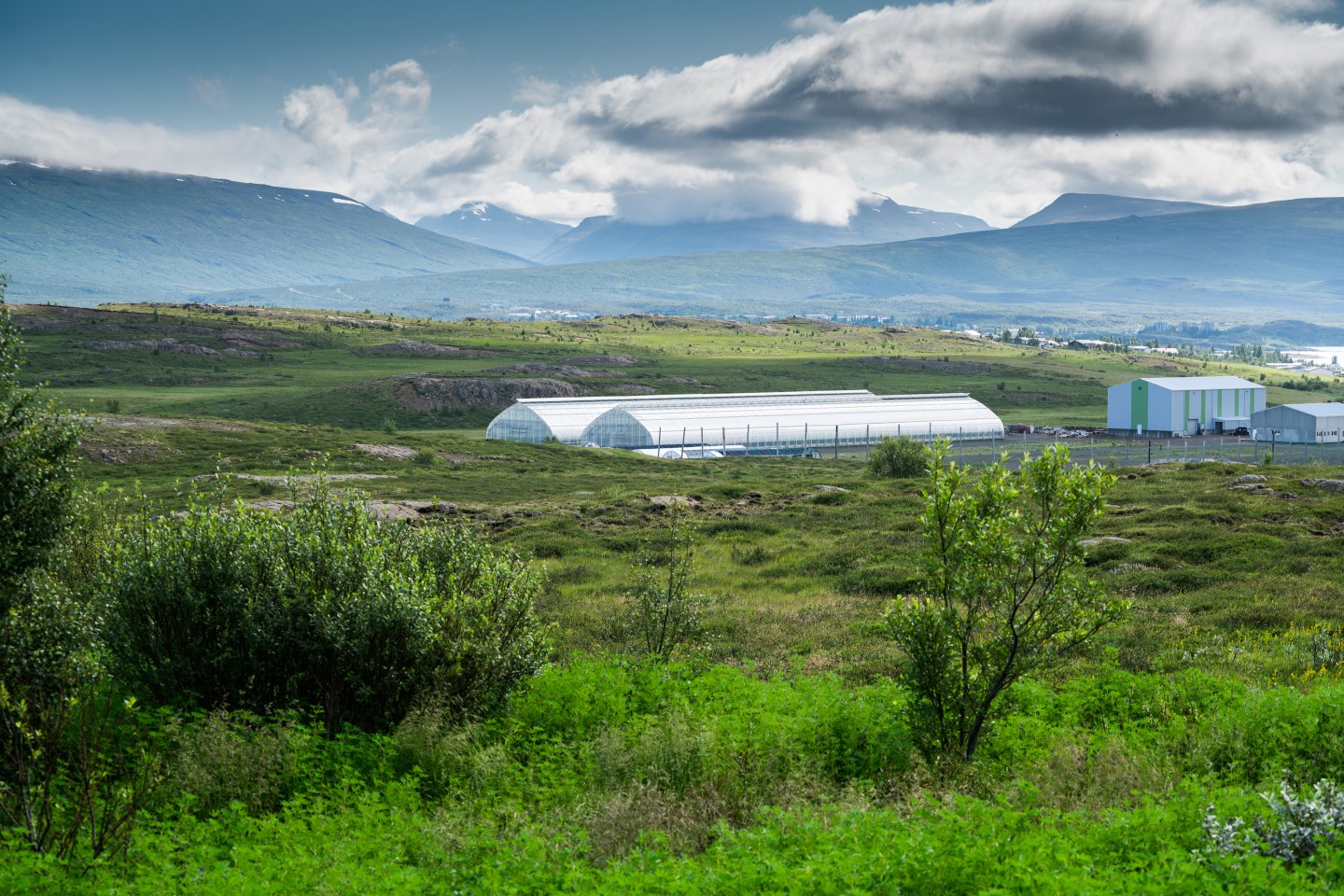
Nordic Wasabi was founded by University of Iceland engineering students to cultivate one of the hardest plants to grow, using custom, sustainable greenhouses they designed.
Courtesy of Nordic Wasabi

Wasabi, or Japanese horseradish, is a flowering plant, with a stem that can be grated to make a piquant paste—a condiment that’s most commonly served with sushi. Historically grown in riverbeds in Japan, it’s also notoriously one of the world’s most difficult and expensive plants to grow commercially. The process is time-consuming (plants can take up to three years to fully mature) and labor-intensive.

Because it requires a lot of clean water and controlled temperatures, cultivating the plant isn’t easily viable for greenhouses in continental Europe or the U.S., either, due to the high cost of water and heating. But Iceland, with its concentration of volcanoes, is one of the leading producers of geothermal energy in the world, i.e. a renewable energy source produced by naturally occurring heat under the earth’s surface.

Tómasson and Hansen designed a state-of-the-art greenhouse that uses 100% renewable hydroelectric powered electricity, and sustainable geothermal heat to warm the greenhouses in colder months. When the greenhouse needs to be cooled down, “most of the time, we just open up a window,” says Hall. The region’s average temperatures range from the low-twenties in winter to high fifties in the summer months. The water, also, is the same as the country’s drinking water, flowing up and filtered through its volcanic rocks. Plus, the computer-controlled greenhouse makes for less hands-on labor. “We have one horticulturist working in the greenhouse who takes care of their harvests,” says Tómasson. “Everything else is automated.”
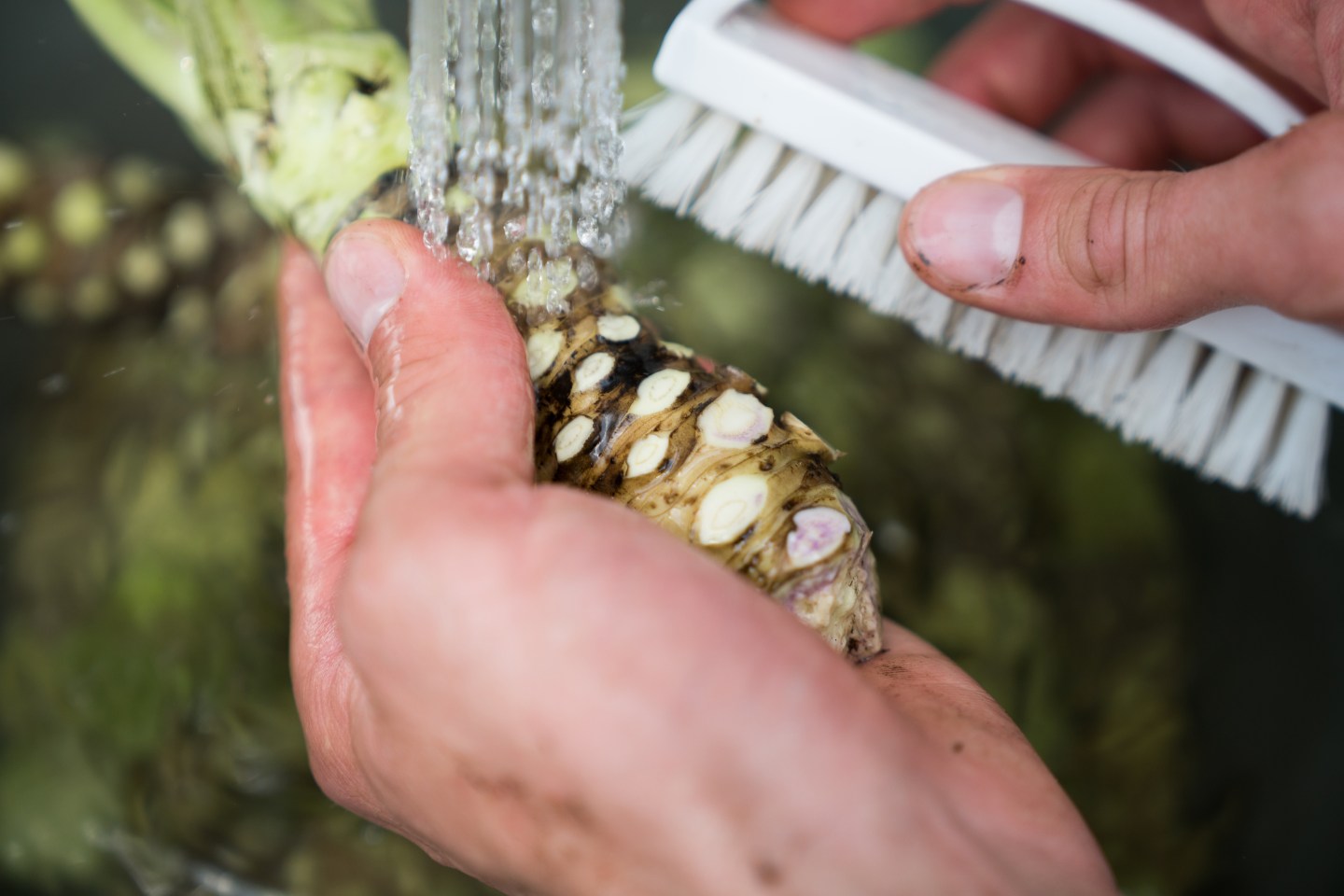
Nordic Wasabi is selling the plant to restaurants and also directly to customers, with a grater and bamboo brush, along with some recipes that go beyond “add to sushi.”
Courtesy of Nordic Wasabi

In Iceland—a country of about 40,000 square miles, roughly the size of Colorado—there’s also plenty of room to grow. “The idea is that we have a big country, all running on renewable energy,” says Ragnar, adding that with a population of about 380,000 people, only roughly 30% of the country is inhabited, while about 70% is sparsely-populated Highlands. The company’s greenhouses have the capacity to grow a few tons of wasabi per year. Currently, one greenhouse is filled with wasabi plants, and another one next to it can double their harvest in the near future.

These unique conditions make sustainably growing wasabi easier, and it’s also made their product an impressive one. The company just won a nomination from EMBLA, the Nordic Food Awards for Nordic food producer of the year. And perhaps more importantly, the food world is paying attention. (After all, what good is a sustainable product if no one wants it?) Chefs all over Europe and Scandinavia are buying wasabi from the company, including the reigning world’s best restaurant, Noma in Copenhagen, and the Icelandic cuisine-focused Moss Restaurant inside the Retreat at Blue Lagoon.

Ingi Þórarinn Friðriksson, the executive chef of Blue Lagoon Iceland, is currently using Nordic Wasabi on both herring and Wagyu dishes. “We find that it’s a bit sweeter and less earthy,” he says, adding that it gives the meal a little bit of an extra kick. “We also like that the growing of the wasabi is very sustainable as they use clean mountain stream water, renewable hydroelectric power, and geothermal heating, which matches our ethos here at the Blue Lagoon.”
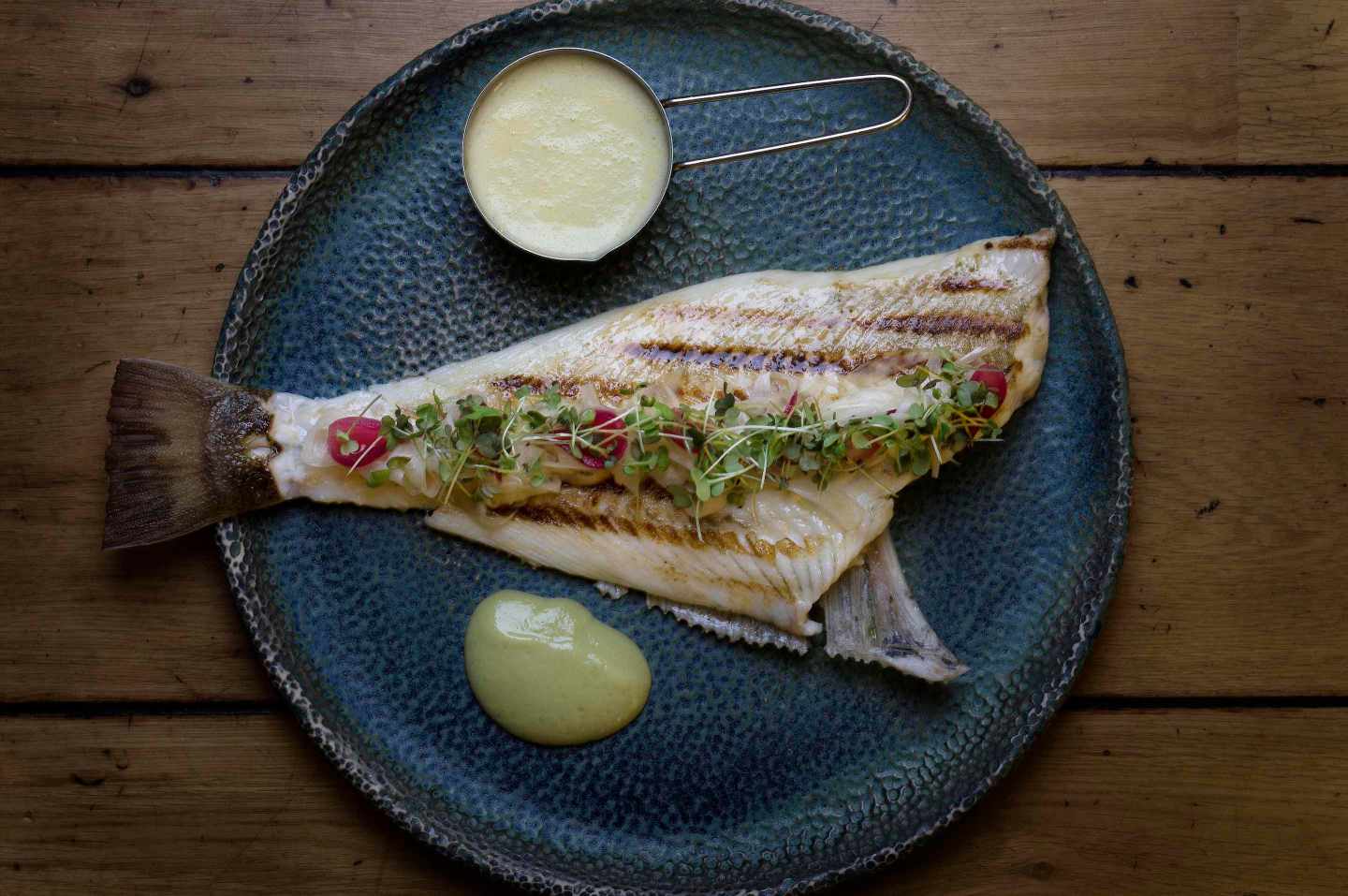
Rauðspretta, a common and commercially important European flatfish.
Courtesy of Nordic Wasabi

While the stellar wasabi grown in Japan can be both costly to export and scarce, and wasabi from other European growers might not be up to par, flavor-wise, “Japanese chefs and Michelin-starred chefs all around Europe are amazed at the product,” says Hall. “So we are bringing this product in that’s not only fully sustainable, it also just tastes really good.”

Besides restaurants, the company is selling direct to consumer, targeting home cooks with kits that come with a knob of wasabi stem, plus a grater and bamboo brush. Beyond sushi, they suggest adding the soft green paste to recipes from cocktails, ribeye, and even ice cream. From an outpost in downtown Reykjavík, they also offer “wasabi hour”—a fun workshop that educates tourists and visitors about fresh wasabi with food and drink pairings.

Jurt Hydroponics isn’t the only business tapping into Iceland’s 100% carbon-free energy; the country has collective appreciation for sustainability. Snorri Jonsson, founder of 64° Reykjavik Distillery, says “Sustainability is extremely important to our ideology in life and business.” Established in 2009, the first Icelandic distillery runs on 100% certified green energy to make spirits that use locally-foraged berries and botanics, including angelica seed, Arctic bilberry, crowberry, and juniper. This both reduces the carbon footprint from importing ingredients, and also just makes for a better quality of spirits like Einiberja gin and Crowberry liqueur.

Óli Hall (left) and Ragnar Atli Tómasson (right).
Courtesy of Nordic Wasabi

Also using renewable geothermal energy, Björn Steinar Jónsson revived an ancient tradition of harvesting sea salt in the country when he founded Saltverk. Jónsson’s salt is an ingredient in some of the bean-to-bar chocolate from Omnom. The Reykjavík-based company co-founded by chef Kjartan Gíslason operates on renewable energy, while sustainability and transparency are key when sourcing ingredients for bars like Lakkrís + Sea Salt and Coffee + Milk bars.

While Tómasson and Hansen chose wasabi because it’s notoriously hard to grow, and could be exported to other markets in continental Europe for a high price per-kilo, Jurt Hydroponics greenhouses could grow other hard-to-grow crops that are viable for export.

“I think you can grow anything in Iceland,” says Tómasson. “People are always asking me about growing avocados. Maybe someday we will.”

Never miss a story: Follow your favorite topics and authors to get a personalized email with the journalism that matters most to you.

About the Author
By Regan Stephens
See full bioRight Arrow Button Icon

Latest in Environment

Finance
Lorem ipsum dolor sit amet, consectetur adipiscing elit, sed do eiusmod tempor incididunt ut labore et dolore magna aliqua. Ut enim ad minim veniam
By Fortune Editors
October 20, 2025
Finance
Lorem ipsum dolor sit amet, consectetur adipiscing elit, sed do eiusmod tempor incididunt ut labore et dolore magna aliqua. Ut enim ad minim veniam
By Fortune Editors
October 20, 2025
Finance
Lorem ipsum dolor sit amet, consectetur adipiscing elit, sed do eiusmod tempor incididunt ut labore et dolore magna aliqua. Ut enim ad minim veniam
By Fortune Editors
October 20, 2025
Finance
Lorem ipsum dolor sit amet, consectetur adipiscing elit, sed do eiusmod tempor incididunt ut labore et dolore magna aliqua. Ut enim ad minim veniam
By Fortune Editors
October 20, 2025
Finance
Lorem ipsum dolor sit amet, consectetur adipiscing elit, sed do eiusmod tempor incididunt ut labore et dolore magna aliqua. Ut enim ad minim veniam
By Fortune Editors
October 20, 2025
Finance
Lorem ipsum dolor sit amet, consectetur adipiscing elit, sed do eiusmod tempor incididunt ut labore et dolore magna aliqua. Ut enim ad minim veniam
By Fortune Editors
October 20, 2025

Most Popular

Finance
Lorem ipsum dolor sit amet, consectetur adipiscing elit, sed do eiusmod tempor incididunt ut labore et dolore magna aliqua. Ut enim ad minim veniam
By Fortune Editors
October 20, 2025
Finance
Lorem ipsum dolor sit amet, consectetur adipiscing elit, sed do eiusmod tempor incididunt ut labore et dolore magna aliqua. Ut enim ad minim veniam
By Fortune Editors
October 20, 2025
Finance
Lorem ipsum dolor sit amet, consectetur adipiscing elit, sed do eiusmod tempor incididunt ut labore et dolore magna aliqua. Ut enim ad minim veniam
By Fortune Editors
October 20, 2025
Finance
Lorem ipsum dolor sit amet, consectetur adipiscing elit, sed do eiusmod tempor incididunt ut labore et dolore magna aliqua. Ut enim ad minim veniam
By Fortune Editors
October 20, 2025
Finance
Lorem ipsum dolor sit amet, consectetur adipiscing elit, sed do eiusmod tempor incididunt ut labore et dolore magna aliqua. Ut enim ad minim veniam
By Fortune Editors
October 20, 2025
Finance
Lorem ipsum dolor sit amet, consectetur adipiscing elit, sed do eiusmod tempor incididunt ut labore et dolore magna aliqua. Ut enim ad minim veniam
By Fortune Editors
October 20, 2025
Fortune Secondary Logo
Rankings
  • 100 Best Companies
  • Fortune 500
  • Global 500
  • Fortune 500 Europe
  • Most Powerful Women
  • Future 50
  • World’s Most Admired Companies
  • See All Rankings
Sections
  • Finance
  • Fortune Crypto
  • Features
  • Leadership
  • Health
  • Commentary
  • Success
  • Retail
  • Mpw
  • Tech
  • Lifestyle
  • CEO Initiative
  • Asia
  • Politics
  • Conferences
  • Europe
  • Newsletters
  • Personal Finance
  • Environment
  • Magazine
  • Education
Customer Support
  • Frequently Asked Questions
  • Customer Service Portal
  • Privacy Policy
  • Terms Of Use
  • Single Issues For Purchase
  • International Print
Commercial Services
  • Advertising
  • Fortune Brand Studio
  • Fortune Analytics
  • Fortune Conferences
  • Business Development
About Us
  • About Us
  • Editorial Calendar
  • Press Center
  • Work At Fortune
  • Diversity And Inclusion
  • Terms And Conditions
  • Site Map
Fortune Secondary Logo
  • About Us
  • Editorial Calendar
  • Press Center
  • Work At Fortune
  • Diversity And Inclusion
  • Terms And Conditions
  • Site Map
  • Facebook icon
  • Twitter icon
  • LinkedIn icon
  • Instagram icon
  • Pinterest icon

Latest in Environment

exxon
LawDefamation
Exxon can sue California’s AG for defamation over recycling comments, judge rules
By Janie Hair and The Associated PressFebruary 26, 2026
4 days ago
Performers in Morph suits on a football field pre-match
EuropeLetter from London
‘I sell millions of Halloween costumes to Americans. Mr. President, here’s my takeaway from the wild tariffs ride’
By Kamal AhmedFebruary 26, 2026
4 days ago
snow
North AmericaThe Weather Channel
After the Snow Day, the Sick Day: One in 6 New York City teachers called out of work on Tuesday
By Jake Offenhartz, Mike Catalini and The Associated PressFebruary 24, 2026
5 days ago
boston
North AmericaMedia
32 inches of snow were enough for the Boston Globe to call off print for the first time in 153 years
By Audrey McAvoy and The Associated PressFebruary 24, 2026
6 days ago
Photo of fragments of plastic on fingers
HealthHealth
Scientists are pushing back on warnings that microplastics damage your health, saying people are just obese and calling some studies ‘a joke’
By Catherina GioinoFebruary 24, 2026
6 days ago
AIchief executive officer (CEO)
Sam Altman gets defensive about AI’s massive electricity usage: ‘It also takes a lot of energy to train a human’
By Marco Quiroz-GutierrezFebruary 24, 2026
6 days ago

Most Popular

placeholder alt text
Economy
Your grandparents are the reason the U.S. isn't in a recession right now. That won't last forever
By Eleanor PringleMarch 1, 2026
23 hours ago
placeholder alt text
Success
MacKenzie Scott's close relationship with Toni Morrison long before Amazon put her on the path give more than $1 billion to HBCUs
By Sasha RogelbergMarch 1, 2026
16 hours ago
placeholder alt text
Middle East
As Iran attacks Dubai, the tax-free haven for the global elite could see 'catastrophic' fallout — 'this can also send shockwaves globally'
By Jason MaMarch 1, 2026
15 hours ago
placeholder alt text
Personal Finance
Trump's universal 401(k) architect on why lower-income people distrust retirement accounts: 'they want to know what the catch is'
By Jacqueline MunisFebruary 28, 2026
2 days ago
placeholder alt text
Health
Gen Z men are eating ‘boy kibble,’ the human equivalent to dog food, to load up on protein cheaply
By Jake AngeloMarch 1, 2026
20 hours ago
placeholder alt text
Middle East
U.S. military gives Iran a taste of its own medicine with cheap copycat Shahed drones, while concern shifts to munitions supply in extended conflict
By Jason MaMarch 1, 2026
13 hours ago

© 2026 Fortune Media IP Limited. All Rights Reserved. Use of this site constitutes acceptance of our Terms of Use and Privacy Policy | CA Notice at Collection and Privacy Notice | Do Not Sell/Share My Personal Information
FORTUNE is a trademark of Fortune Media IP Limited, registered in the U.S. and other countries. FORTUNE may receive compensation for some links to products and services on this website. Offers may be subject to change without notice.