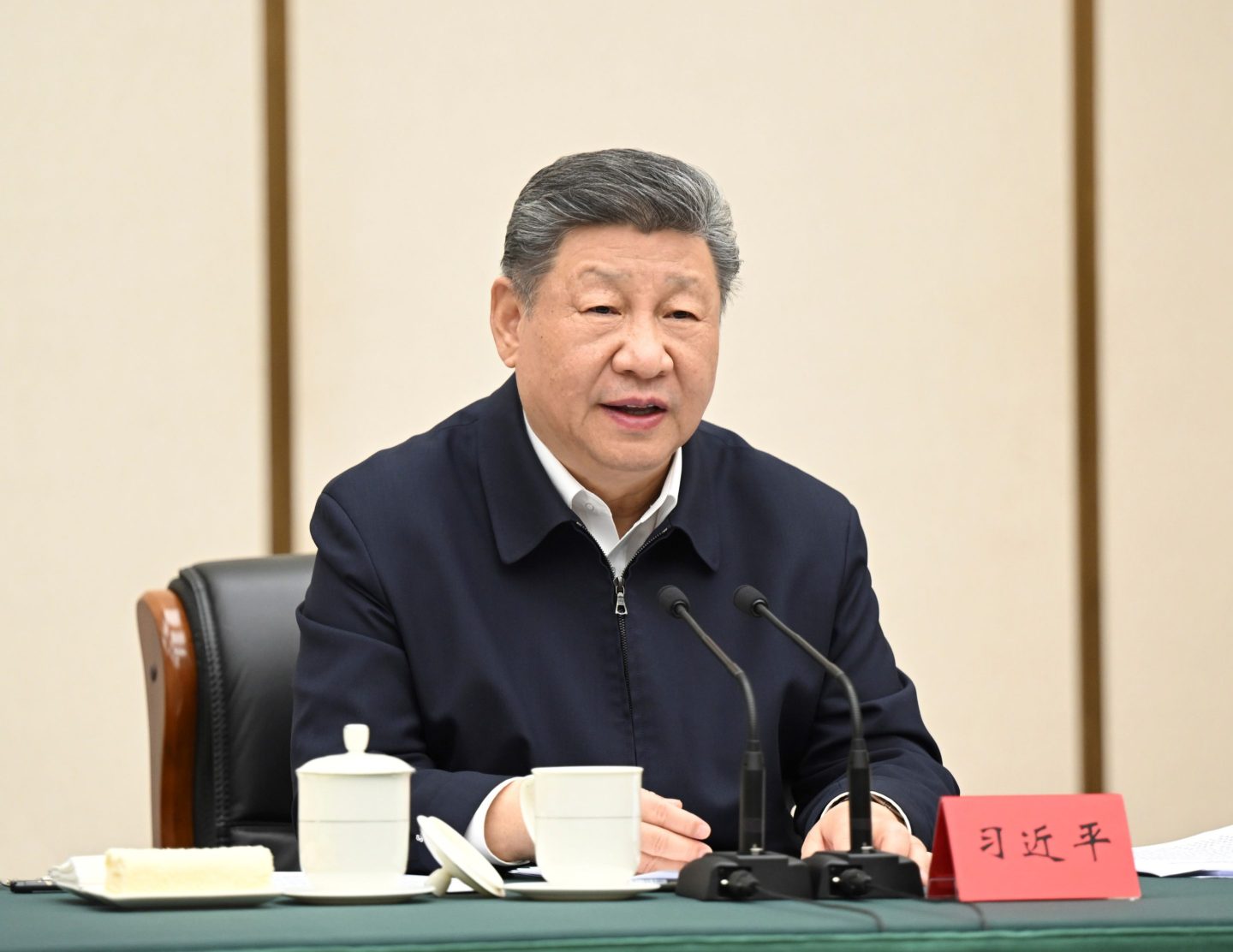
China, the world’s largest emitter of greenhouse gas, is in a race to decarbonize its economy by 2060—but the polluting behemoth might not be moving fast enough for the world to ward off the worst scenario of climate change.
According to Climate Action Tracker (CAT), an independent research group, China could reduce global warming by an average 0.2°C to 0.3°C if it achieves its goal of reaching net-zero carbon emissions by 2060—a target President Xi Jinping announced at the UN General Assembly in September last year.
CAT says China’s –0.3°C contribution is “the biggest single reduction” the group has estimated based on any country’s current climate pledges. Yet, despite potentially contributing the most to reducing global warming, CAT also says China’s climate targets are “highly insufficient.”
“China’s domestic ambition and action still projects rising emissions until 2030 rather than falling and is overall still not sufficient to enable a global transition towards a 1.5°C world, according to our fair share method,” says Swithin Lui, an analyst at NewClimate Institute, one of CAT’s founding groups.
Lui says China needs to decarbonize faster than its current trajectory predicts and that Beijing should target peaking carbon emissions earlier than 2030. Complaints that China is moving too slowly to decarbonize its economy echoed around Glasgow during the COP26 summit on climate change last month, too.
During the summit, former U.S. President Barack Obama said that China’s approach to climate change reflects “a dangerous lack of urgency” and called for the country to do more on leadership. Current U.S. President Joe Biden struck a similar tone and chastised China’s leader, Xi Jinping, for not attending the conference.
To the world’s surprise, the U.S. and China actually emerged from COP26 more unified than when they went in.
During the later negotiations stage of the conference, the two superpowers inked a pledge during the summit to jointly “enhance ambition” on climate change. Beijing signed on to Washington’s plan for lowering methane emissions, too, marking the first time China has made a commitment to reduce the gas.
But China remained steadfast in its position on one of the most fundamental fuels of climate change: coal.
In the final hours of Nov. 13, after negotiations at the COP26 summit on climate change had already stretched an extra day into the weekend, a last-minute push by India and China watered down the wording of the final communiqué and swapped a historic commitment to “phase out” coal with a pledge to simply “phase down” the fossil fuel.
“China and India will have to explain themselves and what they did to the most climate-vulnerable countries in the world,” Alok Sharma, the president of COP26, said after the summit.
But Sharma, who had set himself the goal of consigning coal to history at COP26, refused to categorize the negotiations as a failure owing to that simple change in wording. The summit, Sharma said, was “a historic achievement.” He’s not wrong.
The Glasgow Climate Pact is the first agreement in a quarter-century of COP summits to even mention coal and fossil fuels explicitly, let alone call for their reduced usage. As for China, its reluctance to “phase out” coal entirely doesn’t contradict the country’s overall commitment to reducing carbon emissions.
“China announced its position to phase down coal usage by 2026 in April, and so what China has done at COP26 is stick with its official position and domestic policies,” says Byford Tsang, senior policy adviser at climate think tank E3G. Some climate analysts have in fact criticized China for not bringing anything new to the table at COP26, as much of its climate policy remained unchanged from the year before.
Beijing has pledged China’s carbon emissions will peak by 2030 and that the economy’s net-carbon emissions will be zero by 2060. As the world’s largest emitter of greenhouse gases, contributing 25% of the world’s atmospheric pollution, Beijing’s commitment to effectively eliminating carbon emissions is vital to mitigating the worst of global warming.
But China thinks postindustrial economies, having contributed more to global warming in the long term than less developed economies, should be cajoled to cut emissions first. So-called climate justice was another sticking point for negotiators during COP26.
Rich nations have already committed to contribute, through loans or grants, $100 billion in annual climate financing starting from 2020, as part of agreements made in advance of the historic Paris Agreement of 2015. But those signatories have missed the $100 billion target.
Even so, negotiators at COP26 agreed wealthier nations will, in the next five years, “at least double” their collective provision of climate financing over 2019 levels. According to the Organization for Economic Cooperation and Development (OECD), rich nations contributed $79.6 billion to climate finance in 2019. China, which is the largest economy within the negotiating bloc of developing nations at COP conferences, helped snag that concession.
As per the 2015 Paris Agreement, all COP deals consider China as a developing economy—even though China has pumped more carbon into the atmosphere than most other postindustrial countries.
According to Carbon Brief, China is now the second largest historical polluter in the world, as measured by total carbon emissions from 1850 to the present. China would rank third if the EU were treated as a single bloc, while the U.S., in either scenario, is No. 1.
“China should deliver more because it’s the largest emitter, the third largest historic emitter, and the largest producer of renewable technologies—including solar and electric vehicles—so I think it can do more,” Tsang says.
China’s addiction to coal, consuming 50% of the world’s total output, has fueled the country’s ascent up the ranks. China’s energy sector produces 90% of the country’s carbon emissions and is mostly coal powered. Over 60% of China’s electricity is generated at coal-fired power stations.
According to the International Energy Agency (IEA), the proportion of abated coal-fired power in China’s power mix must drop to 5% of the total by 2060, and unabated coal power—that is, coal power that isn’t offset by carbon capture technology—must stop entirely by 2050.
The IEA’s allowance for China to operate abated coal-fired power plants aligns with China’s own reluctance to “phase out” coal completely. Yet critics of Beijing’s climate policies also point to the fact that, despite its pledges to curb carbon emissions, China increased coal consumption 4% in the first 10 months of this year, compared with the same period last year.
But China wasn’t the only country to resort to coal to power itself through a crippling energy crunch this year. In September, the U.K. broke a two-month coal-free streak and shoveled the fossil fuel back into the nation’s generators, as a declining supply of wind and gas power left the country starved of electricity.
“It’s understandable that China increased coal consumption in the short term, to meet its needs and keep the lights on,” Tsang says. After all, China’s coal consumption has trended downward over the long term, and will continue to do so, he notes.
“Hopefully it will just be a short-term blip.”
This story is part of The Path to Zero, a series of special reports on how business can lead the fight against climate change. This quarter’s report highlights how governments and private industry are approaching the biggest challenges and opportunities in the sustainability space.