Three years ago, Moderna set a record for the largest IPO in biotech history. The much-hyped startup raised $600 million with an initial market value of $7.5 billion despite the fact that it didn’t anticipate having a product on the market before 2025 at the earliest. Its investors were making a long-term bet on the transformative potential of the company’s messenger RNA (mRNA) platform and the thesis behind it—that the manipulation of mRNA molecules could open doors to new possibilities in disease prevention and treatment.
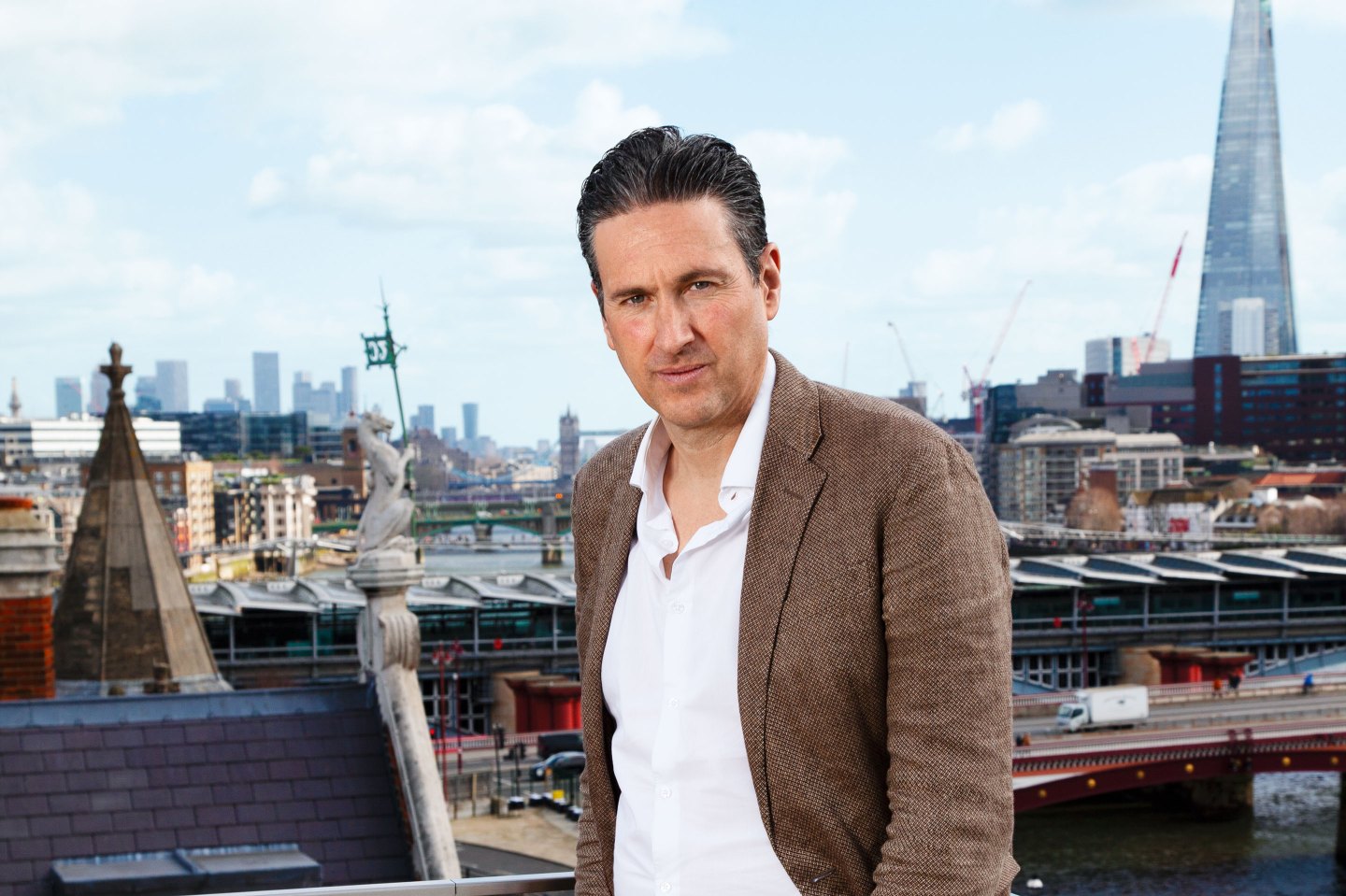
“We believed that if this was possible—and it was a big if—it would change medicine in a very profound way,” Moderna CEO Stéphane Bancel tells Fortune.
Then the pandemic transformed its timeline. The company, based in Cambridge, Mass., was tapped by the U.S. government to help spearhead Operation Warp Speed. And the success of its COVID vaccine has both proved the efficacy of Moderna’s technology and radically transformed its financials overnight. More than 250 million people worldwide have received a jab of the Moderna vaccine so far. And after years of heavy losses, Moderna reported $7.3 billion in earnings on sales of $11.3 billion through the first nine months of 2021—an impressive 65% profit margin.
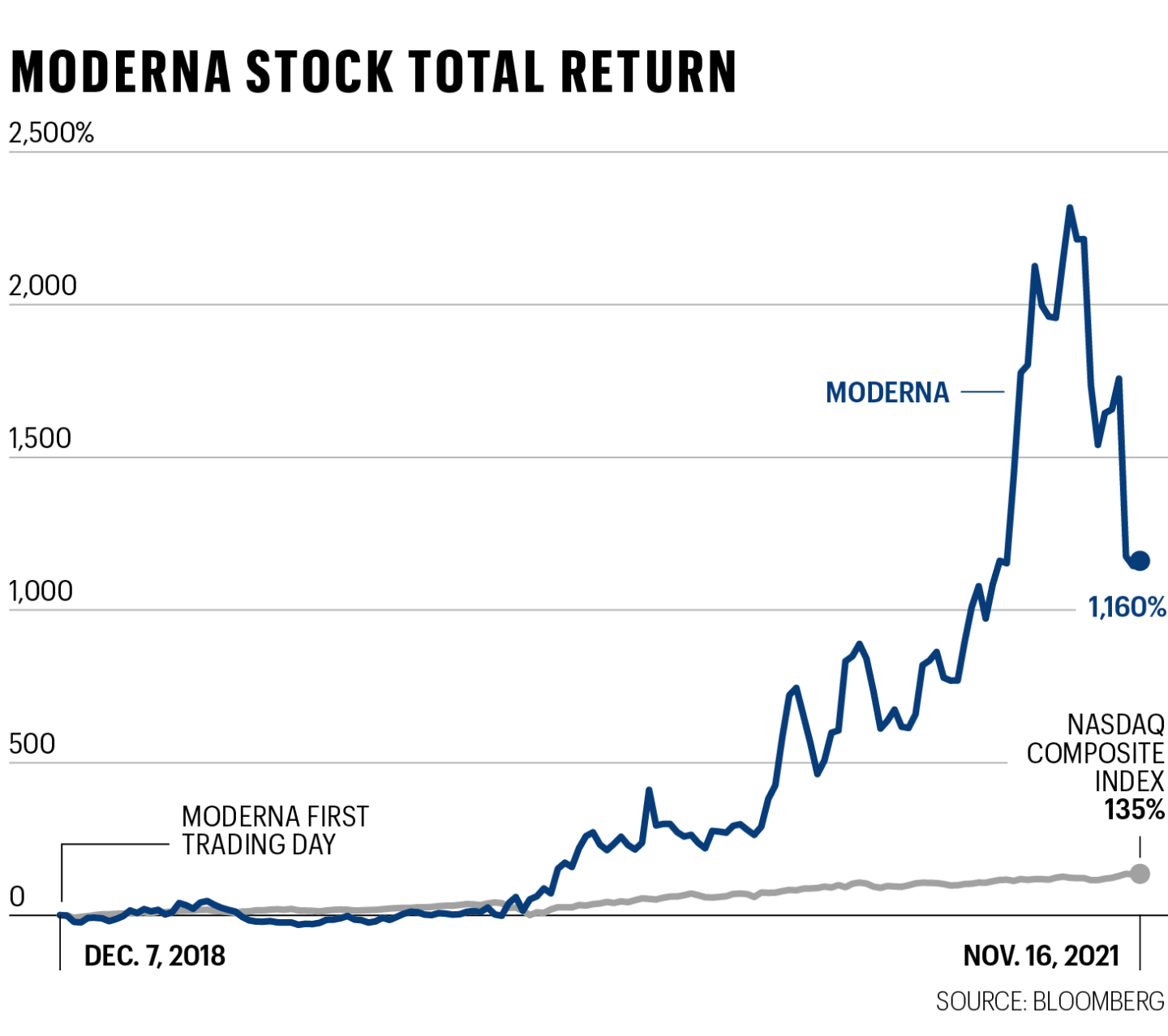
Those results have helped supercharge Moderna’s stock. Its shares are up some 184% over the past year, the best return of any company selected for this year’s Fortune Future 50, despite a recent selloff. And the stock has risen more than 1,100% since its first trading day post-IPO, giving it a market value above $100 billion. The big question for investors now: Is most of Moderna’s upside already priced in, or is it still early days for what could become one of the world’s leading health care companies?

Wall Street analysts have expressed increasing skepticism about Moderna’s current valuation, which some view as bloated. The stock slid more than 30% in early November after the company cut its full-year revenue guidance, citing pressures tied to production constraints and its reprioritization of vaccine deliveries to lower-income regions like Africa. And in a Nov. 4 note, J.P. Morgan asserted that even if Moderna raised its 2021 guidance, “shares would still appear overvalued.” Given that Moderna is currently a one-product business, any sign that demand for its vaccine might slow—as a result of, for instance, antiviral treatments for COVID—could raise alarms for its investors. Morgan Stanley biotech analyst Matthew Harrison, who has an equal-weight rating on Moderna’s stock, says that since COVID-19 is an endemic disease there could be a “long-term market” for COVID vaccines. But if vaccine revenues are not durable through booster shots there are downside risks “until you see some of their other products that are still in development come into play.” Then there is the distraction of Moderna’s ongoing patent dispute with the National Institutes of Health over the technology used in the vaccine.
Bancel says Moderna is focused on applying its approach to non-COVID causes. The CEO notes that one of the key advantages of mRNA technology is the ability to “copy and paste” formulas across various therapies and address different diseases—enabling faster drug development horizons. “There’s a whole slew of latent viruses for which there is no vaccine on the market,” says Bancel. “As a company, we believe we can adapt our technology to the complexity of these viruses to make vaccines.”
The company recently initiated Phase III clinical trials for a vaccine that aims to prevent CMV, a common latent virus that pregnant women can pass on to their babies, and which is the leading infectious cause of birth defects in the U.S. (Roughly one in every 200 babies is born with a congenital CMV infection, and one in five of those children will have long-term health problems.) The CMV vaccine had been projected to become Moderna’s first commercial product before the onset of COVID-19. Moderna has also launched early-phase trials for treatments of other latent viruses, including HIV and EBV, the virus that causes mononucleosis.
Moderna is in various stages of trials for vaccines to prevent respiratory viruses such as influenza and RSV—with the goal of developing a pan-respiratory vaccine that would address those illnesses in tandem with COVID-19. “We want to develop a vaccine for the six to 10 respiratory viruses that hurt humans,” Bancel says. “You’d get one dose at CVS a year, and you’re done.” Morgan Stanley’s Harrison notes that Moderna’s development of such an all-in-one shot would be a large step toward creating “an annual market” that would generate revenues for the company on a consistent basis.
And there are even loftier goals to deploy mRNA therapeutics to treat severe life-threatening diseases like cancer and rare genetic illnesses. Moderna plans to begin Phase II trials soon on a personalized cancer vaccine, and it’s also in early-stage trials on treatments for cardiovascular and autoimmune diseases. Just as ambitiously, the company is looking to follow the lead of Crispr technology and enter the realm of gene editing. In November it announced a partnership with California-based gene-editing firm Metagenomi, with the aim of developing new “in vivo” treatments for serious genetic diseases.
Unlike its COVID vaccine, however, the development and approval of the rest of Moderna’s drug pipeline will almost certainly take several more years to come to fruition. Moderna’s CEO projects nothing but optimism about its prospects. “For 10 years, we believed mRNA might work; today, we know mRNA works,” says Bancel. “So you indeed are going to see an acceleration of the pipeline of Moderna.” For investors betting on Moderna’s second act, that bright future can’t arrive soon enough.
A version of this article appears in the December 2021/January 2022 issue of Fortune with the headline, “Moderna seeks its second act.”
Subscribe to Fortune Daily to get essential business stories straight to your inbox each morning.