Bull markets, like the human investors that compose them, are mortal—and sometimes they die in a spectacular and bloody fashion. Trouble is, you never know for sure when a few days of big losses represent a mere dip (or to some, a buying opportunity) and what is the start of bigger decline. But there are at least four signs that appear when equities are approaching the abyss.
Crashes hit with the scary impact of a Category 4 hurricane, ripping apart portfolios that people depend on to fund retirements and college educations. Often, they are precursors to a recession. In 1929, the Dow Jones Industrial Average lost half its value. Amid the early-2020 pandemic, the Dow fell by more than a third. Today, with the market at a heady level, prophets of market doom are everywhere. Example: Michael Burry, the Big Short hedge fund manager who predicted the 2007-08 housing bust and the resulting market rout, sees hazardous amounts of speculation that he says will bring “the mother of all crashes.”
When these four warning signs occur together, be alert that wicked circumstances may ensue:
High market multiples. An overvalued market is tempting fate. The most common means of tracking stocks’ affordability—the price/earnings ratio, or P/E—has been at a high level for some time: for the S&P 500 lately, it’s 26. That’s far above the historical average of about 15. The market tends to revert to the mean. That is, after getting too lofty, it drops to a more sustainable level, a painful experience.
Since stock prices are largely a reflection of corporate earnings, the P/E measures what you are getting for your money. In the third quarter, earnings were burgeoning, and FactSet projects they’ll be up 45% for all of 2021. Next year, though, prospects aren’t as rosy: The research firm expects a dramatic downshift to 8.5%. And if an economic slowdown comes along, those earnings will evaporate.
Another and even more fright-inducing metric is Nobel laureate economist Robert Shiller’s cyclically adjusted price/earnings ration (CAPE), which smooths out earnings gyrations over the preceding 10 years, giving investors a longer view of valuations. The Shiller P/E, as it’s known, is around 40 lately. The last time the CAPE was this high was during the dot com bubble, and a fearsome market descent followed.
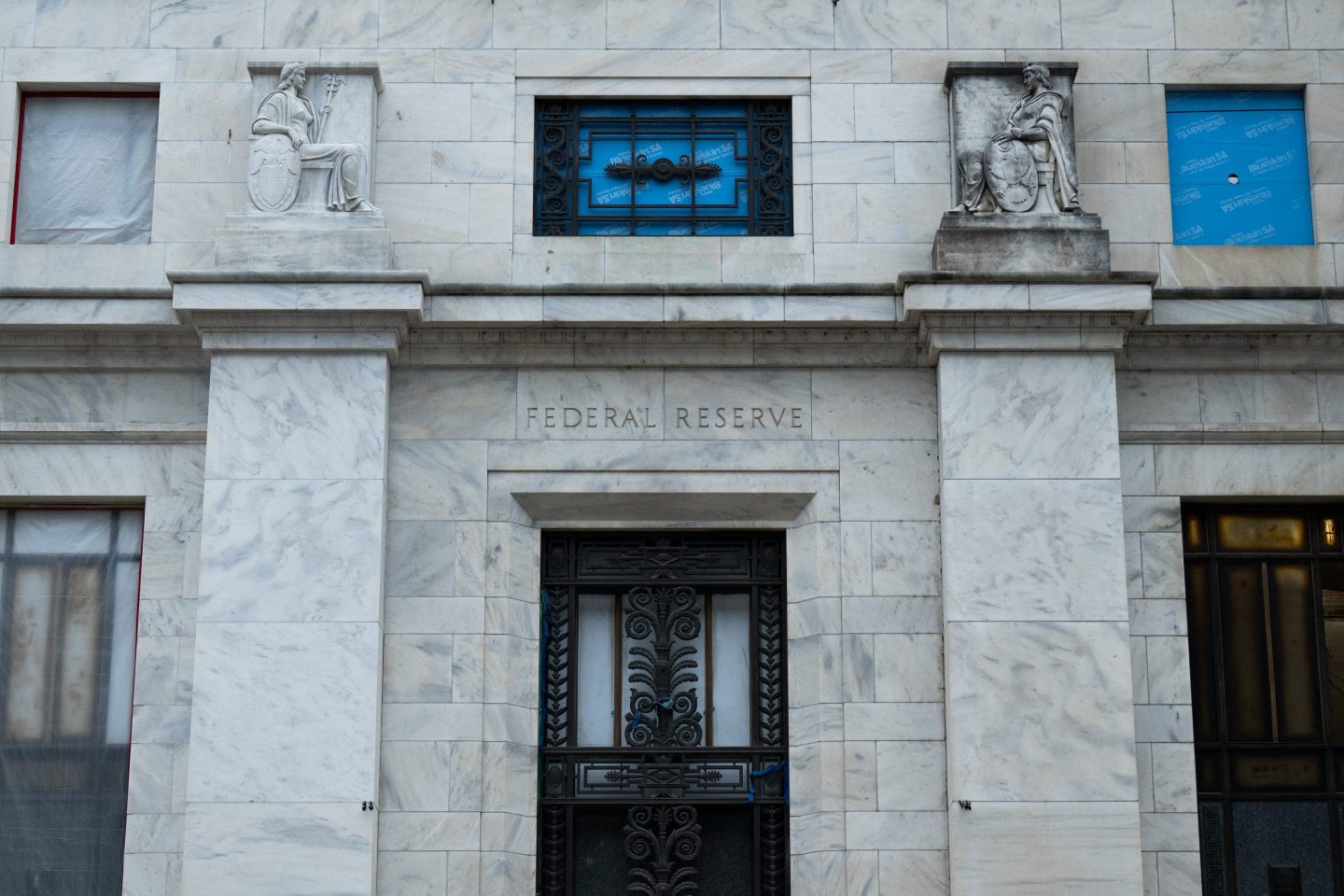
Federal Reserve actions. One classic cause of market dives, and thus recessions, is that the Fed raises interest rates too high for investors to stomach. Higher rates make borrowing less attractive and crimp corporate earnings. After keeping short rates near zero, the Fed has indicated that it will hike them beginning late next year. But on Tuesday during testimony Fed Chief Jerome Powell said that persisting inflation (a worrisome 6.2% in October) may nudge the central bank to act sooner and clamp down harder. Economist Jeremy Siegel, a professor at the University of Pennsylvania’s Wharton School, predicts that the Fed will move in the next month or two, and stocks will slide as a result.
Inverted yield curve. This is where the yield, or interest rate, on a two-year Treasury is higher than that of a 10-year obligation. Of course, the 10-year normally yields much more than the two-year, because investors need to be paid higher interest for the risk of holding a longer-dated bond. But when economic storm clouds gather, investors tend to pile into the 10-year, regarding it as a better refuge. This drives up the bond’s price, and thereby lowers its yield (price and yield move in opposite directions).
The yield curve has inverted before each recession in the last 50 years, and only once gave a false positive. Right now, the gap between two- and 10-year bonds has narrowed, although they still are separated by around one percentage point.
Black swans. These are events that knock the market and the economy on their heels. Sometimes, the arrival of these creatures is unforeseeable, such as the Sept. 11, 2001, terrorist attacks, which torpedoed stocks. Other hazards are lurking in plain sight, like growing sub-prime mortgage defaults in 2007, as hedge fund savant Burry can attest. These produced the global financial crisis and the market’s epic swoon starting in September 2008. (Black swans, unlike white ones, are supposedly rare.)
Determining what’s a black swan isn’t an exact science, certainly. A big hint is when official wisdom shrugs off an obvious and mounting mega-problem. In 2007, the line was that the mortgage mess could be “contained.” In 2021, the White House and the Federal Reserve insist that the supply-chain bottlenecks, born of COVID-19-related labor shortages, among other things, are “temporary.” What if they aren’t?
At the moment, the market’s towering P/E and officialdom’s supply-chain optimism are the lone possible signals that trouble could be brewing. Should the others slither into view, watch out.
Subscribe to Fortune Daily to get essential business stories straight to your inbox each morning.