• Home
  • Latest
  • Fortune 500
  • Finance
  • Tech
  • Leadership
  • Lifestyle
  • Rankings
  • Multimedia

Trendingnow

1

Jeff Bezos wants the bottom half of earners to pay zero income tax—he says nurses making just $75K should save $12K a year

2

As CEO of the $96 billion Sam’s Club, Latriece Watkins is testing her mettle at the warehouse retailer that produced CEOs for Walmart, Target, and Walgreens

3

The river that supplies 40 million Americans is down to 23% — and about to make a $25 million bet on one fish

1

Jeff Bezos wants the bottom half of earners to pay zero income tax—he says nurses making just $75K should save $12K a year

2

As CEO of the $96 billion Sam’s Club, Latriece Watkins is testing her mettle at the warehouse retailer that produced CEOs for Walmart, Target, and Walgreens

3

The river that supplies 40 million Americans is down to 23% — and about to make a $25 million bet on one fish
CommentaryCOVID-19 vaccines

The most important meeting yet for global pandemic response—and drugmakers

By
Nicole Hassoun
Nicole Hassoun
and
Kaushik Basu
Kaushik Basu
Down Arrow Button Icon
By
Nicole Hassoun
Nicole Hassoun
and
Kaushik Basu
Kaushik Basu
Down Arrow Button Icon
November 29, 2021, 12:30 PM ET
Public health experts have long warned that inequities in access to the COVID vaccine would lead to the emergence of problematic new variants.
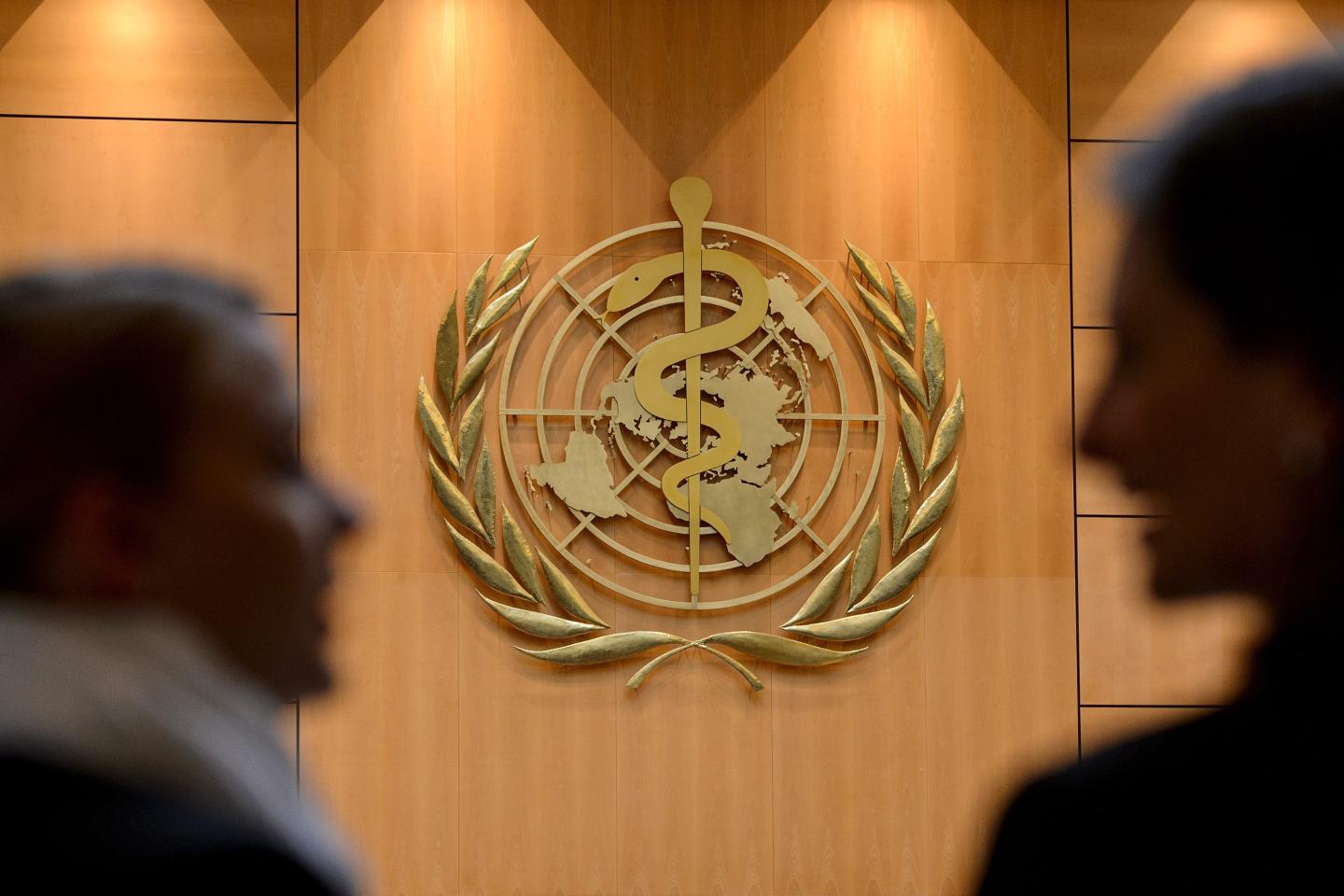
Public health experts have long warned that inequities in access to the COVID vaccine would lead to the emergence of problematic new variants.FABRICE COFFRINI—Getty Images

Global health leaders are meeting today and tomorrow in Geneva to chart the future of pandemic response. Equity between nations must take top priority. As public health experts warned, unequal access to vaccines has led to the emergence of a new variant—Omicron, first identified in South Africa.

It has been almost two years since the COVID-19 pandemic began, and although more than 60% of people in rich countries have received a vaccine, only 3% of those in poor countries have done so—underscoring the dramatic disparity in global access to medicines between rich and poor nations.

Efforts to close this gap have been agonizingly slow. The international community is starting to invest in vaccine manufacturing sites in Africa that will one day produce hundreds of millions of vaccine doses a year. But it will take years to expand capacity significantly—even with large-scale, consistent international financing.

Global negotiations on a patent waiver for COVID-19 vaccines—an effort to give more drugmakers a road map for developing their own effective shots—have stalled. Global manufacturing capacity is in dire straits and distribution systems are woefully under-resourced for the kind of global vaccination campaigns needed to tackle the crisis.

U.S. President Joe Biden recently announced a new plan to expand U.S. vaccine manufacturing and create a billion doses a year for use overseas and domestically. This was urgently needed, but it plays to a charity narrative that is essentially dangerous and won’t make a dent in efforts to prevent the next pandemic or global health crisis.

The COVID-19 pandemic has made it painfully obvious that our global health system is badly broken. It caters to the demands of profit-driven pharmaceutical companies and the buying power of rich consumers and rich nations, at the expense of much of the world.

But there is good news. World leaders are beginning to rethink the global health status quo in the face of pandemic threats, and this month we could see a glimmer of much needed transformation: the first etchings of a more equitable and resilient global health system. It’s an opportunity we can’t afford to bungle.

World Health Organization member states are gathering in Geneva for a special session of the World Health Assembly to debate the merits and hash out the framework for a treaty on pandemic preparedness and response—a global commitment designed to ensure more equitable access to new vaccines and technologies to defend against future pandemic threats.

We need this treaty. But to be truly effective, it must prioritize a critical ingredient: a regulatory framework that provides incentives for pharmaceutical companies to develop products with global health impacts, and at the same time discourages them from using the strategy of holding back wide distribution for the sake of their profits, as happens under the current system. There are many design details that will have to be worked out, but, minimally, such incentives must be tied to a requirement that drug companies vest knowledge, data, and intellectual property needed to make technologies within the WHO or another major global health organization. This will allow the organization to recoup investments in new innovations and ensure equitable access to resulting products.

Imagine this scenario: A newly discovered zoonotic disease spreads rampantly through poultry farms in rural Uganda, infecting an increasing number of humans along the way.

Under the terms of a new global treaty, any company producing a drug to tamp down this pandemic threat will be awarded $1 million dollars upfront. Should a product be used, the company will receive $10 per dose provided. The WHO would own the intellectual property in the product and could allow other companies to produce the medicine and buy it at cost. If the WHO charges those who provide drugs for rich countries market price for the medicine, they can recoup the R&D investment cost and support efforts to scale up manufacturing and distribution. Then, the WHO can ensure the medicine is widely available and equitably distribute it at low cost in poor countries. The basic principle is simple: If we pay for it, we should own it.

There is growing support within the global health community for this concept. “Global health cannot be left hostage to a pharmaceutical industry which buys up patents and develops them in the interest of making profits,” the Independent Panel for Pandemic Preparedness and Response—an independent body of world leaders and public health experts established by the WHO to review the international response to COVID-19—said in a recent report.

Back in March, 25 heads of government (including the leaders of the U.K., France, and Germany) and international agencies issued a joint call for a global treaty “rooted in the constitution of the World Health Organization,” to “effectively respond to pandemics in a highly coordinated fashion.” 

Ultimately this idea’s success depends on the political will of world leaders. Only they have the power to reinstate the WHO as the world’s premier global health entity and foster global collaboration and equity in pandemic response.

In response to the COVID-19 pandemic, taxpayers in rich countries paid companies to develop vaccines, but these companies kept all the profits and did not provide equitable access to these essential health technologies.

We can save millions of lives and billions, if not trillions, of dollars by better preparing for and responding quickly to pandemics. Some estimate that the COVID-19 crisis cost the world $375 billion monthly and will cost $8.5 trillion over the next two years. Other models suggest that vaccine nationalism alone will cost the world $1.2 trillion. Future pandemics could be much worse.

Only by working together to implement better incentives for pharmaceutical innovation and invest in manufacturing and distribution capacity can we hope to adequately address and prevent future pandemics.

Nicole Hassoun is a professor at Binghamton University and the author of Global Health Impact: Extending Access to Essential Medicines. Kaushik Basu is a professor of economics and Carl Marks Professor of International Studies at Cornell University and a former chief economist of the World Bank. 

More must-read commentary published by Fortune:

  • We can’t walk blindly into the metaverse
  • I know how lobbyists make sure Americans don’t get dental care—I was one of them
  • Millennials and Gen Z are a growing force in investing. The market needs to catch up
  • Great leaders show gratitude beyond Thanksgiving
  • Don’t let them tell you inflation is good for the poor. It’s not

Subscribe to Fortune Daily to get essential business stories delivered straight to your inbox each morning.

About the Authors
By Nicole Hassoun
See full bioRight Arrow Button Icon
By Kaushik Basu
See full bioRight Arrow Button Icon

Latest in Commentary

Finance
Lorem ipsum dolor sit amet, consectetur adipiscing elit, sed do eiusmod tempor incididunt ut labore et dolore magna aliqua. Ut enim ad minim veniam
By Fortune Editors
October 20, 2025
Finance
Lorem ipsum dolor sit amet, consectetur adipiscing elit, sed do eiusmod tempor incididunt ut labore et dolore magna aliqua. Ut enim ad minim veniam
By Fortune Editors
October 20, 2025
Finance
Lorem ipsum dolor sit amet, consectetur adipiscing elit, sed do eiusmod tempor incididunt ut labore et dolore magna aliqua. Ut enim ad minim veniam
By Fortune Editors
October 20, 2025
Finance
Lorem ipsum dolor sit amet, consectetur adipiscing elit, sed do eiusmod tempor incididunt ut labore et dolore magna aliqua. Ut enim ad minim veniam
By Fortune Editors
October 20, 2025
Finance
Lorem ipsum dolor sit amet, consectetur adipiscing elit, sed do eiusmod tempor incididunt ut labore et dolore magna aliqua. Ut enim ad minim veniam
By Fortune Editors
October 20, 2025
Finance
Lorem ipsum dolor sit amet, consectetur adipiscing elit, sed do eiusmod tempor incididunt ut labore et dolore magna aliqua. Ut enim ad minim veniam
By Fortune Editors
October 20, 2025

Most Popular

Finance
Lorem ipsum dolor sit amet, consectetur adipiscing elit, sed do eiusmod tempor incididunt ut labore et dolore magna aliqua. Ut enim ad minim veniam
By Fortune Editors
October 20, 2025
Finance
Lorem ipsum dolor sit amet, consectetur adipiscing elit, sed do eiusmod tempor incididunt ut labore et dolore magna aliqua. Ut enim ad minim veniam
By Fortune Editors
October 20, 2025
Finance
Lorem ipsum dolor sit amet, consectetur adipiscing elit, sed do eiusmod tempor incididunt ut labore et dolore magna aliqua. Ut enim ad minim veniam
By Fortune Editors
October 20, 2025
Finance
Lorem ipsum dolor sit amet, consectetur adipiscing elit, sed do eiusmod tempor incididunt ut labore et dolore magna aliqua. Ut enim ad minim veniam
By Fortune Editors
October 20, 2025
Finance
Lorem ipsum dolor sit amet, consectetur adipiscing elit, sed do eiusmod tempor incididunt ut labore et dolore magna aliqua. Ut enim ad minim veniam
By Fortune Editors
October 20, 2025
Finance
Lorem ipsum dolor sit amet, consectetur adipiscing elit, sed do eiusmod tempor incididunt ut labore et dolore magna aliqua. Ut enim ad minim veniam
By Fortune Editors
October 20, 2025
Fortune Secondary Logo
Rankings
  • 100 Best Companies
  • Fortune 500
  • Global 500
  • Fortune 500 Europe
  • Most Powerful Women
  • World's Most Admired Companies
  • See All Rankings
  • Lists Calendar
Sections
  • Finance
  • Fortune Crypto
  • Features
  • Leadership
  • Health
  • Commentary
  • Success
  • Retail
  • Mpw
  • Tech
  • Lifestyle
  • CEO Initiative
  • Asia
  • Politics
  • Conferences
  • Europe
  • Newsletters
  • Personal Finance
  • Environment
  • Magazine
  • Education
Customer Support
  • Frequently Asked Questions
  • Customer Service Portal
  • Privacy Policy
  • Terms Of Use
  • Single Issues For Purchase
  • International Print
Commercial Services
  • Advertising
  • Fortune Brand Studio
  • Fortune Analytics
  • Fortune Conferences
  • Business Development
  • Group Subscriptions
About Us
  • About Us
  • Press Center
  • Work At Fortune
  • Terms And Conditions
  • Site Map
  • About Us
  • Press Center
  • Work At Fortune
  • Terms And Conditions
  • Site Map
  • Facebook icon
  • Twitter icon
  • LinkedIn icon
  • Instagram icon
  • Pinterest icon

Latest in Commentary

t
CommentaryCoding
Girls Who Code CEO: 70% of teen girls want to work in cybersecurity. We’re losing them before they start
By Tarika BarrettMay 29, 2026
3 hours ago
r
CommentaryLayoffs
Big Tech is laying off developers. My company just hired its first. We’re both right about AI
By Rob CollieMay 29, 2026
4 hours ago
lentz
CommentaryCareers
I built a Fortune 1000 career most people wouldn’t walk away from. Then I did
By Christine LentzMay 29, 2026
4 hours ago
s
CommentaryMarketing
What Schlitz beer can teach us about AI adoption
By Julia Dhar, Kristy R. Ellmer and Philip JamesonMay 29, 2026
4 hours ago
hs
CommentaryVenture Capital
I raised $15 million without VC in one of tech’s most capital-intensive sectors. Here’s what I learned
By Hebron SherMay 29, 2026
6 hours ago
dd
CommentaryCareers
Conference Board: We’ve just hit a peak at job satisfaction. AI threatens to completely ruin that for the unlucky 50%
By Matt Rosenbaum and Allan SchweyerMay 29, 2026
6 hours ago

Most Popular

Jeff Bezos wants the bottom half of earners to pay zero income tax—he says nurses making just $75K should save $12K a year
Success
Jeff Bezos wants the bottom half of earners to pay zero income tax—he says nurses making just $75K should save $12K a year
By Preston ForeMay 21, 2026
8 days ago
As CEO of the $96 billion Sam’s Club, Latriece Watkins is testing her mettle at the warehouse retailer that produced CEOs for Walmart, Target, and Walgreens
Magazine
As CEO of the $96 billion Sam’s Club, Latriece Watkins is testing her mettle at the warehouse retailer that produced CEOs for Walmart, Target, and Walgreens
By Emma HinchliffeMay 27, 2026
2 days ago
The river that supplies 40 million Americans is down to 23% — and about to make a $25 million bet on one fish
Environment
The river that supplies 40 million Americans is down to 23% — and about to make a $25 million bet on one fish
By Dorany Pineda, Brittany Peterson and The Associated PressMay 27, 2026
2 days ago
Jamie Dimon said the American Dream was slipping away. JPMorgan just put $40 million on the table to fix it
Banking
Jamie Dimon said the American Dream was slipping away. JPMorgan just put $40 million on the table to fix it
By Nick LichtenbergMay 27, 2026
2 days ago
Current price of oil as of May 28, 2026
Personal Finance
Current price of oil as of May 28, 2026
By Joseph HostetlerMay 28, 2026
1 day ago
As AI slashes white-collar jobs, Salesforce CEO Marc Benioff says almost no one is being hired—except in sales
Success
As AI slashes white-collar jobs, Salesforce CEO Marc Benioff says almost no one is being hired—except in sales
By Emma BurleighMay 28, 2026
24 hours ago

© 2026 Fortune Media IP Limited. All Rights Reserved. Use of this site constitutes acceptance of our Terms of Use and Privacy Policy | CA Notice at Collection and Privacy Notice | Do Not Sell/Share My Personal Information
FORTUNE is a trademark of Fortune Media IP Limited, registered in the U.S. and other countries. FORTUNE may receive compensation for some links to products and services on this website. Offers may be subject to change without notice.