• Home
  • Latest
  • Fortune 500
  • Finance
  • Tech
  • Leadership
  • Lifestyle
  • Rankings
  • Multimedia
CommentaryNFTs

With NFTs, the digital medium is the message

By
Alex Tapscott
Alex Tapscott
Down Arrow Button Icon
By
Alex Tapscott
Alex Tapscott
Down Arrow Button Icon
October 4, 2021, 7:00 PM ET
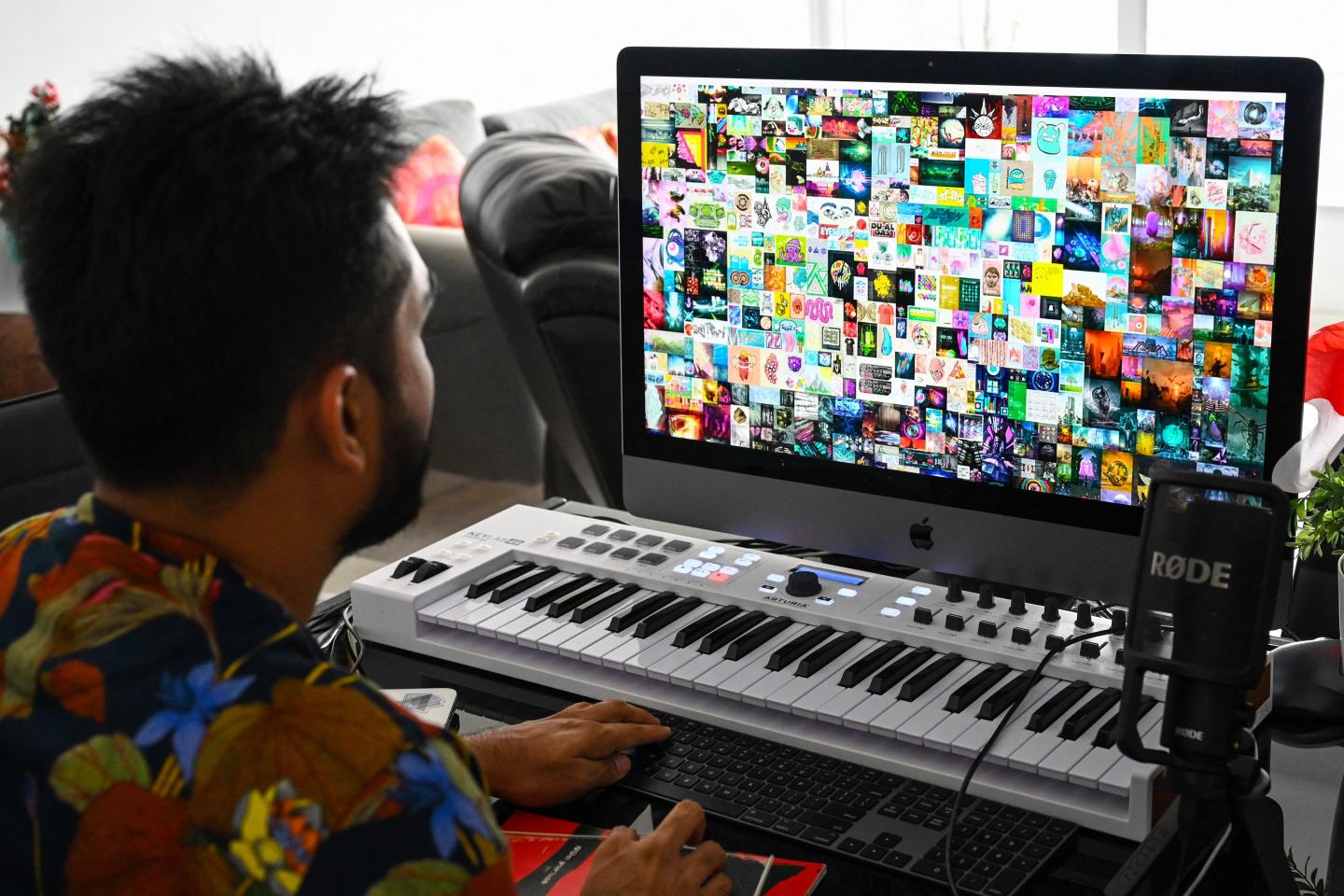
Blockchain entrepreneur Vignesh Sundaresan showing the NFT "Everydays: The First 5,000 Days" by artist Beeple, which Sundaresan bought in March. "NFTs and the underlying blockchain are changing how we consume culture and interact online," writes Alex Tapscott.
Blockchain entrepreneur Vignesh Sundaresan showing the NFT "Everydays: The First 5,000 Days" by artist Beeple, which Sundaresan bought in March. "NFTs and the underlying blockchain are changing how we consume culture and interact online," writes Alex Tapscott.Photo by ROSLAN RAHMAN/AFP via Getty Images

In 1964, media theorist Marshall McLuhan wrote that “The medium is the message.” At the time, print, radio, and television were the dominant media. Today, McLuhan’s observation feels more prescient than ever. Consider NFTs, or non-fungible tokens, the provably scarce digital artwork and other digital goods that are enabled by blockchain.

NFTs have taken the art world by storm and are spreading through the culture. In Damien Hirst’s foray into NFTs, called The Currency, he sold 10,000 unique hand-painted variations on his “dot” works. Buyers also got an NFT of their piece. There’s a catch: In a year, buyers must choose between the physical painting or its NFT. Whichever the buyer doesn’t choose is going to be destroyed. Which medium do you think buyers will choose? McLuhan would recognize the significance of that choice instantly.

Art and other so-called crypto-collectibles are the main use-case for NFTs today, but in the future a wide array of unique digital goods and items will be NFT-based and allow individuals to move seamlessly their identity and digital possessions between different online ecosystems, platforms, games, and universes. 

NFTs upend art and collectibles

There are three main categories of art/collectible NFTs. The first are collectibles tied to familiar cultural assets. For example, NBA TopShots NFTs capture highlights of favorite NBA players. The second are unique pieces of art, such as Beeple’s Everydays: The First 5,000 Days. The final and most viral category is generative art, often created algorithmically and usually issued in a series with a cap on the total supply, such as CryptoPunks. These have become the calling cards and digital identifiers of online communities of early adopters and because of that cache, certain series have become more and more valuable.

So why would someone buy an art NFT?

NFTs are financial assets that we can buy and sell. August 2021 smashed all records for NFT transaction values: OpenSea, a leading NFT platform, surpassed $3 billion in sales volume that month. Speculators are spending thousands and sometimes millions of dollars on the rights to own rare images. Tom Brady launched the NFT platform Autograph, and Steph Curry changed his Twitter avatar to an NFT he bought for $180,000 to align his brand with this emerging asset class.

NFTs are status symbols. As we spend a fourth of our time online, we care more about the presentation of ourselves in everyday digital life—the performative aspect of social interactions, as sociologist Erving Goffman described in his seminal work The Presentation of Self in Everyday Life. Costumes matter. When someone’s avatar is a provably scarce visual that the owner verifiably bought for $100,000, that image says a lot about its owner—namely, that the person is in on NFTs and immersed in cryptoassets (and probably quite wealthy). 

NFTs enable fans and artists to connect. Of course, we could be cynical about NFTs as playthings for the super-rich. But most NFTs cost very little, and anyone can buy them. Many NFT collectors are fans; they don’t expect to sell their NFTs at a higher price. And many NFT creators are bypassing galleries and auction houses—centralized intermediaries and gatekeepers to the collector world—to reach their fans directly, engage with them around art, and retain more of the value they create.

The future of NFTs

Today, innovators are using NFTs primarily for art and collectibles, but we can harness them for greater ends. For example, NFTs will be essential to the growth of the shared-state metaverse, a super-immersive shared online state (perhaps one day paired with hyper-realistic virtual reality) where we can move digital objects between online environments in real time. For example, in the metaverse pioneer Decentraland, we can buy and sell virtual property among other things using the native cryptocurrency MANA. Decentraland helped seed the development and adoption of some of the more creative metaverse-crypto collaborations we’ve seen so far. 

Consider Loot, created by prolific crypto entrepreneur Dom Hofmann, creator of Vine. Hofmann created 8,000 “LootBags” where fans could spend ETH (the native cryptocurrency of Ethereum) to create lists of words such as “Gold Ring” and “Divine Hood,” for some future undeveloped videogame. Within moments, all the Loot Bags were claimed. That’s when the fun really started: Communities of fans, artists and creators emerged to imagine how these assets might look, even minting NFTs of these derivative works. The value of LootBags with “rare” words skyrocketed in value. A whole game of games arose around Hofmann’s idea of a videogame—not an actual game.

In McLuhan’s day, an analog broadcast medium was transforming how we consumed information. NFTs and the underlying blockchain are a digital medium for value, changing the nature of digital goods, and how we consume culture and interact online. Why is this important? Enabling Digital assets that we can own, trade, and transport across different environments and jurisdictions could change our relationship to the Internet and each other. 

Chris Dixon, a partner at Andreesen Horowitz, says, “Tokens give users property rights: the ability to own a piece of the Internet.” The ability to own unique and scarce digital assets—such as our digital identities—and move freely around the Internet without the risk of duplication or seizure by a centralized platform is a profound shift from how things work today. The medium is the message. Time to tune in.

Alex Tapscott is managing director of the Ninepoint Digital Assets Group (a division of Ninepoint Partners LP) and co-author of Blockchain Revolution. This article is for information purposes only and should not be relied upon as investment advice. The author or his employer may have investments in some of the companies mentioned.

More must-read commentary published by Fortune:

  • Historically Black colleges can’t solve tech’s diversity problem alone
  • Conservative business groups support the Equality Act. Congress should heed their call
  • Stop shaming corporations with meaninglessly low effective tax rates
  • How companies can capitalize on the coming boom in “smart assistants”
  • The Great Resignation is upon us, and purpose can help you resist its siren call

Subscribe to Fortune Daily to get essential business stories straight to your inbox each morning.

About the Author
By Alex Tapscott
See full bioRight Arrow Button Icon

Latest in Commentary

Finance
Lorem ipsum dolor sit amet, consectetur adipiscing elit, sed do eiusmod tempor incididunt ut labore et dolore magna aliqua. Ut enim ad minim veniam
By Fortune Editors
October 20, 2025
Finance
Lorem ipsum dolor sit amet, consectetur adipiscing elit, sed do eiusmod tempor incididunt ut labore et dolore magna aliqua. Ut enim ad minim veniam
By Fortune Editors
October 20, 2025
Finance
Lorem ipsum dolor sit amet, consectetur adipiscing elit, sed do eiusmod tempor incididunt ut labore et dolore magna aliqua. Ut enim ad minim veniam
By Fortune Editors
October 20, 2025
Finance
Lorem ipsum dolor sit amet, consectetur adipiscing elit, sed do eiusmod tempor incididunt ut labore et dolore magna aliqua. Ut enim ad minim veniam
By Fortune Editors
October 20, 2025
Finance
Lorem ipsum dolor sit amet, consectetur adipiscing elit, sed do eiusmod tempor incididunt ut labore et dolore magna aliqua. Ut enim ad minim veniam
By Fortune Editors
October 20, 2025
Finance
Lorem ipsum dolor sit amet, consectetur adipiscing elit, sed do eiusmod tempor incididunt ut labore et dolore magna aliqua. Ut enim ad minim veniam
By Fortune Editors
October 20, 2025

Most Popular

Finance
Lorem ipsum dolor sit amet, consectetur adipiscing elit, sed do eiusmod tempor incididunt ut labore et dolore magna aliqua. Ut enim ad minim veniam
By Fortune Editors
October 20, 2025
Finance
Lorem ipsum dolor sit amet, consectetur adipiscing elit, sed do eiusmod tempor incididunt ut labore et dolore magna aliqua. Ut enim ad minim veniam
By Fortune Editors
October 20, 2025
Finance
Lorem ipsum dolor sit amet, consectetur adipiscing elit, sed do eiusmod tempor incididunt ut labore et dolore magna aliqua. Ut enim ad minim veniam
By Fortune Editors
October 20, 2025
Finance
Lorem ipsum dolor sit amet, consectetur adipiscing elit, sed do eiusmod tempor incididunt ut labore et dolore magna aliqua. Ut enim ad minim veniam
By Fortune Editors
October 20, 2025
Finance
Lorem ipsum dolor sit amet, consectetur adipiscing elit, sed do eiusmod tempor incididunt ut labore et dolore magna aliqua. Ut enim ad minim veniam
By Fortune Editors
October 20, 2025
Finance
Lorem ipsum dolor sit amet, consectetur adipiscing elit, sed do eiusmod tempor incididunt ut labore et dolore magna aliqua. Ut enim ad minim veniam
By Fortune Editors
October 20, 2025
Fortune Secondary Logo
Rankings
  • 100 Best Companies
  • Fortune 500
  • Global 500
  • Fortune 500 Europe
  • Most Powerful Women
  • World's Most Admired Companies
  • See All Rankings
  • Lists Calendar
Sections
  • Finance
  • Fortune Crypto
  • Features
  • Leadership
  • Health
  • Commentary
  • Success
  • Retail
  • Mpw
  • Tech
  • Lifestyle
  • CEO Initiative
  • Asia
  • Politics
  • Conferences
  • Europe
  • Newsletters
  • Personal Finance
  • Environment
  • Magazine
  • Education
Customer Support
  • Frequently Asked Questions
  • Customer Service Portal
  • Privacy Policy
  • Terms Of Use
  • Single Issues For Purchase
  • International Print
Commercial Services
  • Advertising
  • Fortune Brand Studio
  • Fortune Analytics
  • Fortune Conferences
  • Business Development
  • Group Subscriptions
About Us
  • About Us
  • Press Center
  • Work At Fortune
  • Terms And Conditions
  • Site Map
  • About Us
  • Press Center
  • Work At Fortune
  • Terms And Conditions
  • Site Map
  • Facebook icon
  • Twitter icon
  • LinkedIn icon
  • Instagram icon
  • Pinterest icon

Latest in Commentary

agentic
CommentaryAI agents
Why your data infrastructure — not your AI model — will determine whether Agentic AI scales
By Jeffrey Sonnenfeld, Stephen Henriques, Catherine Dai and Zander JeinthanuttkanontApril 30, 2026
1 hour ago
hoskins
Commentaryoffices
Gensler Co-Chair: Hot-desking was supposed to save money. It may be costing you your culture
By Diane HoskinsApril 30, 2026
3 hours ago
tillis
CommentaryCongress
Thom Tillis: Free markets built American prosperity. Government intervention puts it at risk
By Thom Tillis and John StanfordApril 30, 2026
4 hours ago
iran
CommentaryIran
The Strait of Hormuz is a data problem, not just a military one
By Erik Bethel and Ami DanielApril 30, 2026
5 hours ago
hollywood
CommentaryMarketing
I spent 20 years learning to navigate an industry. Then I built a campaign for the man who’s dismantling it
By Matti YahavApril 29, 2026
24 hours ago
aging
HealthLongevity
We’re the CEOs of Peloton and the Hospital for Special Surgery. Living longer isn’t enough, we need to live better, too
By Bryan T. Kelly and Peter SternApril 29, 2026
1 day ago

Most Popular

Apple cofounder Ronald Wayne—whose stake would be worth up to $400 billion had he not sold it in 1976—says that at 91, he has no regrets
Success
Apple cofounder Ronald Wayne—whose stake would be worth up to $400 billion had he not sold it in 1976—says that at 91, he has no regrets
By Preston ForeApril 27, 2026
3 days ago
Jamie Dimon gets candid about national debt: ‘There will be a bond crisis, and then we’ll have to deal with it’
Economy
Jamie Dimon gets candid about national debt: ‘There will be a bond crisis, and then we’ll have to deal with it’
By Eleanor PringleApril 29, 2026
1 day ago
‘The cost of compute is far beyond the costs of the employees’: Nvidia executive says right now AI is more expensive than paying human workers
AI
‘The cost of compute is far beyond the costs of the employees’: Nvidia executive says right now AI is more expensive than paying human workers
By Sasha RogelbergApril 28, 2026
2 days ago
‘Take the money and run’: Johns Hopkins economist Steve Hanke on why the UAE quit OPEC
Energy
‘Take the money and run’: Johns Hopkins economist Steve Hanke on why the UAE quit OPEC
By Shawn TullyApril 29, 2026
1 day ago
‘They left me no choice’: Powell isn’t going anywhere—blocking Trump from another Fed appointee
Banking
‘They left me no choice’: Powell isn’t going anywhere—blocking Trump from another Fed appointee
By Eva RoytburgApril 29, 2026
18 hours ago
More than two-thirds of U.S. schools say they’re unable to afford the cost of student free lunch—and MAHA’s dietary guidelines may make it worse
Economy
More than two-thirds of U.S. schools say they’re unable to afford the cost of student free lunch—and MAHA’s dietary guidelines may make it worse
By Sasha RogelbergApril 29, 2026
1 day ago

© 2026 Fortune Media IP Limited. All Rights Reserved. Use of this site constitutes acceptance of our Terms of Use and Privacy Policy | CA Notice at Collection and Privacy Notice | Do Not Sell/Share My Personal Information
FORTUNE is a trademark of Fortune Media IP Limited, registered in the U.S. and other countries. FORTUNE may receive compensation for some links to products and services on this website. Offers may be subject to change without notice.