• Home
  • News
  • Fortune 500
  • Tech
  • Finance
  • Leadership
  • Lifestyle
  • Rankings
  • Multimedia
Politicstrademarks

China is flooding the U.S. with trademark applications and no one is sure why

By
Beth Kowitt
Beth Kowitt
Down Arrow Button Icon
By
Beth Kowitt
Beth Kowitt
Down Arrow Button Icon
July 1, 2021, 9:00 AM ET
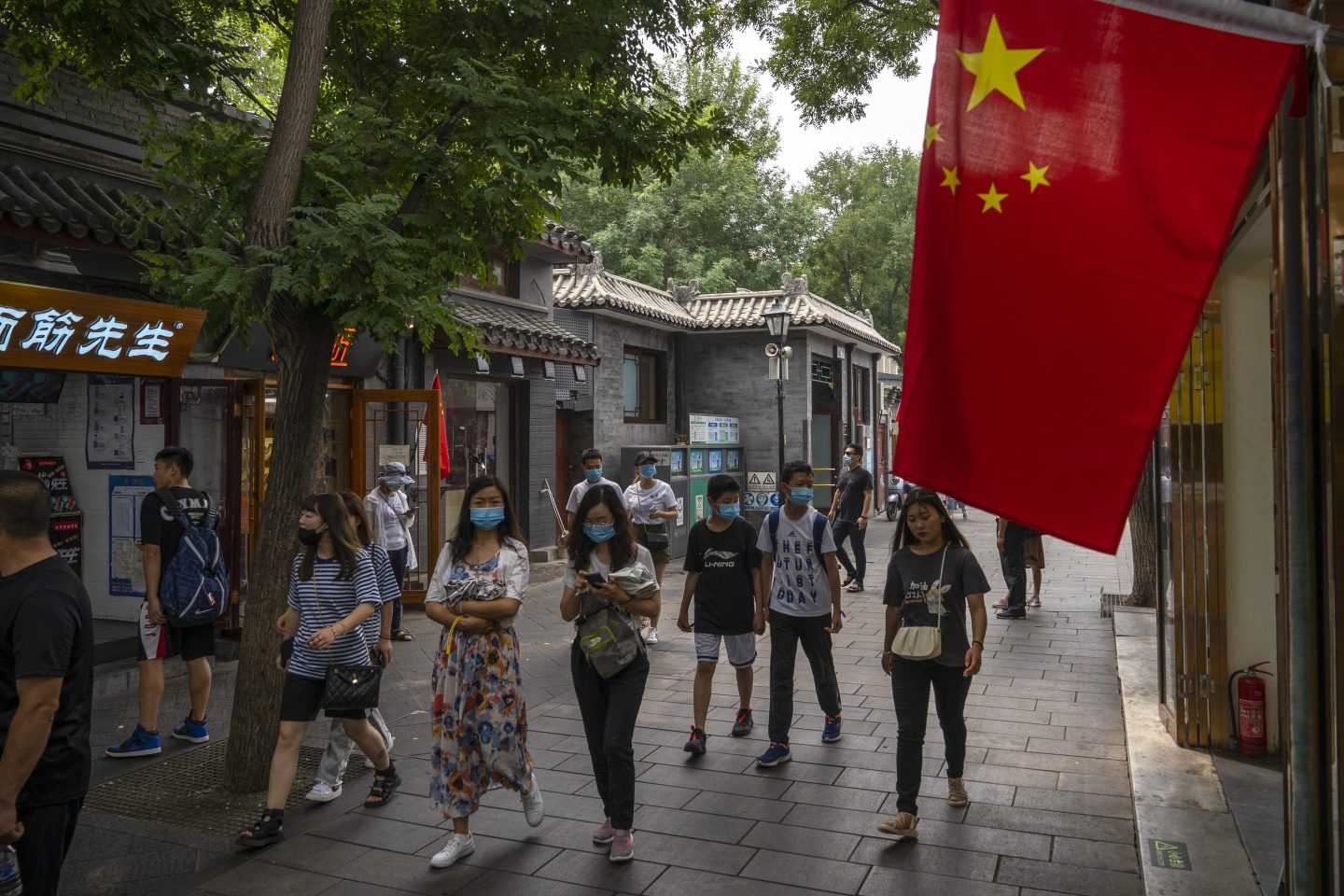
China’s local governments are paying companies and individuals to register U.S. trademarks.
China’s local governments are paying companies and individuals to register U.S. trademarks.Andrea Verdelli—Getty Images

The U.S. Patent and Trademark Office is underwater.

Last week, a blog post by David Gooder, the commissioner for trademarks, announced that trademark applications have “surged to unprecedented levels.” As of June 17, applications are up about 63% from last year, and a growing backlog has doubled the number of filings that are waiting to be processed and examined.

In his post, Gooder said the USPTO is exploring the reasons behind the surge—pointing to an increase in both foreign and domestic filings as well as a rise in e-commerce during the pandemic. The rapid growth of the digital economy and direct-to-consumer companies has meant the creation of a lot more brands, and in turn the demand for trademark filings.

But Josh Gerben, whose law firm Gerben Perrott specializes in trademark law, crunched the numbers and pinpointed what he says is the main contributor to the influx of filings. So far in 2021, 29% of all trademark applications have come from China-based applicants. In 2010, that figure was less than 1%. “It’s the biggest problem to our trademark system that we’ve faced in my career,” says Gerben. “Just the sheer numbers are surprising.”
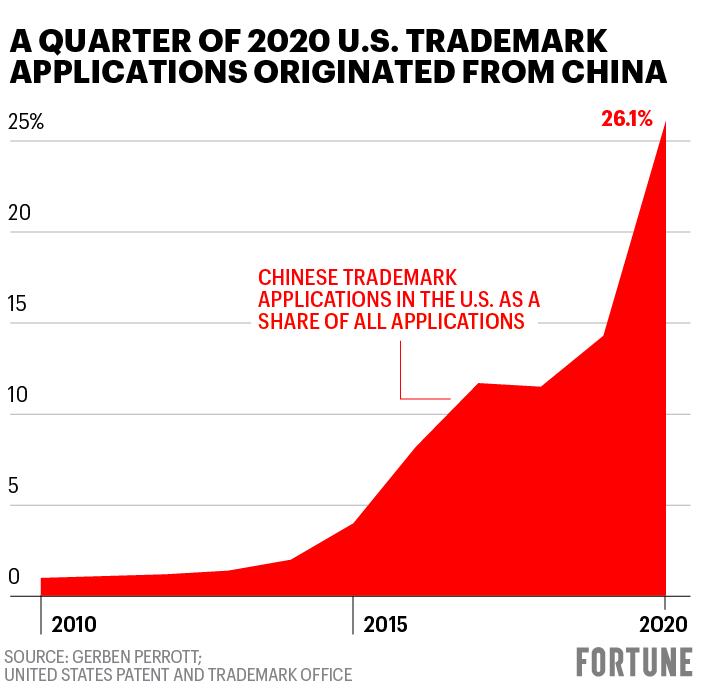
While a rise in trademark applications can be a sign of innovation, the USPTO has found that there are what it calls “nonmarket factors” at play here. One of the big ones the agency points to is that China’s local governments are paying companies and individuals to register U.S. trademarks. Gerben says based on the incentives, obtaining a couple of trademarks a month is enough for a living wage in China. In 2018, the Wall Street Journal reported that many Chinese applicants list addresses in Shenzhen, which pays about $800 for a U.S. registered trademark.

The USPTO declined to comment for this article beyond pointing to Gooder’s blog post and its January report on nonmarket factors in China.

Theories abound over why Chinese municipal governments have adopted this strategy, says Gerben. One is that China wants its businesses to invest in intellectual property around the world and own global brands.

But the “more nefarious” hypothesis is tied to the U.S. trade war, Gerben says. Overwhelming the USPTO with filings that it must process slows down the system, making it harder to register a trademark and increasing cost and time for U.S. businesses. “From a trade war perspective, it’s another tactic,” Gerben says. “It’s another way to poke the U.S. in the eye.” The USPTO, for example, said that new applications used to be reviewed between two and three months after filing. Now it’s taking between four and five. Gerben says that he has applications he filed in December that still have not been examined.

The issue goes beyond just slowing down the filing process. It also makes it harder for companies to find available trademarks for their brands. When someone is granted a registration on any trademark, it prevents identical or similar marks from being registered. “It’s a very broad right, and that’s why it trips up a lot of new brands,” Gerben says. “The crowdedness makes it a lot harder right now.”

Barton Beebe and Jeanne Fromer, professors at New York University School of Law, raised this issue of “trademark depletion”—the “decreasing supply of unclaimed, competitively effective trademarks available to new market entrants”—during a joint statement in a congressional hearing in 2019 on fraudulent trademarks.

The NYU professors have found that a surge of fraudulent applications from China has exacerbated trademark depletion. Of the applications that originated in China for apparel goods in 2017, their research showed that 67% of them were fraudulent—using a digitally altered image in their application or filing an application for a nonsense word, for example. But 39% of the fraudulent applicants were still registered. Beebe and Fromer concluded that this led to “clutter”—marks that are registered but not actually used in commerce.

The Trademark Modernization Act came out of those congressional hearings, but Gerben thinks that the new rules that are in the works won’t address the problem directly and will just cause collateral damage within the system. “I think the challenge is the USPTO doesn’t want to call out China directly enough,” he says. “But the data is extraordinarily clear.”

Subscribe to Fortune Daily to get essential business stories straight to your inbox each morning.

About the Author
By Beth Kowitt
LinkedIn iconTwitter icon
See full bioRight Arrow Button Icon

Latest in Politics

AIMeta
It’s ‘kind of jarring’: AI labs like Meta, Deepseek, and Xai earned some of the worst grades possible on an existential safety index
By Patrick Kulp and Tech BrewDecember 5, 2025
4 hours ago
Schumer
Politicsnational debt
‘This is a bad idea made worse’: Senate Dems’ plan to fix Obamacare premiums adds nearly $300 billion to deficit, CRFB says
By Nick LichtenbergDecember 5, 2025
5 hours ago
Trump
PoliticsWhite House
Trump finally got his peace prize—from a soccer federation widely known for corruption
By Seung Min Kim, Nick Lichtenberg and The Associated PressDecember 5, 2025
5 hours ago
Trump
PoliticsImmigration
4 times in 7 seconds: Trump calls Somali immigrants ‘garbage’
By Laurie Kellman and The Associated PressDecember 5, 2025
5 hours ago
Robert F. Kennedy
PoliticsHealth
Robert F. Kennedy Jr. turns to AI to make America healthy again
By Ali Swenson and The Associated PressDecember 5, 2025
10 hours ago
Trump
Personal FinanceHealth Insurance
Trump wants more health savings accounts. A catch: they can’t pay insurance premiums
By Amanda Seitz and KFF Health NewsDecember 5, 2025
12 hours ago

Most Popular

placeholder alt text
Economy
Two months into the new fiscal year and the U.S. government is already spending more than $10 billion a week servicing national debt
By Eleanor PringleDecember 4, 2025
2 days ago
placeholder alt text
Success
‘Godfather of AI’ says Bill Gates and Elon Musk are right about the future of work—but he predicts mass unemployment is on its way
By Preston ForeDecember 4, 2025
1 day ago
placeholder alt text
Success
Nearly 4 million new manufacturing jobs are coming to America as boomers retire—but it's the one trade job Gen Z doesn't want
By Emma BurleighDecember 4, 2025
1 day ago
placeholder alt text
Success
Nvidia CEO Jensen Huang admits he works 7 days a week, including holidays, in a constant 'state of anxiety' out of fear of going bankrupt
By Jessica CoacciDecember 4, 2025
1 day ago
placeholder alt text
Real Estate
‘There is no Mamdani effect’: Manhattan luxury home sales surge after mayoral election, undercutting predictions of doom and escape to Florida
By Sasha RogelbergDecember 4, 2025
1 day ago
placeholder alt text
Economy
Tariffs and the $38 trillion national debt: Kevin Hassett sees ’big reductions’ in deficit while Scott Bessent sees a ‘shrinking ice cube’
By Nick LichtenbergDecember 4, 2025
1 day ago
Rankings
  • 100 Best Companies
  • Fortune 500
  • Global 500
  • Fortune 500 Europe
  • Most Powerful Women
  • Future 50
  • World’s Most Admired Companies
  • See All Rankings
Sections
  • Finance
  • Leadership
  • Success
  • Tech
  • Asia
  • Europe
  • Environment
  • Fortune Crypto
  • Health
  • Retail
  • Lifestyle
  • Politics
  • Newsletters
  • Magazine
  • Features
  • Commentary
  • Mpw
  • CEO Initiative
  • Conferences
  • Personal Finance
  • Education
Customer Support
  • Frequently Asked Questions
  • Customer Service Portal
  • Privacy Policy
  • Terms Of Use
  • Single Issues For Purchase
  • International Print
Commercial Services
  • Advertising
  • Fortune Brand Studio
  • Fortune Analytics
  • Fortune Conferences
  • Business Development
About Us
  • About Us
  • Editorial Calendar
  • Press Center
  • Work At Fortune
  • Diversity And Inclusion
  • Terms And Conditions
  • Site Map

© 2025 Fortune Media IP Limited. All Rights Reserved. Use of this site constitutes acceptance of our Terms of Use and Privacy Policy | CA Notice at Collection and Privacy Notice | Do Not Sell/Share My Personal Information
FORTUNE is a trademark of Fortune Media IP Limited, registered in the U.S. and other countries. FORTUNE may receive compensation for some links to products and services on this website. Offers may be subject to change without notice.