• Home
  • Latest
  • Fortune 500
  • Finance
  • Tech
  • Leadership
  • Lifestyle
  • Rankings
  • Multimedia
CommentaryBitcoin

Why China cracked down on Bitcoin

By
Isabella Weber
Isabella Weber
Down Arrow Button Icon
By
Isabella Weber
Isabella Weber
Down Arrow Button Icon
May 21, 2021, 10:03 AM ET
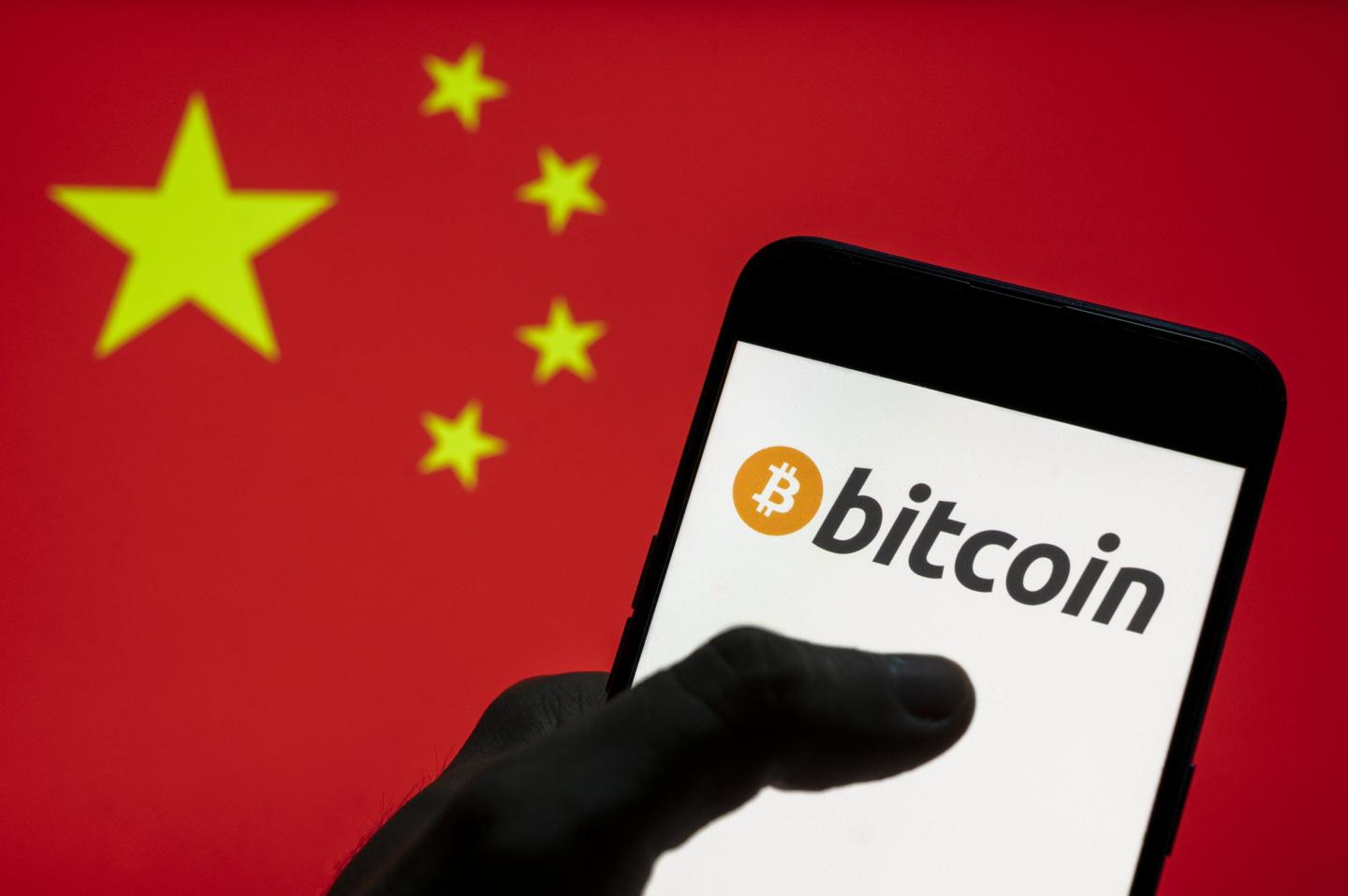
China's recent ban on cryptocurrency services caused a massive drop in the price of Bitcoin, writes Isabella Weber.

China just cracked down on privately mined cryptocurrency and we saw the market for Bitcoin fall down a cliff. In an international context of economic instability due to the continuing coronavirus pandemic, skyrocketing commodity prices, and geopolitical tensions, the People’s Bank of China has emphasized its orientation toward financial, employment, trade, and investment stability. 

Another major tenet of Chinese financial policy has been an emphasis on finance serving the real economy. Cryptocurrencies have shown enormous volatility in recent months and a growth trend that suggests a bubble. The value of Bitcoin has risen by 300% over the last 12 months. The European Central Bank has warned of a cryptocurrency bubble that has outgrown comparable financial bubbles in history, including Tulip Mania in the 17th century. 

Aiming for stability and for a financial architecture that is geared toward supporting rather than dominating the real economy, it should come as no major surprise that Chinese authorities have restricted cryptocurrencies in order to prevent an economic shock if this bubble bursts. 

The most recent announcement of the ban on cryptocurrency services stated that Bitcoin is a specific virtual commodity that is not issued by a monetary authority, has no monetary properties such as being legal tender, is not a real currency, and should not and cannot be used as currency in the market. 

This points to a deeper underlying question: Who has the right to issue money? This is a longstanding question in economics. Libertarian economists like Friedrich Hayek would answer it in favor of private actors, while most others have long argued for a state privilege to issue money, in order to ensure the effectiveness of monetary and economic policy. As Paul Krugman argues, there has been a “strong element of libertarian derp” around Bitcoin asserting that fiat money—government-issued money without commodity backing—will collapse any day, which would necessitate a private alternative currency. 

In China, the economy has been marketized under the steering of the state and the state has maintained an active role participating in a range of important markets. Reclaiming or ensuring the monopoly over the right to issue money is a reflection of this overall policy paradigm. That said, it’s worth noting that claiming a monopoly over the issuance of currency is by no means unique to China. 

The fact that China is the first mover in trying to contain this bubble is a reminder that the country is at the forefront of digital currency development. But we have to distinguish between privately mined Bitcoin and China’s efforts to create a digital yuan. Whereas the former is largely in line with the idea of a private currency that circumvents the exclusive right of the state to issue money, China’s digital renminbi (RMB) is trying to do the exact opposite. It is a state-backed digital currency that would enable consumers to access digital legal tender straight from their bank. 

China is currently the most vibrant market in nonbank mobile payment. In 2018–2019 it experienced a growth rate in electronic transactions of 55%, compared with less than 10% in the U.S., and has reached a mobile payment penetration rate of 86%. Until recently, fintech companies like Alipay and Tencent have led the way in digital payment. Now the state is claiming an increasing role in the market. 

Private cryptocurrency has been criticized internationally for its potential to enable illegal, untraceable transactions. In contrast, the digital RMB leaves a complete account of cash transactions in the hands of the state. 

China’s relationship with cryptocurrency has evolved over the last few years. China has been the world’s most important hub for cryptocurrency mining, with a share of around two-thirds of global production. But the Chinese authorities have shifted to a policy of containment reflected in a tightening of regulations in 2013 and 2017—and now the most recent attempt to restrict cryptocurrency services. 

This pattern represents a more general pattern in China’s economic governance: Markets are being used as a tool to initiate change and unleash dynamism, but speculation is suppressed in order to maintain economic, social, and political stability. 

As I show in my book How China Escaped Shock Therapy, when China first introduced market reforms in the 1980s, the country’s economists were divided over the right approach. Some favored shock-like overnight liberalizations that would have cut the direct ties between state and market, while others argued for reform through state market creation, which was the path ultimately taken. 

The result of China’s distinct reform path is a highly marketized economy with active state participation in systemically significant markets, with the aim to balance market dynamism and the dangers of market volatility. This logic is reflected in the development of the cryptocurrency market in China. 

Isabella Weber is an assistant professor of economics at the University of Massachusetts Amherst. Her new book, How China Escaped Shock Therapy, will be launched on May 27.

Our mission to make business better is fueled by readers like you. To enjoy unlimited access to our journalism, subscribe today.
About the Author
By Isabella Weber
See full bioRight Arrow Button Icon

Latest in Commentary

Finance
Lorem ipsum dolor sit amet, consectetur adipiscing elit, sed do eiusmod tempor incididunt ut labore et dolore magna aliqua. Ut enim ad minim veniam
By Fortune Editors
October 20, 2025
Finance
Lorem ipsum dolor sit amet, consectetur adipiscing elit, sed do eiusmod tempor incididunt ut labore et dolore magna aliqua. Ut enim ad minim veniam
By Fortune Editors
October 20, 2025
Finance
Lorem ipsum dolor sit amet, consectetur adipiscing elit, sed do eiusmod tempor incididunt ut labore et dolore magna aliqua. Ut enim ad minim veniam
By Fortune Editors
October 20, 2025
Finance
Lorem ipsum dolor sit amet, consectetur adipiscing elit, sed do eiusmod tempor incididunt ut labore et dolore magna aliqua. Ut enim ad minim veniam
By Fortune Editors
October 20, 2025
Finance
Lorem ipsum dolor sit amet, consectetur adipiscing elit, sed do eiusmod tempor incididunt ut labore et dolore magna aliqua. Ut enim ad minim veniam
By Fortune Editors
October 20, 2025
Finance
Lorem ipsum dolor sit amet, consectetur adipiscing elit, sed do eiusmod tempor incididunt ut labore et dolore magna aliqua. Ut enim ad minim veniam
By Fortune Editors
October 20, 2025

Most Popular

Finance
Lorem ipsum dolor sit amet, consectetur adipiscing elit, sed do eiusmod tempor incididunt ut labore et dolore magna aliqua. Ut enim ad minim veniam
By Fortune Editors
October 20, 2025
Finance
Lorem ipsum dolor sit amet, consectetur adipiscing elit, sed do eiusmod tempor incididunt ut labore et dolore magna aliqua. Ut enim ad minim veniam
By Fortune Editors
October 20, 2025
Finance
Lorem ipsum dolor sit amet, consectetur adipiscing elit, sed do eiusmod tempor incididunt ut labore et dolore magna aliqua. Ut enim ad minim veniam
By Fortune Editors
October 20, 2025
Finance
Lorem ipsum dolor sit amet, consectetur adipiscing elit, sed do eiusmod tempor incididunt ut labore et dolore magna aliqua. Ut enim ad minim veniam
By Fortune Editors
October 20, 2025
Finance
Lorem ipsum dolor sit amet, consectetur adipiscing elit, sed do eiusmod tempor incididunt ut labore et dolore magna aliqua. Ut enim ad minim veniam
By Fortune Editors
October 20, 2025
Finance
Lorem ipsum dolor sit amet, consectetur adipiscing elit, sed do eiusmod tempor incididunt ut labore et dolore magna aliqua. Ut enim ad minim veniam
By Fortune Editors
October 20, 2025
Fortune Secondary Logo
Rankings
  • 100 Best Companies
  • Fortune 500
  • Global 500
  • Fortune 500 Europe
  • Most Powerful Women
  • Future 50
  • World’s Most Admired Companies
  • See All Rankings
Sections
  • Finance
  • Fortune Crypto
  • Features
  • Leadership
  • Health
  • Commentary
  • Success
  • Retail
  • Mpw
  • Tech
  • Lifestyle
  • CEO Initiative
  • Asia
  • Politics
  • Conferences
  • Europe
  • Newsletters
  • Personal Finance
  • Environment
  • Magazine
  • Education
Customer Support
  • Frequently Asked Questions
  • Customer Service Portal
  • Privacy Policy
  • Terms Of Use
  • Single Issues For Purchase
  • International Print
Commercial Services
  • Advertising
  • Fortune Brand Studio
  • Fortune Analytics
  • Fortune Conferences
  • Business Development
  • Group Subscriptions
About Us
  • About Us
  • Editorial Calendar
  • Press Center
  • Work At Fortune
  • Diversity And Inclusion
  • Terms And Conditions
  • Site Map
  • About Us
  • Editorial Calendar
  • Press Center
  • Work At Fortune
  • Diversity And Inclusion
  • Terms And Conditions
  • Site Map
  • Facebook icon
  • Twitter icon
  • LinkedIn icon
  • Instagram icon
  • Pinterest icon

Latest in Commentary

trump
CommentaryZoom
The U.S. has a $282 billion trade surplus you’ve never heard of — and it’s at risk
By Josh KallmerApril 19, 2026
13 hours ago
benioff
CommentarySalesforce
AI’s next act: how Salesforce is turning efficiency gains into revenue
By Keith Ferrazzi and Wendy SmithApril 18, 2026
1 day ago
trump
CommentaryWhite House
Trump has already endorsed the Monroe Doctrine. Now he needs to endorse the Truman Doctrine
By Robert HormatsApril 18, 2026
2 days ago
trump
CommentaryManufacturing
Tariffs alone won’t save American manufacturing — here’s what actually will
By Johan "Kip" EidebergApril 18, 2026
2 days ago
hormuz
CommentaryIran
With Hormuz under strain, a trade corridor built for resilience faces a real-world test
By Angela Chitkara and Samantha SuttonApril 17, 2026
2 days ago
broker
CommentarySoftware
The 3 forces quietly dismantling the business model that made enterprise software fabulously profitable
By Michael Jacobides and Stefano PuntoniApril 17, 2026
2 days ago

Most Popular

'We should absolutely be concerned about non-college-educated men today': higher rents, living at home, falling out of the labor market
Economy
'We should absolutely be concerned about non-college-educated men today': higher rents, living at home, falling out of the labor market
By Catherina GioinoApril 18, 2026
2 days ago
The record-setting U.S. drought is so bad that 97% of the Southeast and two-thirds of the West are parched
North America
The record-setting U.S. drought is so bad that 97% of the Southeast and two-thirds of the West are parched
By Seth Borenstein and The Associated PressApril 18, 2026
1 day ago
Putin finally admits Russia's economy is in trouble and grasps for answers, after warnings about a financial crisis have been piling up
Economy
Putin finally admits Russia's economy is in trouble and grasps for answers, after warnings about a financial crisis have been piling up
By Jason MaApril 18, 2026
1 day ago
MacKenzie Scott has donated more than $26 billion—but it's barely made a dent in her net worth because of the power of Amazon shares
Success
MacKenzie Scott has donated more than $26 billion—but it's barely made a dent in her net worth because of the power of Amazon shares
By Sydney LakeApril 18, 2026
1 day ago
The $6 billion Vatican Bank was beset by scandals, disastrous investments—and ties to the Mafia. How Pope Francis tried to fix it
Banking
The $6 billion Vatican Bank was beset by scandals, disastrous investments—and ties to the Mafia. How Pope Francis tried to fix it
By Marco Quiroz-GutierrezApril 18, 2026
1 day ago
Thousands of CEOs admit AI had no impact on employment or productivity—and it has economists resurrecting a paradox from 40 years ago
AI
Thousands of CEOs admit AI had no impact on employment or productivity—and it has economists resurrecting a paradox from 40 years ago
By Sasha RogelbergApril 19, 2026
7 hours ago

© 2026 Fortune Media IP Limited. All Rights Reserved. Use of this site constitutes acceptance of our Terms of Use and Privacy Policy | CA Notice at Collection and Privacy Notice | Do Not Sell/Share My Personal Information
FORTUNE is a trademark of Fortune Media IP Limited, registered in the U.S. and other countries. FORTUNE may receive compensation for some links to products and services on this website. Offers may be subject to change without notice.