• Home
  • Latest
  • Fortune 500
  • Finance
  • Tech
  • Leadership
  • Lifestyle
  • Rankings
  • Multimedia

Trendingnow

1

Anne Hathaway says she was spammed with ChatGPT-written thank you notes after hiring for a recent role: ‘Nobody on that list gets that job’

2

The affordability crisis is so bad that, for the first time ever, both mom and dad are working full-time in most American families

3

Current price of oil as of June 18, 2026

1

Anne Hathaway says she was spammed with ChatGPT-written thank you notes after hiring for a recent role: ‘Nobody on that list gets that job’

2

The affordability crisis is so bad that, for the first time ever, both mom and dad are working full-time in most American families

3

Current price of oil as of June 18, 2026
Commentaryoil and gas
Asia

The Strait of Hormuz crisis shows energy security is now a boardroom issue

By
Victor Nian
Victor Nian
Down Arrow Button Icon
By
Victor Nian
Victor Nian
Down Arrow Button Icon
May 10, 2026, 4:59 PM ET

Victor Nian is a founding co-chairman of the Centre for Strategic Energy and Resources.

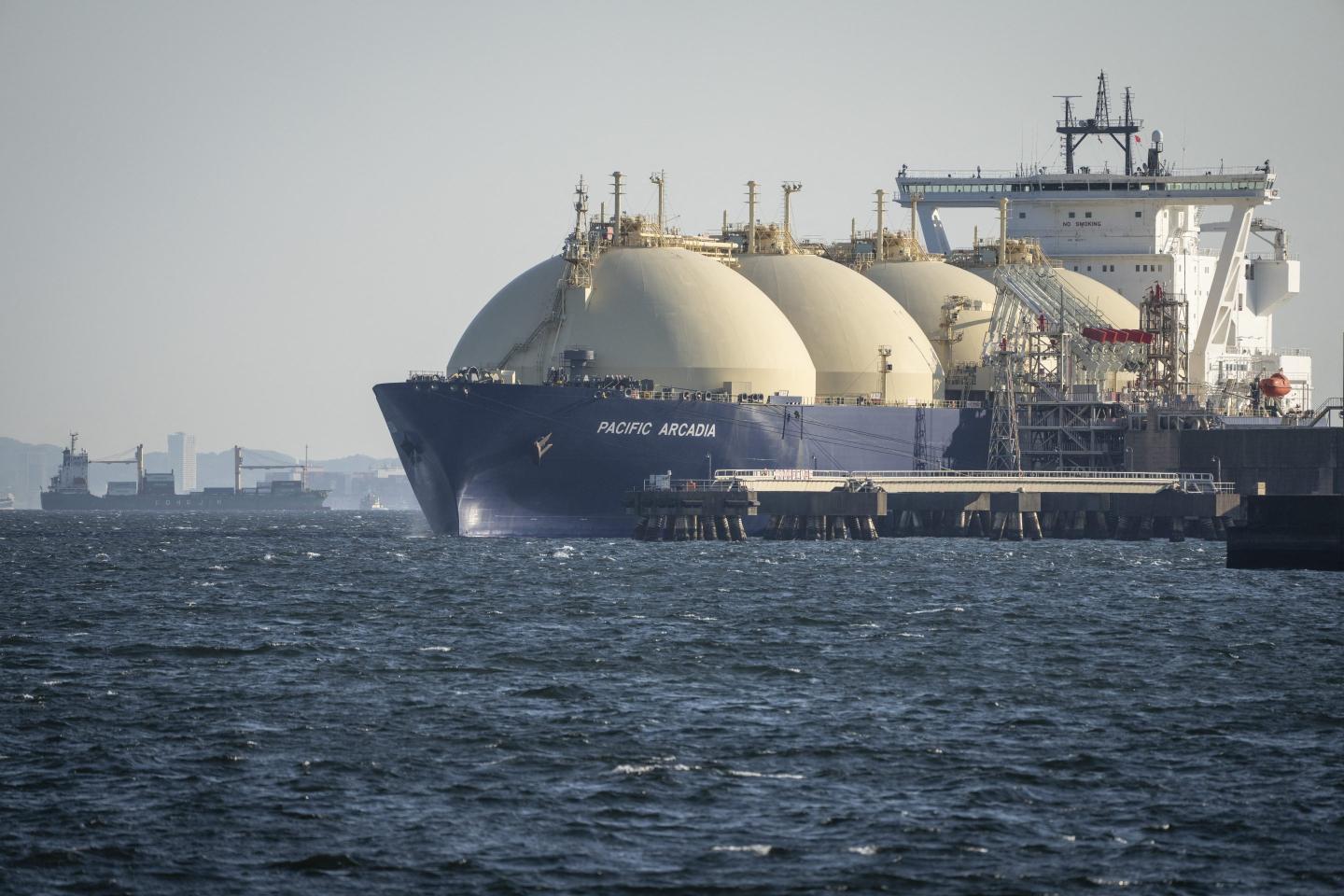
A liquefied natural gas (LNG) tanker is moored at a LNG berth in Kawasaki, Kanagawa prefecture on April 8, 2026.
A liquefied natural gas (LNG) tanker is moored at a LNG berth in Kawasaki, Kanagawa prefecture on April 8, 2026. Yuichi Yamazaki—AFP via Getty Images
Add Fortune on Google for similar content.

For many corporate leaders, energy risk means just higher fuel and electricity bills. Spiking oil prices mean tighter margins and more cost-cutting. Energy is a problem for governments to solve, not for boardrooms to manage.

That assumption is outdated. A closed Strait of Hormuz, which carries a fifth of the world’s oil supply and a significant share of liquefied natural gas, should be a wake-up call for executives. The consequences of Middle East tensions don’t just stop at gas stations or household utility bills; instead, they quickly percolate through the economy, through higher costs for everything from freight and packaging to food and insurance.

Energy shocks have always been a threat to the broader economy, but energy is now deeply embedded in complex, electricity-dependent business systems. Manufacturers rely on just-in-time supply chains, while retailers need temperature-controlled warehousing and complex logistics networks. Data centers and cloud services need uninterrupted power.

The effects of a disrupted energy market now travel faster and further than in previous crises, which makes energy security as much a business issue as a public policy one.

Originally, governments handled national energy security through diplomatic efforts and emergency planning. Yet in today’s economy, national resilience depends on privately-owned infrastructure and corporate decisions. That blurs the line between state strategy and corporate strategy.

Put another way: Company survival and national resilience are tightly linked.

Markets can adjust in the long term, but a company still needs to make it through short-term disruption. A manufacturer can’t wait a year for gas markets to normalize if key suppliers are shutting down this quarter, and a retailer similarly can’t bear higher freight costs during the peak shopping season.

Many companies know what they spend on electricity and fuel, but far fewer understand exactly how an interruption to energy supplies will spread throughout their business, including how it will affect companies further up or down the supply chain, or even end-users. A company can be greatly exposed to energy volatility even if fuel and electricity make up only a modest share of direct costs.

What should boards and CEOs do now?

First, executives need to treat energy risk the way they now treat cyber risk, as a strategic issue that must be regularly stress-tested. Boards should ask management to model how oil priced at $130 a barrel could hurt the company. What products become unprofitable? Which suppliers fail first? What customers are at risk? The energy stress test needs to become a regular part of corporate risk management.

Second, they should build buffers in areas where disruption will do the most damage. That doesn’t mean building stockpiles or retooling entire supply chains, but it does require identifying critical vulnerabilities. Maybe that means finding alternate sources for key inputs, establishing backup power generation, or setting up longer-term freight contracts. For more strategic sectors, companies may need to work closely with governments, utilities, and key suppliers. The goal isn’t to eliminate risk, but provide enough of a cushion so a temporary shock doesn’t become a business crisis.

These steps seem costly, but so did cybersecurity preparation before ransomware threats became routine. Resilience looks expensive until something happens; after that, it looks indispensable.

The bigger lesson from the Strait of Hormuz crisis is that efficiency may work in a stable world, but falls apart in an unstable one. Outperformance in the next decade won’t come from lower costs, but instead from the ability to keep operating when markets turn volatile.

The opinions expressed in Fortune.com commentary pieces are solely the views of their authors and do not necessarily reflect the opinions and beliefs of Fortune.

About the Author
By Victor Nian
See full bioRight Arrow Button Icon
Add Fortune on Google for similar content.

Latest in Commentary

Finance
Lorem ipsum dolor sit amet, consectetur adipiscing elit, sed do eiusmod tempor incididunt ut labore et dolore magna aliqua. Ut enim ad minim veniam
By Fortune Editors
October 20, 2025
Finance
Lorem ipsum dolor sit amet, consectetur adipiscing elit, sed do eiusmod tempor incididunt ut labore et dolore magna aliqua. Ut enim ad minim veniam
By Fortune Editors
October 20, 2025
Finance
Lorem ipsum dolor sit amet, consectetur adipiscing elit, sed do eiusmod tempor incididunt ut labore et dolore magna aliqua. Ut enim ad minim veniam
By Fortune Editors
October 20, 2025
Finance
Lorem ipsum dolor sit amet, consectetur adipiscing elit, sed do eiusmod tempor incididunt ut labore et dolore magna aliqua. Ut enim ad minim veniam
By Fortune Editors
October 20, 2025
Finance
Lorem ipsum dolor sit amet, consectetur adipiscing elit, sed do eiusmod tempor incididunt ut labore et dolore magna aliqua. Ut enim ad minim veniam
By Fortune Editors
October 20, 2025
Finance
Lorem ipsum dolor sit amet, consectetur adipiscing elit, sed do eiusmod tempor incididunt ut labore et dolore magna aliqua. Ut enim ad minim veniam
By Fortune Editors
October 20, 2025

Most Popular

Finance
Lorem ipsum dolor sit amet, consectetur adipiscing elit, sed do eiusmod tempor incididunt ut labore et dolore magna aliqua. Ut enim ad minim veniam
By Fortune Editors
October 20, 2025
Finance
Lorem ipsum dolor sit amet, consectetur adipiscing elit, sed do eiusmod tempor incididunt ut labore et dolore magna aliqua. Ut enim ad minim veniam
By Fortune Editors
October 20, 2025
Finance
Lorem ipsum dolor sit amet, consectetur adipiscing elit, sed do eiusmod tempor incididunt ut labore et dolore magna aliqua. Ut enim ad minim veniam
By Fortune Editors
October 20, 2025
Finance
Lorem ipsum dolor sit amet, consectetur adipiscing elit, sed do eiusmod tempor incididunt ut labore et dolore magna aliqua. Ut enim ad minim veniam
By Fortune Editors
October 20, 2025
Finance
Lorem ipsum dolor sit amet, consectetur adipiscing elit, sed do eiusmod tempor incididunt ut labore et dolore magna aliqua. Ut enim ad minim veniam
By Fortune Editors
October 20, 2025
Finance
Lorem ipsum dolor sit amet, consectetur adipiscing elit, sed do eiusmod tempor incididunt ut labore et dolore magna aliqua. Ut enim ad minim veniam
By Fortune Editors
October 20, 2025
Fortune Secondary Logo
Rankings
  • 100 Best Companies
  • Fortune 500
  • Global 500
  • Fortune 500 Europe
  • Most Powerful Women
  • World's Most Admired Companies
  • See All Rankings
  • Lists Calendar
Sections
  • Finance
  • Fortune Crypto
  • Features
  • Leadership
  • Health
  • Commentary
  • Success
  • Retail
  • Mpw
  • Tech
  • Lifestyle
  • CEO Initiative
  • Asia
  • Politics
  • Conferences
  • Europe
  • Newsletters
  • Personal Finance
  • Environment
  • Magazine
  • Education
Customer Support
  • Frequently Asked Questions
  • Customer Service Portal
  • Privacy Policy
  • Terms Of Use
  • Single Issues For Purchase
  • International Print
Commercial Services
  • Advertising
  • Fortune Brand Studio
  • Fortune Analytics
  • Fortune Conferences
  • Business Development
  • Group Subscriptions
About Us
  • About Us
  • Press Center
  • Work At Fortune
  • Terms And Conditions
  • Site Map
  • About Us
  • Press Center
  • Work At Fortune
  • Terms And Conditions
  • Site Map
  • Facebook icon
  • Twitter icon
  • LinkedIn icon
  • Instagram icon
  • Pinterest icon

Latest in Commentary

g
CommentaryVenture Capital
I watched enterprises buy AI that solved the wrong problem. So I left Dell and built a startup to fix it
By Ganesh PadmanabhanJune 19, 2026
4 hours ago
Samantha Gloede
CommentaryLeadership
Boards must avoid sleepwalking into the AI era. KPMG’s Global AI risk chief has a survival guide
By Samantha GloedeJune 19, 2026
5 hours ago
Piyush Patel
Commentaryshopping
Black Friday already sorted the winners from the losers. Your industry is next
By Piyush PatelJune 19, 2026
5 hours ago
audrey
CommentaryInsurance
Aflac general counsel: Georgia lawmakers took a crucial step forward on sickle cell disease – but there’s more work to be done
By Audrey Boone TillmanJune 19, 2026
6 hours ago
dario
CommentaryVenture Capital
Four AI giants just raised $188 billion. Here’s how to survive the Big AI-pocalypse
By Carl Fritjofsson and Cameron SellersJune 19, 2026
9 hours ago
cj
CommentaryIBM
IBM’s $17 million DOJ settlement makes the case for civility
By Carolynn JohnsonJune 16, 2026
3 days ago

Most Popular

Anne Hathaway says she was spammed with ChatGPT-written thank you notes after hiring for a recent role: ‘Nobody on that list gets that job’
Success
Anne Hathaway says she was spammed with ChatGPT-written thank you notes after hiring for a recent role: ‘Nobody on that list gets that job’
By Orianna Rosa RoyleJune 18, 2026
1 day ago
The affordability crisis is so bad that, for the first time ever, both mom and dad are working full-time in most American families
Economy
The affordability crisis is so bad that, for the first time ever, both mom and dad are working full-time in most American families
By Jacqueline MunisJune 17, 2026
2 days ago
Current price of oil as of June 18, 2026
Personal Finance
Current price of oil as of June 18, 2026
By Joseph HostetlerJune 18, 2026
1 day ago
Hundreds of Stanford students walked out of their grad ceremony to protest Google CEO’s commencement speech. It wasn’t all about AI
Big Tech
Hundreds of Stanford students walked out of their grad ceremony to protest Google CEO’s commencement speech. It wasn’t all about AI
By Tristan BoveJune 15, 2026
4 days ago
Microsoft boss Steve Ballmer publicly dismissed Chrome as a 'rounding error'—but Google’s CEO says he used the jab as fuel to win the browser-wars
Success
Microsoft boss Steve Ballmer publicly dismissed Chrome as a 'rounding error'—but Google’s CEO says he used the jab as fuel to win the browser-wars
By Preston ForeJune 17, 2026
2 days ago
Current price of gold as of June 18, 2026
Personal Finance
Current price of gold as of June 18, 2026
By Danny BakstJune 18, 2026
1 day ago

© 2026 Fortune Media IP Limited. All Rights Reserved. Use of this site constitutes acceptance of our Terms of Use and Privacy Policy | CA Notice at Collection and Privacy Notice | Do Not Sell/Share My Personal Information
FORTUNE is a trademark of Fortune Media IP Limited, registered in the U.S. and other countries. FORTUNE may receive compensation for some links to products and services on this website. Offers may be subject to change without notice.