• Home
  • Latest
  • Fortune 500
  • Finance
  • Tech
  • Leadership
  • Lifestyle
  • Rankings
  • Multimedia
Commentarycorporate social responsibility

When should CEOs speak out on public issues?

By
Bill George
Down Arrow Button Icon
By
Bill George
Down Arrow Button Icon
May 12, 2021, 5:00 AM ET
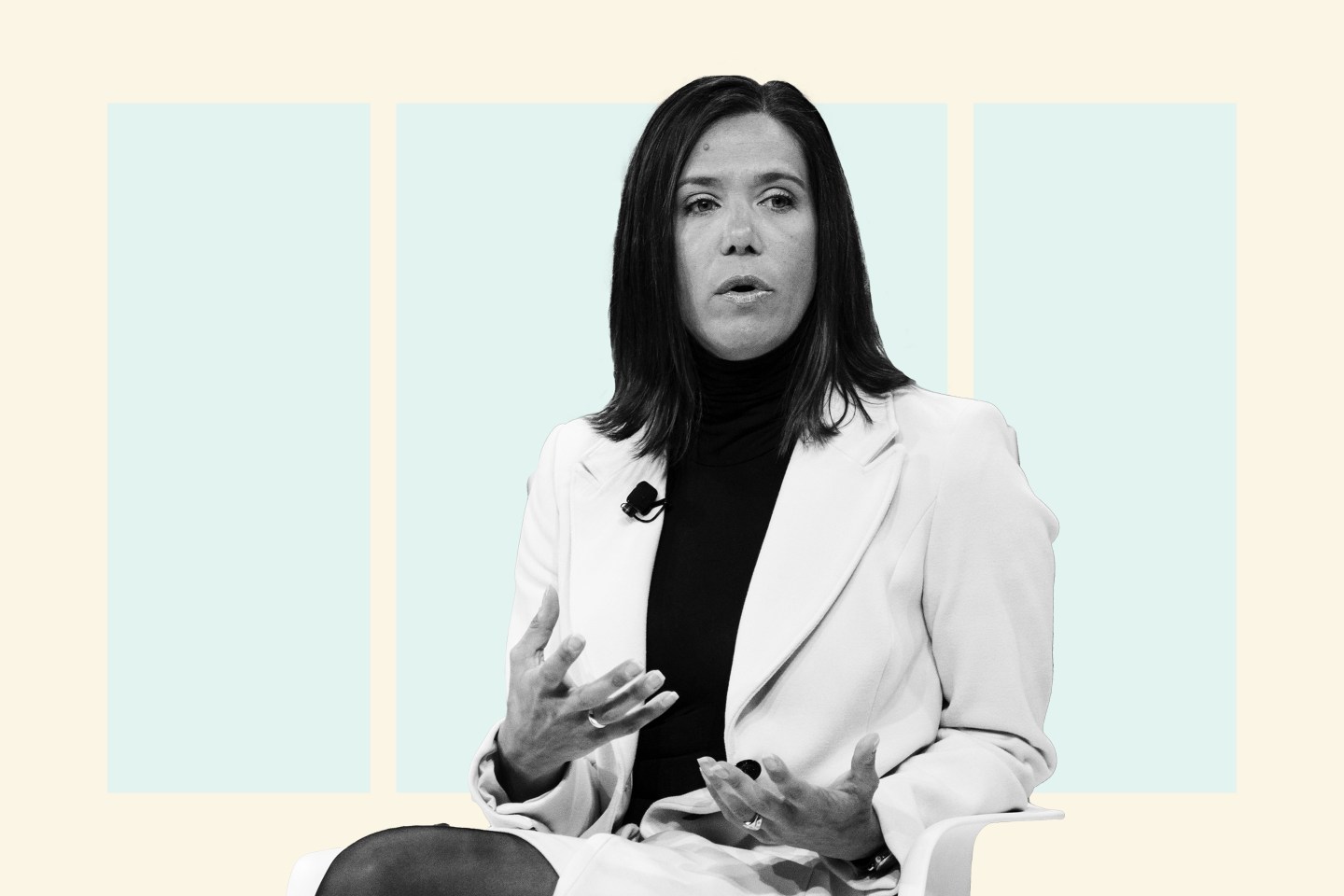
Best Buy CEO Corie Barry
Best Buy CEO Corie BarrySarah Silbiger—Bloomberg/Getty Images

Late last week, Texas and Florida joined Georgia and Arizona in passing laws that restrict voter access to the polls. In response, a wide swath of corporate leaders have voiced their opposition.

CEOs are increasingly being called upon to comment publicly on complex policy issues, yet the decision to get personally involved is a difficult one for most. From public issues like climate change, immigration, and BIPOC and LGBTQ rights to the murder of George Floyd and state voting laws, business leaders are learning the hard way that they will be criticized regardless of whether they speak out or remain silent.

What’s causing CEOs to speak out now on these issues?

First of all, the role of CEOs as public figures has changed dramatically in recent years. These days they are expected to speak for their companies, rather than delegate this role to their communications team. Second, CEOs today have shifted from a sole focus on shareholder value to serving all their stakeholders—their employees, customers, shareholders, and communities—and they need to speak out on their behalf.

CEOs need to develop a framework to determine when to engage in public issues so that there is consistency to their actions. This framework must be prepared in advance, as usually there is not enough time for discussion and debate when a crisis emerges. 

Here’s when they should get involved:

Issues relating directly to their company’s mission and values

Many employees today want to work for companies guided by their purpose, which includes contributing positively to society’s pressing issues. In turn, the company’s brand must stand for something, which is often revealed through public issues. That’s why it is incumbent on CEOs to take stands that are congruent with their brand promise.

Issues impacting their employees

Millennial employees expect their CEOs to speak out on their behalf. So do employees who are BIPOC, women, and LGBTQ. For example, Texas’s new law threatening voting rights caused companies based in the state, like American Airlines and Dell, to oppose the law vigorously. 

When Delta ended flight discounts for members attending the NRA’s annual meeting in 2018—a total of 13 people—Georgia’s lawmakers dropped a $38 million jet fuel tax break from a tax bill. CEO Ed Bastian ignored the threat, declaring, “Delta’s values are not for sale.” The tax break was eventually restored.

Issues directly impacting their customers

Your company cannot be healthy selling into an unhealthy market. As CEO of Medtronic in the 1990s, I recognized that bureaucratic machinations at the Food and Drug Administration (FDA) were delaying the approval of our implantable defibrillators. At a large conference in Washington, D.C., I criticized the FDA for not moving ahead with its review. 

The product was approved shortly thereafter and today is saving many lives. I’ll never know whether my comments had an impact, but I am pleased I took a public stand on behalf of Medtronic’s patients. (I currently own stock in the company.)

Issues impacting their community

In Minnesota last summer, the murder of George Floyd by a police officer unleashed a series of protests, many of which turned violent. Local CEOs of major companies spoke out forcefully against police brutality and then organized efforts to rebuild businesses and buildings impacted by the riots. Best Buy CEO Corie Barry committed her company to “a path of systemic, permanent change in as many ways as we can find.”

When issues violate fundamental societal norms

CEOs who signed the recent advertisements objecting to proposed voting laws declared they were taking stands on behalf of democracy, asserting that without democracy, capitalism cannot survive. In 2017, Merck CEO Ken Frazier took a stand against former President Donald Trump’s statement that the Charlottesville white supremacist demonstration had “some very fine people on both sides.” 

Frazier publicly resigned from the President’s American Manufacturing Council, stating, “America’s leaders must honor our fundamental values by clearly rejecting expressions of hatred, bigotry, and group supremacy…As CEO of Merck and as a matter of personal conscience, I feel a responsibility to take a stand against intolerance and extremism.”

Deciding when to step in

The preceding guidelines do not mean that CEOs should speak out on all matters. They must also know when to remain silent. On issues in which they have no involvement and thus no standing, such as with the plight of the Uighurs in China, they should stay out of the fray—so their voices have greater impact on issues that most affect them.

In our surveys of CEOs at Harvard Business School, we have learned that this aspect of their jobs is the one that makes them most uncomfortable. None of these choices is easy or risk-free, but today, representing their companies and all their stakeholders is an essential part of the CEO’s job.

Bill George is a senior fellow at Harvard Business School and former chair and CEO of Medtronic. He is the author of Discover Your True North.

Our mission to make business better is fueled by readers like you. To enjoy unlimited access to our journalism, subscribe today.
About the Author
By Bill George
See full bioRight Arrow Button Icon

Latest in Commentary

Finance
Lorem ipsum dolor sit amet, consectetur adipiscing elit, sed do eiusmod tempor incididunt ut labore et dolore magna aliqua. Ut enim ad minim veniam
By Fortune Editors
October 20, 2025
Finance
Lorem ipsum dolor sit amet, consectetur adipiscing elit, sed do eiusmod tempor incididunt ut labore et dolore magna aliqua. Ut enim ad minim veniam
By Fortune Editors
October 20, 2025
Finance
Lorem ipsum dolor sit amet, consectetur adipiscing elit, sed do eiusmod tempor incididunt ut labore et dolore magna aliqua. Ut enim ad minim veniam
By Fortune Editors
October 20, 2025
Finance
Lorem ipsum dolor sit amet, consectetur adipiscing elit, sed do eiusmod tempor incididunt ut labore et dolore magna aliqua. Ut enim ad minim veniam
By Fortune Editors
October 20, 2025
Finance
Lorem ipsum dolor sit amet, consectetur adipiscing elit, sed do eiusmod tempor incididunt ut labore et dolore magna aliqua. Ut enim ad minim veniam
By Fortune Editors
October 20, 2025
Finance
Lorem ipsum dolor sit amet, consectetur adipiscing elit, sed do eiusmod tempor incididunt ut labore et dolore magna aliqua. Ut enim ad minim veniam
By Fortune Editors
October 20, 2025

Most Popular

Finance
Lorem ipsum dolor sit amet, consectetur adipiscing elit, sed do eiusmod tempor incididunt ut labore et dolore magna aliqua. Ut enim ad minim veniam
By Fortune Editors
October 20, 2025
Finance
Lorem ipsum dolor sit amet, consectetur adipiscing elit, sed do eiusmod tempor incididunt ut labore et dolore magna aliqua. Ut enim ad minim veniam
By Fortune Editors
October 20, 2025
Finance
Lorem ipsum dolor sit amet, consectetur adipiscing elit, sed do eiusmod tempor incididunt ut labore et dolore magna aliqua. Ut enim ad minim veniam
By Fortune Editors
October 20, 2025
Finance
Lorem ipsum dolor sit amet, consectetur adipiscing elit, sed do eiusmod tempor incididunt ut labore et dolore magna aliqua. Ut enim ad minim veniam
By Fortune Editors
October 20, 2025
Finance
Lorem ipsum dolor sit amet, consectetur adipiscing elit, sed do eiusmod tempor incididunt ut labore et dolore magna aliqua. Ut enim ad minim veniam
By Fortune Editors
October 20, 2025
Finance
Lorem ipsum dolor sit amet, consectetur adipiscing elit, sed do eiusmod tempor incididunt ut labore et dolore magna aliqua. Ut enim ad minim veniam
By Fortune Editors
October 20, 2025
Rankings
  • 100 Best Companies
  • Fortune 500
  • Global 500
  • Fortune 500 Europe
  • Most Powerful Women
  • Future 50
  • World’s Most Admired Companies
  • See All Rankings
Sections
  • Finance
  • Leadership
  • Success
  • Tech
  • Asia
  • Europe
  • Environment
  • Fortune Crypto
  • Health
  • Retail
  • Lifestyle
  • Politics
  • Newsletters
  • Magazine
  • Features
  • Commentary
  • Mpw
  • CEO Initiative
  • Conferences
  • Personal Finance
  • Education
Customer Support
  • Frequently Asked Questions
  • Customer Service Portal
  • Privacy Policy
  • Terms Of Use
  • Single Issues For Purchase
  • International Print
Commercial Services
  • Advertising
  • Fortune Brand Studio
  • Fortune Analytics
  • Fortune Conferences
  • Business Development
About Us
  • About Us
  • Editorial Calendar
  • Press Center
  • Work At Fortune
  • Diversity And Inclusion
  • Terms And Conditions
  • Site Map

Latest in Commentary

fraser
CommentaryLeadership
The 7 most overlooked CEOs in 2025—and the 5 to watch in 2026
By Jeffrey Sonnenfeld and Stephen HenriquesJanuary 7, 2026
1 hour ago
christian klein
CommentarySoftware
The most honest prediction for 2026: nobody knows what’s next
By Christian KleinJanuary 7, 2026
5 hours ago
CES
CommentaryRobots
Beyond the CES hype: why home robots need the self-driving car playbook
By Jason CorsoJanuary 6, 2026
1 day ago
AsiaTariffs and trade
Countries must move beyond seeing AI as a race, where one side must beat the other
By Boris Babic and Brian WongJanuary 3, 2026
4 days ago
trump
CommentaryVenezuela
5 takeaways on Venezuela in the aftermath of Maduro: A memo to CEOs
By Jeffrey SonnenfeldJanuary 3, 2026
4 days ago
Bhargava
CommentaryPasswords
You probably use the same password for 30 different websites. It’s time for a passkey. 
By Rishi BhargavaJanuary 3, 2026
4 days ago

Most Popular

placeholder alt text
Personal Finance
Janet Yellen warns the $38 trillion national debt is testing a red line economists have feared for decades
By Eva RoytburgJanuary 5, 2026
2 days ago
placeholder alt text
Economy
Mark Cuban on the $38 trillion national debt and the absurdity of U.S. healthcare: we wouldn't pay for potato chips like this
By Nick LichtenbergJanuary 6, 2026
22 hours ago
placeholder alt text
Law
Amazon is cutting checks to millions of customers as part of a $2.5 billion FTC settlement. Here's who qualifies and how to get paid
By Sydney LakeJanuary 6, 2026
19 hours ago
placeholder alt text
Future of Work
'Employers are increasingly turning to degree and GPA' in hiring: Recruiters retreat from ‘talent is everywhere,’ double down on top colleges
By Jake AngeloJanuary 6, 2026
20 hours ago
placeholder alt text
Success
Blackstone exec says elite Ivy League degrees aren’t good enough—new analysts need to 'work harder' and be nice 
By Ashley LutzJanuary 5, 2026
2 days ago
placeholder alt text
AI
Experienced software developers assumed AI would save them a chunk of time. But in one experiment, their tasks took 20% longer
By Sasha RogelbergJanuary 5, 2026
2 days ago

© 2025 Fortune Media IP Limited. All Rights Reserved. Use of this site constitutes acceptance of our Terms of Use and Privacy Policy | CA Notice at Collection and Privacy Notice | Do Not Sell/Share My Personal Information
FORTUNE is a trademark of Fortune Media IP Limited, registered in the U.S. and other countries. FORTUNE may receive compensation for some links to products and services on this website. Offers may be subject to change without notice.