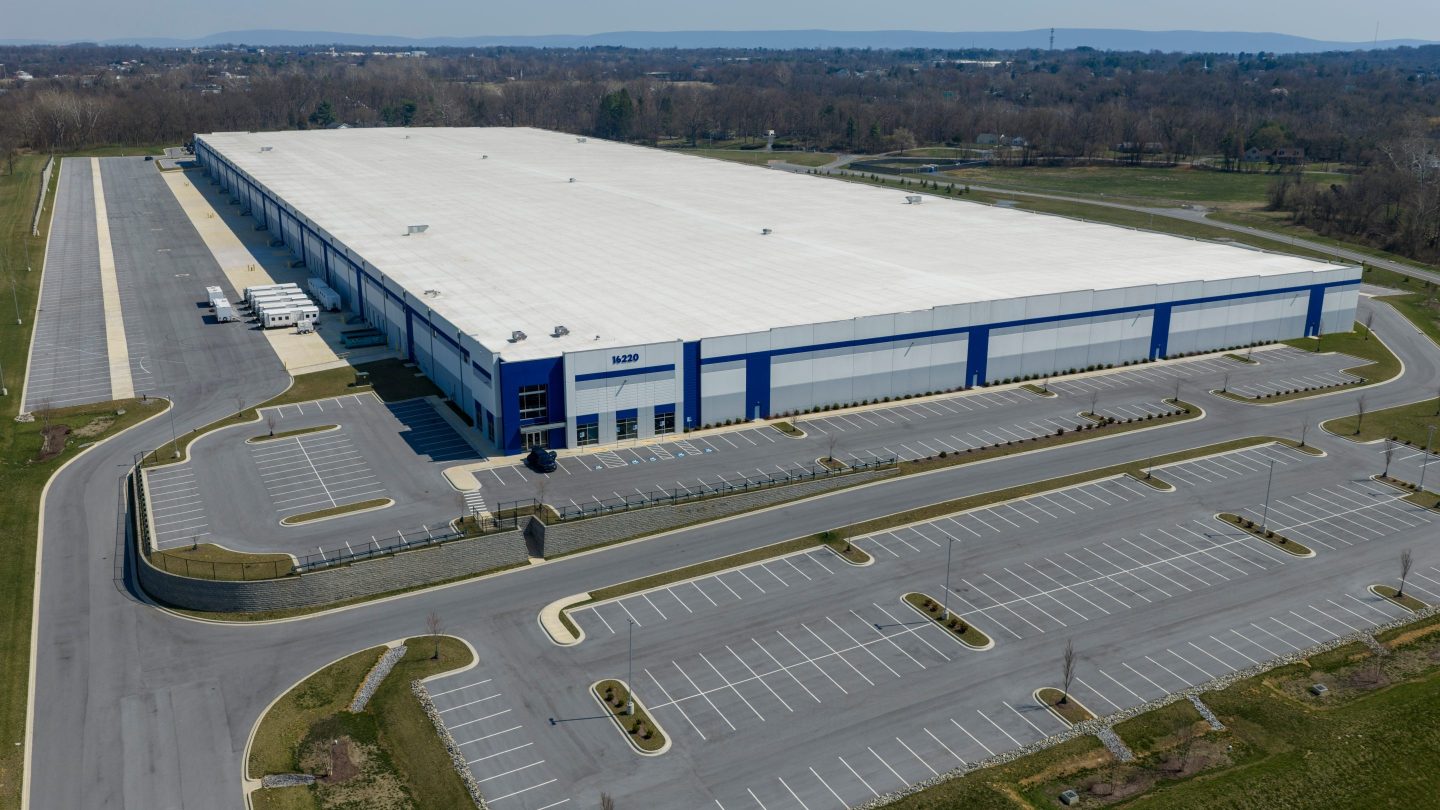
As the National Labor Relations Board reviews ballots from Amazon.com’s union election in Alabama, the U.S. labor movement is entering a pivotal moment that will likely define the future of worker organization for decades to come.
The campaign to organize the more than 5,800 workers at Amazon’s warehouse in Bessemer, Ala. has also drawn new political lines in the debate around the right to unionize. Progressive senators such as Bernie Sanders (I-VA) and Elizabeth Warren (D-MA) have rallied on behalf of the union, as expected. But other supporters, like Sen. Marco Rubio (R-FL). have also spoken out on behalf of the employees looking to organize, a surprise as Republicans typically support legislation that favors business and diminishes union efforts.
“Here’s my standard: When the conflict is between working Americans and a company whose leadership has decided to wage culture war against working-class values, the choice is easy—I support the workers. And that’s why I stand with those at Amazon’s Bessemer warehouse today,” wrote Rubio in an opinion piece for USA Today this month.
The sudden shift comes as House Democrats approved a bill, The Protect the Right to Organize (PRO) Act, which would make some of the most dramatic, and controversial, union-friendly changes to American labor law in decades. Labor advocates have called it the most important piece of labor legislation in generations, while big business groups say that it will harm independent contractors and bottom lines.
The act would extend joint employer liability (in which an individual who is not on an organization’s payroll, and is contracted from another company, could still be considered their employee), expand the definition of employee by narrowing the definition of supervisor and independent contractors, simplify union election rules, end right-to-work protections that prohibit employees from being forced to pay union dues as a condition of their employment, allow for more strikes and make it more difficult for employers to replace workers on strike, and mandate initial collective bargaining agreements within as little as 120 days, amongst other things.
It’s unlikely that the act will pass through the divided Senate without Democrats first eliminating the filibuster, an act that requires 60 votes to invoke cloture on legislative matters and prevents parties with a small majority from voting partisan bills into action.
And while it may appear that some Republicans like Rubio have had a change of heart about union efforts, his support of Amazon workers in Alabama is actually linked to his opposition of the PRO Act. “What our nation desperately needs is not more oligopolies like Amazon or hostile relationships; what we need is a more productive relationship between labor and management,” he wrote in his opinion piece. “Legislation like the Democrats’ Protecting the Right to Organize Act would essentially mandate adversarial relations between labor and management.”
Parts of the bill, however, could end up passing through the Senate and make their way to President Joe Biden’s desk, who has spoken out in support of the act. The thought has companies like Uber and Instacart, which rely on gig workers who are not considered employees, as a large part of their business model. The groups have long seen the writing on the wall, and have previously launched campaigns in California and New Jersey, states that already have their own version of the PRO Act, and have made it illegal for employers to misclassify workers as independent contractors.
App-based workers
The PRO Act would adopt the same test that California uses to determine a worker’s employment status, but only for the purposes of union organizing:
- The individual is free from control and direction in connection with the performance of the service, both under the contract for the performance of service and in fact.
- The service is performed outside the usual course of the business of the employer.
- The individual is customarily engaged in an independently established trade, occupation, profession, or business of the same nature as that involved in the service performed.
In response to the California changes, Protect App-Based Drivers & Services was launched, an organization infused with a cool $200 million from Uber, Lyft, Instacart, and Doordash. The group created websites and ad campaigns and held rallies protesting the bill.
They also spread false information to drivers, claiming that if they were reclassified as employees “scheduling and rigid shifts would become the norm, and Uber would likely prevent drivers from working for other rideshare companies.”
But legal experts say there’s nothing in California law that requires shift scheduling. San Diego City Attorney Mara Elliott laughed when asked if there was any legal precedent for employees being required to work shifts. “There are no requirements that hours be contiguous, either. I generally just don’t know where they’re coming from,” said San Diego Chief Deputy City Attorney Mark Ankcorn.
Still, their efforts were successful. Workers for app-based services were made exempt from the law by a ballot initiative, Proposition 22, which the companies bankrolled. Similar efforts have been made around the PRO Act, with the goal of swaying both politicians and workers against it.
Uber and Lyft have hired boardrooms full of former top democratic officials, including Vice President Kamala Harris’ brother-in-law Tony West, who serves as Uber’s chief legal officer, to try to increase their political influence and sway policymakers in D.C. They have spent vast sums of money to lobby against the bill as well.
Campaigns, much like in California, have been launched to explain to workers that they would end up giving away freedom instead of gaining protection under the law.
App-based companies have legitimate worries about the operating costs of millions of workers unionizing and bargaining for fair pay and benefits. They claim that they will have to limit the number of drivers they hire and that they will have to pass new costs along to their riders, lowering demand.
Employees, unlike independent contractors, qualify for local minimum wage laws, health and unemployment insurance, and other social programs. They can also unionize and bargain for more. That’s a lot of extra cost for app-based companies that are not yet profitable. Research analysts at Barclays estimated in a report that before app-based gig workers became exempt the reclassification in California cost $3,625 per driver. Uber reported a net loss of $968 million during the fourth quarter of 2020.
Labor leaders argue that a business model which relies on the exploitation of labor is never sustainable, regardless of legislation.
Other freelancers
Many white-collar freelancers, like accountants and journalists, also worry that the ABC test might hurt their bottom lines. Employers might worry that hiring them will violate the law, and they’ll lose out on income, they argue.
But what is not being made clear by lobbyists and business advocates is that the ABC test used in the PRO act is just for determining whether a freelance worker is able to participate in a union contract, not if they have to be onboarded as a full-time employee to do work for a company.
“Nothing in the PRO Act outlaws any kind of work arrangement. The PRO Act’s ‘ABC test’ only determines who qualifies for NLRA protection if and when they try to engage in collective action, organize a union or bargain collectively,” wrote the AFL-CIO. “The PRO Act does not affect any of the laws that typically determine whether someone is hired as a W-2 employee, most notably tax law, but also minimum wage, overtime, unemployment insurance, workers’ compensation, etc.”
It’s not unusual for states to use the ABC test for selective purposes only; some use it to determine who gets unemployment benefits, and others use it to determine minimum wage or overtime protections only.
If a workplace is unionized, however, certain “permalancers”—a colloquial term for long-term freelance contract workers who do not have employee benefits—may be unable to negotiate special contracts with their employers and would instead have to abide by the union contract.
More than a quarter of Americans now rely on the gig economy to supplement their income in some manner, and one in 10 rely on it as their primary source of income. Those numbers have increased with the rapid increase in unemployment due to COVID-19, but financial volatility and access to benefits are major challenges for these so-called independent contractors.
“As America works to recover from the devastating challenges of deadly pandemic, an economic crisis, and reckoning on race that reveals deep disparities,” said Biden in support of the act. “We need to summon a new wave of worker power to create an economy that works for everyone.”