• Home
  • Latest
  • Fortune 500
  • Finance
  • Tech
  • Leadership
  • Lifestyle
  • Rankings
  • Multimedia
Commentary

To end the pandemic, every business leader must put worker health and equity first

By
Darren Walker
Darren Walker
and
Chuck Robbins
Chuck Robbins
Down Arrow Button Icon
By
Darren Walker
Darren Walker
and
Chuck Robbins
Chuck Robbins
Down Arrow Button Icon
February 23, 2021, 5:30 AM ET
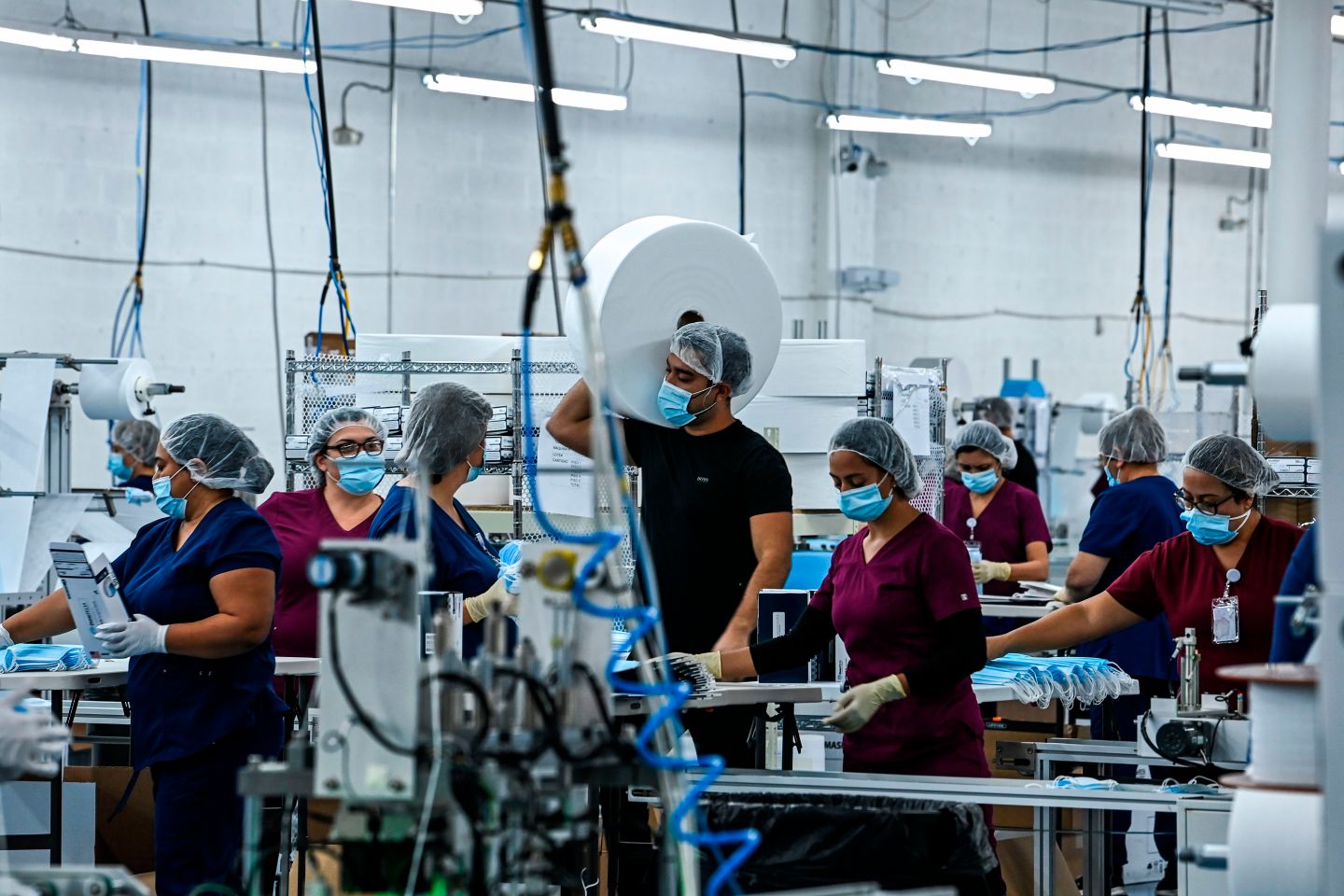
Employees at work in a medical equipment factory in North Miami, Fla. “When we look back on this pandemic,” the authors write, “history will ask how business leaders rethought their approach to employees and protected them.”
Employees at work in a medical equipment factory in North Miami, Fla. “When we look back on this pandemic,” the authors write, “history will ask how business leaders rethought their approach to employees and protected them.”CHANDAN KHANNA—AFP/Getty Images

COVID-19 has upended every part of society. But now that we are a year into the pandemic, we have come to better understand how it spreads, and the incredible risk and sacrifice so many employees are taking to keep our shelves stocked, our health care institutions staffed, our children educated, and our communities moving.

It’s noteworthy that among President Biden’s first actions to take hold of the pandemic was an executive order calling on the Occupational Safety and Health Administration (OSHA) to revise existing safety guidelines, ramp up enforcement, and use its resources to protect America’s most vulnerable and hardest-hit workers. With that directive, the new President made clear what we all know to be true: America’s workers are on the front lines of this pandemic, and they must have the protection and support they deserve from their employers. 

We have witnessed how workplace transmission is contributing to the country’s mounting case count. Inequality has also exacerbated the spread of the virus. President Biden’s order points to the social, racial, health, and economic inequities that frontline workers are experiencing today, and this is a clear signal that every business must not only root out inequality by reshaping leadership strategies—businesses must also have clear frameworks for understanding and addressing how certain groups are disproportionately impacted. 

So, facing these multiple crises—a pandemic, a needed economic recovery, a reckoning with racial inequality—what is the role of employers, and how do leaders need to change? In our view, businesses must focus on their people, placing their voices, their health (both physical and mental), their safety, and equity at the top of business priorities. Thinking about employees shouldn’t be a function of human resources—it’s a competitive differentiator, and it’s needed now more than ever. 

Cisco, for example, has been guided by its social justice principles to examine and, where possible, strengthen employee health benefits through a racial equity lens. Employee-focused initiatives in mental health, workplace safety and privacy, and childcare all sit at the same level as business strategy to ensure that issues of inequity can be elevated to leadership. 

By advocating for internal safety measures, effective policy, and racial equity, companies can put purpose-driven leadership into practice to protect their workers and fuel an inclusive recovery. For many businesses, this will mean changing the way they view their people strategies—applying the same rigor, creativity, and care they used to pivot and keep their business strong during this crisis. For every business, this will mean listening to and protecting those most at risk. As we continue to distribute vaccines, a process that will still take time, business leaders can use their ingenuity, energy, and resources to place the well-being of workers at the forefront.

Black and Latinx workers account for 36% of employees in frontline jobs, with many lacking access to the paid sick days and quality health insurance needed to care for themselves and their families. Black frontline workers are also more likely to report experiencing retaliation by managers for raising concerns about the coronavirus. With Black Americans losing their lives to the pandemic at more than twice the rate of white people, businesses must double down on commitments they renewed in the wake of last summer’s racial reckoning and widespread protests by making worker safety a key part of their social justice efforts.

First, businesses can reduce spread by offering paid sick days to all workers, whether they are full-time, part-time, or contractors. Over a quarter of people know someone who has gone to work sick during the pandemic because of financial stresses, thereby risking the health of customers and staff. Now, companies can make clear that economic security and public health are not options workers have to choose between, but two sides of the same coin.

Second, we must provide essential protections for workers, including supplying and mandating personal protective equipment, enforcing social distancing protocols and the use of face coverings, immediately notifying employees of exposure or infections, and implementing workplace contact tracing.

Next, while many companies have already embraced these measures, it’s crucial to ensure they are consistently implemented and that organizations can rapidly course-correct when something goes wrong. To do that, companies must give their employees a voice in designing and managing workplace health and safety. Workers know the problems best and often have a unique, early window into where efforts may be falling short.

This pandemic has made clear that taking deliberate steps can be the difference between being part of the problem or part of the solution. Our country relies on working people to keep the economy functioning, and communities safe. So, when we look back on this pandemic, history will ask how business leaders rethought their approach to employees and protected them. The choice is clear, and there’s no time to waste. Together, we can build an inclusive future that ensures all workers are safe, healthy, and thriving. With everything connected, and everything at stake, we must build that future today.

Darren Walker is president of the Ford Foundation. Chuck Robbins is the chairman and chief executive officer of Cisco Systems and a member of the Ford Foundation’s board of trustees.

About the Authors
By Darren Walker
See full bioRight Arrow Button Icon
By Chuck Robbins
See full bioRight Arrow Button Icon

Latest in Commentary

Finance
Lorem ipsum dolor sit amet, consectetur adipiscing elit, sed do eiusmod tempor incididunt ut labore et dolore magna aliqua. Ut enim ad minim veniam
By Fortune Editors
October 20, 2025
Finance
Lorem ipsum dolor sit amet, consectetur adipiscing elit, sed do eiusmod tempor incididunt ut labore et dolore magna aliqua. Ut enim ad minim veniam
By Fortune Editors
October 20, 2025
Finance
Lorem ipsum dolor sit amet, consectetur adipiscing elit, sed do eiusmod tempor incididunt ut labore et dolore magna aliqua. Ut enim ad minim veniam
By Fortune Editors
October 20, 2025
Finance
Lorem ipsum dolor sit amet, consectetur adipiscing elit, sed do eiusmod tempor incididunt ut labore et dolore magna aliqua. Ut enim ad minim veniam
By Fortune Editors
October 20, 2025
Finance
Lorem ipsum dolor sit amet, consectetur adipiscing elit, sed do eiusmod tempor incididunt ut labore et dolore magna aliqua. Ut enim ad minim veniam
By Fortune Editors
October 20, 2025
Finance
Lorem ipsum dolor sit amet, consectetur adipiscing elit, sed do eiusmod tempor incididunt ut labore et dolore magna aliqua. Ut enim ad minim veniam
By Fortune Editors
October 20, 2025

Most Popular

Finance
Lorem ipsum dolor sit amet, consectetur adipiscing elit, sed do eiusmod tempor incididunt ut labore et dolore magna aliqua. Ut enim ad minim veniam
By Fortune Editors
October 20, 2025
Finance
Lorem ipsum dolor sit amet, consectetur adipiscing elit, sed do eiusmod tempor incididunt ut labore et dolore magna aliqua. Ut enim ad minim veniam
By Fortune Editors
October 20, 2025
Finance
Lorem ipsum dolor sit amet, consectetur adipiscing elit, sed do eiusmod tempor incididunt ut labore et dolore magna aliqua. Ut enim ad minim veniam
By Fortune Editors
October 20, 2025
Finance
Lorem ipsum dolor sit amet, consectetur adipiscing elit, sed do eiusmod tempor incididunt ut labore et dolore magna aliqua. Ut enim ad minim veniam
By Fortune Editors
October 20, 2025
Finance
Lorem ipsum dolor sit amet, consectetur adipiscing elit, sed do eiusmod tempor incididunt ut labore et dolore magna aliqua. Ut enim ad minim veniam
By Fortune Editors
October 20, 2025
Finance
Lorem ipsum dolor sit amet, consectetur adipiscing elit, sed do eiusmod tempor incididunt ut labore et dolore magna aliqua. Ut enim ad minim veniam
By Fortune Editors
October 20, 2025
Fortune Secondary Logo
Rankings
  • 100 Best Companies
  • Fortune 500
  • Global 500
  • Fortune 500 Europe
  • Most Powerful Women
  • World's Most Admired Companies
  • See All Rankings
  • Lists Calendar
Sections
  • Finance
  • Fortune Crypto
  • Features
  • Leadership
  • Health
  • Commentary
  • Success
  • Retail
  • Mpw
  • Tech
  • Lifestyle
  • CEO Initiative
  • Asia
  • Politics
  • Conferences
  • Europe
  • Newsletters
  • Personal Finance
  • Environment
  • Magazine
  • Education
Customer Support
  • Frequently Asked Questions
  • Customer Service Portal
  • Privacy Policy
  • Terms Of Use
  • Single Issues For Purchase
  • International Print
Commercial Services
  • Advertising
  • Fortune Brand Studio
  • Fortune Analytics
  • Fortune Conferences
  • Business Development
  • Group Subscriptions
About Us
  • About Us
  • Lists Calendar
  • Press Center
  • Work At Fortune
  • Terms And Conditions
  • Site Map
  • About Us
  • Lists Calendar
  • Press Center
  • Work At Fortune
  • Terms And Conditions
  • Site Map
  • Facebook icon
  • Twitter icon
  • LinkedIn icon
  • Instagram icon
  • Pinterest icon

Latest in Commentary

frank
CommentaryVisa
Visa CMO: AI agents are your new customers — here’s how to sell to them
By Frank Cooper IIIApril 22, 2026
1 hour ago
shlomit
Commentarycyber
The Mythos meeting focused on the wrong AI risk to banks. Here’s the one nobody is talking about
By Shlomit WagmanApril 22, 2026
4 hours ago
one piece
CommentaryPersonal Finance
Gen Z is doing (almost) everything right with money—and still getting burned
By Beth KoblinerApril 22, 2026
9 hours ago
beard
CommentaryEducation
Yale asked the right question. Now the rest of higher education owes an answer
By Steve BeardApril 22, 2026
9 hours ago
trump
Commentarynational debt
America’s national debt is heading to 175% of GDP. Here’s why no president—including Trump—has the will to stop it
By Steve H. Hanke and David M. WalkerApril 22, 2026
10 hours ago
edelman
CommentaryHealth
70% of people believe at least one divisive health claim. Science needs a new playbook
By Richard EdelmanApril 22, 2026
11 hours ago

Most Popular

The tables have turned: Florida and Texas are the biggest losers in the housing market as Ohio emerges a surprise winner
Real Estate
The tables have turned: Florida and Texas are the biggest losers in the housing market as Ohio emerges a surprise winner
By Sydney LakeApril 21, 2026
1 day ago
'Something sinister could be happening': FBI looks into dead or missing nuclear and space defense scientists tied to NASA, Blue Origin, and SpaceX
Politics
'Something sinister could be happening': FBI looks into dead or missing nuclear and space defense scientists tied to NASA, Blue Origin, and SpaceX
By Catherina GioinoApril 21, 2026
1 day ago
‘Something sinister’: What we know about the FBI probe into dead and missing scientists linked to space and military industries
Economy
‘Something sinister’: What we know about the FBI probe into dead and missing scientists linked to space and military industries
By Jim EdwardsApril 22, 2026
10 hours ago
John Ternus, the man stepping into Tim Cook and Steve Jobs' shoes, is a 25-year Apple veteran with zero LinkedIn posts
C-Suite
John Ternus, the man stepping into Tim Cook and Steve Jobs' shoes, is a 25-year Apple veteran with zero LinkedIn posts
By Kelvin Chan and The Associated PressApril 21, 2026
1 day ago
$166 billion in tariff refunds just became available, but small businesses may already be at a disadvantage
Law
$166 billion in tariff refunds just became available, but small businesses may already be at a disadvantage
By Sasha RogelbergApril 20, 2026
2 days ago
Jeff Bezos once gave Eva Longoria and the admiral behind Osama bin Laden's capture $100 million—but she says you don't need wealth to give back
Success
Jeff Bezos once gave Eva Longoria and the admiral behind Osama bin Laden's capture $100 million—but she says you don't need wealth to give back
By Orianna Rosa RoyleApril 21, 2026
2 days ago

© 2026 Fortune Media IP Limited. All Rights Reserved. Use of this site constitutes acceptance of our Terms of Use and Privacy Policy | CA Notice at Collection and Privacy Notice | Do Not Sell/Share My Personal Information
FORTUNE is a trademark of Fortune Media IP Limited, registered in the U.S. and other countries. FORTUNE may receive compensation for some links to products and services on this website. Offers may be subject to change without notice.