• Home
  • Latest
  • Fortune 500
  • Finance
  • Tech
  • Leadership
  • Lifestyle
  • Rankings
  • Multimedia
Commentaryfree speech

Online platforms are making up free speech rules as they go—and it’s concerning

By
Yuval Shany
Down Arrow Button Icon
By
Yuval Shany
Down Arrow Button Icon
January 28, 2021, 5:30 AM ET
Commentary-Social Platforms-Free Speech Rules
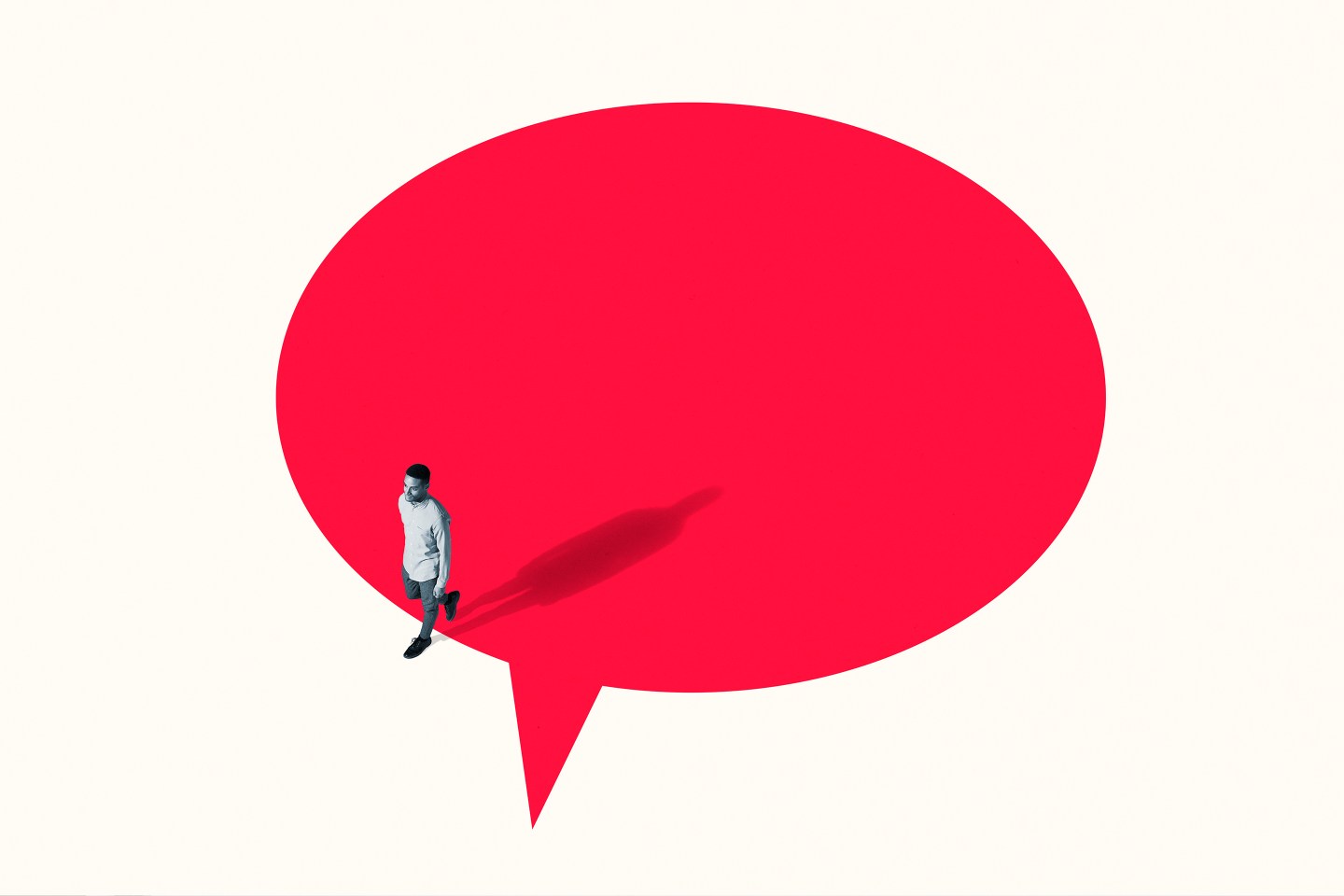
Banning Trump from Twitter raises concerns about free speech protections online, writes Yuval Shany.Klaus Vedfelt—Getty Images

The dramatic events of Jan. 6, 2021, represent not only a severe crisis for American democracy—the first takeover of the U.S. Capitol building since 1812—but also a possible tipping point in the power relationship between the U.S. government and the major online platforms. 

Up until recently, the U.S. government was considering whether to subject the platforms to stricter regulation—for example, by removing their immunity from claims pursuant to Section 230 of the Communications Decency Act—because of a widespread perception of failure to moderate harmful online content. 

However, the decision by the largest online platforms to deplatform President Trump in the aftermath of the failed insurrection attempt marks an odd reversal of roles: The platforms have taken drastic steps to protect the democratic institutions of the U.S. government in lieu of the government itself, which failed to adequately protect the Capitol.  

Almost in parallel to the deplatforming of the President by Facebook and Twitter, tech giants Apple, Google, and Amazon withdrew the right-wing social network Parler from their app stores or web-hosting services. 

These developments stand in marked contrast to the traditional hands-off policies long held by online platforms, which for many years resisted calls for moderating false content, citing concerns about becoming arbiters of the truth. They displayed particular deference toward interfering with online content posted by world leaders—alluding to the public interest in obtaining the information they posted. 

The quick shift from refusing to serve as speech police to permanently blocking the President in response to the unprecedented postelection events raises, nonetheless, questions about the compatibility of the platforms’ new policies and practices with core freedom of expression principles, and the adequacy of the regulatory framework governing online platforms. 

The need to address such questions was implicitly acknowledged by Twitter CEO Jack Dorsey, who alluded to the measures taken by Twitter vis-à-vis the President’s account as a “dangerous” precedent.  

As private entities, online platforms are not subject to constitutional limits on speech regulation under the First Amendment, but rather operate under a contractual framework established by terms-of-service agreements and community standards or rules. 

Still, given the significant market share held by a few online platforms and the dominance of online speech in the marketplace of ideas and in political discourse, they have become critical gatekeepers in the world of information.

And while most still think of freedom of expression as a right exercised by individuals vis-à-vis governments, in the digital space the platforms operate as de facto governments, exercising lawmaking, law interpretation, and law enforcement functions, including—apparently—the power to permanently banish individuals, groups, and businesses, an outcome that might be regarded as the virtual equivalent of exile for life.

Lack of certainty around platforms’ policies and the processes of their interpretation and application also raises significant concerns about potential abuse of power, and about generating a chilling effect on political speech.

Now that online platforms are evolving from republishers of third-party information—who may choose to exercise some editorial control over such content (protected by Section 230’s “good Samaritan” clause, authorizing the removal in good faith of objectionable content)—to gatekeepers of democracy and defenders of the public interest, legal and political checks over their newly exercised power need to be reevaluated.

Three sets of questions should compose part of a review of platforms’ free speech policies, which can be undertaken by relevant stakeholders, including democratic government institutions, international bodies, academia, the media, and public interest groups:

  1. Are community standards on political speech sufficiently detailed and precise in explaining what constitutes prohibited speech and what the consequences are for violating the said standards? In order to retain broad legitimacy, such standards ought to be compatible with recognized standards, such as those found in rule-of-law democracies or international human rights law.
  2. Is decision-making regarding content moderation in political speech cases sufficiently transparent in terms of the process undertaken and the reasons given for specific speech-limiting decisions?
  3. Do individuals and groups affected by content moderation decisions have an effective avenue of recourse to challenge such decisions?

Ensuring that online platforms integrate good governance, human rights, and rule-of-law safeguards in their community standards and actual operations may help mitigate the “dangerous” precedent of deplatforming President Trump.    

Yuval Shany directs the Federmann Cyber Security Research Center of the Cyber Law Program at the Hebrew University of Jerusalem. He is also vice president of the Israel Democracy Institute and former chair of the UN Human Rights Committee.

About the Author
By Yuval Shany
See full bioRight Arrow Button Icon

Latest in Commentary

Finance
Lorem ipsum dolor sit amet, consectetur adipiscing elit, sed do eiusmod tempor incididunt ut labore et dolore magna aliqua. Ut enim ad minim veniam
By Fortune Editors
October 20, 2025
Finance
Lorem ipsum dolor sit amet, consectetur adipiscing elit, sed do eiusmod tempor incididunt ut labore et dolore magna aliqua. Ut enim ad minim veniam
By Fortune Editors
October 20, 2025
Finance
Lorem ipsum dolor sit amet, consectetur adipiscing elit, sed do eiusmod tempor incididunt ut labore et dolore magna aliqua. Ut enim ad minim veniam
By Fortune Editors
October 20, 2025
Finance
Lorem ipsum dolor sit amet, consectetur adipiscing elit, sed do eiusmod tempor incididunt ut labore et dolore magna aliqua. Ut enim ad minim veniam
By Fortune Editors
October 20, 2025
Finance
Lorem ipsum dolor sit amet, consectetur adipiscing elit, sed do eiusmod tempor incididunt ut labore et dolore magna aliqua. Ut enim ad minim veniam
By Fortune Editors
October 20, 2025
Finance
Lorem ipsum dolor sit amet, consectetur adipiscing elit, sed do eiusmod tempor incididunt ut labore et dolore magna aliqua. Ut enim ad minim veniam
By Fortune Editors
October 20, 2025

Most Popular

Finance
Lorem ipsum dolor sit amet, consectetur adipiscing elit, sed do eiusmod tempor incididunt ut labore et dolore magna aliqua. Ut enim ad minim veniam
By Fortune Editors
October 20, 2025
Finance
Lorem ipsum dolor sit amet, consectetur adipiscing elit, sed do eiusmod tempor incididunt ut labore et dolore magna aliqua. Ut enim ad minim veniam
By Fortune Editors
October 20, 2025
Finance
Lorem ipsum dolor sit amet, consectetur adipiscing elit, sed do eiusmod tempor incididunt ut labore et dolore magna aliqua. Ut enim ad minim veniam
By Fortune Editors
October 20, 2025
Finance
Lorem ipsum dolor sit amet, consectetur adipiscing elit, sed do eiusmod tempor incididunt ut labore et dolore magna aliqua. Ut enim ad minim veniam
By Fortune Editors
October 20, 2025
Finance
Lorem ipsum dolor sit amet, consectetur adipiscing elit, sed do eiusmod tempor incididunt ut labore et dolore magna aliqua. Ut enim ad minim veniam
By Fortune Editors
October 20, 2025
Finance
Lorem ipsum dolor sit amet, consectetur adipiscing elit, sed do eiusmod tempor incididunt ut labore et dolore magna aliqua. Ut enim ad minim veniam
By Fortune Editors
October 20, 2025
Rankings
  • 100 Best Companies
  • Fortune 500
  • Global 500
  • Fortune 500 Europe
  • Most Powerful Women
  • Future 50
  • World’s Most Admired Companies
  • See All Rankings
Sections
  • Finance
  • Leadership
  • Success
  • Tech
  • Asia
  • Europe
  • Environment
  • Fortune Crypto
  • Health
  • Retail
  • Lifestyle
  • Politics
  • Newsletters
  • Magazine
  • Features
  • Commentary
  • Mpw
  • CEO Initiative
  • Conferences
  • Personal Finance
  • Education
Customer Support
  • Frequently Asked Questions
  • Customer Service Portal
  • Privacy Policy
  • Terms Of Use
  • Single Issues For Purchase
  • International Print
Commercial Services
  • Advertising
  • Fortune Brand Studio
  • Fortune Analytics
  • Fortune Conferences
  • Business Development
About Us
  • About Us
  • Editorial Calendar
  • Press Center
  • Work At Fortune
  • Diversity And Inclusion
  • Terms And Conditions
  • Site Map

Latest in Commentary

Thomas “Tom” McInerney is President, CEO and a Director of Genworth Financial
CommentaryCaregiving
I’m a CEO who’s spent nearly 40 years talking to presidents, lawmakers and leaders about our long-term care crisis. They knew this moment was coming
By Thomas McInerneyDecember 19, 2025
11 hours ago
Kristin Olson
Commentaryinvesting advice
I lead Goldman Sachs’ alternatives for wealth globally. Around the world, investors want to know more 
By Kristin OlsonDecember 19, 2025
13 hours ago
unemployed
CommentaryLayoffs
The AI efficiency illusion: why cutting 1.1 million jobs will stifle, not scale, your strategy
By Katica RoyDecember 18, 2025
1 day ago
Muddu
CommentaryIT
IT service is reaching its breaking point. At Salesforce, we see 3 tipping points
By Muddu SudhakarDecember 18, 2025
2 days ago
small business
CommentaryLayoffs
Our data shows that companies of 500 and fewer workers mostly avoided the AI layoffs. They’re making AI work for them
By Gabby BurlacuDecember 18, 2025
2 days ago
Sophia Romee is the General Manager of the GenAI Studio at the College Board
CommentaryEducation
Gen Z is on the fence about AI in the classroom. That’s a good thing
By Sophia RomeeDecember 18, 2025
2 days ago

Most Popular

placeholder alt text
Economy
The $38 trillion national debt is to blame for over $1 trillion in annual interest payments from here on out, CRFB says
By Nick LichtenbergDecember 17, 2025
2 days ago
placeholder alt text
AI
Meta’s 28-year-old billionaire prodigy says the next Bill Gates will be a 13-year-old who is ‘vibe coding’ right now
By Eva RoytburgDecember 19, 2025
16 hours ago
placeholder alt text
Success
As graduates face a ‘jobpocalypse,’ Goldman Sachs exec tells Gen Z they need to know their commercial impact 
By Preston ForeDecember 18, 2025
1 day ago
placeholder alt text
Economy
‘This is a wacky number’: economists cry foul as new government data assumes zero housing inflation in surprising November drop
By Eva RoytburgDecember 18, 2025
1 day ago
placeholder alt text
Future of Work
LinkedIn CEO says it's 'outdated' to have a five-year career plan: It's a 'little bit foolish' considering the pace AI is changing the workplace
By Sydney LakeDecember 18, 2025
1 day ago
placeholder alt text
Success
Billionaire who sold two companies to Coca-Cola says he tries to persuade people not to become entrepreneurs: ‘Every single day, you can go bankrupt’
By Dave SmithDecember 19, 2025
12 hours ago

© 2025 Fortune Media IP Limited. All Rights Reserved. Use of this site constitutes acceptance of our Terms of Use and Privacy Policy | CA Notice at Collection and Privacy Notice | Do Not Sell/Share My Personal Information
FORTUNE is a trademark of Fortune Media IP Limited, registered in the U.S. and other countries. FORTUNE may receive compensation for some links to products and services on this website. Offers may be subject to change without notice.