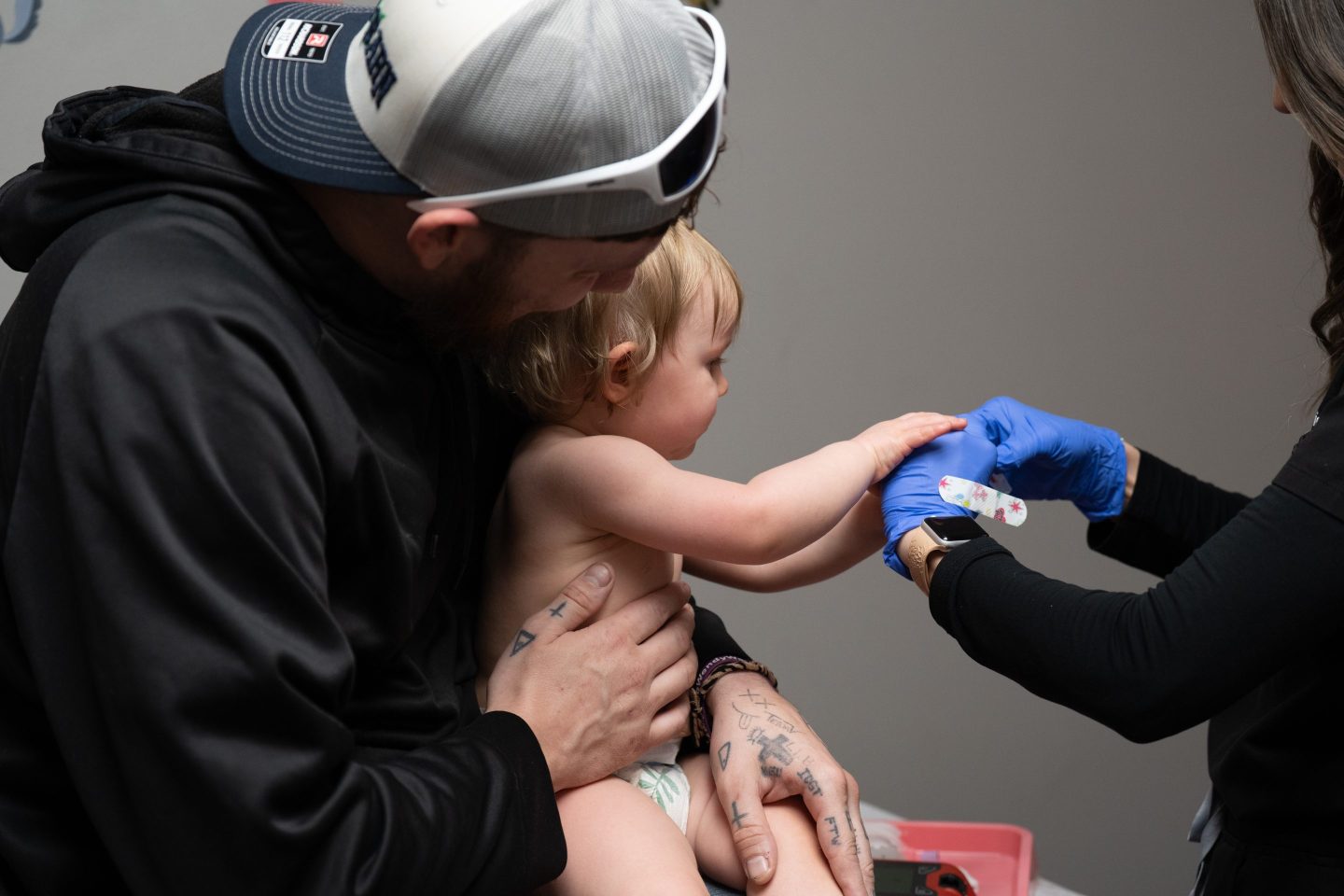
When it comes to COVID-19 vaccine uptake, seeing is believing—a host of new data shows people are growing less skeptical of rolling up their sleeve for the proverbial shot in the arm.
But the big question remains: will any of that newfound confidence translate to the kind of uptake needed to build the collective immunization needed to knock back the deadly contagion?
Let’s examine the glass-half-full case first.
In much of the developed world, COVID vaccine acceptance is actually on the rise ever since the world’s richest countries started their historic mass immunization efforts.
According to new survey data shared exclusively with Fortune, pollsters at Ipsos found that people in 13 out of 15 countries across the Americas, Asia + Oceania, plus Europe + Africa have expressed more of a willingness to take the COVID jab since mid-December—or around the time the public first started seeing a wave of news stories that Britain, followed by the United States, had begun to vaccinate against the deadly coronavirus outbreak.
“I’m kind of holding my breath for some older people in my life to get the vaccine just so I can stop worrying about them,” one survey participant told Ipsos. “It doesn’t feel like we’re connecting as much. Now that [we’re] getting the vaccine, that might shift a little.”
Here’s what Ipsos found, by region. People in China, the U.K. and Brazil are among the world’s most vaccine-willing. The French, South Africans and Russians, meanwhile, are among the most skeptical. But in most places, the trend is looking more optimistic as more people have told Ipsos in the past month that they’d take the COVID-19 vaccine when it comes available in their region.

Ipsos give three reasons for the growing confidence in the jab. “The first is that early adopters have shown the new vaccines to be safe. Second, the recent spate of lockdowns has reminded us of the consequences of not being able to control COVID-19. Third, we want our lives back and most of us now believe this will be helped with a significant level of vaccination,” Ipsos’s CEO of public affairs, Darrell Bricker said.
The skeptical view
It might be a bit too early to say the planet is shifting from a state of vaccine hesitancy to vaccine acceptance, but, Ipsos, for one, views the data positively. It has as good view as anyone as it’s been tracking monthly the public sentiment on a COVID vaccine for more than six months.
But in that Ipsos data, there’s some reason for pause. There’s been an explosion in confidence in countries such as Italy and even in ultra skeptical France. But in places like Germany and Australia it’s much more mooted. And, in South Africa and the United States it’s actually in decline. (However, a YouGov poll released on Friday showed an upswing in vaccine optimism among Americans over a period of the past two months.)
For now, the problems posed by vaccine hesitancy are mostly theoretical—few COVID-19 vaccines have been approved and distributed so far, meaning the main concern is supply rather than demand.
This situation will likely persist for the next month or two, says Azeem Majeed, professor of primary care and public health at Imperial College London. “By Easter, we’ll have a lot more vaccines,” he says. Once high levels of inoculation have been achieved among over-50s, “then we may start to hit problems.”
The hardest to convince
Majeed sees three broad groups of people who might be hard to reach with vaccines. The first comprises those, typically in lower-paid jobs, who are very mobile or who might find it hard to take time off to get vaccinated.
Then comes the problem of active skepticism. The second group includes those who have “some anxiety” about the vaccines but who “can generally be convinced”, while the third comprises those who are against the vaccine and are unlikely to change their minds.
“Because the vaccine is new and not well-established, we don’t have long-term data on safety and efficacy that we have on other vaccines,” Majeed says. “As time goes by and more data is accumulated, it will help to address those issues amongst the public.”
The professor says there are “quite strong social indicators”—including poorer backgrounds and lower education levels—for vaccine skepticism.
Religion can occasionally play a part, too. For example, some Muslim and Jewish activists have claimed that COVID-19 vaccines contain pork—also a worry for some vegans, Majeed notes—or that they alter the recipient’s DNA. Neither of these ideas is correct, nor is the preposterous notion that they contain microchips for tracking people.
In the U.K., following research that showed up to 72% of Black people were unlikely or very unlikely to get the vaccine, senior health experts have urged the government to target vaccine communications at people in Black, Asian and minority ethnic (BAME) communities.
“We are concerned that recent reports show that people within BAME communities are not only more likely to be adversely affected by the virus but also less likely to accept the COVID vaccine, when offered it,” Martin Marshall, chair of the Royal College of General Practitioners, told the Guardian. “As such, where appropriate, we’re calling for public health communications to be tailored to patients in BAME communities, to reassure them about the efficacy and safety of the vaccine and ultimately encourage them to come forward for their vaccination when they are invited for it.”
Health care resistance
Perhaps surprisingly, many people working in health care are COVID-19 vaccine skeptics.
The Press Association reported Sunday that up to a fifth of workers in some U.K. care-home groups refused the vaccine when offered it. Researchers have made similar findings in the U.S. and Austria, with French care-home staffers being even more resistant. Around a month ago, a survey in Germany indicated that half of nurses and a quarter of doctors did not want the vaccine, either.
“A lot of non-medical staff aren’t clued up about the science of vaccines. For example, they are afraid you can get COVID from the vaccine, mostly due to many getting ill after flu jabs,” says one medical secretary at a large central-London hospital, who asked to remain anonymous.
“The medical people all seem to just have had it—I don’t know anyone medical who’s not had it,” the National Health Service employee says, adding that some non-frontline colleagues were concerned about being guinea pigs for vaccines that have not been tested over long periods of time.
Because the vaccines are not yet approved for under-18s, that excludes a large section of society from being able to get inoculated. As a result, says Majeed, at least 70% of the rest of society needs to get the jab, if herd immunity is to become a reality. If the newer, more infectious strains of the virus become dominant, he added, a “higher level” of uptake would be needed.
Water Ricciardi, a senior advisor to Italian Health Minister Roberto Speranza, recently told lawmakers there that potential dominance of the newly-arrived “British variant” would require vaccination levels more in the order of 90%-95%.
The European Commission said Tuesday that it wanted to see member states vaccinate 70% of their adult populations by the summer, and 80% of health and social care professionals by March.
Continued efficacy
The Commission, which like the EU’s national governments is deeply concerned about the spread of the more transmissible strains, also said countries should boost their genome sequencing of coronavirus samples to see which variations are going around.
While the so-called British and South African strains are currently causing alarm around the world, there could be others that pose the same problems—it just happens that both the U.K. and South Africa are doing a lot of genome sequencing, and were therefore in a position to identify new coronavirus variants.
Anthony Fauci, the top U.S. infectious-diseases expert, said Thursday that he believed the Pfizer-BioNTech and Moderna vaccines—which are already being distributed in many countries—should still be able to handle the new variants.
“It appears that the vaccine will still be effective,” he said.
That is doubtlessly a message that will need to take hold, so people do not see the emergence of the mutations as a reason to avoid taking the vaccine when offered it.