Our mission to make business better is fueled by readers like you. To enjoy unlimited access to our journalism, subscribe today.
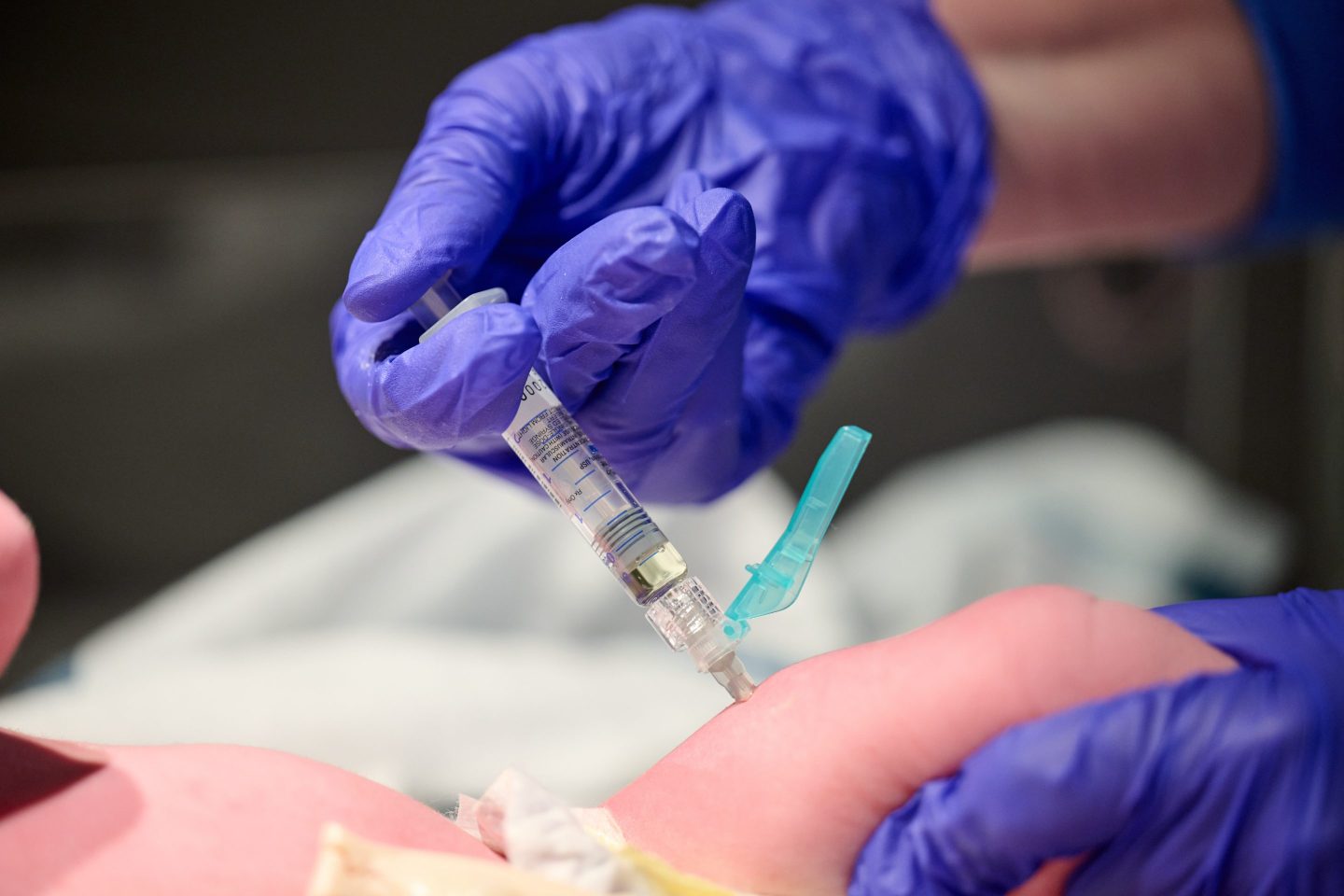
Success for the huge COVID-19 U.S. vaccination program now underway hinges on people getting two doses, separated by three to four weeks. But a recent study suggests that many people may fail to get their second injection, which is necessary to build maximum immunity.
The research, published Dec. 14, focused on a vaccine to prevent the viral skin condition known as shingles. It found that one in four Medicare patients missed getting their second dose within six months of their initial one.
Recipients of the two COVID-19 vaccines currently approved for use may be more likely to complete their immunizations than those in the study, for reasons including greater perceived health risk if they don’t. But the authors of the new study caution that many of the same barriers will be at work: not just patient negligence, but also poverty, age, and isolation.
A high number of incomplete vaccinations could make it harder to stem the coronavirus and end the pandemic, which is spreading out of control in most states. It could also lead to more deaths and hospitalizations than there otherwise would be.
To make matters worse, the study found that follow-up vaccination rates for the shingles were much lower for certain groups. Only 58% of Hispanic patients, 61% of Black patients, and 69% of Asian patients received a second dose. Meanwhile, only 64% of low-income patients and 66% of disabled patients returned for their second doses.
“This obviously has some troubling implications for the COVID vaccine,” says Juliette Cubanski, one of the study’s authors and deputy director for Medicare policy at KFF, formerly the Kaiser Family Foundation. “These groups are among the hardest hit in terms of getting seriously ill and dying from COVID.”
There are important differences between Shingrix, the shingles vaccine, and the coronavirus vaccines. Most obviously, while shingles can be extremely painful and even debilitating, it is rarely life-threatening. And with the coronavirus in the news every single day, there will be fewer chances for patients to simply forget their second dose.
Another factor that points to higher second-dose rates for the COVID vaccines is timing. Patients could wait up to six months for their second dose of Shingrix, but both COVID vaccines currently being administered—one from Moderna and another from Pfizer-BioNTech—require a second shot within three to four weeks. According to Cubanski, the longer Shingrix delay may have made it easier for patients to overlook their follow-up shot.
But other factors that prevented patients from getting their full course of Shingrix will still be in effect when it comes to the COVID vaccines.
One is the complex and often unpredictable payments that are inextricable from American health care. The Shingrix vaccine required an out-of-pocket copayment for each dose, which Cubanski says may have discouraged some people from getting a second one. By contrast, the coronavirus vaccine is expected to require no payment from U.S. recipients, even for the 29 million Americans without health insurance. But Cubanski worries that people may not realize that they can get immunized at no cost.
“People’s concern about having to pay something out of pocket might be an issue, even if there is no actual cost,” she says. “They might not be aware that the vaccine is actually free.”
Transportation will also likely be an issue. Disabled, low-income, or rural Americans in particular may have difficulty reaching a vaccination site not just once, but twice. Rural areas have some of America’s lowest influenza vaccination rates—as low as 25% in some cases—partly because of distance.
Finally, Cubanski is concerned that some coronavirus vaccine recipients will be discouraged from following through on their second dose after an adverse reaction to the first one. Though the reactions don’t appear to be common, both Pfizer and Moderna vaccines can cause mild muscle soreness, fatigue, or low fever.
“These side effects are a sign that the vaccine is working, and not a sign that you have been infected with the virus and now have the disease,” says Cubanski. “That’s an important message to get across.”
In fact, it is medically impossible for the Pfizer or Moderna vaccines to transmit the virus behind COVID-19. While some vaccines use weakened versions of the virus they protect against, the new COVID vaccines use a new technique to trigger immunity without using any viral material.
Meanwhile, there is no single system in the U.S. to ensure that patients get their second dose. That responsibility will fall on individual recipients and the various health providers administering the vaccine.
One major vaccination site is expected to be outpatient clinics, including those run by Walgreens and CVS. Walgreens says it will use a variety of techniques to ensure follow-up doses, including scheduling an appointment for a second dose when the first one is administered, and sending patients reminders via mail, email, and voicemail.
As with most aspects of the coronavirus pandemic, these challenges have implications beyond the individual who misses his or her second dose. Trial data indicates that a single dose of the Moderna or Pfizer vaccines provide significant protection from the coronavirus, but a second dose makes that protection much higher and likely longer-lasting. If enough people miss their second vaccine doses, it could take significantly longer to reach the population-wide immunity level needed to stop the virus from circulating and end the pandemic.