• Home
  • Latest
  • Fortune 500
  • Finance
  • Tech
  • Leadership
  • Lifestyle
  • Rankings
  • Multimedia
CommentaryBanks

Bankers were the villains of the last recession. They can be heroes in this one

By
Aaron Fine
Aaron Fine
and
Ahmet Hacikura
Ahmet Hacikura
Down Arrow Button Icon
By
Aaron Fine
Aaron Fine
and
Ahmet Hacikura
Ahmet Hacikura
Down Arrow Button Icon
December 11, 2020, 1:18 PM ET
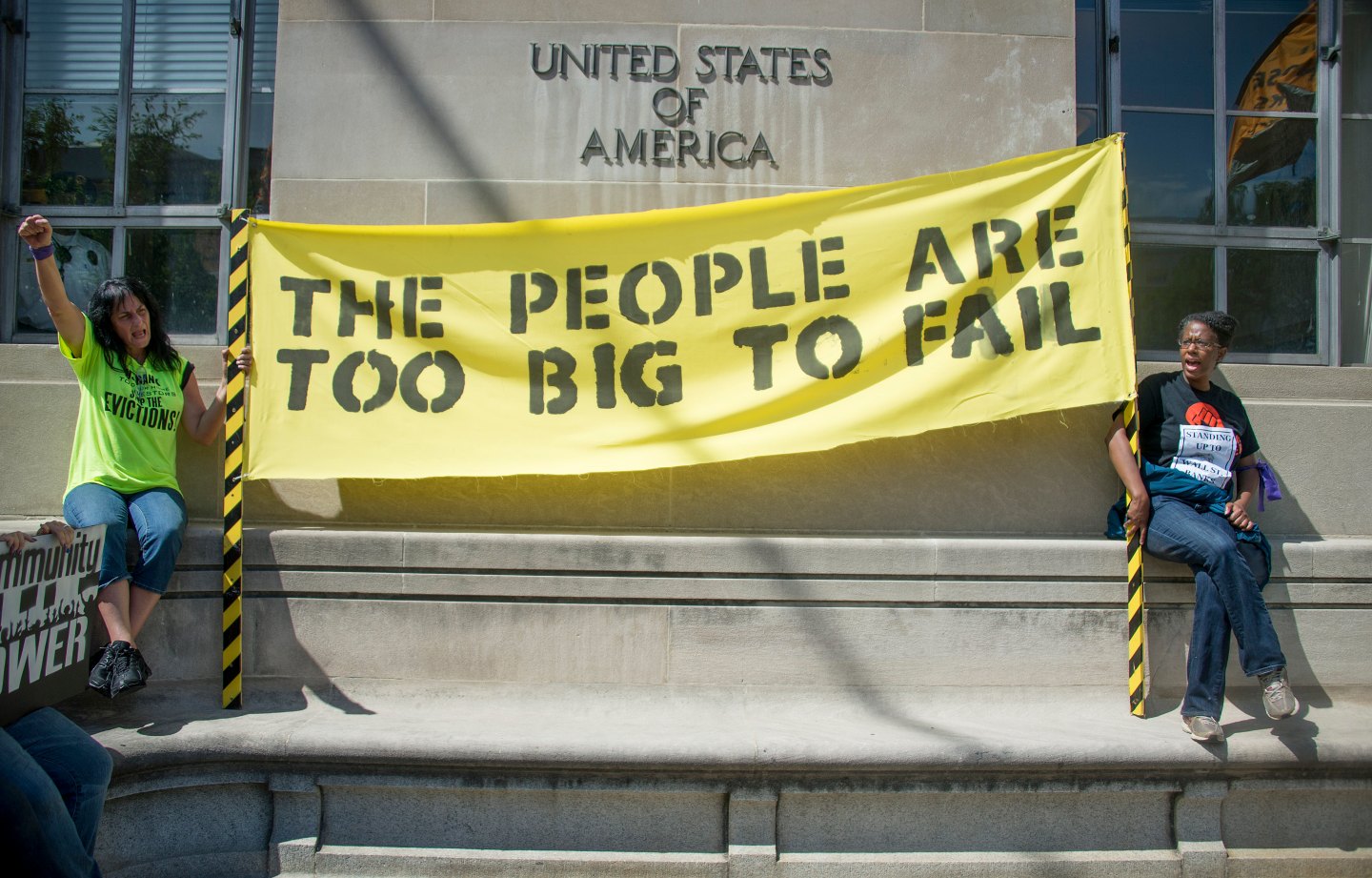
Protesters during a rally against big banks and home foreclosures in Washington, D.C., in 2013. Banks that stumble in the current crisis “risk doing damage not only to their customers and shareholders but also their own careers,” write the authors.
Protesters during a rally against big banks and home foreclosures in Washington, D.C., in 2013. Banks that stumble in the current crisis “risk doing damage not only to their customers and shareholders but also their own careers,” write the authors.(Photo by Jim Watson/AFP via Getty Images)

Banks didn’t start the coronavirus recession, and so far they’ve been part of the rescue effort. But with the next round of federal relief uncertain, ordinary Americans are bracing for bigger financial troubles on the horizon—and bankers are facing a moment of truth.  

Despite months of job gains, the number of people receiving unemployment benefits is still nearly twice the Great Recession peak more than a decade ago. 

So far, government aid has significantly blunted financial stress for millions of Americans. But federal relief programs such as student-loan deferrals and extended unemployment insurance have expired or soon will wind down. By next spring, if federal relief isn’t extended, up to 20 million Americans will see their incomes fall to zero, according to the latest Department of Labor weekly jobs report. And many of them will also see their cost of housing go up dramatically as mortgage forbearance programs come to an end. 

The government will likely grant a fresh round of aid at some point. But the price tag will have to be large, and the rollout swift, to prevent severe stress in households already suffering from the recession. The blunt instrument of fiscal policy isn’t likely to keep everyone afloat for much longer. Even small gaps in income can lead quickly to deep levels of financial strain. Before the coronavirus recession, 37% of American households didn’t have enough cash on hand to cover a hypothetical $400 expense, according to a 2019 Federal Reserve study. And the pandemic, of course, has only underscored how dangerously close to the line of insolvency so many Americans live.

In short, millions more Americans could soon fall behind on mortgages, credit cards, and car payments. When that happens, attention will shift to banks. 

U.S. mortgage lenders bore much of the blame for the last recession, and many top executives ended up losing their jobs. This time, banks have been part of the solution—the public face of Paycheck Protection Program loans and other measures that have helped millions of Americans stay solvent. But when customers begin missing loan payments, bankers will be forced to take actions that could flip the script and turn them into villains once again. 

Alternatively, they can choose to be remembered as benevolent innovators. There are three ways banks can both help their customers in the short term and perform for their shareholders in the long term.  

First, they can seize this opportunity to put empathetic client care and long-term relationship building ahead of short-term profits. 

When borrowers start missing payments, banks will have every legal right to try to claw back every dollar they are owed. But that might be unwise. Most banks have already set aside billions of dollars in reserves and are optimistic they won’t need to earmark more. If they overzealously collect on delinquent loans, the public relations and regulatory cost could be high—at a time when the monetary value of trying to collect on many of those loans is at an all-time low. The math of being as lenient as possible for borrowers who are truly without fault has never been more persuasive. 

Second, bankers have an opportunity to become more flexible. After the mortgage meltdown of the 2000s, regulators imposed so many new rules and restrictions that banks decided it was better to standardize their operations to avoid any missteps. If they continue down that path in the coming months they will risk being seen as robotic and ineffective. Bankers have a chance to set a new course toward customized client care and advice, which would help strengthen relationships and avoid perceptions that they are looking only after their own interests.

Third, they can become emergency lenders. The current stalemate in Congress is the third in the past two years to leave households facing a short-term cash crunch even though help from the federal government was almost certainly on the way—the others being the government shutdown at the end of 2018 and the delay in the rollout of the CARES Act earlier this year. It seems unlikely this will be the last such occasion. 

Banks can help solve this problem by making short-term loans at reasonable interest rates to tide people over until the federal relief arrives. That would help customers in the near term and solidify long-term relationships. 

Whether or not the coronavirus recession turns out to be worse than the Great Recession, the number of stressed American households is about to increase sharply. Bankers will be under a microscope like never before as they decide how—or whether—to help customers. If they succeed, they will build relationships for life. If they stumble, they risk doing damage not only to their customers and shareholders but also their own careers. 

Aaron Fine is a partner at Oliver Wyman and head of the consultancy’s retail and business banking practice in the Americas. Ahmet Hacikura is a partner in the practice.

About the Authors
By Aaron Fine
See full bioRight Arrow Button Icon
By Ahmet Hacikura
See full bioRight Arrow Button Icon

Latest in Commentary

Julian Braithwaite is the Director General of the International Alliance for Responsible Drinking
CommentaryProductivity
Gen Z is drinking 20% less than Millennials. Productivity is rising. Coincidence? Not quite
By Julian BraithwaiteDecember 13, 2025
14 hours ago
carbon
Commentaryclimate change
Banking on carbon markets 2.0: why financial institutions should engage with carbon credits
By Usha Rao-MonariDecember 13, 2025
15 hours ago
Dr. Javier Cárdenas is the director of the Rockefeller Neuroscience Institute NeuroPerformance Innovation Center.
Commentaryconcussions
Fists, not football: There is no concussion protocol for domestic violence survivors
By Javier CárdenasDecember 12, 2025
2 days ago
Gary Locke is the former U.S. ambassador to China, U.S. secretary of commerce, and governor of Washington.
CommentaryChina
China is winning the biotech race. Patent reform is how we catch up
By Gary LockeDecember 12, 2025
2 days ago
millennial
CommentaryConsumer Spending
Meet the 2025 holiday white whale: the millennial dad spending $500+ per kid
By Phillip GoerickeDecember 12, 2025
2 days ago
Sarandos
CommentaryAntitrust
Netflix, Warner, Paramount and antitrust: Entertainment megadeal’s outcome must follow the evidence, not politics or fear of integration
By Satya MararDecember 12, 2025
2 days ago

Most Popular

placeholder alt text
Success
Apple cofounder Ronald Wayne sold his 10% stake for $800 in 1976—today it’d be worth up to $400 billion
By Preston ForeDecember 12, 2025
2 days ago
placeholder alt text
Economy
Tariffs are taxes and they were used to finance the federal government until the 1913 income tax. A top economist breaks it down
By Kent JonesDecember 12, 2025
2 days ago
placeholder alt text
Success
40% of Stanford undergrads receive disability accommodations—but it’s become a college-wide phenomenon as Gen Z try to succeed in the current climate
By Preston ForeDecember 12, 2025
2 days ago
placeholder alt text
Economy
The Fed just ‘Trump-proofed’ itself with a unanimous move to preempt a potential leadership shake-up
By Jason MaDecember 12, 2025
1 day ago
placeholder alt text
Economy
For the first time since Trump’s tariff rollout, import tax revenue has fallen, threatening his lofty plans to slash the $38 trillion national debt
By Sasha RogelbergDecember 12, 2025
1 day ago
placeholder alt text
Success
Apple CEO Tim Cook out-earns the average American’s salary in just 7 hours—to put that into context, he could buy a new $439,000 home in just 2 days
By Emma BurleighDecember 12, 2025
1 day ago
Rankings
  • 100 Best Companies
  • Fortune 500
  • Global 500
  • Fortune 500 Europe
  • Most Powerful Women
  • Future 50
  • World’s Most Admired Companies
  • See All Rankings
Sections
  • Finance
  • Leadership
  • Success
  • Tech
  • Asia
  • Europe
  • Environment
  • Fortune Crypto
  • Health
  • Retail
  • Lifestyle
  • Politics
  • Newsletters
  • Magazine
  • Features
  • Commentary
  • Mpw
  • CEO Initiative
  • Conferences
  • Personal Finance
  • Education
Customer Support
  • Frequently Asked Questions
  • Customer Service Portal
  • Privacy Policy
  • Terms Of Use
  • Single Issues For Purchase
  • International Print
Commercial Services
  • Advertising
  • Fortune Brand Studio
  • Fortune Analytics
  • Fortune Conferences
  • Business Development
About Us
  • About Us
  • Editorial Calendar
  • Press Center
  • Work At Fortune
  • Diversity And Inclusion
  • Terms And Conditions
  • Site Map

© 2025 Fortune Media IP Limited. All Rights Reserved. Use of this site constitutes acceptance of our Terms of Use and Privacy Policy | CA Notice at Collection and Privacy Notice | Do Not Sell/Share My Personal Information
FORTUNE is a trademark of Fortune Media IP Limited, registered in the U.S. and other countries. FORTUNE may receive compensation for some links to products and services on this website. Offers may be subject to change without notice.