• Home
  • Latest
  • Fortune 500
  • Finance
  • Tech
  • Leadership
  • Lifestyle
  • Rankings
  • Multimedia

Trendingnow

1

As Big Tech showers employees with perks to win the talent war, Nvidia built a nearly $5 trillion company by making people pay for their own lunch

2

MacKenzie Scott alone accounted for one-third of America's $19.2 billion in megagifts last year

3

Current price of oil as of July 1, 2026

1

As Big Tech showers employees with perks to win the talent war, Nvidia built a nearly $5 trillion company by making people pay for their own lunch

2

MacKenzie Scott alone accounted for one-third of America's $19.2 billion in megagifts last year

3

Current price of oil as of July 1, 2026
HealthCoronavirus

The science behind the leading COVID vaccines will lead to faster manufacturing

By
Sy Mukherjee
Sy Mukherjee
Down Arrow Button Icon
By
Sy Mukherjee
Sy Mukherjee
Down Arrow Button Icon
December 5, 2020, 8:00 AM ET
Add Fortune on Google for similar content.

The fate of the COVID pandemic may well be dictated by a biological building block that’s just several hundred nanometers long.

Messenger RNA, or mRNA, is at the heart of both leading vaccine candidates, one from Moderna and the other from Pfizer and partner BioNTech. The companies’ clinical trial data suggest these vaccines are about 95% effective. And Pfizer’s vaccine, which has already received the green light in the U.K., may start being distributed to certain Americans in just a matter of weeks.

It will be a distribution challenge and an immunization campaign the likes of which the world has never seen. But as remarkable as that challenge will be, the science that led to the creation of promising vaccines in less than a year is equally remarkable—a process that usually takes about five years or more. And in the case of Pfizer’s and Moderna’s vaccines, their pioneering technologies could make it far easier to scale up the manufacturing process.

So how does a vaccine get made, anyway? And how did academic institutes and pharmaceutical companies pull it off so quickly in the midst of a pandemic?

How a virus births a vaccine

Drugs don’t just spring out of thin air. Creating one, whether it be a therapeutic meant to treat disease or a vaccine meant to prevent it, is a fascinating process which begins with a thorough examination of the biological foe in question.

“One of the first steps of making a vaccine is to identify the weak spot in the pathogen; to identify the vaccine target,” says Peter Hotez, dean for the National School of Tropical Medicine at Houston’s Baylor College of Medicine.

The basic role of a vaccine is to induce an immune response, which will then offer protection against a pathogen by forcing your body to create antibodies which attack antigens, the components of a pathogen that produce the immune response. So when the actual virus comes knocking, your body already recognizes the intruder and can deploy its antibody arsenal.

Many common vaccines contain little bits of the virus or bacteria itself that either have been killed after being grown in a lab or are live but greatly weakened and are therefore unlikely to get you sick.

In the case of the coronavirus, identifying the “weak spot” Hotez refers to was the crucial first step. It’s something rather sinisterly named the spike protein.

“When you think of the coronavirus, everyone’s seen the pictures of the virus that has the colored spike protein, that red bit that’s protruding off that cylindrical virus compound,” says Dean Fanelli, a partner in the intellectual property department of Seyfarth Shaw LLP’s Washington, D.C., offices.
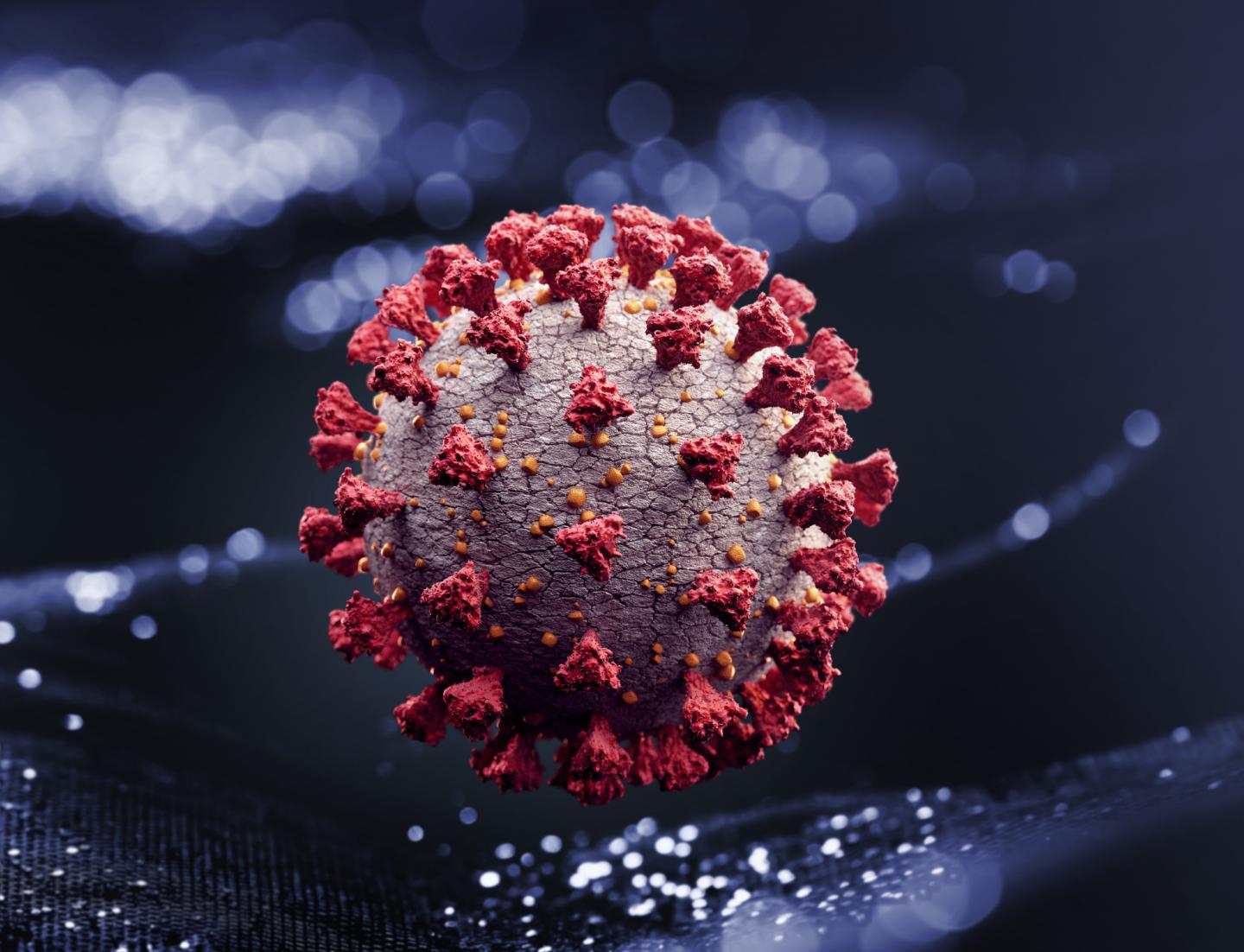
Coronavirus
Radoslav Zilinsky—Getty Images

That “spike protein” does exactly what you’d think a spiked object would do: It pierces something else. “The spike protein attaches to the ACE2 protein present in human cells. And so we know that’s how this virus actually infects people,” adds Fanelli.

The drugmakers knew they would have to teach the body to attack the antibody-attracting antigens on the spike protein. But the way in which Pfizer and Moderna went about that is very different from the traditional vaccine creation method.

Creating a COVID mRNA vaccine

Messenger RNA is a powerful biological tool. It’s the molecule that actually instructs your cells what to make, such as proteins.

Theoretically, that means you could harness mRNA to turn your body’s cells into mini drugmaking factories that can fight various diseases. As little as a year ago, large swaths of the biotech community were skeptical of using mRNA technology to make treatments.

But that’s just what the leading vaccine candidates have been able to accomplish. By leveraging the genetic code of the virus, which was made available globally by Chinese scientists earlier this year, drugmakers have been able to figure out how to use mRNA to force the body to mimic the spike protein and induce an immune response.

In essence, they go back one step from the traditional vaccine-making process. Rather than injecting the surface proteins that awaken the immune system directly into the body, Pfizer/BioNTech and Moderna are injecting the RNA which codes for such proteins.

One individual who’s been a decided RNA vaccine evangelist is Phil Dormitzer, who just happens to be the vice president and chief scientific officer of Pfizer’s viral vaccines unit.

“I’ve been thinking about RNA vaccines for a long time,” he says. “Things really came together in 2018 when we agreed with BioNTech to start the new mRNA program.” That collaboration began as a quest to develop an mRNA-based flu vaccine. The focus shifted once the pandemic hit.

Dormitzer cites two specific reasons he’s enthusiastic about the technology: flexibility and the capacity to rapidly manufacture and scale up treatments. He explains that with RNA vaccines an immune response could produce both antibodies and T cells, another key immune system warrior, which is important since one or the other might be more effective against COVID.

The second reason is particularly critical at a time when these vaccines must be scaled up on a massive level for worldwide distribution.

“I think a lot of people gravitate to mRNA because you can make a piece of mRNA in a day, right?” says Baylor’s Hotez. “And there are companies that you can contract out that will make the mRNA for you.”

Unlike more traditional vaccines, you don’t have to spend months upon months manually harvesting and purifying a pathogen’s antigens in order to make the final product. You can simply let the instruction-carrying mRNA sequences loose into the body. After that, the body’s cells do that heavy lifting all by themselves.

That’s one of the reasons why Pfizer’s and Moderna’s vaccines may have leapfrogged competitors on the regulatory front—and what may help them ramp up hundreds of millions of vaccine doses by the end of 2021.

An army of COVID vaccines

Ultimately conquering the coronavirus pandemic will likely require a motley crew of vaccines which use different technologies. Not everything is going to be an mRNA vaccine.

For instance, Hotez’s own group has been working on a COVID-19 vaccine which employs a far more traditional technology called recombinant adenovirus tech.

“We started making the new spike protein as did other groups,” he says. “It’s just that different groups are using different technologies to do it, whether it’s mRNA or adenovirus. And each of the technologies has strengths and weaknesses.”

For Pfizer, one of the more complex issues is the ultracold temperature its COVID vaccine requires for storage, about negative 70 degrees Celsius. That’s precisely because of the mRNA component of its specific vaccine, which could fall apart without being thoroughly frozen. Pfizer even had to come up with a special high-tech storage and transport case to deal with that exact dilemma.

So while mRNA vaccines present some problems, the quickness they provide is exactly what’s needed in this moment. Distributing the COVID vaccines and persuading people to get them will be the next daunting challenge—and there are still plenty of other pioneering projects to come during this pandemic.

More health care and Big Pharma coverage from Fortune:

  • To address health disparities, we need better data
  • “Like drowning in slow motion”: Life on the ground at one of America’s hardest-hit COVID-19 hospitals
  • Vaccines, tech, and climate: Europe pitches a new partnership to President-elect Biden
  • England’s pre-Christmas lockdown is over. Now everyone is fighting about what comes next
  • Commentary: How to keep COVID from reversing progress on AIDS
About the Author
By Sy Mukherjee
See full bioRight Arrow Button Icon
Add Fortune on Google for similar content.

Latest in Health

Finance
Lorem ipsum dolor sit amet, consectetur adipiscing elit, sed do eiusmod tempor incididunt ut labore et dolore magna aliqua. Ut enim ad minim veniam
By Fortune Editors
October 20, 2025
Finance
Lorem ipsum dolor sit amet, consectetur adipiscing elit, sed do eiusmod tempor incididunt ut labore et dolore magna aliqua. Ut enim ad minim veniam
By Fortune Editors
October 20, 2025
Finance
Lorem ipsum dolor sit amet, consectetur adipiscing elit, sed do eiusmod tempor incididunt ut labore et dolore magna aliqua. Ut enim ad minim veniam
By Fortune Editors
October 20, 2025
Finance
Lorem ipsum dolor sit amet, consectetur adipiscing elit, sed do eiusmod tempor incididunt ut labore et dolore magna aliqua. Ut enim ad minim veniam
By Fortune Editors
October 20, 2025
Finance
Lorem ipsum dolor sit amet, consectetur adipiscing elit, sed do eiusmod tempor incididunt ut labore et dolore magna aliqua. Ut enim ad minim veniam
By Fortune Editors
October 20, 2025
Finance
Lorem ipsum dolor sit amet, consectetur adipiscing elit, sed do eiusmod tempor incididunt ut labore et dolore magna aliqua. Ut enim ad minim veniam
By Fortune Editors
October 20, 2025

Most Popular

Finance
Lorem ipsum dolor sit amet, consectetur adipiscing elit, sed do eiusmod tempor incididunt ut labore et dolore magna aliqua. Ut enim ad minim veniam
By Fortune Editors
October 20, 2025
Finance
Lorem ipsum dolor sit amet, consectetur adipiscing elit, sed do eiusmod tempor incididunt ut labore et dolore magna aliqua. Ut enim ad minim veniam
By Fortune Editors
October 20, 2025
Finance
Lorem ipsum dolor sit amet, consectetur adipiscing elit, sed do eiusmod tempor incididunt ut labore et dolore magna aliqua. Ut enim ad minim veniam
By Fortune Editors
October 20, 2025
Finance
Lorem ipsum dolor sit amet, consectetur adipiscing elit, sed do eiusmod tempor incididunt ut labore et dolore magna aliqua. Ut enim ad minim veniam
By Fortune Editors
October 20, 2025
Finance
Lorem ipsum dolor sit amet, consectetur adipiscing elit, sed do eiusmod tempor incididunt ut labore et dolore magna aliqua. Ut enim ad minim veniam
By Fortune Editors
October 20, 2025
Finance
Lorem ipsum dolor sit amet, consectetur adipiscing elit, sed do eiusmod tempor incididunt ut labore et dolore magna aliqua. Ut enim ad minim veniam
By Fortune Editors
October 20, 2025
Fortune Secondary Logo
Rankings
  • 100 Best Companies
  • Fortune 500
  • Global 500
  • Fortune 500 Europe
  • Most Powerful Women
  • World's Most Admired Companies
  • See All Rankings
  • Lists Calendar
Sections
  • Finance
  • Fortune Crypto
  • Features
  • Leadership
  • Health
  • Commentary
  • Success
  • Retail
  • Mpw
  • Tech
  • Lifestyle
  • CEO Initiative
  • Asia
  • Politics
  • Conferences
  • Europe
  • Newsletters
  • Personal Finance
  • Environment
  • Magazine
  • Education
Customer Support
  • Frequently Asked Questions
  • Customer Service Portal
  • Privacy Policy
  • Terms Of Use
  • Single Issues For Purchase
  • International Print
Commercial Services
  • Advertising
  • Fortune Brand Studio
  • Fortune Analytics
  • Fortune Conferences
  • Business Development
  • Group Subscriptions
About Us
  • About Us
  • Press Center
  • Work At Fortune
  • Terms And Conditions
  • Site Map
  • About Us
  • Press Center
  • Work At Fortune
  • Terms And Conditions
  • Site Map
  • Facebook icon
  • Twitter icon
  • LinkedIn icon
  • Instagram icon
  • Pinterest icon

Latest in Health

Opti-Greens 50 Review (2026): Insights from Hands-On Testing
HealthDietary Supplements
Opti-Greens 50 Review (2026): Insights from Hands-On Testing
By Christina SnyderJuly 2, 2026
2 hours ago
A man shaves wood pieces from a block.
EconomyRetirement
Economists have found an answer to slowing cognitive decline: Avoid retiring early, study finds
By Sasha RogelbergJuly 2, 2026
6 hours ago
The Best Compact Ellipticals of 2026: Tested by Fitness Fanatics
HealthDietary Supplements
The Best Compact Ellipticals of 2026: Tested by Fitness Fanatics
By Emily PharesJuly 2, 2026
6 hours ago
The 6 Best Exercise Bikes of 2026: Fitness Expert Reviewed
HealthDietary Supplements
The 6 Best Exercise Bikes of 2026: Fitness Expert Reviewed
By Christina SnyderJuly 1, 2026
1 day ago
kean
PoliticsCongress
Tom Kean discloses depression diagnosis behind 4-month absence from Congress: ‘until you experience it yourself, it is difficult to fully understand’
By Mike Catalini, Joey Cappelletti and The Associated PressJune 30, 2026
2 days ago
‘Cop on your wrist’: Wearables offer tons of data, but people are still going to sleep to Netflix and TikTok
HealthBrainstorm Tech
‘Cop on your wrist’: Wearables offer tons of data, but people are still going to sleep to Netflix and TikTok
By Amanda GerutJune 29, 2026
3 days ago

Most Popular

As Big Tech showers employees with perks to win the talent war, Nvidia built a nearly $5 trillion company by making people pay for their own lunch
Big Tech
As Big Tech showers employees with perks to win the talent war, Nvidia built a nearly $5 trillion company by making people pay for their own lunch
By Marco Quiroz-GutierrezJuly 1, 2026
2 days ago
MacKenzie Scott alone accounted for one-third of America's $19.2 billion in megagifts last year
Success
MacKenzie Scott alone accounted for one-third of America's $19.2 billion in megagifts last year
By Sydney LakeJune 25, 2026
8 days ago
Current price of oil as of July 1, 2026
Personal Finance
Current price of oil as of July 1, 2026
By Joseph HostetlerJuly 1, 2026
1 day ago
Trump got a $78K pension from the Screen Actors Guild in 2025 because he appeared in Home Alone 2 in 1992
Politics
Trump got a $78K pension from the Screen Actors Guild in 2025 because he appeared in Home Alone 2 in 1992
By Sasha RogelbergJuly 1, 2026
1 day ago
Today, Emily Blunt is worth $80 million thanks to her Hollywood career—but she actually wanted to be a UN Spanish translator on $80K
Success
Today, Emily Blunt is worth $80 million thanks to her Hollywood career—but she actually wanted to be a UN Spanish translator on $80K
By Orianna Rosa RoyleJuly 2, 2026
15 hours ago
CEO of $248 billion cybersecurity company says workers are about to face a ‘Darwinian moment’ thanks to AI: Evolve or get cut
Success
CEO of $248 billion cybersecurity company says workers are about to face a ‘Darwinian moment’ thanks to AI: Evolve or get cut
By Emma BurleighJuly 1, 2026
1 day ago

© 2026 Fortune Media IP Limited. All Rights Reserved. Use of this site constitutes acceptance of our Terms of Use and Privacy Policy | CA Notice at Collection and Privacy Notice | Do Not Sell/Share My Personal Information
FORTUNE is a trademark of Fortune Media IP Limited, registered in the U.S. and other countries. FORTUNE may receive compensation for some links to products and services on this website. Offers may be subject to change without notice.