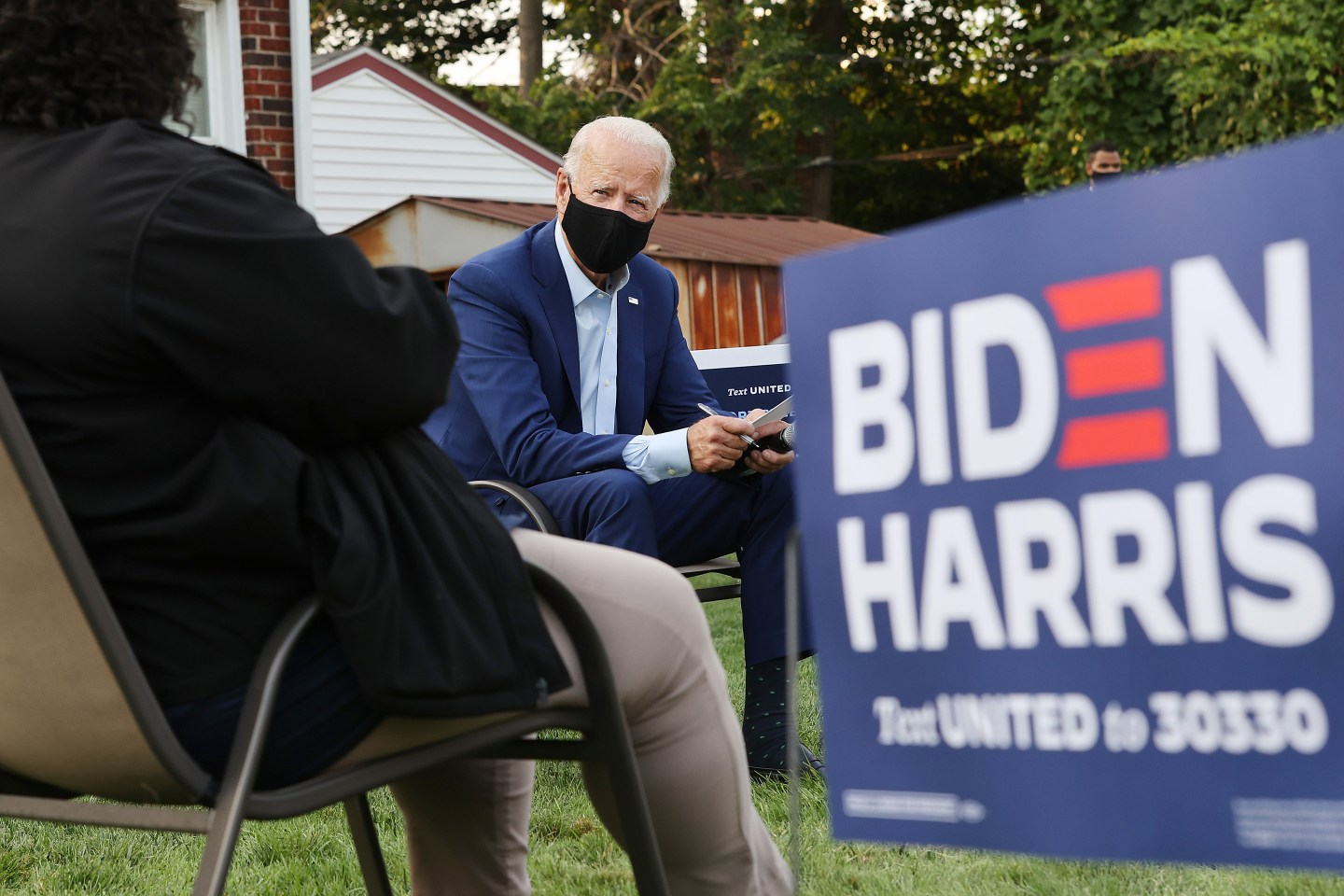
Americans elected Joe Biden as the next President of the United States. We welcome the Biden-Harris presidency and stand ready to support the incoming administration’s mandate to heal the deep divides in our nation and face the intersectional problems harming Americans: from COVID-19 and the economic downturn to the deep wounds of racial injustice and the worsening climate crisis.
Our democratic process worked. Every vote counts, and we took the time to count them methodically, accurately, and by the book. While our democracy remains intact, America is suffering. The work of healing our nation must be guided by facts and science, as well as by compassion. It must also be guided by a renewed spirit of partnership between the White House and U.S. cities and states. Mayors and governors have rolled up our sleeves and led our constituents through the pandemic and the economic and social ills that have threatened to further divide us, as well as fending off climate-driven disasters. We stand ready to work with the federal government to keep Americans safe.
The communities we govern have been grappling with the multiple crises facing America. Michigan saw historic flooding in May that forced thousands of residents to evacuate, and Phoenix had the hottest summer on record, with more than 50 days over 110 degrees Fahrenheit. The effects of these extreme weather events were exacerbated by COVID-19 and increasing inequality, both of which have disproportionately affected people of color and low-income communities who’ve often been left behind.
Cities and states have too often lacked the backing of the federal government, constraining our ability to solve these unprecedented and simultaneous crises. We look forward to having a governing partner in the Biden administration that believes in science and listens not only to the experts but also to the experiences of the cities and states on the front lines. Together we can simultaneously tackle the coronavirus and climate change.
As we step up our actions on both crises, we ask the incoming administration to acknowledge and support the central role mayors and governors have played and will continue to play in safeguarding the American public.
Climate action at the state and local levels has been immensely important over the last four years and must remain a mainstay of U.S. climate strategy for the next four and beyond. In our states we have been laying a strong foundation for the recovery and stimulus efforts that are needed to rebuild cleaner and stronger. We must continue to identify opportunities for Americans to have well-paying jobs and the security to ensure the health and safety of themselves and their families. Our efforts must be equitable and mindful of deep-rooted issues of racial, social, and economic injustice, because those issues will influence how any policy plays out. Above all, our greatest imperative is to protect the planet for future generations.
This election saw state and local climate leaders largely hold onto their seats and many climate-related ballot measures pass, in part because people care about addressing climate change. Here in Michigan and Arizona, we have strong policy frameworks in place to accelerate climate action, transition to a carbon-neutral economy, and, most importantly, create jobs.
Michigan’s new Office of Future Mobility and Electrification will work across state government, academia, and private industry to support our ability to develop and produce the next generation of transportation technologies. We are employing 2,200 workers by repurposing our old manufacturing facilities to build the electric cars of the future.
With 90% of Arizona’s solar energy jobs located in the Phoenix area, the city is well-positioned for growth in a state that ranked sixth nationally for solar jobs at the end of 2019. Phoenix has the most solar installed on municipal property of any American city and has innovative partnerships with local utilities to make clean energy more accessible, including an initiative to reduce costs for public housing residents.
Being on the front lines of climate change has shown us, time and again, that we must work together for solutions. A Biden administration committed to bold, comprehensive action will accelerate the work we’re doing on the ground, ensuring climate solutions fuel our country’s post-pandemic economic recovery and improve the well-being of our local communities.
In Arizona and Michigan, we know the work is hard and that governing across deep divides takes courage and conviction, and will require rebuilding trust. But healing is not weakness, and it is not capitulation. As President-elect Biden said in his speech on the day his victory was called, “We must be an America that never gives up and never gives in,” no matter the challenges we face.
Kate Gallego is the mayor of Phoenix.
Gretchen Whitmer is the governor of Michigan.