• Home
  • Latest
  • Fortune 500
  • Finance
  • Tech
  • Leadership
  • Lifestyle
  • Rankings
  • Multimedia
MagazineGlobal 500

Semiconductors are a weapon in the U.S.-China trade war. Can this chipmaker serve both sides?

By
Eamon Barrett
Eamon Barrett
Down Arrow Button Icon
By
Eamon Barrett
Eamon Barrett
Down Arrow Button Icon
August 10, 2020, 6:30 AM ET

What a difference two months can make. In May, Taiwan Semiconductor Manufacturing Co. (TSMC), the world’s largest chipmaker, lost the business of Huawei Technologies—its biggest Chinese customer and the source of 13% of its revenue—as a casualty of geopolitical jockeying between superpowers. But TSMC shareholders took the loss in stride. And by late July, after a stumble by rival Intel, TSMC’s stock had risen almost 50% since May, making it one of the world’s 10 most valuable companies. 

May’s low and July’s high have something in common: They both reflect TSMC’s distinctive role in the global tech economy. Although far from a household name, TSMC controls roughly half of the world’s contract chip manufacturing. Brand-name companies that design their own chips—most notably Apple—rely on TSMC’s world-class production so they don’t have to spend tens of billions to build their own factories. Crack open your iPhone and you’ll find a chip from TSMC. If you could crack open an American guided missile, you’d likely find one there too. Its prowess has elevated TSMC to No. 362 on the Global 500, with $35 billion in revenue. Today it gets 60% of sales from the U.S. and about 20% from mainland China. 

But TSMC’s central place in the silicon ecosystem makes it particularly sensitive to the counterpunches of Sino-American trade tensions. As relations between China and the U.S. deteriorate, each is determined to insulate its supply of semiconductors from attack by the other—which means redefining their relationships with TSMC. As the chipmaker charts its course between the antagonists, the stakes for both countries and the broader tech industry are substantial. 
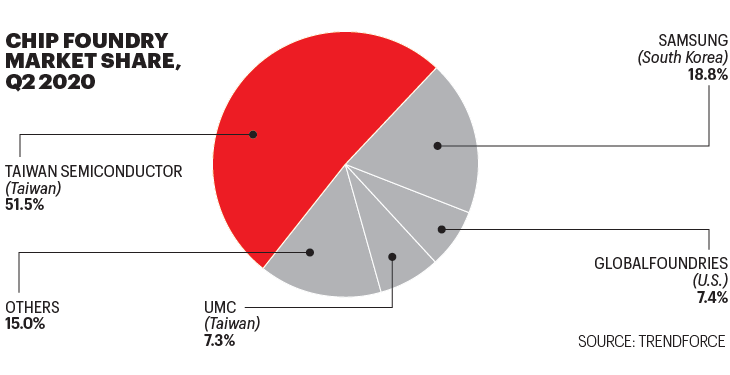
“Semiconductors are such a big weapon because they’re one of the clearest choke points in the global technology trade,” says Matt Sheehan at MacroPolo, the Paulson Institute’s China-focused think tank. “There are good substitutes to a lot of other tech, but there’s not a good substitute for TSMC.” 

Still, being irreplaceable doesn’t make a company invulnerable. TSMC chairman Mark Liu admits to Fortune that trade headwinds are creating headaches. “Our work relies on the free flow of knowledge and the free flow of trade,” he says, “which has no doubt been suppressed.”

Newsletter-Red-Line-15

Founded in 1987, TSMC initially provided overflow capacity to chipmakers like Intel that had their own foundries or “fabs.” When demand for chipsets boomed in the 1990s along with personal computers, TSMC’s revenue soared as it served “fabless” U.S. companies like Nvidia and Qualcomm.

“Suddenly entrepreneurs didn’t need billions of dollars to open their own foundries, they could use TSMC,” says Daniel Nenni, founder of chip information forum Semiwiki. By not engaging in chip or product design, TSMC could assure clients it would never steal designs and compete. Talented chip designers were able to tap TSMC’s manufacturing to launch their own start-ups. “Hundreds of companies resulted from this transformation,” Nenni says.

The company’s biggest breakthrough came in 2011, when it began partnering with Apple. Apple now accounts for roughly 23% of TSMC’s business, and TSMC is the sole manufacturer of processors for iPhones and iPads. 

TSMC was attractive to Steve Jobs’ juggernaut in part because of its reputation for protecting intellectual property. Apple and its previous chip manufacturer, Samsung, were exchanging bitter lawsuits over alleged IP theft when TSMC entered the scene. According to Richard Thurston, who served as TSMC general counsel from 2002 until 2014, Apple audited TSMC’s trade-secrets protocols and found “we were doing things even they weren’t doing.” 
TSM.09.20.Taiwan Semiconductor-vertical
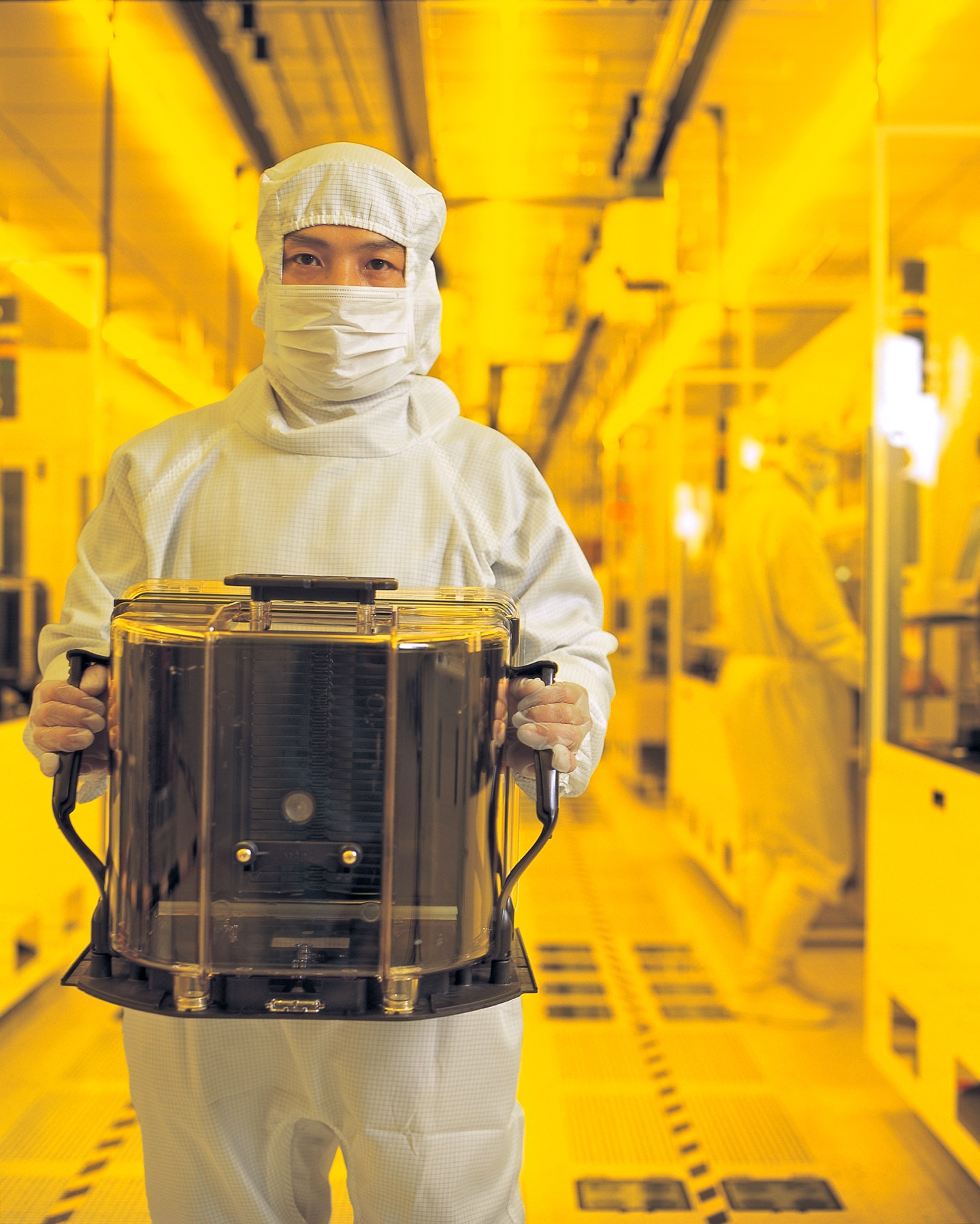
An engineer transports silicon wafers at a Taiwan Semiconductor “fab” in Hsinchu, Taiwan.
Courtesy of TSMC

At TSMC, employees, customers, and suppliers all sign nondisclosure agreements. The company’s 16 manufacturing sites in Taiwan are firewalled from each other, preventing hackers from finding a singular point of access. Even low-tech theft is heavily guarded against. In some fabs, printer paper is lined with metallic strips that activate airport-style gate sensors at the exits if an employee tries to leave with notes in a pocket. 

The company also has a reputation for flawless execution. Each semiconductor contains billions of transistors; for the chip to work, each transistor needs to be made perfectly. Although the manufacturing equipment TSMC uses is available commercially, the processes TSMC developed to utilize it are virtually inimitable. Philip Wong, vice president of corporate research, puts it this way: “I could buy the same tennis racket as Serena Williams, but I’m not going to play as well as her.” 

China would dearly love to up its game. TSMC is China’s biggest contract supplier, making chips for the likes of smartphone giant Xiaomi, computer manufacturer Lenovo, and electric-vehicle makers. Recently Beijing has accelerated its push for silicon independence. China’s Semiconductor Manufacturing International Corp. (SMIC), a company founded in 2000 with government support, secured $2.5 billion in state funding this May and raised another $6.6 billion in July through a share offering in Shanghai. But SMIC’s technological capabilities remain generations behind TSMC’s. So do its sales: In 2019, SMIC had revenue of roughly $3 billion, while TSMC sold $7 billion worth of chips in mainland China alone. 

I could buy the same tennis racket as Serena Williams, but I’m not going to play as well as her.

Philip Wong, VP, Corporate Research, TSMC

Without a cutting-edge chip manufacturer, China’s tech economy remains vulnerable, and this spring the U.S. exploited that vulnerability by severing TSMC from Huawei, the telecom equipment manufacturer. The White House has long pressured allies and companies to block Huawei’s development, arguing that Huawei can intercept sensitive data with its communications gear and share it with China’s government. (Huawei has denied that it would do so.) In May, the U.S. Commerce Department issued a regulation that effectively prohibited TSMC from selling chips to Huawei if it wanted to keep doing business with U.S. firms; TSMC obliged. 

The timing of the Huawei ban was intriguing. Just hours before it was issued, TSMC had announced it would invest $12 billion in building a fab in Arizona. Alex Capri, a visiting senior fellow at the National University of Singapore, sees that plant as “a concession,” with TSMC expanding production in the U.S. to gain political leverage in Washington. 

Leaders in Beijing may have seen it that way too. They sent fighter jets to buzz Taiwan’s airspace a total of eight times in June, upping the pressure on TSMC’s home base—an island the Beijing government claims sovereignty over. The flyovers were a sobering reminder that an escalating Trump-vs.-China trade war could result in something hotter. A major disruption of TSMC’s fabs would have enormous ripple effects in tech—not least, jacking up the price of an iPhone.

But for now, investors seem to be betting that TSMC will be buoyed by the giants on either side of the Pacific whose chips it has built for so long. “Huawei is one big customer, of course,” says Liu, “but we have 499 customers.”

A version of this article appears in the August/September 2020 issue of Fortune with the headline “Walking a tightrope in Taiwan.”

About the Author
By Eamon Barrett
LinkedIn iconTwitter icon
See full bioRight Arrow Button Icon

Latest from the Magazine

Finance
Lorem ipsum dolor sit amet, consectetur adipiscing elit, sed do eiusmod tempor incididunt ut labore et dolore magna aliqua. Ut enim ad minim veniam
By Fortune Editors
October 20, 2025
Finance
Lorem ipsum dolor sit amet, consectetur adipiscing elit, sed do eiusmod tempor incididunt ut labore et dolore magna aliqua. Ut enim ad minim veniam
By Fortune Editors
October 20, 2025
Finance
Lorem ipsum dolor sit amet, consectetur adipiscing elit, sed do eiusmod tempor incididunt ut labore et dolore magna aliqua. Ut enim ad minim veniam
By Fortune Editors
October 20, 2025
Finance
Lorem ipsum dolor sit amet, consectetur adipiscing elit, sed do eiusmod tempor incididunt ut labore et dolore magna aliqua. Ut enim ad minim veniam
By Fortune Editors
October 20, 2025
Finance
Lorem ipsum dolor sit amet, consectetur adipiscing elit, sed do eiusmod tempor incididunt ut labore et dolore magna aliqua. Ut enim ad minim veniam
By Fortune Editors
October 20, 2025
Finance
Lorem ipsum dolor sit amet, consectetur adipiscing elit, sed do eiusmod tempor incididunt ut labore et dolore magna aliqua. Ut enim ad minim veniam
By Fortune Editors
October 20, 2025

Most Popular

Finance
Lorem ipsum dolor sit amet, consectetur adipiscing elit, sed do eiusmod tempor incididunt ut labore et dolore magna aliqua. Ut enim ad minim veniam
By Fortune Editors
October 20, 2025
Finance
Lorem ipsum dolor sit amet, consectetur adipiscing elit, sed do eiusmod tempor incididunt ut labore et dolore magna aliqua. Ut enim ad minim veniam
By Fortune Editors
October 20, 2025
Finance
Lorem ipsum dolor sit amet, consectetur adipiscing elit, sed do eiusmod tempor incididunt ut labore et dolore magna aliqua. Ut enim ad minim veniam
By Fortune Editors
October 20, 2025
Finance
Lorem ipsum dolor sit amet, consectetur adipiscing elit, sed do eiusmod tempor incididunt ut labore et dolore magna aliqua. Ut enim ad minim veniam
By Fortune Editors
October 20, 2025
Finance
Lorem ipsum dolor sit amet, consectetur adipiscing elit, sed do eiusmod tempor incididunt ut labore et dolore magna aliqua. Ut enim ad minim veniam
By Fortune Editors
October 20, 2025
Finance
Lorem ipsum dolor sit amet, consectetur adipiscing elit, sed do eiusmod tempor incididunt ut labore et dolore magna aliqua. Ut enim ad minim veniam
By Fortune Editors
October 20, 2025
Fortune Secondary Logo
Rankings
  • 100 Best Companies
  • Fortune 500
  • Global 500
  • Fortune 500 Europe
  • Most Powerful Women
  • Future 50
  • World’s Most Admired Companies
  • See All Rankings
Sections
  • Finance
  • Fortune Crypto
  • Features
  • Leadership
  • Health
  • Commentary
  • Success
  • Retail
  • Mpw
  • Tech
  • Lifestyle
  • CEO Initiative
  • Asia
  • Politics
  • Conferences
  • Europe
  • Newsletters
  • Personal Finance
  • Environment
  • Magazine
  • Education
Customer Support
  • Frequently Asked Questions
  • Customer Service Portal
  • Privacy Policy
  • Terms Of Use
  • Single Issues For Purchase
  • International Print
Commercial Services
  • Advertising
  • Fortune Brand Studio
  • Fortune Analytics
  • Fortune Conferences
  • Business Development
  • Group Subscriptions
About Us
  • About Us
  • Editorial Calendar
  • Press Center
  • Work At Fortune
  • Diversity And Inclusion
  • Terms And Conditions
  • Site Map
  • About Us
  • Editorial Calendar
  • Press Center
  • Work At Fortune
  • Diversity And Inclusion
  • Terms And Conditions
  • Site Map
  • Facebook icon
  • Twitter icon
  • LinkedIn icon
  • Instagram icon
  • Pinterest icon

Latest from the Magazine

Who owns ideas in the AI age?
MagazinePublishing
Who owns ideas in the AI age?
By Francesca CassidyApril 8, 2026
1 day ago
Southeast Asia’s business leaders want wellness at work—as long as the programs get real results
Magazine100 Best Companies to Work For
Southeast Asia’s business leaders want wellness at work—as long as the programs get real results
By Alice WilliamsApril 8, 2026
2 days ago
So… what are we doing with AI? Innovating in an age of caution
MagazineStrategy
So… what are we doing with AI? Innovating in an age of caution
By Francesca CassidyApril 7, 2026
2 days ago
Anthropic’s research shows that AI can already do a huge portion of many jobs; its top economist talks about how that could shape the future of work
MagazineAutomation
Anthropic’s research shows that AI can already do a huge portion of many jobs; its top economist talks about how that could shape the future of work
By Matthew Heimer and Nicolas RappApril 7, 2026
3 days ago
Fortune Archives: Who gets a seat at the table?
MagazineFortune Archives
Fortune Archives: Who gets a seat at the table?
By Indrani SenApril 5, 2026
5 days ago
Watches like this $455,000 timepiece can’t be made by a machine—and that’s exactly why they’re the ultimate flex amid the analog revival
MagazineWatches
Watches like this $455,000 timepiece can’t be made by a machine—and that’s exactly why they’re the ultimate flex amid the analog revival
By Adam EraceApril 4, 2026
5 days ago

Most Popular

The U.S. government is spending $88 billion a month in interest on national debt—equal to spending on defense and education combined
Economy
The U.S. government is spending $88 billion a month in interest on national debt—equal to spending on defense and education combined
By Fortune EditorsApril 9, 2026
12 hours ago
The U.S. had a national debt ‘home run’ in its grasp, says Jamie Dimon. But the government did nothing, and now its best option is crisis management
Economy
The U.S. had a national debt ‘home run’ in its grasp, says Jamie Dimon. But the government did nothing, and now its best option is crisis management
By Fortune EditorsApril 8, 2026
2 days ago
2 years ago, Saudi Arabia quietly canceled the ‘petrodollar’ deal with America that wired the world economy for 50 years. Then war broke out in Iran
Energy
2 years ago, Saudi Arabia quietly canceled the ‘petrodollar’ deal with America that wired the world economy for 50 years. Then war broke out in Iran
By Fortune EditorsApril 7, 2026
2 days ago
Self-made billionaire MrBeast says his work-life balance is nonexistent and calls it a ‘miracle’ if he works less than 15-hour days: ‘I live to work’
Success
Self-made billionaire MrBeast says his work-life balance is nonexistent and calls it a ‘miracle’ if he works less than 15-hour days: ‘I live to work’
By Fortune EditorsApril 8, 2026
1 day ago
Gen Z workers are so fearful AI will take their job they’re intentionally sabotaging their company’s AI rollout
AI
Gen Z workers are so fearful AI will take their job they’re intentionally sabotaging their company’s AI rollout
By Fortune EditorsApril 8, 2026
1 day ago
Gen Z doesn't want your full-time job. They want several part-time roles, and it's reshaping the entire workforce
Success
Gen Z doesn't want your full-time job. They want several part-time roles, and it's reshaping the entire workforce
By Fortune EditorsApril 9, 2026
15 hours ago

© 2026 Fortune Media IP Limited. All Rights Reserved. Use of this site constitutes acceptance of our Terms of Use and Privacy Policy | CA Notice at Collection and Privacy Notice | Do Not Sell/Share My Personal Information
FORTUNE is a trademark of Fortune Media IP Limited, registered in the U.S. and other countries. FORTUNE may receive compensation for some links to products and services on this website. Offers may be subject to change without notice.