• Home
  • Latest
  • Fortune 500
  • Finance
  • Tech
  • Leadership
  • Lifestyle
  • Rankings
  • Multimedia

Trendingnow

1

Mark Cuban says he has the solution to growing income inequality, and it's to reward every employee—from CEO to janitor—with company stock

2

‘I want to die broke’: Billionaire philanthropist Denny Sanford dies after giving away $4 billion

3

'Dr. Doom' Nouriel Roubini says we're headed for universal basic income or 'some form of socialism' as AI revolutionizes work—He calls that optimistic

1

Mark Cuban says he has the solution to growing income inequality, and it's to reward every employee—from CEO to janitor—with company stock

2

‘I want to die broke’: Billionaire philanthropist Denny Sanford dies after giving away $4 billion

3

'Dr. Doom' Nouriel Roubini says we're headed for universal basic income or 'some form of socialism' as AI revolutionizes work—He calls that optimistic
FinancePricing

Why slashing product prices is usually a terrible idea

Geoff Colvin
By
Geoff Colvin
Geoff Colvin
Senior Editor-at-Large
Down Arrow Button Icon
Geoff Colvin
By
Geoff Colvin
Geoff Colvin
Senior Editor-at-Large
Down Arrow Button Icon
July 13, 2020, 8:00 AM ET
Add Fortune on Google for similar content.

Subscribe to How to Reopen, our weekly newsletter on what it takes to reboot business in the midst of a pandemic.

Warren Buffett is an aggressive pricer. He mostly leaves the managers of Berkshire Hathaway’s portfolio companies alone, but when it comes to setting prices at companies including See’s Candies and the Buffalo News, he has often liked to be involved.

“The manager has just one business,” he once explained to Fortune. “His equation tells him that if he prices a little too low, it’s not that serious. But if he prices too high, he sees himself screwing up the only thing in his life.” Such excessive risk aversion leaves money on the table, Buffett figures, so he often pushes for higher prices. More often than not, he’s right.

Even in a historic downturn, Buffett’s instinct is worth keeping in mind. Many managers underestimate the power of pricing, and the unanimous advice from pricing experts in this troubled economy is to price with courage and creativity. In businesses where demand has plunged, slashing prices may be a terrible idea—and it may not be necessary at all.

In a few special cases—think hand sanitizer—the pandemic has turbocharged demand. Yet even here, managers need courage. It’s the courage to abstain from multiplying prices by five or 10 or 20, or whatever the market will bear. The winners will be those who think long-term, difficult as that is in a crisis.

For the vast majority of businesses—those facing strapped customers and shrunken demand—the No. 1 imperative is to avoid cutting prices if at all possible, what experts in the field call “maintaining price integrity.” In the B2B world, “you get a lot of pressure back from your customers to reduce price, which can manifest itself as hesitancy to move forward with the purchase,” says Ron Kermisch, a Bain consultant who leads the firm’s global pricing practice. “Companies too quickly move to price as the lever, without really understanding what’s driving the customer hesitancy.”

Creative managers can find many ways to allay customers’ concerns while maintaining price: for example, by extending payment terms, or by offering a shorter-term contract if the customer is worried about uncertainty, or by offering additional services such as help with integrating new software.

Even when financial concessions are unavoidable, maintaining the established price is crucial. In B2C commerce, several Four Seasons hotels are offering a third or fourth night free, the same strategy they followed in the last downturn; the customer gets more, but the room rate on the bill remains the same. Ritz-Carlton is offering some guests a daily “resort credit” of $100 to be applied toward meals, spa treatments, or other services, reducing the customer’s total cost without cutting the room rate.

But wait: Is anyone really fooled? If customers are being given more for a stated price, isn’t it obvious that the price has been cut? In fact, there is a difference, and it’s important. In pricing theory there’s something called the reference price, which is the lowest price customers ever paid for a product or service. They tend to remember it and compare all future prices against it. One-time add-ons to a product or service may be hard to remember or hard to value, but the reference price is clear. Reduce it, and customers will wonder why they should ever pay more.

That’s just the beginning of the damage that price cuts can do. They rarely pay for themselves. If you cut prices 20%, you have to sell 25% more units just to maintain revenue. In a severe downturn, how likely is that? And if a competitor matches your price cut, the pain will be much worse. The economics of every business are different, but McKinsey research has found that in a typical S&P 1500 company, a 5% price cut would have to spark a 19% volume increase just to pay for itself, and that hardly ever happens. Even if holding prices steady reduces sales and profits, price cuts may reduce them even more.

The long-term effects can be more harmful. Price cuts, even temporary ones, train customers to behave badly, always waiting for the next sale. Perhaps worse, they destroy brand equity.

The problem is especially acute in the luxury goods business, where a breathtaking price is a product feature and a key element of the brand identity. Conventional wisdom held that the industry had learned its lesson in the financial crisis of 2008–09, when some luxury items were offered for 70% off at Saks Fifth Avenue and other temples of upscale consumption. But it’s happening again. Valentino dresses are being discounted 50% at Valentino’s own website, for example, and 70% elsewhere; at Matchesfashion.com, a beaded Valentino gown has been reduced from $30,000 to a mere $9,000. Customers who paid full price may resolve never to make that mistake again. The same general phenomenon plays out in most product and service categories.

Having vowed to avoid price cuts no matter what, you may nonetheless find that in this downturn, which has been so traumatic for so many, you sometimes have no choice. Yet even then, you can mitigate the damage by asking for something in return. For example, recent Bain research finds that 81% of chief information officers who asked software vendors for payment relief received it—and 80% of those who received relief gave something back. Some agreed to extend their contract or to expand the scope of their contract in the future; others agreed to renew early. “Customers are willing to do that,” says Kermisch. “You need to show empathy as a provider, but they understand you’re running a business.”

And if you sell one of those white-hot pandemic products that are still in short supply? The advice is simple: Don’t gouge. Even if the market will bear it, your reputation might not. Attorneys general from Washington State to Washington D.C. have sued retailers or hit them with cease-and-desist orders for selling Clorox, hand sanitizer, and related products at exorbitant prices. Don’t let that happen to you. Forgo the quick profits and think long-term.

Pricing is an undervalued discipline. No one in the C-suite has “price” in their title. Research by the Simon Kucher & Partners consulting firm finds that “only 12% [of companies] believe they can boost profits by adjusting prices.” Pricing is worth far more attention than most managers give it—especially now, when you need every advantage you can get.

Dive into stories from Fortune’s print edition:

  • Who pays for the pandemic when insurance companies refuse?
  • Will 5G remake the post-coronavirus world? It already has, say the CEOs of Cisco and Qualcomm
  • What businesses can learn from a coronavirus-tracking breakthrough
  • The simple metric that’s taking over big business
  • Misery at the mall: Which retail chains are hurting the most?
  • 2020’s Fortune 500
  • WATCH: Can the cannabis industry survive the coronavirus crisis?
About the Author
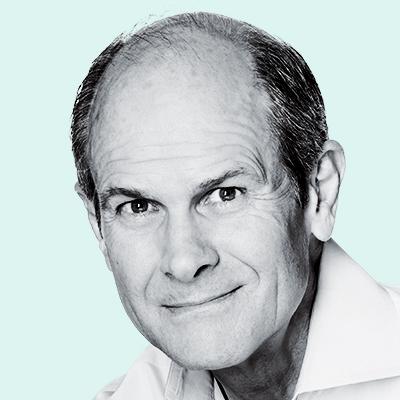
Geoff Colvin
By Geoff ColvinSenior Editor-at-Large
LinkedIn iconTwitter icon

Geoff Colvin is a senior editor-at-large at Fortune, covering leadership, globalization, wealth creation, the infotech revolution, and related issues.

See full bioRight Arrow Button Icon
Add Fortune on Google for similar content.

Latest in Finance

Finance
Lorem ipsum dolor sit amet, consectetur adipiscing elit, sed do eiusmod tempor incididunt ut labore et dolore magna aliqua. Ut enim ad minim veniam
By Fortune Editors
October 20, 2025
Finance
Lorem ipsum dolor sit amet, consectetur adipiscing elit, sed do eiusmod tempor incididunt ut labore et dolore magna aliqua. Ut enim ad minim veniam
By Fortune Editors
October 20, 2025
Finance
Lorem ipsum dolor sit amet, consectetur adipiscing elit, sed do eiusmod tempor incididunt ut labore et dolore magna aliqua. Ut enim ad minim veniam
By Fortune Editors
October 20, 2025
Finance
Lorem ipsum dolor sit amet, consectetur adipiscing elit, sed do eiusmod tempor incididunt ut labore et dolore magna aliqua. Ut enim ad minim veniam
By Fortune Editors
October 20, 2025
Finance
Lorem ipsum dolor sit amet, consectetur adipiscing elit, sed do eiusmod tempor incididunt ut labore et dolore magna aliqua. Ut enim ad minim veniam
By Fortune Editors
October 20, 2025
Finance
Lorem ipsum dolor sit amet, consectetur adipiscing elit, sed do eiusmod tempor incididunt ut labore et dolore magna aliqua. Ut enim ad minim veniam
By Fortune Editors
October 20, 2025

Most Popular

Finance
Lorem ipsum dolor sit amet, consectetur adipiscing elit, sed do eiusmod tempor incididunt ut labore et dolore magna aliqua. Ut enim ad minim veniam
By Fortune Editors
October 20, 2025
Finance
Lorem ipsum dolor sit amet, consectetur adipiscing elit, sed do eiusmod tempor incididunt ut labore et dolore magna aliqua. Ut enim ad minim veniam
By Fortune Editors
October 20, 2025
Finance
Lorem ipsum dolor sit amet, consectetur adipiscing elit, sed do eiusmod tempor incididunt ut labore et dolore magna aliqua. Ut enim ad minim veniam
By Fortune Editors
October 20, 2025
Finance
Lorem ipsum dolor sit amet, consectetur adipiscing elit, sed do eiusmod tempor incididunt ut labore et dolore magna aliqua. Ut enim ad minim veniam
By Fortune Editors
October 20, 2025
Finance
Lorem ipsum dolor sit amet, consectetur adipiscing elit, sed do eiusmod tempor incididunt ut labore et dolore magna aliqua. Ut enim ad minim veniam
By Fortune Editors
October 20, 2025
Finance
Lorem ipsum dolor sit amet, consectetur adipiscing elit, sed do eiusmod tempor incididunt ut labore et dolore magna aliqua. Ut enim ad minim veniam
By Fortune Editors
October 20, 2025
Fortune Secondary Logo
Rankings
  • 100 Best Companies
  • Fortune 500
  • Global 500
  • Fortune 500 Europe
  • Most Powerful Women
  • World's Most Admired Companies
  • See All Rankings
  • Lists Calendar
Sections
  • Finance
  • Fortune Crypto
  • Features
  • Leadership
  • Health
  • Commentary
  • Success
  • Retail
  • Mpw
  • Tech
  • Lifestyle
  • CEO Initiative
  • Asia
  • Politics
  • Conferences
  • Europe
  • Newsletters
  • Personal Finance
  • Environment
  • Magazine
  • Education
Customer Support
  • Frequently Asked Questions
  • Customer Service Portal
  • Privacy Policy
  • Terms Of Use
  • Single Issues For Purchase
  • International Print
Commercial Services
  • Advertising
  • Fortune Brand Studio
  • Fortune Analytics
  • Fortune Conferences
  • Business Development
  • Group Subscriptions
About Us
  • About Us
  • Press Center
  • Work At Fortune
  • Terms And Conditions
  • Site Map
  • About Us
  • Press Center
  • Work At Fortune
  • Terms And Conditions
  • Site Map
  • Facebook icon
  • Twitter icon
  • LinkedIn icon
  • Instagram icon
  • Pinterest icon

Latest in Finance

ford
Commentary250 Years of Innovation
Alliance for America’s Skilled Trades: Skilled trades shaped America’s past. Here’s how they can build America’s future
By Jim Farley, Linda Hubbard, Bayo Ogunlesi and Ruth PoratJuly 21, 2026
12 minutes ago
Shipping transits slow to a trickle as Strait of Hormuz faces “worst-case scenario” 
NewslettersFortune Gulf Brief
Shipping transits slow to a trickle as Strait of Hormuz faces “worst-case scenario” 
By Melissa HancockJuly 21, 2026
13 minutes ago
Current ARM mortgage rates report for July 21, 2026
Personal FinanceReal Estate
Current ARM mortgage rates report for July 21, 2026
By Glen Luke FlanaganJuly 21, 2026
3 hours ago
Current refi mortgage rates report for July 21, 2026
Personal Financemortgage rates
Current refi mortgage rates report for July 21, 2026
By Glen Luke FlanaganJuly 21, 2026
3 hours ago
Mortgage rates today, July 21, 2026
Personal Financemortgages
Mortgage rates today, July 21, 2026
By Glen Luke FlanaganJuly 21, 2026
3 hours ago
A Jersey Mike's logo is displayed outside one of their stores in San Diego, California.
InvestingIPOs
Jersey Mike’s IPO valuation could reach eight times Sweetgreen’s market cap
By Sheryl EstradaJuly 21, 2026
3 hours ago

Most Popular

Mark Cuban says he has the solution to growing income inequality, and it's to reward every employee—from CEO to janitor—with company stock
Success
Mark Cuban says he has the solution to growing income inequality, and it's to reward every employee—from CEO to janitor—with company stock
By Sasha RogelbergJuly 20, 2026
17 hours ago
‘I want to die broke’: Billionaire philanthropist Denny Sanford dies after giving away $4 billion
Success
‘I want to die broke’: Billionaire philanthropist Denny Sanford dies after giving away $4 billion
By Sydney LakeJuly 20, 2026
21 hours ago
'Dr. Doom' Nouriel Roubini says we're headed for universal basic income or 'some form of socialism' as AI revolutionizes work—He calls that optimistic
AI
'Dr. Doom' Nouriel Roubini says we're headed for universal basic income or 'some form of socialism' as AI revolutionizes work—He calls that optimistic
By Jason MaJuly 18, 2026
2 days ago
Warren Buffett says his $147 billion investing career was an accident: ‘I may be one of the 10 luckiest in the world’
Future of Work
Warren Buffett says his $147 billion investing career was an accident: ‘I may be one of the 10 luckiest in the world’
By Sarah GlodekJuly 20, 2026
1 day ago
Current price of silver as of Monday, July 20, 2026
Personal Finance
Current price of silver as of Monday, July 20, 2026
By Joseph HostetlerJuly 20, 2026
1 day ago
It’s not just Taco Bell lettuce and possible glass in Pillsbury rolls: Food and drink recall events reached a 6-year year-over-year high
Retail
It’s not just Taco Bell lettuce and possible glass in Pillsbury rolls: Food and drink recall events reached a 6-year year-over-year high
By Sasha RogelbergJuly 20, 2026
1 day ago

© 2026 Fortune Media IP Limited. All Rights Reserved. Use of this site constitutes acceptance of our Terms of Use and Privacy Policy | CA Notice at Collection and Privacy Notice | Do Not Sell/Share My Personal Information
FORTUNE is a trademark of Fortune Media IP Limited, registered in the U.S. and other countries. FORTUNE may receive compensation for some links to products and services on this website. Offers may be subject to change without notice.