Fifty years ago, smog choked cities from Pittsburgh to Los Angeles; a recent oil spill had blackened Santa Barbara’s beaches; and Cleveland’s Cuyahoga River had caught fire. In the face of widespread industrial degradation across the country, the public rose up in outrage. At that time, most companies saw environmental problems as a side issue, or even an obstacle to their real business of making and selling goods for a thriving nation.
But the world is very different today—in no small part because on April 22, 1970, 20 million Americans took to the streets demanding reduced air pollution, improved water quality, and better waste management. They argued that the world needed to wake up to environmental degradation and change its ways. Over the past half-century, American corporate leadership has largely shifted its thinking about the environment, from seeing pollution and resource management as a matter of conflict and annoyance to recognizing sustainability as a strategic business value.
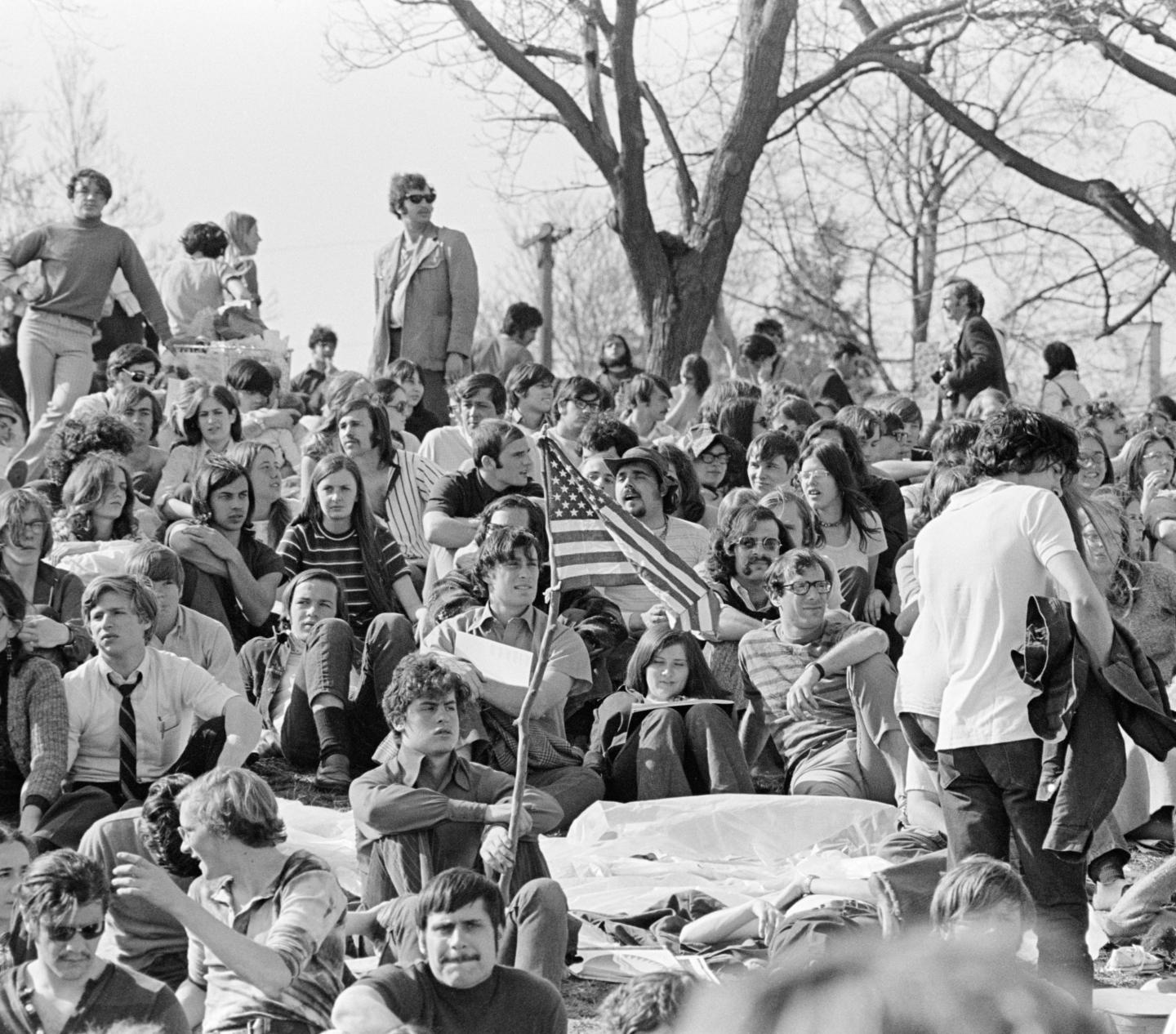
This week marks the 50th anniversary of those nationwide environmental celebrations and “teach-ins” that came to be called Earth Day. From the largest 1970 gathering, in Fairmont Park in Philadelphia, to smaller marches and events in many other cities and towns, we ourselves witnessed the spirit of protest in song and speech that signaled the launch of the modern American environmental era.
To commemorate this anniversary, Yale University’s School of the Environment, School of Management, and Law School jointly convened the Yale Business Sustainability Summit. The program was originally scheduled as a live event on the Yale campus for 125 top leaders; in light of COVID-19, the summit was recast as a virtual gathering of nearly a thousand online participants. Holding the summit via Zoom, we could boast that the carbon footprint of the event was near zero, in sharp contrast to the conference travel that would otherwise have occurred. (You can watch a recording of the summit here.)
More important than the change in travel and technology, we observed a notable shift in tone. Instead of seeing environmental issues as concerns about land conservation and industrial pollution controls as a business burden, the participating corporate leaders talked about how environment sustainability had become a core element of day-to-day business strategy.
One after another, the CEOs from leading companies, including Alan Jope of Unilever, Darius Adamczyk of Honeywell, and Steve Voorhees of WestRock, one of the nation’s largest producers of packaging, explained how a sharpened environmental focus helped their businesses to cut costs, reduce risks, expand sales, and add value to their bottom line.
Even leaders in challenging and energy-intensive industries laid out a picture of the transformative change that is underway. Ralph Izzo, CEO of utility PSEG, discussed how his company has invested over $2 billion in solar power and close to that amount in offshore wind, as well as making major investments in energy efficiency. “We’re trying to create a future where customers use less energy; the energy they use is cleaner; that cleaner energy is delivered with a greater degree of reliability and resiliency; and that electricity is used to power the economy more broadly than it powers it today,” Izzo told the summit.
In an equally dramatic turnabout from past decades, top officials from leading environmental groups such as the World Wildlife Fund, the Natural Resources Defense Council, the Global Reporting Initiative, and the Sustainability Accounting Standards Board highlighted their work with companies. While those NGOs continue to push for more ambition from their corporate partners, their ongoing engagement with companies across the nation demonstrated that progress toward a sustainable future will arrive more quickly if the innovative capacity and financial strength of the business world can be harnessed.
A new position in the C-suite
Perhaps no greater signal of the environmental focus that now permeates the business world could have been offered than the presence in our event of dozens of chief sustainability officers—a job title that did not exist 30 years ago, much less 50. The CSOs from companies in a wide range of industries—including Walmart, Goldman Sachs, PepsiCo, UPS, and Patagonia—all laid out ambitious game plans.
Both Walmart and HVAC-maker Trane have launched “gigaton initiatives” to reduce 1 billion metric tons of emissions by 2030. Walmart’s Jane Ewing shared that in 2018, the company powered 28% of its operations by renewable energy and diverted 81% of its waste to landfills. Other companies are working to dramatically reduce the amount of energy used in their industries. CEO Darius Adamczyk described how Honeywell’s use of technologies in more than 10 million commercial buildings worldwide not only makes these buildings safer, more secure, and more comfortable, but it also makes them up to 40% more energy efficient. Companies have bought into the concept of a “circular economy” and have set ambitious goals to reduce the amount of waste going to landfills, particularly from packaging.
In addition to these business and environmental leaders, our Earth Day@50 event drew an impressive array of government officials, engineers, scientists, public health experts, and historians, as well as professors, students, and others eager to assess the legacy of Earth Day—and to highlight how their fields would be contributing to the mounting push to address society’s remaining sustainability challenges.
While activism in the immediate aftermath of the original Earth Day led to legislation regarding clean air, safer drinking water, toxic substances, surface mining, and endangered species, the purpose of this summit centered on whether and how business had changed. Had corporate America become a constructive force over the past 50 years in moving the United States and the world toward a more sustainable future? The consensus answer was yes—albeit with significant qualifications.
Today, no business can go forward without a profound appreciation for what is required to maintain what management experts call its “social license to operate.” Every company must continually demonstrate its legitimacy and show that it adds value to society, not simply profits to its own shareholders. In this regard, we heard repeatedly from corporate leaders, such as Boston Consulting Group CEO Rich Lesser, that companies are rapidly shifting from business models based on shareholder primacy to a stakeholder perspective that recognizes obligations to employees, customers, suppliers, and communities.

We see this trend intensifying in the next few years. In particular, we envision what one of us has called an “end to externalities,” meaning that any enterprise whose profits depend on sending pollution up a smokestack or otherwise spilling harm onto society at large can expect to be challenged. We anticipate that the public will demand an end to such emissions—or at the very least insist that the company pay for the harm it is causing.
In this regard, Nobel Prize–winning Yale economist Bill Nordhaus told our summit that the best way to confront climate change would be through carbon charges of some kind. Calls like this have been a frequent feature of environmental debates over the years. But the wide support for such carbon pricing among the corporate leaders who spoke reflected a very new attitude from the business world.
Over the past 50 years, most businesses have come to recognize the need to be part of the solution to sustainability. And sustainability has become part of the mission and culture of most companies, if not all. As Mike Lamach, the CEO of Trane, proclaimed: “Our belief is that one company can change an industry, and an industry can change the world.” And it is true that today, organizations of all sorts and sizes set out sustainability goals, report on a series of metrics that track progress, and hold their executives accountable for environmental performance. Most enterprises have launched multiple sustainability-related initiatives and are making significant investments in support of these efforts, and many are launching new businesses focused on delivering sustainability solutions to their customers.
But despite the changes in attitudes over the past 50 years and the progress that has been made, the damage to the Earth continues. Businesses must therefore play an even greater role in working with government to deliver the transformative changes needed to move society toward a clean energy future and a sustainable trajectory more broadly. Many summit participants expressed the hope that in the aftermath of the COVID-19 crisis, there will be an increased willingness to take greater collective action on sustainability.
In closing the summit, Indra Nooyi, former CEO and chair of PepsiCo, declared: “Maybe, just maybe, we can emerge out of this pandemic with a view to the longer term and a more sustainable form of capitalism.” We share that hope.
Jeff Sonnenfeld is senior associate dean and Lester Crown Professor of Management Practice at the Yale School of Management and president of the Yale Chief Executive Leadership Institute. He authored the pioneering sustainability book Corporate Views of the Public Interest and also The Hero’s Farewell and Firing Back.
Dan Esty is the Hillhouse Professor at Yale University and the editor of the recently released book A Better Planet: 40 Big Ideas for a Sustainable Future. He served in various senior roles at the Environmental Protection Agency in the 1980s and 1990s and as commissioner of Connecticut’s Department of Energy and Environmental Protection from 2011 to 2014.
More must-read energy and environmental coverage from Fortune:
—Why the coronavirus crisis could make Big Oil greener
—How Global 500 companies are responding to the coronavirus
—IEA warns of “staggering” demand drop in global oil markets
—Listen to Leadership Next, a Fortune podcast examining the evolving role of CEO
—WATCH: PSEG CEO on climate change action: “It should have been done yesterday”
Subscribe to The Loop, a weekly look at the revolutions in energy, tech, and sustainability.