Along with the daily spikes in confirmed coronavirus cases and deaths, a third, more hopeful number is also ticking upward: the number of people who have recovered from COVID-19, which on Friday topped 219,000.
So far, authorities have confirmed over 1 million cases of COVID-19 and 53,000 coronavirus-related deaths globally. According to predictive models, the pandemic has not yet peaked, meaning the world will continue to see jumps in all three coronavirus categories: cases, fatalities, and recoveries.
The growing number of recoveries comes with a growing number of questions about what it means to overcome COVID-19: about a patient’s contagiousness, subsequent immunity to the disease, and long-term effects. Much about the aftermath of the illness remains unclear or unknown, and there is even uncertainty about the term “recover” in the coronavirus context.
The medical definition of “recovery” depends on the disease, said Keiji Fukuda, clinical professor and director of the School of Public Health at the University of Hong Kong. With illnesses like the common cold, someone is considered recovered when they feel better. With other diseases, like influenza C, clinicians can conduct a lab test to determine if someone has recovered, Fukuda said.
With COVID-19, “the difficulty is that some people who feel subjectively well still have laboratory and chest CT [scan] evidence of infection. When we have more information about the relationship of infection and symptoms for COVID, we will have a better idea of how to define ‘recovered’ for COVID-19,” Fukuda said. For now, “we are still trying to determine what recovery means.”
What are the long-term effects?
Early evidence suggests that coronavirus victims may experience lingering health effects of COVID-19, even after testing negative. Medical experts in Hong Kong who have observed discharged COVID-19 patients report the patients had shortness of breath and may have lost some lung function, but the researchers were unsure how long those ailments would last.
In the past, reduced lung function was reported in patients with severe cases of SARS and MERS—two respiratory illnesses caused by coronaviruses—who needed intensive-care ventilation. COVID-19 patients who require ventilators (around 5% of cases, according to the World Health Organization) may lose some lung function, but for most patients who recover from mild COVID-19 infections, there should be “no lasting effect,” Dr. Shu-Yuan Xiao, a pathology professor at the University of Chicago School of Medicine, told ABC News.
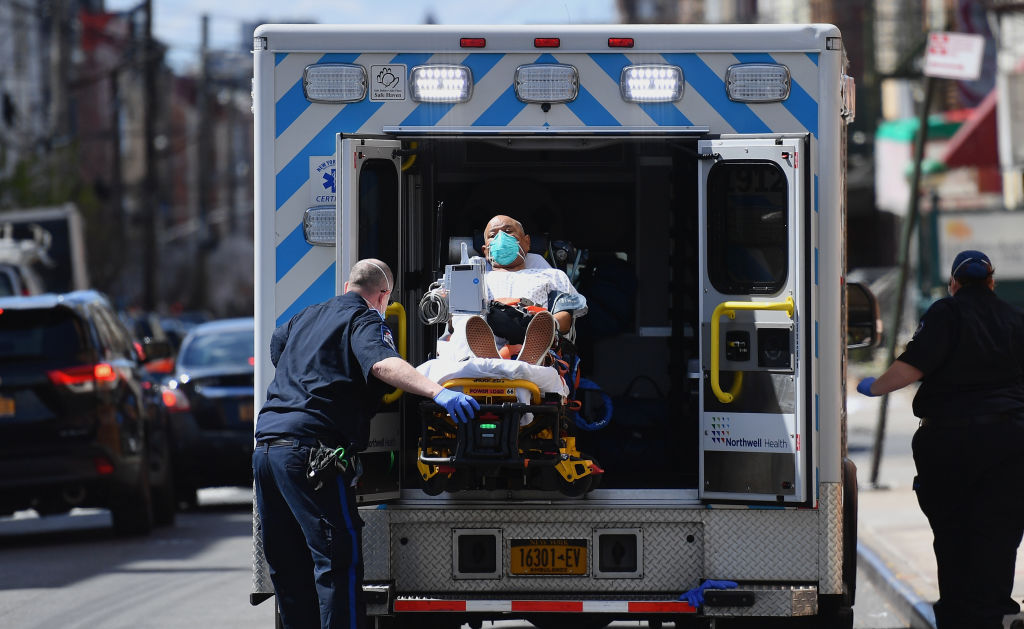
One 70-year-old man in Wuhan who recovered from COVID-19 after eight days in an intensive care unit told Chinese news outlet Caixin Global in March that even a month after being discharged he was unable to “breathe as freely as before” and often felt as though his “windpipe and throat are blocked.”
London-based freelance journalist Tobi Akingbade was not tested for the virus but had been in direct contact with a confirmed case prior to the onset of her symptoms. She was told by the U.K.’s National Health Service to self-isolate after describing her symptoms over the phone.
Akingbade documented her experience with a mild COVID-19 case on Twitter. “Day 13: Walked down the stairs for the first time[,]” wrote Akingbade. Her symptoms included fever, cough, difficulty breathing, migraine, and intense fatigue, and they began to subside after nine days or so. “Now I struggle with fatigue and minor breathing issues,” she wrote.
For people with COVID-19 who are not hospitalized, the U.S. Centers for Disease Control and Prevention (CDC) provides symptoms-based criteria to determine whether they’ve recovered from the illness.
People can stop home isolation, the CDC says, when they have not had a fever for 72 hours, when “other symptoms have improved,” like coughing and shortness of breath, and they must also receive two negative tests in a row, 24 hours apart. If they do not have access to a test, the first two criteria remain, and they must also wait for seven days to pass since the onset of symptoms before they can stop home isolation.
Access to testing kits continues to be an issue in the U.S., so many people have to judge for themselves when they have recovered.
One 22-year-old college student in New York City, who asked not to be named, awoke in mid-March with a sore throat. Her roommate, who complained of the same symptom the day before, was notified by his workplace that a recent visitor to the office had tested positive.
The student’s symptoms expanded to aches, fever, fatigue, and difficulty breathing. Following CDC guidelines, she and her roommate self-quarantined in their apartment but did not try to get tested. “I was like, ‘Look, I’m young, I’m probably fine […] I don’t want to burden the health care system,'” the student said. A friend who had stayed over in the same apartment that week later tested positive for the coronavirus.
Eight days after the onset of her symptoms, “I felt completely normal,” said the student, who has no underlying health conditions. “I think no longer having those issues with my breathing and my fitness made me feel like, ‘Oh, okay, I’ve definitely gotten better.'”
There are some patients who’ve been declared recovered and discharged from the hospital, only to test positive for the virus again, but that phenomenon is most likely explained by faulty testing.
How long are patients contagious?
Another unknown in the COVID-19 recovery is the window in which a person with COVID-19 is contagious. One study in Germany estimated it would take 10 days after patients with mild illness first fell sick for them to become low-risk for spreading the disease. Another study out of Wuhan, China, found that the virus could live in a recovered patient’s respiratory tract for anywhere from eight to 37 days.
“It is clear that people are infectious and can infect other individuals during the first days, but we don’t know for how long they can remain infectious,” said Roberto Bruzzone, codirector of the University of Hong Kong’s HKU-Pasteur Research Pole for the study of infectious disease.

Health officials in China mandate that recovered patients self-isolate for two weeks after they are discharged, just in case, and then get tested once more.
“There is a principle of caution at this moment, and this is why probably some patients are being held in hospitals or in specialized structures before being discharged,” Bruzzone said.
Are recovered patients immune?
Another marker of coronavirus recovery is at least some degree of immunity to it.
The immune system of an infected person who recovers from the disease produces antibodies to fight against the virus. With some viruses, like polio, post-recovery immunity is lifelong. In other cases, like with the common cold coronaviruses, antibody levels gradually decline after recovery from infection, which is why people get colds again and again over their lifetimes.
Scientists in China, Italy, and the U.S. are exploring whether the antibodies extracted from recovered patients’ blood can be used to treat people sickened by COVID-19.
The U.S. Food and Drug Administration (FDA) last week approved, on a conditional basis, the treatment of COVID-19 patients with recovered patients’ antibodies. The FDA said that promising data out of China, where recovered COVID-19 patients are now donating their antibody-filled blood plasma to hospitals, prompted the approval.
It is not yet known—and it’s too soon to tell—how long the body’s immune response to the new coronavirus, SARS-CoV-2, will last; some experts predict one to two years.
What’s the psychological impact?
Sustaining the life of COVID-19 patients is doctors’ most-immediate priority, said J. Wesley Boyd, an associate professor of psychiatry at Harvard Medical School and a faculty member of the school’s Center for Bioethics. A distant second, he said, is “psychological sequelae.”
“Many of those who recover will no doubt suffer a panoply of psychological symptoms,” Boyd said, including anxiety, post-traumatic stress disorder, survivor’s guilt, and “prolonged feelings of heightened vulnerability.”
The U.S. CDC website calls attention to coronavirus stigma, warning that social outcasting of patients can occur “after a person has been released from COVID-19 quarantine even though they are not considered a risk for spreading the virus to others.”
Because COVID-19 sickens people indiscriminately, there shouldn’t be stigma associated with COVID-19, Boyd said. But still, he says, “I could imagine that for a period after one recovers from COVID-19 others might wonder if that person is still infectious and exercise caution being near that person or socializing with them for a while after they were sick.”
It’s a brand-new disease, he said, so “we really don’t know how people will be treated over time once they recover.”
The 70-year-old Wuhan man who talked to Caixin said his family members and social groups have “effectively isolated” him. “Everyone seems to think I pose a risk to their health, so in that sense, my recovery has only been temporary.”
The widespread nature of COVID-19—Harvard epidemiologist Marc Lipsitch estimates 40% to 70% of people worldwide will be infected by the coronavirus—may ultimately reduce the chance of such treatment, Boyd said. “It is possible—if not likely—that so many people are ultimately going to test positive for COVID-19 around the globe, that it will be the norm, not the exception, to recover from infection.”
More coronavirus coverage from Fortune:
—USPS might have to shutter by June as stimulus package provides no funding
—Everything you need to know about the coronavirus stimulus checks
—There will be another pandemic after the coronavirus. It’s time to start preparing
—Political activists make sure Americans register to vote—from a distance
—Social distancing creates $8 trillion in economic benefits, study says
—Where do clothing rental and subscriptions fit in a world that works from home?
—Listen to Leadership Next, a Fortune podcast examining the evolving role of CEO
—WATCH: World leaders and health experts on how to stop the spread of COVID-19
Subscribe to Outbreak, a daily newsletter roundup of stories on the coronavirus pandemic and its impact on global business. It’s free to get it in your inbox.