This is the web version of Business x Design, a newsletter on the power of design. Sign up here to get it in your inbox.
Tony Chambers here, co-chair of Fortune‘s Brainstorm Design conference.
How does a company stay relevant when the landscape in which it operates is changing so rapidly? One quintessentially British company seems to have the answers.
During my 15 years at the helm of Wallpaper* magazine, I had the privilege of an up close view of the inner workings of some of the world’s leading design and lifestyle brands. In furniture, fashion, food, watches, jewellery, hospitality, and automotive industries, I gained an unrivalled perspective—usually directly from the CEOs and creative directors—on what was and wasn’t working for their respective companies. Such insight is proving invaluable now while running my own design consultancy and co-chairing Brainstorm Design.
Of all the companies and individuals I’ve observed, there’s one that exemplifies the benefits of instilling a design-led approach to running a business. That’s British fashion designer and retailer Paul Smith.
This autumn will mark the 50th anniversary of Smith’s eponymous brand, which launched with the opening of his first shop in Nottingham. “Actually, it was just a room with no windows, but I called it a shop,” he told me. “We took £35 that first day. Not a bad start.”
Without any formal education in design or business, he grew and maintained a global brand (Smith retails in 73 countries) with a turnover of over £215 million ($279 million) and more than 1,500 employees.
Smith has kept the company independent, but compared to fashion behemoths such as Louis Vuitton and Gucci—who are owned by LVMH and Kering, respectively—Paul Smith’s global brand recognition is extraordinary. How is this? It requires hard graft, innovative design, and risk-taking, but for me, the major factor is personality.
Today, more than ever, the consumer wants to relate to a brand’s personality, and Paul Smith has personality by the bucketload. He stands for something, and that something is authentic and trustworthy. There’s the playful way he mixes traditional tailoring with an irreverent twist, or how he merges casual and formal attire with an assured confidence that somehow avoids arrogance.
“The reason I’ve managed to survive in business for so long is partly because of the sense of humour I inherited from my dad,” Smith says. Politeness, good manners and respect (not things you’d normally associate with the cutthroat world of fashion) are also synonymous with the man and the brand. As is a fastidious attention to all parts of the business. “I care deeply about all details—the cleanliness of the staff loos as much as the cut of a jacket.”
His relentless creativity and curiosity sets him apart, and If you’re ever lucky to spend time with him in his Aladdin’s cave of an office, you’ll likely see the many motivational notes he has scribbled on scraps of paper. Here are some that any business should heed:
“Start something new.” “Take pleasure seriously.” “Fight the bully.” “You can’t do it without doing it.” “Concentrate on the doughnut, not the hole.” “Every day is a new beginning.” “Work is not about shorter hours or longer hours, it’s about every hour.” “Make room to break the rules.” “Always ask ‘what’s the alternative.’ ”
More design news below.
Tony Chambers
VISION, EMPATHY, SCALE
This edition of Business By Design was curated by Margaret Rhodes.
Great minds. In theory, crowdsourced design glimmers with possibility. In practice, organizations from NASA to now-defunct gadget-maker Quirky have found that pooling thousands of clever ideas doesn’t necessarily yield a ready-for-market product. But for a recent makeathon focused on products for differently-abled bodies, the International Committee of the Red Cross redesigned the crowdsourcing process itself. To get a wide range of ideas from participants, the organization trained them in design thinking and how to put together a business plan. [Harvard Business Review]
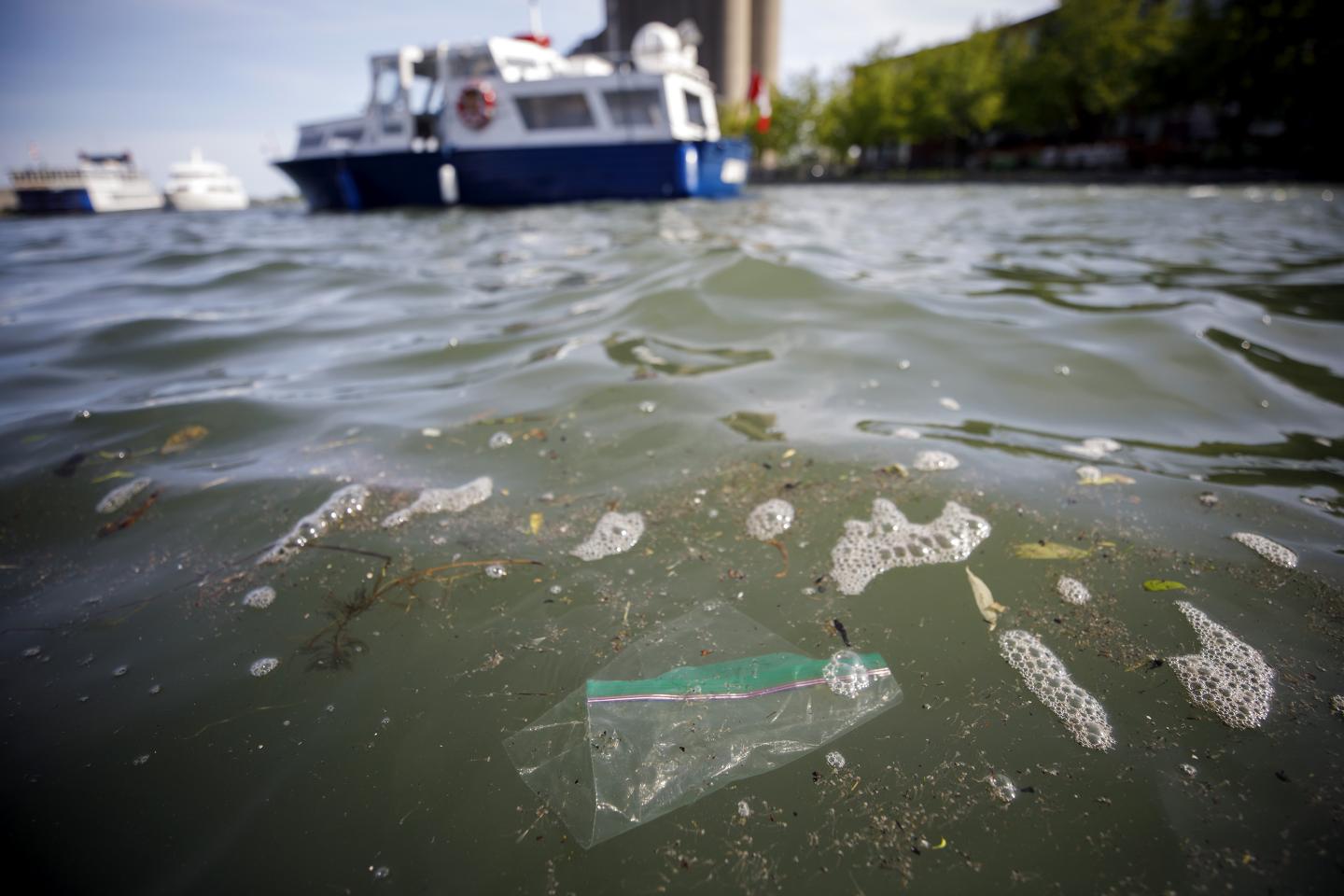
One word: plastics. Canada will move forward with a nationwide ban on single-use plastics, slated to go into effect in 2021. The Canadian Environmental Protection Act requires a scientific assessment to make such decisions, and the results are grim in: In 2016, 29,000 tons of plastic garbage littered outdoor areas in the country. “Microplastics,” invisible to the human eye but present in drinking water, make up much of that garbage. Canada is hardly the only country with this problem, but the ban is a vote of optimism that thoughtfully-designed policy can turn the tides. [CBC]
Trouble in Iowa. The Des Moines Register’s highly-regarded caucusgoer poll was tabled this week amidst concerns about poorly-chosen font size. Pete Buttigieg’s team learned that some survey operators weren’t mentioning the former South Bend mayor to poll-takers—at all. The culprit appears to be a call center script an operator typed in an enlarged font, which forced some candidates’ names off the screen. A little scrolling—or better training at the call center—could go a long way. [The New York Times]
Decision makers. What keeps designers from the C-suite—training, or power? On their podcast this week, designers Jessica Helfand and Michael Beirut unpack a Fast Company op-ed in which user experience expert Don Norman argues that current design training could better prepare designers for business by focusing more on the ethics of their craft. He compares designers to soldiers, but Helfand and Bierut take issue with the metaphor: It implies that designers only take orders from on high. In fact, they too have power to shape the course of action. [The Observatory]
IN CASE YOU MISSED IT
Should your company take design more seriously? by Nate Berg
Airbnb brings in a Disney theme park hand to run ‘Experiences’ ahead of its IPO by Aric Jenkins
Why you shouldn’t feel guilty about paper packaging when you shop online by Mark S. Sutton
Fortune poll: Target and Walmart gain (a little) ground in the e-commerce war with Amazon by Lance Lambert
The next frontier of road rage is the parking garage by Andrew Moseman
IN CASE YOU MISSED IT—AROUND THE WEB
5 top designers imagine the workplace of 2040 from Fast Company
Can Design Thinking Save Business? from The Wall Street Journal
The Worst Video Game Ever from 99% Invisible
THE REBIRTH OF AMERICAN CITIES
What’s possible in the great reimagination of cities without cars
Three dispatches from the rapidly approaching future of car-free living: In Utrecht, a new neighborhood proposal includes a car-sharing plan that designates one car for every three households. In Vienna, policymakers are trying to incentivize locals to ditch cars by offering museum and concert hall tickets to those who walk, bike, or ride public transit. And on Wednesday, San Francisco’s ban on private cars—at least as it pertains to a congested downtown stretch of Market Street—goes into effect.
San Francisco follows New York City (which prohibits private cars from part of 14th Street), Barcelona (which has six car-free “superblocks,” and Oslo (its downtown district banned cars and added more bike lanes) in taking measures to prioritize pedestrians and bicycles over automobiles. London also has a low-emissions zone, and in September staged a one-day pseudo-holiday called Car Free Day. What once seemed like an unlikely experiment in urban planning is now enjoying a groundswell of support from residents and critics, many of whom are clamoring for bolder car-free policies.
In fact, so much excitement hovers around banishing cars, it can be easy to forget about the streets themselves. In the absence of vehicles, what happens to that space? When the architecture firm Snøhetta redesigned Times Square, they made it an open plaza for neon-dazed tourists wandering on foot. Most European cities simply expand bike lanes. But not everyone can walk or ride a bike.
In Curbed, journalist James Nevius writes about the great reimagining of American cities without cars. Multimodal streets, open-air plazas, and congestion pricing—for regulating streets that only partially ban vehicles—can all contribute to a healthier urban landscape.
Some matters aren’t as easily resolved. Exactly which communities, for instance, will get blessed with freshly-paved parks? How can designers best leverage the Americans with Disabilities Act to make these spaces equally useful to everyone? If an employee lives in a neighborhood underserved by public transit, where does she leave her car after the parking lots near her office are razed?
Designers involved in these projects will have plenty to consider. One line from Nevius’s essay, partly based on his time spent in European cities, serves as a good reminder of what’s possible:
“While American cities can seem new when compared to European counterparts, every major U.S. city—with the exception of Las Vegas—was founded before the introduction of the automobile. Although many have grown up so symbiotically with cars that it seems impossible to disentangle motor vehicles from the urban framework, urban planning in America is rooted in pre-car, mostly European models.”
If we were so easily able to orient our communities around vehicles, surely cities (and the designers thinking about them) are nimble enough to reimagine the world without them.