It seems the coronavirus isn’t just making humans sick.
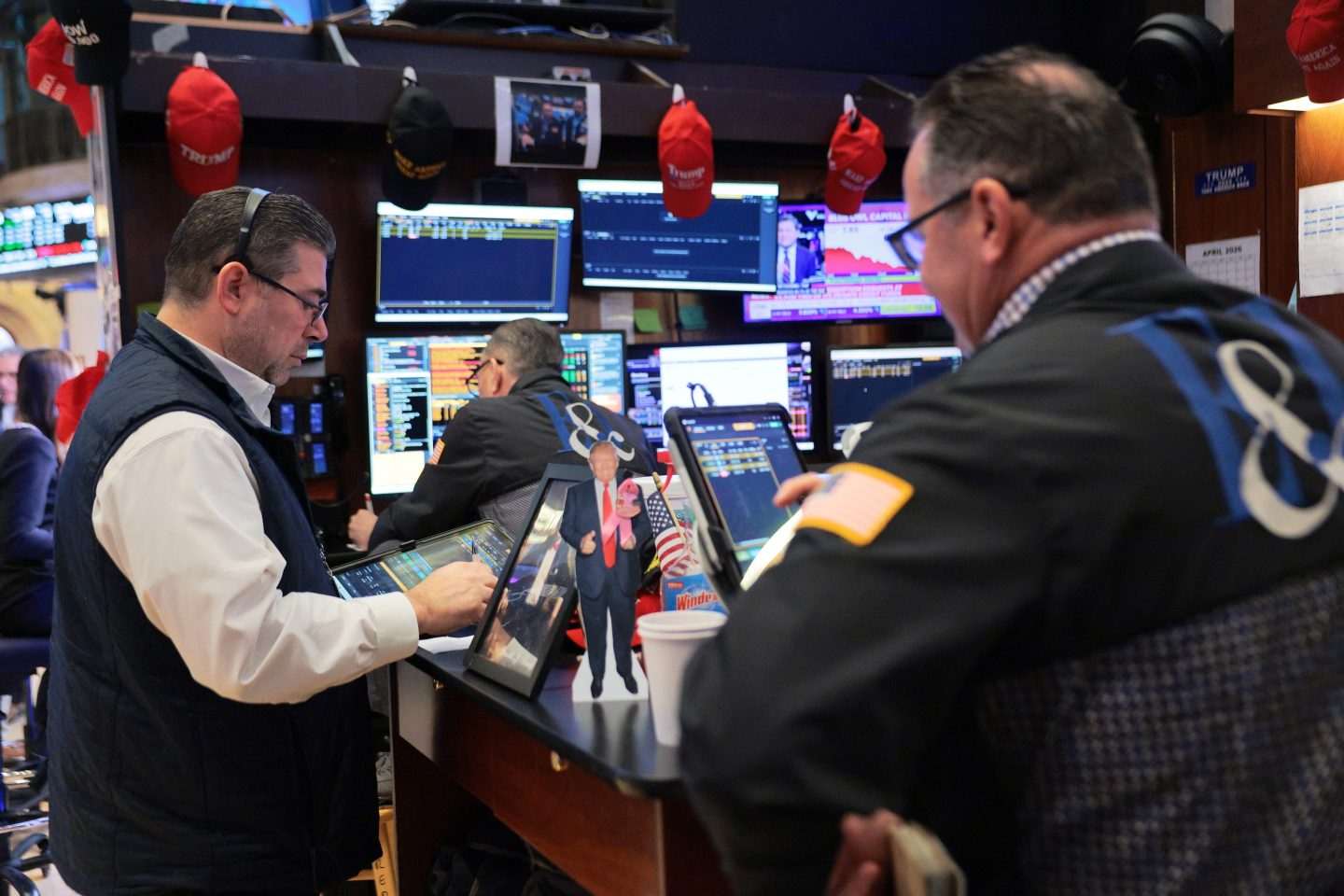
Coronavirus fears have all but wiped out January’s gains, as major indexes tumbled lower Friday, with the Dow Jones industrial average closing over 600 points down, and the S&P 500 following suit with around a 50 point-plus plunge. The Dow lost all of its January gains as of Friday, down over 2% for the month.
And as the virus spreads, market malaise appears to have spread with it. “We basically started this year with a void of risks, it was a vacuum,” says Michael Reynolds, investment strategy officer at Glenmede Trust. But just a month into the new year, that base case no longer stands.
Though outbreak (including the first human-to-human transmission of the virus in the U.S.) has clearly rattled investors, analysts are advising caution, not panic, in the coming weeks.
Areas of market illness
Certain companies and sectors are clearly more exposed than others.
Since the virus broke out in Wuhan, China, more than 7,700 people globally have been infected. Big companies like Google, Apple, JPMorgan Chase, and Ford Motor Co. are either shutting down offices in China or instituting employee travel bans to China. Even banks like HSBC will reportedly be shutting down over 20 branches starting on Feb. 3. And with the The U.S. State Department’s “do not travel to China” warning on Thursday, major U.S. airlines like Delta Air Lines and American Airlines announced they were halting U.S.-China flights, beginning on Feb. 6 through April 30 (for the former).
Indeed, transportation and energy are two sore spots right now, according to Randy Frederick, the vice president of trading and derivatives at Charles Schwab, but “There’s quite a bit of spillover” into other sectors already, he says.
The energy sector is trading off nearly 11% year to date, and materials are also off single digits from the start of 2020.
Commodity prices have dropped over 6% since Jan 17 (via the Bloomberg Commodity Index), when the first big outbreak disclosures were released. Within the S&P 500, the biggest sectors to take a hit have mostly been energy, materials, financials, consumer discretionary, and health care.
Even the bond market is looking ill, as the U.S. 30-year Treasury yield dipped below 2% on Thursday—its lowest since early September of last year. Yet Schwab’s Frederick doesn’t think treasury yields necessarily caught the coronavirus—”While it may have accelerated the downturn [in yields], I don’t think you can point to this as being the cause of it,” he says, noting that yields have been decelerating since the start of the year.
Historically, epidemics are a mixed bag
While it can be easy to point to previous epidemics (like the SARS outbreak in 2003 or even the measles outbreak last year), those like Frederick contend it is hard to measure the impact of outbreaks on the market—mainly because it is hard to tell exactly when they begin and, more importantly, end.
According to Dow Jones market data, in the past 12 epidemics back to 1981 with HIV/AIDS, the S&P 500 was only down once (during the HIV/AIDS epidemic) six months after the “start.” And in Frederick’s shorter time window of 30 days and 90 days after an epidemic reached markets, the S&P was only down about 0.5% in the first 30 days—and was actually up over 2% in the 90 days following (based on data from the past 16 outbreaks going back to the polio outbreak in 1952).
That’s good news for investors. “Since there weren’t a whole lot of cases where we had really significant downturns while these things came about, it’s likely that it’s, one, relatively short-lived, and two, the overall impact will be relatively small,” Frederick says. Still, there’s always the possibility that the coronavirus could be different.
Coronavirus could provide a ‘healthy’ correction
Despite glaring headlines and indexes in the red, analysts are looking at the silver-lining—namely, the virus could present an opportunity for some investors to rebalance their portfolios at more attractive valuations.
For those inclined, the current market dip could present an opportune moment to scoop up emerging market assets at more attractive valuations, according to a UBS Asset Management report this week. Glenmede Trust’s Reynolds is also eyeing emerging markets, as they’ve had a “longer-term structural overweight to emerging Asia.”
But those like Schwab’s Frederick have a word to the wise for investors in the coming week: “For almost the entirety of 2019, people were in a buy-the-dip mode—[but] this thing is probably not over yet, and it’s a little bit too risky to be buying right now,” he says.
Chinese markets that have been closed for the New Year are set to reopen on Monday. And for Frederick, that’s cause for investors to pause. “There’s almost no doubt that they’re going to dip lower and gap down,” he says. “Buying today is also risky from that perspective.”
But a 5% to 10% correction in the market (barring major fundamental downward shifts in the economy) could be just what the doctor ordered, says Reynolds. Schwab’s Frederick thinks the epidemic might have an unusual effect: “I think this is going to be, frankly, a healthy correction.”
More must-read stories from Fortune:
—All of your questions on filing taxes in 2020, answered
—The health of the economy in nine charts
—Global companies enter lockdown mode as coronavirus rocks China
—Bull market advice for investing in today’s market
—WATCH: Biggest investing opportunities and risks for 2020
Subscribe to Fortune’s Bull Sheet for no-nonsense finance news and analysis daily.