• Home
  • Latest
  • Fortune 500
  • Finance
  • Tech
  • Leadership
  • Lifestyle
  • Rankings
  • Multimedia
Financesocially responsible investing

Why A Data Revolution Is Giving Socially Responsible Investors an Edge

Matthew Heimer
By
Matthew Heimer
Matthew Heimer
Executive Editor, Features
Down Arrow Button Icon
September 25, 2019, 6:30 AM ET
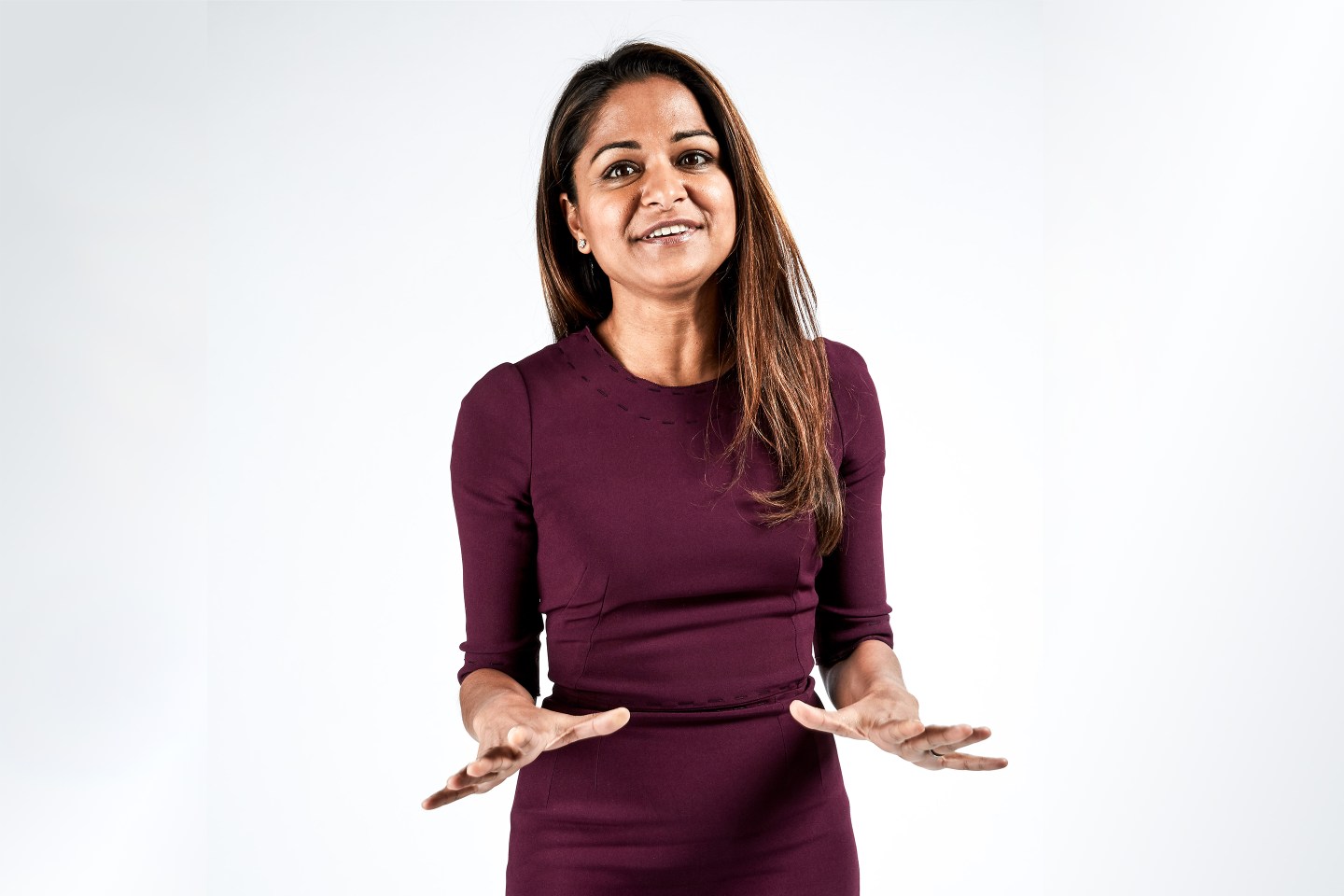
Savita Subramanian, Bank of America Merrill Lynch
Savita Subramanian, Bank of America Merrill Lynch, Head of U.S. equity and quantitative strategy.Spencer Heyfron for Fortune

It’s getting a lot easier to align your financial strategy with your conscience.  A report issued to clients this week by BofA Merrill Lynch Global Research makes an unusually strong data-driven case for “ESG investing”—taking companies’ environmental impact, social impact, and governance into account when deciding whether to buy their stocks. The report’s takeaway: If you’re not using ESG analysis, you may be leaving money on the table. 

The report, which BAML issued to clients on Monday and shared with Fortune on Tuesday, concludes that a strategy of buying stocks that ranked well on various ESG metrics—buying only the best-behaved companies, in other words—would have beaten the broader market by up to 3 percentage points a year over the past five years. (That’s a blockbuster margin in an industry where beating your benchmark by half a percentage point can mean big bonuses and a yacht party.) 

Research linking ESG best practices to better stock performance has been making the rounds on Wall Street for a while, but much of that research has been tantalizingly inconclusive. More often than not, the margins of victory have been small, the correlation between good corporate behavior and strong results unclear, and the definitions of ESG fuzzy.

Related: Does Impact Investing Have a Data Problem?

What’s changing, says Savita Subramanian, BAML’s head of U.S. equity and quantitative strategy, is that researchers are finding more sophisticated ways to measure ESG behavior and to correlate it to market outcomes. The result, argues Subramanian (who’s also head of global ESG research), is that social-responsibility metrics have become a tool that almost any financial pro has to at least consider. As she put it in an interview with Fortune, “Why would any investor not want to use this stuff?”

When bad things happen to bad companies 

The BAML report draws on a big pool of such metrics; its credited sources include data providers MSCI, Thomson Reuters (whose data arm spun off last year under the name Refinitiv), and Sustainalytics. The report included a few striking statistical highlights, including these:

Bad ESG scores put profits at risk

Median three-year volatility in earnings per share for companies in the lowest and worst quartile of ESG scores was about five times as great as for those in the highest and best quartile. Higher volatility tends to correlate with lower share prices, because it’s exactly what long-term investors hope to avoid. ESG scores, Subramanian says, “are a predictor of earnings risk better than any other metric we’ve ever tested.”

Ethical bankruptcy can lead to…bankruptcy

Of the 17 S&P 500 companies that went bankrupt between 2005 and 2015, BAML found that 15 had scored poorly on ESG scores five years prior to the bankruptcy. 

Bad companies pay more to borrow

The BAML team found a difference of about 2 full percentage points in borrowing costs (essentially, interest on debt) between the companies with the lowest ESG scores and those with the highest. Higher borrowing costs, of course, eat into profits, which can scare investors away. 

The value of reputation

To be sure, these data still show correlation, rather than causation. The “why” of the connection between ESG scores and stock performance often remains elusive, and varies enormously from company to company. But the BAML report does point to one potential explanation for the strength of those correlations: The rising importance of intangible assets – the value of a company’s brands, intellectual property, and employee talent – to the overall value of big companies.

According to BAML, intangible assets now account for 68% of the book value of the S&P 500, up from around 35% in 1999. That means that the reputational damage from a governance scandal or an environmental catastrophe is more likely to do long-lasting damage to a company’s market value than it might have two decades ago. Strikes, boycotts, corruption, and data breaches can drive away both customers and talented recruits, says Subramanian. “The brand impairment can hit you for years,” she notes. “We have to think outside the box to measure that kind of intangible risk.” 

Subramanian hastens to add that ESG rankings “aren’t by themselves a holy grail” for stock pickers. Great ESG scores mean little if a company is selling products that consumers don’t like. And companies that woo investors by touting their high scores on ESG metrics risk being disproportionately hit even by small PR problems. “If you’re highly ranked,” she says, “and there’s even a whiff of controversy about your business model, you’ve got further to fall.” 

Still, the increasing value of ESG data makes it a powerful tool for money managers and financial advisers, BAML concludes—especially since millennials, the nation’s largest demographic cohort, are especially likely to want their money to be invested under ESG principles. 

Last but not least, it’s good to know that your values can be financially valuable. “As a human being, it’s satisfying to realize that these measures that maximize human benefit pay off for shareholders, too,” Subramanian says. “It’s nice to see some kind of teleological benefit to acting well as opposed to acting badly.” In a world where nice investors have seldom finished first, that’s a refreshing observation.

Editor’s note: This article was updated to clarify details about when and how Fortune received access to the BAML report.

More must-read stories from Fortune:

—Airbnb plans huge IPO in 2020, continuing push by tech companies to go public
—What’s the difference between a recession and a depression? Here’s what history tells us
—Why the next recession may feel very different than 2008
—Why the repo market is such a big deal—and why its $400 billion bailout is so unnerving
—Apple Card: Here are all the credit card’s 3% cash back benefits partners

Don’t miss the daily Term Sheet, Fortune’s newsletter on deals and dealmakers.

About the Author
Matthew Heimer
By Matthew HeimerExecutive Editor, Features
Instagram iconTwitter icon

Matt Heimer oversees Fortune's longform storytelling in digital and print and is the editorial coordinator of Fortune magazine. He is also a co-chair of the Fortune Global Forum and the lead editor of Fortune's annual Change the World list.

See full bioRight Arrow Button Icon

Latest in Finance

Finance
Lorem ipsum dolor sit amet, consectetur adipiscing elit, sed do eiusmod tempor incididunt ut labore et dolore magna aliqua. Ut enim ad minim veniam
By Fortune Editors
October 20, 2025
Finance
Lorem ipsum dolor sit amet, consectetur adipiscing elit, sed do eiusmod tempor incididunt ut labore et dolore magna aliqua. Ut enim ad minim veniam
By Fortune Editors
October 20, 2025
Finance
Lorem ipsum dolor sit amet, consectetur adipiscing elit, sed do eiusmod tempor incididunt ut labore et dolore magna aliqua. Ut enim ad minim veniam
By Fortune Editors
October 20, 2025
Finance
Lorem ipsum dolor sit amet, consectetur adipiscing elit, sed do eiusmod tempor incididunt ut labore et dolore magna aliqua. Ut enim ad minim veniam
By Fortune Editors
October 20, 2025
Finance
Lorem ipsum dolor sit amet, consectetur adipiscing elit, sed do eiusmod tempor incididunt ut labore et dolore magna aliqua. Ut enim ad minim veniam
By Fortune Editors
October 20, 2025
Finance
Lorem ipsum dolor sit amet, consectetur adipiscing elit, sed do eiusmod tempor incididunt ut labore et dolore magna aliqua. Ut enim ad minim veniam
By Fortune Editors
October 20, 2025

Most Popular

Finance
Lorem ipsum dolor sit amet, consectetur adipiscing elit, sed do eiusmod tempor incididunt ut labore et dolore magna aliqua. Ut enim ad minim veniam
By Fortune Editors
October 20, 2025
Finance
Lorem ipsum dolor sit amet, consectetur adipiscing elit, sed do eiusmod tempor incididunt ut labore et dolore magna aliqua. Ut enim ad minim veniam
By Fortune Editors
October 20, 2025
Finance
Lorem ipsum dolor sit amet, consectetur adipiscing elit, sed do eiusmod tempor incididunt ut labore et dolore magna aliqua. Ut enim ad minim veniam
By Fortune Editors
October 20, 2025
Finance
Lorem ipsum dolor sit amet, consectetur adipiscing elit, sed do eiusmod tempor incididunt ut labore et dolore magna aliqua. Ut enim ad minim veniam
By Fortune Editors
October 20, 2025
Finance
Lorem ipsum dolor sit amet, consectetur adipiscing elit, sed do eiusmod tempor incididunt ut labore et dolore magna aliqua. Ut enim ad minim veniam
By Fortune Editors
October 20, 2025
Finance
Lorem ipsum dolor sit amet, consectetur adipiscing elit, sed do eiusmod tempor incididunt ut labore et dolore magna aliqua. Ut enim ad minim veniam
By Fortune Editors
October 20, 2025
Rankings
  • 100 Best Companies
  • Fortune 500
  • Global 500
  • Fortune 500 Europe
  • Most Powerful Women
  • Future 50
  • World’s Most Admired Companies
  • See All Rankings
Sections
  • Finance
  • Leadership
  • Success
  • Tech
  • Asia
  • Europe
  • Environment
  • Fortune Crypto
  • Health
  • Retail
  • Lifestyle
  • Politics
  • Newsletters
  • Magazine
  • Features
  • Commentary
  • Mpw
  • CEO Initiative
  • Conferences
  • Personal Finance
  • Education
Customer Support
  • Frequently Asked Questions
  • Customer Service Portal
  • Privacy Policy
  • Terms Of Use
  • Single Issues For Purchase
  • International Print
Commercial Services
  • Advertising
  • Fortune Brand Studio
  • Fortune Analytics
  • Fortune Conferences
  • Business Development
About Us
  • About Us
  • Editorial Calendar
  • Press Center
  • Work At Fortune
  • Diversity And Inclusion
  • Terms And Conditions
  • Site Map

Most Popular

placeholder alt text
Future of Work
Malcolm Gladwell tells young people if they want a STEM degree, 'don’t go to Harvard.' You may end up at the bottom of your class and drop out
By Sasha RogelbergDecember 27, 2025
2 days ago
placeholder alt text
Banking
Russian official warns a banking crisis is possible amid nonpayments. 'I don’t want to think about a continuation of the war or an escalation'
By Jason MaDecember 27, 2025
1 day ago
placeholder alt text
Arts & Entertainment
Gen Zers and millennials flock to so-called analog islands 'because so little of their life feels tangible'
By Michael Liedtke and The Associated PressDecember 28, 2025
11 hours ago
placeholder alt text
Europe
Christmas 500 years ago was a drunken 6-week feast that may have been considerably better than the modern holiday, medieval historian says
By Bobbi Sutherland and The ConversationDecember 25, 2025
4 days ago
placeholder alt text
Politics
Peter Thiel and Larry Page are preparing to flee California in case the state passes a billionaire wealth tax, report says
By Jason MaDecember 27, 2025
1 day ago
placeholder alt text
Success
MacKenzie Scott's close relationship with Toni Morrison long before Amazon put her on the path give more than $1 billion to HBCUs
By Sasha RogelbergDecember 28, 2025
13 hours ago

© 2025 Fortune Media IP Limited. All Rights Reserved. Use of this site constitutes acceptance of our Terms of Use and Privacy Policy | CA Notice at Collection and Privacy Notice | Do Not Sell/Share My Personal Information
FORTUNE is a trademark of Fortune Media IP Limited, registered in the U.S. and other countries. FORTUNE may receive compensation for some links to products and services on this website. Offers may be subject to change without notice.


Latest in Finance

Investingprecious metals
Silver pulls back after topping $80 in historic year-end rally
By Robin Paxton and BloombergDecember 28, 2025
2 hours ago
North AmericaMexico
Interoceanic Train derails in southern Mexico, injuring at least 15 and halting traffic on line
By The Associated PressDecember 28, 2025
3 hours ago
EconomyJobs
The job market in 2026 will suffer from ‘uncomfortably slow growth’ in the first half but reverse higher later in the year, JPMorgan says
By Jason MaDecember 28, 2025
4 hours ago
EconomyTariffs and trade
Bank of America’s Moynihan sees Trump’s tariffs starting to de-escalate
By Sarah Maddox and BloombergDecember 28, 2025
6 hours ago
North AmericaMedia
This Warren Buffett-backed wildlife rehab center estimates not having old newspapers to use would create more than $10,000 a year in new costs
By Michael Weissenstein and The Associated PressDecember 28, 2025
6 hours ago
North AmericaNew York City
The retirement of this notoriously finicky card marks the end of an era for one of the world’s oldest and largest transit systems
By Philip Marcelo and The Associated PressDecember 28, 2025
11 hours ago