• Home
  • Latest
  • Fortune 500
  • Finance
  • Tech
  • Leadership
  • Lifestyle
  • Rankings
  • Multimedia
MagazineSecurity

Should Companies Bolster Their Cybersecurity by ‘Hacking Back?’

Robert Hackett
By
Robert Hackett
Robert Hackett
Down Arrow Button Icon
July 24, 2019, 6:30 AM ET
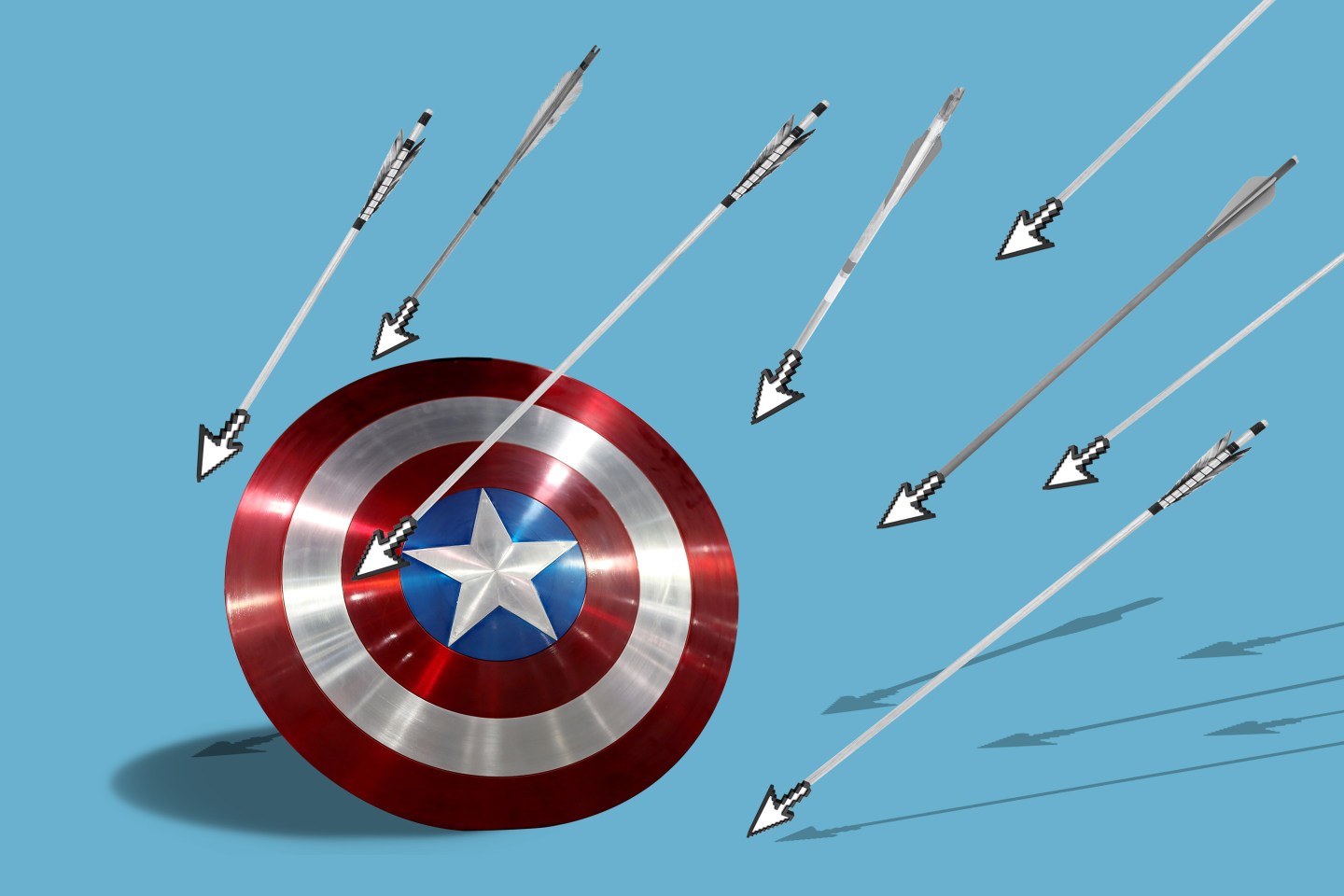
Photo-Illustration by Tres Commas; Original Photographs, Shield: Gabe Ginsberg—Getty Images; arrows: Getty images
Photo-Illustration by Tres Commas; Original Photographs, Shield: Gabe Ginsberg—Getty Images; arrows: Getty imagesPhoto-Illustration by Tres Commas; Original Photographs, Shield: Gabe Ginsberg—Getty Images; arrows: Getty images

Attend any cybersecurity confab, and you’ll encounter some version of the following refrain. “There are two types of companies in this world: those that have been hacked and those that don’t yet know they’ve been hacked.” 

The phrase that launched a thousand quips was coined by Dmitri Alperovitch, a Moscow-born entrepreneur and one of the world’s foremost hacker-sleuths. In 2011, as head threat researcher at antivirus pioneer McAfee, he created the classification while investigating—and publicly revealing—half a decade’s worth of (likely Chinese) cyber­attacks on more than 70 organizations, including defense contractors, tech companies, and the United Nations.

Now the huff of resignation is due for an update. “I’ve since modified that phrase,” Alperovitch tells Fortune. “The first two companies still exist, but now there’s a third type that’s able to successfully defend itself against intrusion.” Ah, hope yet!

One could write off Alperovitch’s addendum as a savvy sales pitch. As the cofounder and chief technology officer of CrowdStrike, a cybersecurity company that stunned investors with a share price–popping IPO in June, there’s no wonder he’s feeling a bit of good cheer. 

But there’s something to Alperovitch’s revision. Richard A. Clarke, former White House security adviser to both Bushes and to Clinton, agrees with the new, tripartite framing. He says as much in his just-published book, coauthored with Obama cyber lead Robert K. Knake, The Fifth Domain—a reference to cyber as the newest theater of war, after land, sea, air, and space. 

Consider NotPetya. The devastatingly global computer-wiping attack, which Russia released on the world in 2017, caused billions of dollars of damage to corporations such as FedEx, Maersk, and Merck. 

But not all firms succumbed. “What you don’t hear about is the list of American companies that were there doing business in Ukraine”—ground zero for the attack—“that didn’t get damaged,” Clarke says. Firms like Boeing, DowDuPont, and Johnson & Johnson “were the dogs that didn’t bark, and in our book, we tried to figure out why.”

So, what separates the hacks from the hack-nots? At a technical level, the unharmed firms had patched their machines against the vulnerability exploited by NotPetya. But a more fundamental question is, Why did some companies patch, while others neglected to?

In a word: prioritization. The most resilient organizations have buy-in across the—literal—board. Any executive who blocks a chief information security officer better have a damn good reason. The CEO will surely hear about it.

That’s good defense, but what if companies could punch back? That’s what some members of Congress are proposing in a piece of legislation known as the “hack back” bill, which would allow companies to probe an attacker’s computer and destroy stolen data.

Mark Mao, head of privacy practice at Troutman Sanders, an Atlanta law firm, is a cautious proponent. “Personally, I don’t think it’s a bad idea,” he says. “To me, it’s like a cyber Second Amendment.” (He adds that it would have to be “limited” and that “a lot of the details would have to be worked out.”)

Mao draws a comparison to nuclear stalemates. “Deterrence works because nobody wants to be nuked,” he says. “Most hackers get away with [it] because there’s no retribution in any way.”

But most cyber­security industry insiders agree that if the hack back bill became law, the results would be a fiasco. Sandra Joyce, head of intelligence at cybersecurity firm FireEye and a U.S. Air Force reservist, disapproves. “The last thing we need is to add well-intentioned rookies into the mix,” she says, noting the dangers of misidentifying attackers and the threat of tit-for-tat escalation. It’d be “releasing a vigilantism fraught with risk.”

“The last thing we need is to add well-intentioned rookies into the mix.” – Sandra Joyce, head of intelligence, FireEye

The bill, she says, represents “the voice of the commercial sector that has felt very neglected. It’s a signal of frustration.”

The vexation is understandable. Worldwide spending on cyber­security is expected to grow about 9%, to $124 billion this year, according to Gartner. And the breaches seem to just keep coming.

Companies don’t need to bankrupt their coffers to keep hackers from bankrupting them. Clarke says companies that spend 8% to 10% of their IT budget on cybersecurity tend to be best in class.

But even this price tag is not always necessary to outrun the proverbial bear. Alperovitch says he knows of one Fortune 500 customer in the hospitality business that spends a mere $11 million annually to defend itself, and he is convinced that it’s among the most secure he has ever seen. 

At that particular concern, the chair of the board gave his cell phone number to the company’s chief information security officer and included a message: “Call me anytime, day and night, if anyone says no to you.”

As Alperovitch puts it: “At that organization, no one tells him no.”

A version of this article appears in the August 2019 issue of Fortune with the headline “The Corporate Fortress.”

More must-read stories from Fortune:

—The 2019 Fortune Global 500: See the full list

—It’s China’s world: China has now reached parity with the U.S. on the Global 500

—China’s biggest private sector company is betting its future on data

—How the maker of the world’s bestselling drug keeps prices sky-high

—Cloud gaming is big tech’s new street fight

Get up to speed on your morning commute with Fortune’s CEO Daily newsletter.

About the Author
Robert Hackett
By Robert Hackett
Instagram iconLinkedIn iconTwitter icon
See full bioRight Arrow Button Icon

Latest from the Magazine

Finance
Lorem ipsum dolor sit amet, consectetur adipiscing elit, sed do eiusmod tempor incididunt ut labore et dolore magna aliqua. Ut enim ad minim veniam
By Fortune Editors
October 20, 2025
Finance
Lorem ipsum dolor sit amet, consectetur adipiscing elit, sed do eiusmod tempor incididunt ut labore et dolore magna aliqua. Ut enim ad minim veniam
By Fortune Editors
October 20, 2025
Finance
Lorem ipsum dolor sit amet, consectetur adipiscing elit, sed do eiusmod tempor incididunt ut labore et dolore magna aliqua. Ut enim ad minim veniam
By Fortune Editors
October 20, 2025
Finance
Lorem ipsum dolor sit amet, consectetur adipiscing elit, sed do eiusmod tempor incididunt ut labore et dolore magna aliqua. Ut enim ad minim veniam
By Fortune Editors
October 20, 2025
Finance
Lorem ipsum dolor sit amet, consectetur adipiscing elit, sed do eiusmod tempor incididunt ut labore et dolore magna aliqua. Ut enim ad minim veniam
By Fortune Editors
October 20, 2025
Finance
Lorem ipsum dolor sit amet, consectetur adipiscing elit, sed do eiusmod tempor incididunt ut labore et dolore magna aliqua. Ut enim ad minim veniam
By Fortune Editors
October 20, 2025

Most Popular

Finance
Lorem ipsum dolor sit amet, consectetur adipiscing elit, sed do eiusmod tempor incididunt ut labore et dolore magna aliqua. Ut enim ad minim veniam
By Fortune Editors
October 20, 2025
Finance
Lorem ipsum dolor sit amet, consectetur adipiscing elit, sed do eiusmod tempor incididunt ut labore et dolore magna aliqua. Ut enim ad minim veniam
By Fortune Editors
October 20, 2025
Finance
Lorem ipsum dolor sit amet, consectetur adipiscing elit, sed do eiusmod tempor incididunt ut labore et dolore magna aliqua. Ut enim ad minim veniam
By Fortune Editors
October 20, 2025
Finance
Lorem ipsum dolor sit amet, consectetur adipiscing elit, sed do eiusmod tempor incididunt ut labore et dolore magna aliqua. Ut enim ad minim veniam
By Fortune Editors
October 20, 2025
Finance
Lorem ipsum dolor sit amet, consectetur adipiscing elit, sed do eiusmod tempor incididunt ut labore et dolore magna aliqua. Ut enim ad minim veniam
By Fortune Editors
October 20, 2025
Finance
Lorem ipsum dolor sit amet, consectetur adipiscing elit, sed do eiusmod tempor incididunt ut labore et dolore magna aliqua. Ut enim ad minim veniam
By Fortune Editors
October 20, 2025
Rankings
  • 100 Best Companies
  • Fortune 500
  • Global 500
  • Fortune 500 Europe
  • Most Powerful Women
  • Future 50
  • World’s Most Admired Companies
  • See All Rankings
Sections
  • Finance
  • Leadership
  • Success
  • Tech
  • Asia
  • Europe
  • Environment
  • Fortune Crypto
  • Health
  • Retail
  • Lifestyle
  • Politics
  • Newsletters
  • Magazine
  • Features
  • Commentary
  • Mpw
  • CEO Initiative
  • Conferences
  • Personal Finance
  • Education
Customer Support
  • Frequently Asked Questions
  • Customer Service Portal
  • Privacy Policy
  • Terms Of Use
  • Single Issues For Purchase
  • International Print
Commercial Services
  • Advertising
  • Fortune Brand Studio
  • Fortune Analytics
  • Fortune Conferences
  • Business Development
About Us
  • About Us
  • Editorial Calendar
  • Press Center
  • Work At Fortune
  • Diversity And Inclusion
  • Terms And Conditions
  • Site Map

© 2025 Fortune Media IP Limited. All Rights Reserved. Use of this site constitutes acceptance of our Terms of Use and Privacy Policy | CA Notice at Collection and Privacy Notice | Do Not Sell/Share My Personal Information
FORTUNE is a trademark of Fortune Media IP Limited, registered in the U.S. and other countries. FORTUNE may receive compensation for some links to products and services on this website. Offers may be subject to change without notice.


Most Popular

placeholder alt text
Personal Finance
Janet Yellen warns the $38 trillion national debt is testing a red line economists have feared for decades
By Eva RoytburgJanuary 5, 2026
1 day ago
placeholder alt text
AI
Experienced software developers assumed AI would save them a chunk of time. But in one experiment, their tasks took 20% longer
By Sasha RogelbergJanuary 5, 2026
1 day ago
placeholder alt text
Success
Blackstone exec says elite Ivy League degrees aren’t good enough—new analysts need to 'work harder' and be nice 
By Ashley LutzJanuary 5, 2026
1 day ago
placeholder alt text
Personal Finance
Current price of silver as of Monday, January 5, 2026
By Joseph HostetlerJanuary 5, 2026
2 days ago
placeholder alt text
Energy
‘Big Short’ investor Michael Burry says toppling of Venezuela’s Maduro will weaken Russia’s global standing as its oil ‘just became less important’
By Marco Quiroz-GutierrezJanuary 5, 2026
1 day ago
placeholder alt text
Economy
Under Biden, America got 150 countries to agree a 15% global corporate tax. Under Trump, America gets an exemption
By Fatima Hussein and The Associated PressJanuary 5, 2026
1 day ago

Latest from the Magazine

MagazineWarren Buffett
Warren Buffett: Business titan and cover star
By Indrani SenDecember 7, 2025
1 month ago
MagazineMarkets
Why an AI bubble could mean chaos for stock markets—and how smart investors are protecting their portfolios
By Alyson ShontellDecember 3, 2025
1 month ago
MagazineMedia
CoComelon started as a YouTube show for toddlers. It’s now a $3 billion empire that even Disney can’t ignore
By Natalie JarveyDecember 3, 2025
1 month ago
MagazineFood and drink
A Chinese ice cream chain, powered by super-cheap cones, now has more outlets than McDonald’s
By Theodora YuDecember 3, 2025
1 month ago
AITikTok
China’s ByteDance could be forced to sell TikTok U.S., but its quiet lead in AI will help it survive—and maybe even thrive
By Nicholas GordonDecember 2, 2025
1 month ago
MagazineAnthropic
Anthropic is all in on ‘AI safety’—and that’s helping the $183 billion startup win over big business
By Jeremy KahnDecember 2, 2025
1 month ago