• Home
  • News
  • Fortune 500
  • Tech
  • Finance
  • Leadership
  • Lifestyle
  • Rankings
  • Multimedia

The Newest Threat to Cheap European Flights? A Plan to Finally Tax Jet Fuel

By
Katherine Dunn
Katherine Dunn
Down Arrow Button Icon
By
Katherine Dunn
Katherine Dunn
Down Arrow Button Icon
July 13, 2019, 7:00 AM ET
The French transit ministry has proposed an "eco-tax" as well as pushed for taxing jet fuel on international flights.
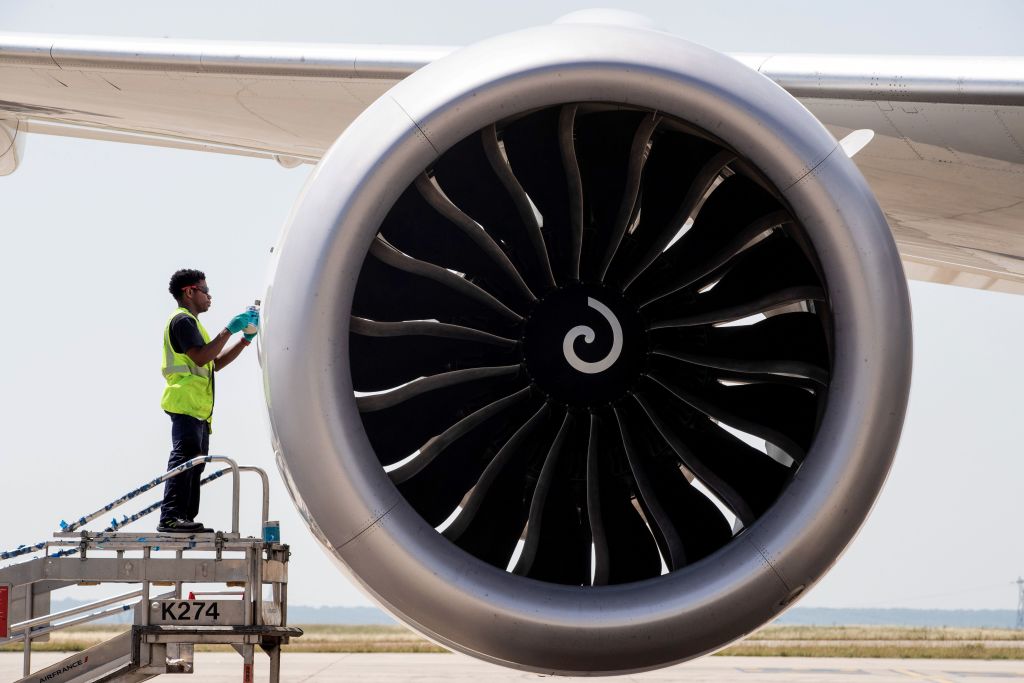
An airport worker checks the engine of a Boeing 787 of the airline company Air France parked in the tarmac at Roissy-Charles de Gaulle Airport, in Roissy, north of Paris, on June 27, 2019. (Photo by JOEL SAGET / AFP) (Photo credit should read JOEL SAGET/AFP/Getty Images)Photo credit should read JOEL SAGET—AFP/Getty Images

When France’s transport ministry announced this week that it would launch an “eco-tax” on flights, it also touched on a rising debate in European aviation: is it time to start taxing jet fuel?

Under a global agreement after World War II, it became standard to not tax fuel on international flights in order to incentivize commercial aviation—in contrast with taxes on fuel used on trucks and cars. (The same is true for international shipping.) The practice is still in place today, though the French government on Tuesday fired another salvo in an effort to upend it.

France said that the “eco-tax” would consist of 1.5 euros ($1.69) fee on inter-France economy flights per passenger, and 3 euros ($3.38) for flights outside of the EU—with higher fees for business fliers. And, alongside the Netherlands, it has called for the EU Commission to finally end the exemption on taxing jet fuel, known on land as kerosene. That jet fuel tax would be a separate, additional tax on top of the eco-tax, but both would have the same purpose: reducing emissions.

But the jet fuel tax could be difficult to implement—requiring multilateral cooperation, lest a single country bear the consequences—not to mention costly.

Tax as blunt tool

Even the minimum tax on fuel would cause the price for a flight in the EU to go up by an estimated 10%, according to a report released by the EU Commission in June.

Emissions, however, would decrease in tandem: falling by an estimated 11%, and bringing the aviation industry closer to reducing net-emissions as part of the Paris Agreement. 
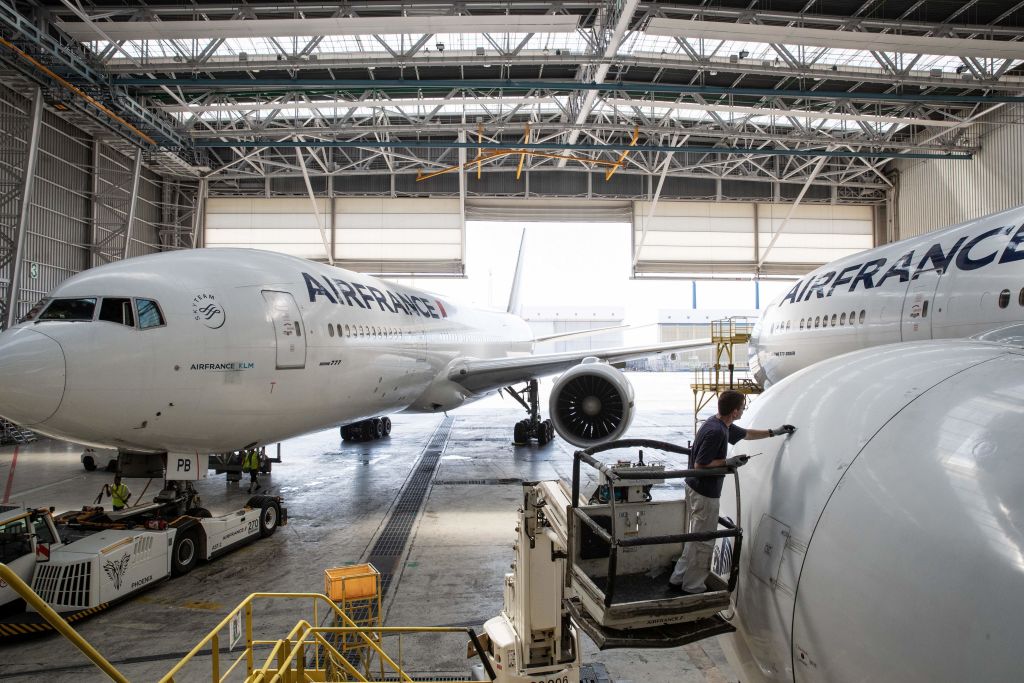
Air France plane in hangar
Air France immediately denounced the French government’s ‘eco-tax,’ which is likely to hit flight demand. (Joel Saget—AFP/Getty Images)
Joel Saget—AFP/Getty Images

Taxing jet fuel is no doubt a blunt tool for addressing a vexing problem: while aviation accounts for just over 2.5% of global CO2 emissions, the soaring demand for cheap flights makes the industry the most difficult transit sector to decarbonize, according to the International Energy Agency (IEA).

A cost incentive

To be clear, operators already have a powerful incentive to be fuel efficient: cost.

Even untaxed, jet fuel is a huge expense, representing nearly 24% of operators’ costs in 2018, according to the International Air Transit Association (IATA), the industry’s global trade body. As recently as the first quarter of this year, Lufthansa and Air France-KLM both attributed losses in part to high fuel costs.

As a result, between 1968 and 2014, the fuel efficiency of new commercial planes improved on average by 1.3% per year due to newer and better models, according to a study from the International Council on Clean Transportation.
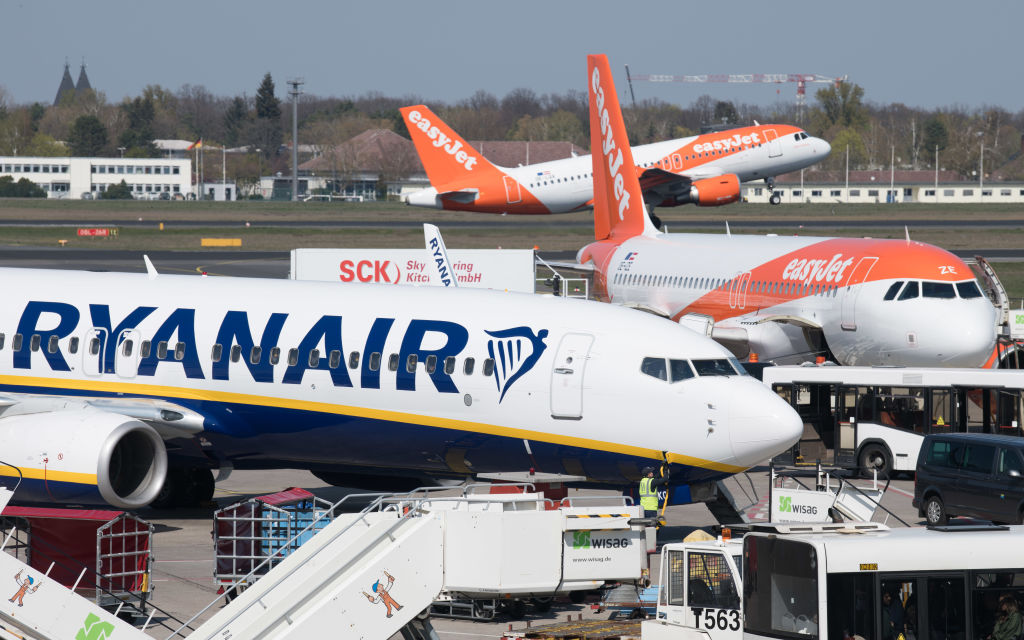
RyanAir and EasyJet plans sit on a tarmac
The proliferation of Europe’s discount airlines has coincided with tremendous growth in mass travel. (Jörg Carstensen—picture alliance via Getty Images)
Jörg Carstensen—picture alliance via Getty Images

Alternate fuels have also gained ground, from hydrogen fuels to biofuels, which are now available at a handful of airports but don’t yet offer a price advantage, the IEA says. 

Can’t keep up

But even rapid advances in technology and efficiency can’t keep pace with the recent growth in mass air travel; it ballooned 140% since 2000.

A direct route to cutting emissions, then, is to hit that demand directly: if flying is less affordable, passenger numbers will dip (as will jobs in aviation), and emissions will follow. 

Whatever form that hit to demand takes—an eco-tax, a jet fuel tax, the cost of lower-carbon fuel, or even just the cost of restocking with lighter, better jets—the days of low-cost European flights could be numbered. If that’s the case, it might worth resorting to an even lower-carbon option, and start booking trains. 

More must-read stories from Fortune:

—Switzerland’s stock-trading standoff with the EU provides a glimpse of life after Brexit

—The Bahrain Conference: What the experts and the media missed

—Ford’s new plan for Europe: Fewer jobs, more SUVs

—The British Royal Family’s costs are skyrocketing. Here’s why

—Listen to our new audio briefing, Fortune 500 DailyCatch up with Data Sheet, Fortune‘s daily digest on the business of tech.


About the Author
By Katherine Dunn
LinkedIn iconTwitter icon
See full bioRight Arrow Button Icon
0

Most Popular

placeholder alt text
Economy
Two months into the new fiscal year and the U.S. government is already spending more than $10 billion a week servicing national debt
By Eleanor PringleDecember 4, 2025
1 day ago
placeholder alt text
Success
‘Godfather of AI’ says Bill Gates and Elon Musk are right about the future of work—but he predicts mass unemployment is on its way
By Preston ForeDecember 4, 2025
24 hours ago
placeholder alt text
Success
Nearly 4 million new manufacturing jobs are coming to America as boomers retire—but it's the one trade job Gen Z doesn't want
By Emma BurleighDecember 4, 2025
24 hours ago
placeholder alt text
Success
Nvidia CEO Jensen Huang admits he works 7 days a week, including holidays, in a constant 'state of anxiety' out of fear of going bankrupt
By Jessica CoacciDecember 4, 2025
23 hours ago
placeholder alt text
Economy
Tariffs and the $38 trillion national debt: Kevin Hassett sees ’big reductions’ in deficit while Scott Bessent sees a ‘shrinking ice cube’
By Nick LichtenbergDecember 4, 2025
22 hours ago
placeholder alt text
Health
Bill Gates decries ‘significant reversal in child deaths’ as nearly 5 million kids will die before they turn 5 this year
By Nick LichtenbergDecember 4, 2025
1 day ago
Rankings
  • 100 Best Companies
  • Fortune 500
  • Global 500
  • Fortune 500 Europe
  • Most Powerful Women
  • Future 50
  • World’s Most Admired Companies
  • See All Rankings
Sections
  • Finance
  • Leadership
  • Success
  • Tech
  • Asia
  • Europe
  • Environment
  • Fortune Crypto
  • Health
  • Retail
  • Lifestyle
  • Politics
  • Newsletters
  • Magazine
  • Features
  • Commentary
  • Mpw
  • CEO Initiative
  • Conferences
  • Personal Finance
  • Education
Customer Support
  • Frequently Asked Questions
  • Customer Service Portal
  • Privacy Policy
  • Terms Of Use
  • Single Issues For Purchase
  • International Print
Commercial Services
  • Advertising
  • Fortune Brand Studio
  • Fortune Analytics
  • Fortune Conferences
  • Business Development
About Us
  • About Us
  • Editorial Calendar
  • Press Center
  • Work At Fortune
  • Diversity And Inclusion
  • Terms And Conditions
  • Site Map

© 2025 Fortune Media IP Limited. All Rights Reserved. Use of this site constitutes acceptance of our Terms of Use and Privacy Policy | CA Notice at Collection and Privacy Notice | Do Not Sell/Share My Personal Information
FORTUNE is a trademark of Fortune Media IP Limited, registered in the U.S. and other countries. FORTUNE may receive compensation for some links to products and services on this website. Offers may be subject to change without notice.



