• Home
  • Latest
  • Fortune 500
  • Finance
  • Tech
  • Leadership
  • Lifestyle
  • Rankings
  • Multimedia
FinanceRecession

Here are all the Recession Warning Signals That Have Already Gone Off

Anne Sraders
By
Anne Sraders
Anne Sraders
Down Arrow Button Icon
Anne Sraders
By
Anne Sraders
Anne Sraders
Down Arrow Button Icon
July 11, 2019, 2:57 PM ET

We may be in the longest economic expansion in American history, but there are already plenty of warning signs that the next recession may be on its way.

Experts are debating whether a recession is in the cards for 2020 (Fortune reported that 60% of economists think so), or if this expansion has room to run. But one thing is indisputable: several recession warning signals are already flashing.

In addition to the indicators themselves, there’s a growing sense that the trade war is long from over, which is weighing on many. Although President Trump announced a pseudo-truce with China, experts are seeing negative implications for businesses and the economy alike. In fact, perpetuating trade protectionism is the “number one issue” fueling business uncertainty, says Mark Hamrick, Bankrate.com senior economic analyst.

To be sure, even those that acknowledge that there are worrisome signs aren’t necessarily predicting that a recession is imminent, or even inevitable. Randy Watts, chief investment strategist at William O’Neil & Co, tells Fortune that projected S&P 500 double-digit earnings growth next year and Fed rate cuts are variables that, “if they break positively, …there’s even a chance the economy could re-accelerate.”

In the meantime, here are four signals worth paying attention to.

Recession Probability Index

Since the 1960s, one indicator of a looming recession has been the New York Fed’s recession probability index breaking 30%.

The probability of a U.S. recession predicted by the treasury spread hit 32.9% in July—the highest since 2009, according to the New York Fed.

The index in large part looks to the yield curve to determine the likelihood of a near recession. And for Morgan Stanley Wealth Management’s chief investment officer Lisa Shalett, the firm remains “cautious” as recession indicators are “flashing yellow,” Shalett wrote in a note.

Inverted yield curve

The inverted yield curve has historically been a major indicator that a recession is afoot—and experts believe it’s no different this time.

The U.S. Treasury yield curve has been inverted since May—meaning that the three-month Treasury bill (with a shorter maturity) has a higher yield than the 10-year Treasury note (a longer maturity). This inversion is a key signal that a downturn may be on its way. Morgan Stanley notes that, with the 10-year yield falling to 1.95% and the three-month T-bills hitting 2.15%, the “negative spread hit its widest point yet.”

An inverted yield curve means that investors have less confidence in older bonds than newer ones, which doesn’t bode well. And with this most recent inversion, Chris Dillon, a multi-asset investment specialist at T. Rowe Price, says it “certainly grabs everybody’s attention.”

Consumer and business confidence

Although consumer confidence is still historically high, the most recent June consumer confidence index (released by The Conference Board every month) dropped to two-year lows, to 121.5. The index provides insight into consumer’s concerns, and at these lows, may indicate their growing bearishness on the economy.

“The sentiment measures both for business and consumers should be monitored very closely, because then there’s the question of whether that’s followed by a change in behavior,” Bankrate.com’s Hamrick says. While he doesn’t think consumer sentiment has moved too dramatically, he says business sentiment has dropped from its highs.

In fact, this wavering confidence may be affecting U.S. manufacturing data as well.

“The biggest warning sign has been in contracting [Purchasing Managers’ Index], indicating a significant slowdown in expected manufacturing activity,” Max Gokhman, head of asset allocation at Pacific Life Fund Advisors, told Fortune in a note. “While U.S. PMIs remain slightly expansionary, in stark contrast with Europe, the trend is decidedly negative.”

Gokhman suggests that trade concerns are “paramount to souring business confidence,” the escalation of which could “hasten the downturn.”

The problem for many analysts is that, with uncertainty over trade policies, businesses may be more cautious with capital expenditures. T. Rowe Price’s Dillon describes year-to-date capital expenditures as “disappointing.” Whether considering things like building a new plant in China versus Mexico (both targets of trade policy issues) or holding off on investment, William O’Neil & Co’s Watts thinks trade is pushing corporate managers to be “nervous about making a corporate capital allocation mistake.”

Watts suggests this may be causing undue pessimism about the market given that the consumer economy and employment levels are currently “pretty good.” And according to Morgan Stanley, waning business confidence is already having an impact on economic growth and weak earnings.

U.S. Manufacturing

Weak U.S. manufacturing may be signaling slowing growth—and that’s cause for concern.

For Morgan Stanley Wealth Management’s Shalett, the most recent economic reports show “slowing that is far worse than the 2015-2016 minirecession,” she writes—due in large part to “outright contractionary” PMI (an indicator surveying purchasing managers at businesses) data and global new orders.

For instance, the U.S. automotive sector has experienced slowing sales in recent months, and orders for non-defense capital goods (not including aircraft) fell 0.9% in April—more than expected by analysts. While June PMI Composite (an overview of manufacturing and service sectors) is still above 50 (meaning it’s still expansionary), it’s dangerously flirting with a drop.

According to a Reuters report in May, factory activity dropped to near 10-year lows, sparking fresh concern. In fact, both JP Morgan and Morgan Stanley cut 2nd quarter GDP estimates to 1% from 2.25% and 1.9% from 2.2% respectively.

Economists like Hamrick are concerned. Hamrick says that the now sub-2% growth pace, down from 1st quarter growth of 3% last year, indicates that the near-11 year economic expansion “should not have been sustainable,” and may be overdue for a slowdown.

And as Fed Chairman Jerome Powell noted in remarks Wednesday (which many saw as an assurance for an interest rate cut in July), these trade tensions and the overall slowing of global growth “continue to weigh on the US economic outlook.”

For Hamrick, the 30% chance of recession metric shouldn’t be too spooky (there’s “still a 70% chance that it doesn’t happen,” he says). But whether or not that 70% chance will hold is yet to be seen, and Hamrick suggests we consider whether we’re in for a “soft landing”—or another crash.

More must-read stories from Fortune:

—Here’s when most economists think the next recession will happen

—Meet the A.I. landlord that’s building a single-family-home empire

—Doctors can now give out prescriptions for a visit to the museum

—This island escape is Italy’s best-kept secret

—Will Facebook’s Libra become the go-to payment system where banks fall short?

Subscribe to Fortune’s CEO Daily newsletter for the latest business news and analysis.

About the Author
Anne Sraders
By Anne Sraders
LinkedIn iconTwitter icon
See full bioRight Arrow Button Icon

Latest in Finance

Finance
Lorem ipsum dolor sit amet, consectetur adipiscing elit, sed do eiusmod tempor incididunt ut labore et dolore magna aliqua. Ut enim ad minim veniam
By Fortune Editors
October 20, 2025
Finance
Lorem ipsum dolor sit amet, consectetur adipiscing elit, sed do eiusmod tempor incididunt ut labore et dolore magna aliqua. Ut enim ad minim veniam
By Fortune Editors
October 20, 2025
Finance
Lorem ipsum dolor sit amet, consectetur adipiscing elit, sed do eiusmod tempor incididunt ut labore et dolore magna aliqua. Ut enim ad minim veniam
By Fortune Editors
October 20, 2025
Finance
Lorem ipsum dolor sit amet, consectetur adipiscing elit, sed do eiusmod tempor incididunt ut labore et dolore magna aliqua. Ut enim ad minim veniam
By Fortune Editors
October 20, 2025
Finance
Lorem ipsum dolor sit amet, consectetur adipiscing elit, sed do eiusmod tempor incididunt ut labore et dolore magna aliqua. Ut enim ad minim veniam
By Fortune Editors
October 20, 2025
Finance
Lorem ipsum dolor sit amet, consectetur adipiscing elit, sed do eiusmod tempor incididunt ut labore et dolore magna aliqua. Ut enim ad minim veniam
By Fortune Editors
October 20, 2025

Most Popular

Finance
Lorem ipsum dolor sit amet, consectetur adipiscing elit, sed do eiusmod tempor incididunt ut labore et dolore magna aliqua. Ut enim ad minim veniam
By Fortune Editors
October 20, 2025
Finance
Lorem ipsum dolor sit amet, consectetur adipiscing elit, sed do eiusmod tempor incididunt ut labore et dolore magna aliqua. Ut enim ad minim veniam
By Fortune Editors
October 20, 2025
Finance
Lorem ipsum dolor sit amet, consectetur adipiscing elit, sed do eiusmod tempor incididunt ut labore et dolore magna aliqua. Ut enim ad minim veniam
By Fortune Editors
October 20, 2025
Finance
Lorem ipsum dolor sit amet, consectetur adipiscing elit, sed do eiusmod tempor incididunt ut labore et dolore magna aliqua. Ut enim ad minim veniam
By Fortune Editors
October 20, 2025
Finance
Lorem ipsum dolor sit amet, consectetur adipiscing elit, sed do eiusmod tempor incididunt ut labore et dolore magna aliqua. Ut enim ad minim veniam
By Fortune Editors
October 20, 2025
Finance
Lorem ipsum dolor sit amet, consectetur adipiscing elit, sed do eiusmod tempor incididunt ut labore et dolore magna aliqua. Ut enim ad minim veniam
By Fortune Editors
October 20, 2025
Fortune Secondary Logo
Rankings
  • 100 Best Companies
  • Fortune 500
  • Global 500
  • Fortune 500 Europe
  • Most Powerful Women
  • Future 50
  • World’s Most Admired Companies
  • See All Rankings
Sections
  • Finance
  • Fortune Crypto
  • Features
  • Leadership
  • Health
  • Commentary
  • Success
  • Retail
  • Mpw
  • Tech
  • Lifestyle
  • CEO Initiative
  • Asia
  • Politics
  • Conferences
  • Europe
  • Newsletters
  • Personal Finance
  • Environment
  • Magazine
  • Education
Customer Support
  • Frequently Asked Questions
  • Customer Service Portal
  • Privacy Policy
  • Terms Of Use
  • Single Issues For Purchase
  • International Print
Commercial Services
  • Advertising
  • Fortune Brand Studio
  • Fortune Analytics
  • Fortune Conferences
  • Business Development
About Us
  • About Us
  • Editorial Calendar
  • Press Center
  • Work At Fortune
  • Diversity And Inclusion
  • Terms And Conditions
  • Site Map
Fortune Secondary Logo
  • About Us
  • Editorial Calendar
  • Press Center
  • Work At Fortune
  • Diversity And Inclusion
  • Terms And Conditions
  • Site Map
  • Facebook icon
  • Twitter icon
  • LinkedIn icon
  • Instagram icon
  • Pinterest icon

Latest in Finance

igor
CommentaryMarkets
If the recent AI and crypto shocks upset you, you’re tracking the wrong cycle
By Igor PejicFebruary 21, 2026
2 hours ago
A girl with a computer on the desk in front of her looks up.
InnovationEducation
The U.S. spent $30 billion to ditch textbooks for laptops and tablets: The result is the first generation less cognitively capable than their parents
By Sasha RogelbergFebruary 21, 2026
2 hours ago
EconomyU.S. economy
New CBO report shows national debt spiraling into uncharted territory by 2035—and Trump’s tariff defeat will make the picture even worse
By Shawn TullyFebruary 21, 2026
3 hours ago
Kevin Warsh, former governor of the US Federal Reserve
EconomyFed
Jerome Powell knows the Fed’s balance sheet got too big—Kevin Warsh has a plan, he just has to sell it without freaking out the markets
By Eleanor PringleFebruary 21, 2026
4 hours ago
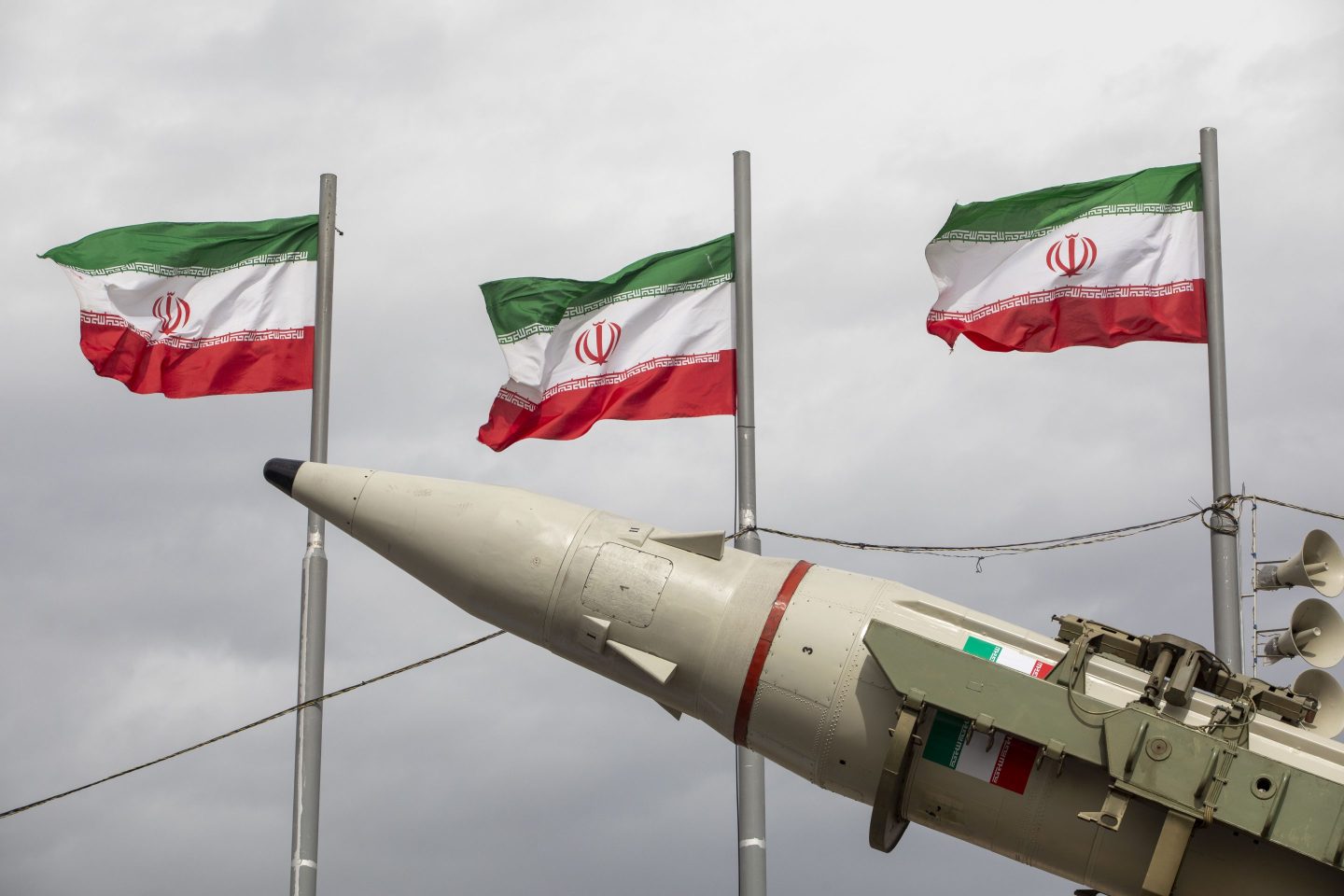
Missiles produced by Iran's armed forces are displayed near a row of Iranian flags during commemorations to mark the anniversary of the 1979 Iranian Revolution on February 11, 2026 in Tehran, Iran. In that year, Ruhollah Khomeini led an overthrow of the Pahlavi dynasty in 1979 and established himself as Supreme Leader of the Islamic Republic of Iran.
EnergyIran
Trump loves cheap gas—but a military conflict in Iran could nearly double your price at the pump
By Jordan BlumFebruary 21, 2026
7 hours ago
EconomyTariffs and trade
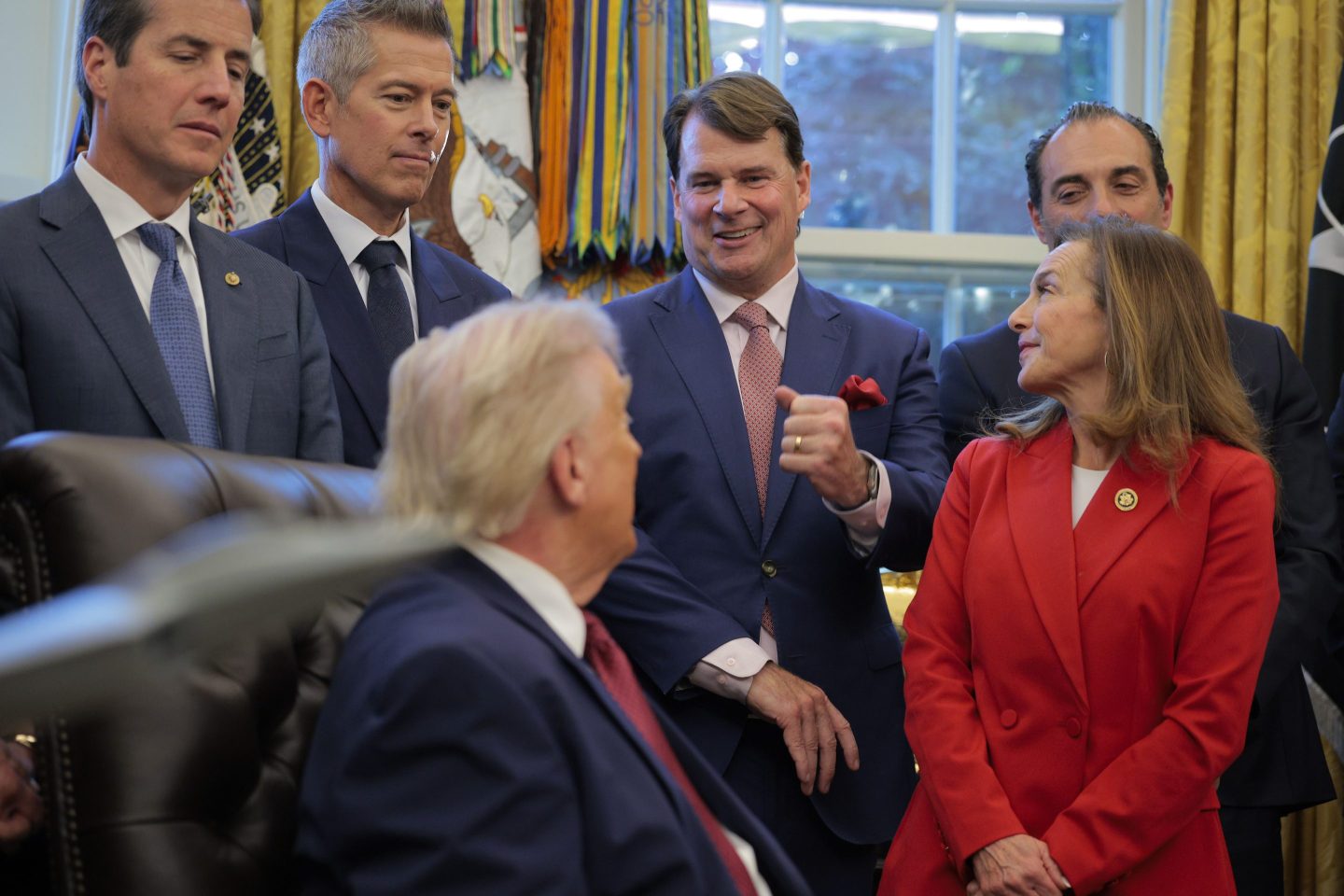
Detroit automakers ask White House to be spared from new tariffs
By Gabrielle Coppola and BloombergFebruary 20, 2026
12 hours ago

Most Popular

placeholder alt text
Economy
Fed confirms it obeyed U.S. Treasury request for an unusual ‘rate check,’ weakening the dollar against foreign currencies
By Jim EdwardsFebruary 19, 2026
2 days ago
placeholder alt text
Success
'I had to take 60 meetings': Jeff Bezos says 'the hardest thing I've ever done' was raising the first million dollars of seed capital for Amazon
By Dave Smith and Fortune EditorsFebruary 19, 2026
2 days ago
placeholder alt text
AI
‘I’m deeply uncomfortable’: Anthropic CEO warns that a cadre of AI leaders, including himself, should not be in charge of the technology’s future
By Sasha RogelbergFebruary 19, 2026
2 days ago
placeholder alt text
AI
Sam Altman says the quiet part out loud, confirming some companies are ‘AI washing’ by blaming unrelated layoffs on the technology
By Sasha RogelbergFebruary 19, 2026
2 days ago
placeholder alt text
AI
Deutsche Bank asked AI how it was planning to destroy jobs. And the robot answered
By Nick LichtenbergFebruary 18, 2026
3 days ago
placeholder alt text
Arts & Entertainment
Gen Zers and millennials flock to so-called analog islands 'because so little of their life feels tangible'
By Michael Liedtke and The Associated PressFebruary 20, 2026
20 hours ago

© 2026 Fortune Media IP Limited. All Rights Reserved. Use of this site constitutes acceptance of our Terms of Use and Privacy Policy | CA Notice at Collection and Privacy Notice | Do Not Sell/Share My Personal Information
FORTUNE is a trademark of Fortune Media IP Limited, registered in the U.S. and other countries. FORTUNE may receive compensation for some links to products and services on this website. Offers may be subject to change without notice.