• Home
  • Latest
  • Fortune 500
  • Finance
  • Tech
  • Leadership
  • Lifestyle
  • Rankings
  • Multimedia

Trendingnow

1

As Big Tech showers employees with perks to win the talent war, Nvidia built a nearly $5 trillion company by making people pay for their own lunch

2

MacKenzie Scott alone accounted for one-third of America's $19.2 billion in megagifts last year

3

Current price of oil as of July 1, 2026

1

As Big Tech showers employees with perks to win the talent war, Nvidia built a nearly $5 trillion company by making people pay for their own lunch

2

MacKenzie Scott alone accounted for one-third of America's $19.2 billion in megagifts last year

3

Current price of oil as of July 1, 2026
FinanceEconomy

The Famous ‘Phillips Curve’ to Predict Inflation Isn’t Working Like It Should

By
Bob Sellers
Bob Sellers
Down Arrow Button Icon
By
Bob Sellers
Bob Sellers
Down Arrow Button Icon
June 14, 2019, 1:50 PM ET
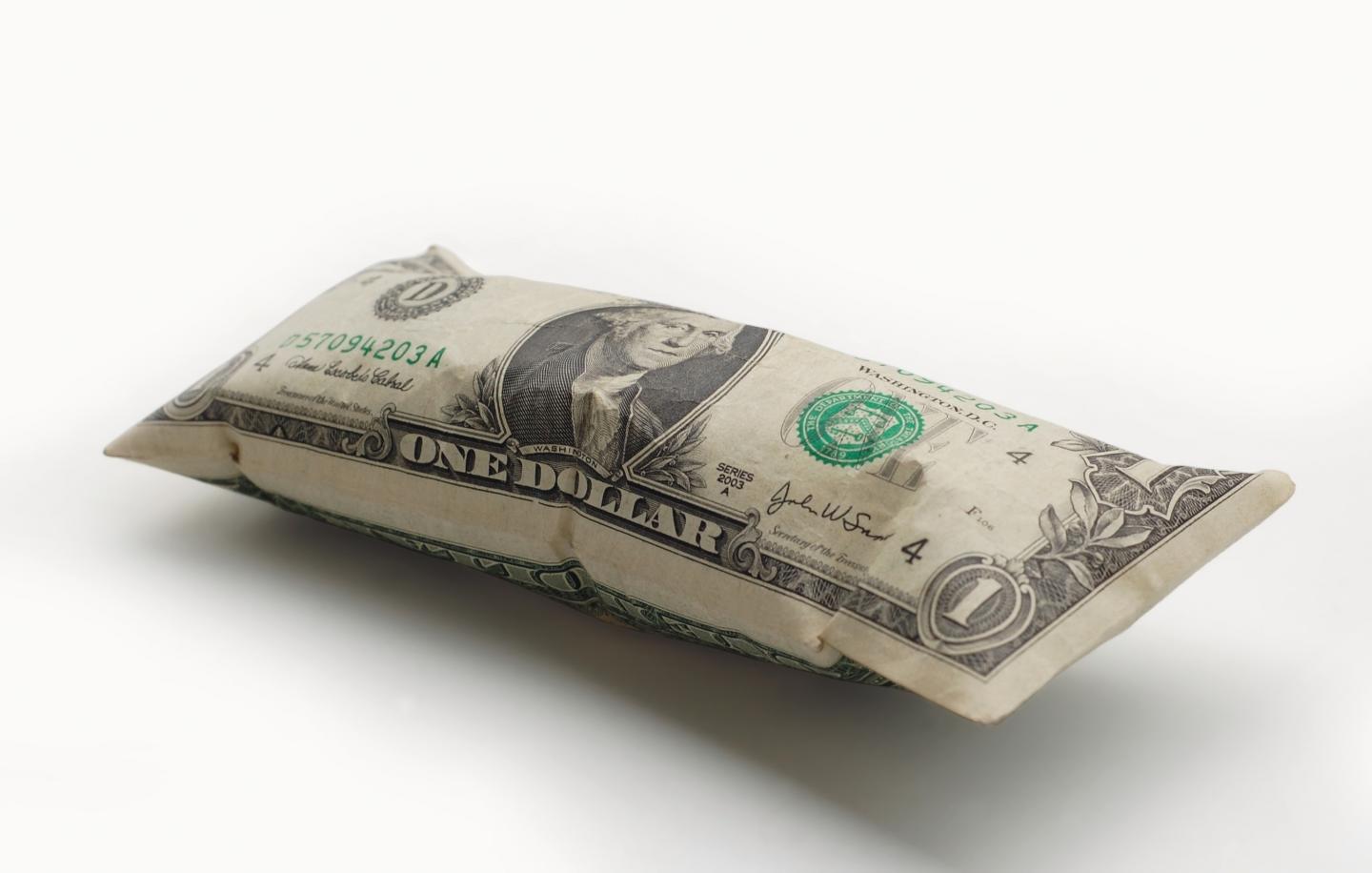
inflated dollar
A picture representing the recent inflation in U.S. currency.photoMacgyver Getty Images/iStockphoto
Add Fortune on Google for similar content.

Cookies and milk. Keith and Nicole. Jay-Z and Beyoncé. There are certain relationships that just seem to last. In the world of economics, it’s unemployment and inflation. Way back in 1958, economist William Phillips made an interesting observation. It seemed as though when unemployment went down, inflation went up. The inverse relationship became known as the Phillips Curve, and recently a lot of economic analysts and stock market watchers have been asking, with unemployment below 4%, why is inflation still so low (under 2%)?

First of all, Phillips didn’t actually say when unemployment fell, inflation would go up. After studying data between 1861 and 1957, he made the observation that when unemployment went down, wages tended to rise. Since inflation often goes up after that, other economists started using the inverse relationship between unemployment and inflation as a short hand predictor of what might happen in the economy—and as a clue as to when central banks might raise interest rates in an effort to keep inflation at bay. This has led to some current discussions in the financial industry as to why the Phillips Curve “isn’t working.”

It doesn’t “work” because it’s not a cause-and-effect relationship to begin with, according to Doug Duncan, Chief Economist at Fannie Mae. “The Phillips Curve is the observation that there is correlation of employment and inflation. The degree of correlation varies over time. But that does not extend to causation.” So while rising inflation may sometimes occur during times of falling unemployment, one doesn’t cause the other.

In fact, there have been so many exceptions to the inverse relationship, its usefulness is often called into question. For instance, there was the period of stagflation in the 70s when unemployment and inflation both went up. And economist Milton Friedman went so far as to state that the inverse relationship between unemployment and inflation only worked in the short term. Kind of like Brad and Angelina. (Sorry.)

Friedman said that when inflation kicked in, workers who were getting paid lower wages would suddenly realize they were being underpaid and start to ask for raises or change jobs to make more money. That’s why overall wages would go up. But this was a short term phenomenon; over the long term, many other factors would affect whether inflation rose.

Liz Ann Sonders, Chief Investment Strategist at Charles Schwab & Co., points to one determining factor right now as the economy, which hasn’t been growing fast enough to put pressure on wages and inflation. “Up until mid-last year, nominal GDP growth was below the unemployment rate. Historically when that occurs, there has been no Phillips Curve correlation.” But in the middle of last year, she says, the Phillips Curve kicked back in. “We finally saw average hourly earnings kick into a slightly higher gear, albeit not to the 4% or so that historically accompanied the latter part of cycles.”

But this time while wages have risen, significant inflation has not followed. The just-released CPI report showed a modest .1% rise in May, pushing inflation at the consumer level down to a rate of just 1.8% over the past 12 months.

“Workers are becoming more productive so businesses are paying them more,” according to Duncan. “This is not inflation. The source of the productivity gain is investment by businesses, often in the current environment in technology tools.”

Given the uncertainty and narrow scope of the Phillips Curve correlations, central banks can’t use the curve as a reliable predictive tool. No less than Fed Chairman Jerome Powell referred to the Phillips Curve in a speech last week , describing a period of low inflation (1.4%) and low unemployment (4.1%) that was “not so different from today.” It was a time, he said, that “macroeconomists were puzzling over the flatness of the Phillips Curve.” The year was 1999. In the subsequent years, we saw the collapse of the dot.com boom and the onset of the Great Recession, driven by a myriad of causes, including household debt, the mortgage crisis, and bank failures. Fed policy had to react to economic dynamics infinitely more complicated than the simple relationship between inflation and wages.

In the current economy, Powell has his eye on much more than just the Phillips Curve. “Using monetary policy to push sufficiently hard on labor markets to lift inflation could pose risks of destabilizing excesses in financial markets or elsewhere.” In other words, lowering interest rates in order to stimulate the economy, which theoretically would lead to a growth in wages and inflation, could backfire. Too much money in the system could lead to an overheated economy and a scenario much like the one that led to the 2008 financial crisis in the first place.

So while the Phillips Curve relationship between unemployment and inflation can’t be ignored, today’s equation is a little more complicated than just cookies and milk.

More must-read stories from Fortune:

—A red flag to investors: The stock market may be hitting the “triple top”

—The Renault deal is dead, but Fiat Chrysler still needs a partner

—Many economists think the next recession will be before the 2020 election

—The S&P 500 has performed far worse under Trump than Obama

—Listen to our new audio briefing, Fortune 500 Daily

Don’t miss the daily Term Sheet, Fortune‘s newsletter on deals and dealmakers.

About the Author
By Bob Sellers
See full bioRight Arrow Button Icon
Add Fortune on Google for similar content.

Latest in Finance

Finance
Lorem ipsum dolor sit amet, consectetur adipiscing elit, sed do eiusmod tempor incididunt ut labore et dolore magna aliqua. Ut enim ad minim veniam
By Fortune Editors
October 20, 2025
Finance
Lorem ipsum dolor sit amet, consectetur adipiscing elit, sed do eiusmod tempor incididunt ut labore et dolore magna aliqua. Ut enim ad minim veniam
By Fortune Editors
October 20, 2025
Finance
Lorem ipsum dolor sit amet, consectetur adipiscing elit, sed do eiusmod tempor incididunt ut labore et dolore magna aliqua. Ut enim ad minim veniam
By Fortune Editors
October 20, 2025
Finance
Lorem ipsum dolor sit amet, consectetur adipiscing elit, sed do eiusmod tempor incididunt ut labore et dolore magna aliqua. Ut enim ad minim veniam
By Fortune Editors
October 20, 2025
Finance
Lorem ipsum dolor sit amet, consectetur adipiscing elit, sed do eiusmod tempor incididunt ut labore et dolore magna aliqua. Ut enim ad minim veniam
By Fortune Editors
October 20, 2025
Finance
Lorem ipsum dolor sit amet, consectetur adipiscing elit, sed do eiusmod tempor incididunt ut labore et dolore magna aliqua. Ut enim ad minim veniam
By Fortune Editors
October 20, 2025

Most Popular

Finance
Lorem ipsum dolor sit amet, consectetur adipiscing elit, sed do eiusmod tempor incididunt ut labore et dolore magna aliqua. Ut enim ad minim veniam
By Fortune Editors
October 20, 2025
Finance
Lorem ipsum dolor sit amet, consectetur adipiscing elit, sed do eiusmod tempor incididunt ut labore et dolore magna aliqua. Ut enim ad minim veniam
By Fortune Editors
October 20, 2025
Finance
Lorem ipsum dolor sit amet, consectetur adipiscing elit, sed do eiusmod tempor incididunt ut labore et dolore magna aliqua. Ut enim ad minim veniam
By Fortune Editors
October 20, 2025
Finance
Lorem ipsum dolor sit amet, consectetur adipiscing elit, sed do eiusmod tempor incididunt ut labore et dolore magna aliqua. Ut enim ad minim veniam
By Fortune Editors
October 20, 2025
Finance
Lorem ipsum dolor sit amet, consectetur adipiscing elit, sed do eiusmod tempor incididunt ut labore et dolore magna aliqua. Ut enim ad minim veniam
By Fortune Editors
October 20, 2025
Finance
Lorem ipsum dolor sit amet, consectetur adipiscing elit, sed do eiusmod tempor incididunt ut labore et dolore magna aliqua. Ut enim ad minim veniam
By Fortune Editors
October 20, 2025
Fortune Secondary Logo
Rankings
  • 100 Best Companies
  • Fortune 500
  • Global 500
  • Fortune 500 Europe
  • Most Powerful Women
  • World's Most Admired Companies
  • See All Rankings
  • Lists Calendar
Sections
  • Finance
  • Fortune Crypto
  • Features
  • Leadership
  • Health
  • Commentary
  • Success
  • Retail
  • Mpw
  • Tech
  • Lifestyle
  • CEO Initiative
  • Asia
  • Politics
  • Conferences
  • Europe
  • Newsletters
  • Personal Finance
  • Environment
  • Magazine
  • Education
Customer Support
  • Frequently Asked Questions
  • Customer Service Portal
  • Privacy Policy
  • Terms Of Use
  • Single Issues For Purchase
  • International Print
Commercial Services
  • Advertising
  • Fortune Brand Studio
  • Fortune Analytics
  • Fortune Conferences
  • Business Development
  • Group Subscriptions
About Us
  • About Us
  • Press Center
  • Work At Fortune
  • Terms And Conditions
  • Site Map
  • About Us
  • Press Center
  • Work At Fortune
  • Terms And Conditions
  • Site Map
  • Facebook icon
  • Twitter icon
  • LinkedIn icon
  • Instagram icon
  • Pinterest icon

Latest in Finance

Michael Burry just shorted Caterpillar’s 172% AI rally. One analyst says his bet won’t even matter
Investingstock prices
Michael Burry just shorted Caterpillar’s 172% AI rally. One analyst says his bet won’t even matter
By Marco Quiroz-GutierrezJuly 2, 2026
3 hours ago
U.S. Treasury Secretary Scott Bessent
EconomyDebt
AI’s $2.2 trillion deficit fix is already half fake, economists say
By Tristan BoveJuly 2, 2026
4 hours ago
s
Personal FinanceSports
The sports economy is unaffordable at the bar, let alone the stadium
By Catherina GioinoJuly 2, 2026
4 hours ago
sb
North AmericaU.S. Department of the Treasury
Scott Bessent goes after the top Mexican cartel’s new billion-dollar business: gas stations
By Fatima Hussein and The Associated PressJuly 2, 2026
4 hours ago
eggs
LawAntitrust
Egg companies made $1.22 billion in profit off a $6 carton — now they’re buying their way out of a price-fixing case with 53 million donated eggs
By Wyatte Grantham-Philips and The Associated PressJuly 2, 2026
5 hours ago
Vladimir Putin
EconomyRussia
Russia’s economy is ‘sputtering,’ and Putin’s wartime spending model has pushed the country to an ‘economic, political, and military abyss’
By Tristan BoveJuly 2, 2026
5 hours ago

Most Popular

As Big Tech showers employees with perks to win the talent war, Nvidia built a nearly $5 trillion company by making people pay for their own lunch
Big Tech
As Big Tech showers employees with perks to win the talent war, Nvidia built a nearly $5 trillion company by making people pay for their own lunch
By Marco Quiroz-GutierrezJuly 1, 2026
2 days ago
MacKenzie Scott alone accounted for one-third of America's $19.2 billion in megagifts last year
Success
MacKenzie Scott alone accounted for one-third of America's $19.2 billion in megagifts last year
By Sydney LakeJune 25, 2026
8 days ago
Current price of oil as of July 1, 2026
Personal Finance
Current price of oil as of July 1, 2026
By Joseph HostetlerJuly 1, 2026
1 day ago
Trump got a $78K pension from the Screen Actors Guild in 2025 because he appeared in Home Alone 2 in 1992
Politics
Trump got a $78K pension from the Screen Actors Guild in 2025 because he appeared in Home Alone 2 in 1992
By Sasha RogelbergJuly 1, 2026
1 day ago
Today, Emily Blunt is worth $80 million thanks to her Hollywood career—but she actually wanted to be a UN Spanish translator on $80K
Success
Today, Emily Blunt is worth $80 million thanks to her Hollywood career—but she actually wanted to be a UN Spanish translator on $80K
By Orianna Rosa RoyleJuly 2, 2026
16 hours ago
CEO of $248 billion cybersecurity company says workers are about to face a ‘Darwinian moment’ thanks to AI: Evolve or get cut
Success
CEO of $248 billion cybersecurity company says workers are about to face a ‘Darwinian moment’ thanks to AI: Evolve or get cut
By Emma BurleighJuly 1, 2026
1 day ago

© 2026 Fortune Media IP Limited. All Rights Reserved. Use of this site constitutes acceptance of our Terms of Use and Privacy Policy | CA Notice at Collection and Privacy Notice | Do Not Sell/Share My Personal Information
FORTUNE is a trademark of Fortune Media IP Limited, registered in the U.S. and other countries. FORTUNE may receive compensation for some links to products and services on this website. Offers may be subject to change without notice.