“Bumblebee”—the sixth Transformers movie in 11 years—has been described by Hasbro Inc. executives as setting a new tone, one that will reinvigorate its fan base with a heartfelt story that’s “our most all-family, all-audience, dual-gender film ever.”
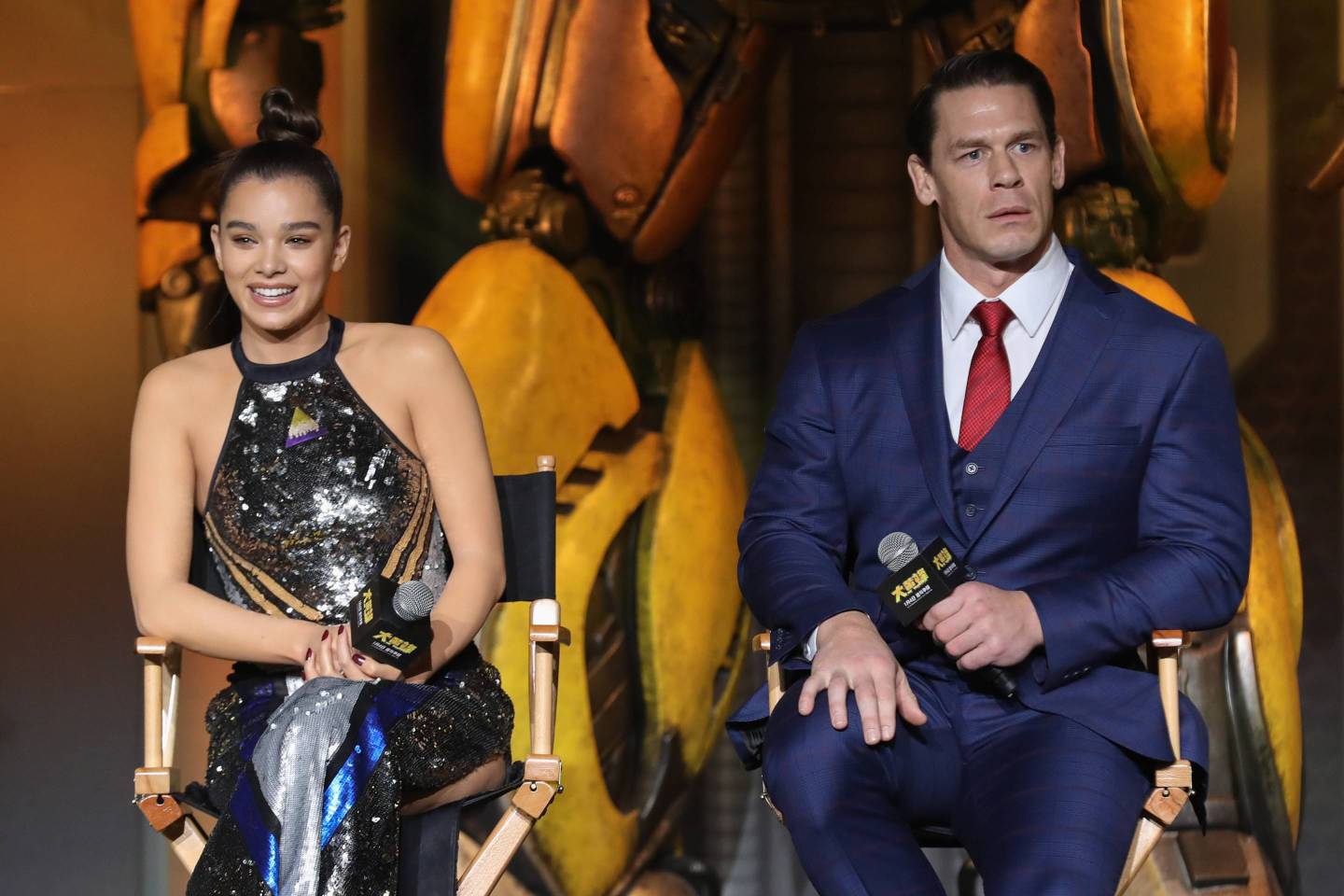
In a first for the franchise, a woman, Christina Hodson, wrote the screenplay for the movie, which hits U.S. theaters on Friday. It also boasts the first female lead for the series, 22-year-old Hailee Steinfeld. Director Travis Knight made a name for himself in stop-motion animated kids films, such as the critically acclaimed “Coraline.” As for Bumblebee, a black and yellow robot, he transforms into a Volkswagen Beetle, a cuddlier disguise than the brawny Chevy Camaro he inhabited in the previous five films.
“He’s everybody’s buddy,” Tom Warner, Hasbro’s senior vice president for the Transformers franchise, said of the character. “You are going to see more heart and soul and fun in this film than ever before.”
This may be a tall order, given the franchise’s reputation. Derided as a cynical exercise in advertising masquerading as feature film, the movies are regularly pilloried for their tween-boy fever-dream plots about battling robots.
In promotional materials for “Bumblebee,” Knight—the son of Nike Inc. founder Phil Knight—said growing up in the 1980s made him love “those classic Spielbergian coming-of-age tales,” and that he wanted to bring the same sensibility to Transformers. It’s no surprise that the trailer feels a lot like “E.T.,” with a sympathetic and endangered alien (a robot in this case) looking to a young Earthling (Steinfeld) for help. In a review, Rolling Stone summed it up as “if John Hughes made a Transformers movie.”
It’s fair to ask how such a film could fit with the testosterone-pumping, summer tent-pole franchise that generated almost $5 billion in inflation-adjusted global box office. One that Variety called a “crunched-metal robot-war mega-series.”
The answer is that it doesn’t. Call it a reboot of a reboot. “Bumblebee” is a prequel to the entire, 11-year-old franchise. It’s set in the 1980s, which coincidentally is when Hasbro shook up the toy industry with the Transformers television show, an animated series that spawned hundreds of millions of dollars in merchandise sales. The new movie tells the origin story of Bumblebee, who was a Volkswagen bug in the original cartoon, too.
“We deliberately wanted to open it up and go back to the roots,” said Hasbro’s Warner, who joined the company in 2014 after a career at Hollywood studios, including 20th Century Fox. “To bring the fun back to Transformers.”
It’s a daring move for the company, considering what the previous films accomplished. They may not have drawn many laughs (or positive reviews), but when viewed strictly as a marketing device (action figures, pajamas, pillow cases, lunch boxes), the franchise is a money-making phenomenon. If there’s a Mount Rushmore of film merchandising, the Transformers series is on it, right next to Star Wars, “Frozen” and Marvel.
When the first installment, simply dubbed “Transformers,” hit theaters on July 3, 2007, the property had been pretty much dead for a decade. Hasbro sought to recapture the brand’s success on the small screen, where it hooked latchkey kids with an after-school cartoon about a war between good and bad robots from a distant world called Cybertron. Some say the brand might have peaked as early as 1986, with an early animated feature film—“The Transformers: The Movie”—that had Weird Al Yankovic on the soundtrack and Orson Welles voicing a robot that could devour entire planets.
But the 2007 movie changed everything. It was a smash, racking up an inflation-adjusted $855 million at the global box office. The live-action film, starring Shia LaBeouf and directed by action-film stalwart Michael Bay, even had buy-in from Steven Spielberg, who signed on as executive producer. Not only did it thrill young boys and their nostalgic parents, but the movie landed struggling Hasbro a new, gigantic revenue stream that would surpass half-a-billion dollars a year.
The toy industry and its relationship with Hollywood was forever altered by “Transformers.” Older toy brands and their valuable built-in audiences—many having become parents—were seen as potential box-office cash cows. (Look at what Lego has done with plastic blocks.) Properties once seen as dead or dormant suddenly looked ripe for revival. (Cue the “Teenage Mutant Ninja Turtles” reboot.)
The franchise was the brainchild of Brian Goldner, 55, who got promoted from chief operating officer to Hasbro’s top job within a year. The success of “Transformers” gave him the power and freedom to steer the company away from just being a maker of molded plastic. He’s since taken G.I. Joe, My Little Pony and the game Battleship to the big screen. The company, which has considered merging with a movie studio, now calls itself a “global play and entertainment company,” replete with its own television and film production divisions.
Following the 2007 blockbuster, Transformers fell into a bankable formula. Hasbro’s Hollywood partner, Paramount Pictures, made and marketed the films and reaped the box office cash. Bay kept stuffing the franchise with CGI violence and increasingly absurd plots. Hasbro chalked up the big-screen use of its intellectual property to free marketing, and Goldner got executive producer credits. The prospect of a coming movie—and all that brand awareness from Paramount’s massive ad spend—drove retailers such as Walmart Inc. and Target Corp. to keep stocking shelves with Transformers merchandise. And the fans dutifully gobbled it up.
That critics skewered the films didn’t seem to matter, because audiences kept coming. This was especially the case in China, where “Transformers: Revenge of the Fallen” in 2009, “Transformers: Dark of the Moon” in 2011 and “Transformers: Age of Extinction” in 2014 struck gold. The latest of these three movies also marked the handoff from LaBeouf to Mark Wahlberg as the (human) face of the franchise.
Goldner used the Transformers template to turn other toy lines into entertainment brands. My Little Pony—another forgotten 1980s property—became “My Little Pony: The Movie” in 2017. By then, Hasbro’s market value had almost tripled since the 2007 Transformers film was released, topping $14 billion. The 95-year-old company, founded in Providence, Rhode Island, by Henry, Hillel and Herman Hassenfeld as a seller of textile remnants and school supplies, leapfrogged Mattel Inc. to become the most valuable toymaker in the world.
But then Hasbro went too far. “Transformers: The Last Knight,” which debuted on June 21, 2017, took the series in a strange direction. Hasbro and Paramount wanted to expand the franchise, just as Disney did with Marvel, by creating multiple spinoffs and serials that are somehow all connected to a broader “cinematic universe.” They founded a writers’ room and even tapped an Academy Award-winning scribe, Akiva Goldsman, writer of “A Beautiful Mind.” Like Marvel, they turned to decades of comic books and mythology that had sprung up around the original series.
“There is so much lore to pull from,” said Samantha Lomow, president of Hasbro brands. “There is Earth, but there is Cybertron and everything in between. There are hundreds and hundreds of Transformers characters. We’ve just scratched the surface.”
“Last Knight” told the story of Transformers who were around to help King Arthur, and asserted that Earth is actually Unicron, the planet-eating robot Welles played in the 1986 animated film. Critics were especially harsh this time, but—more important for Hasbro—fans stayed away, too. The U.S. box office tally of $130 million was the worst of the series, by almost 50 percent.
Meanwhile, the timing was also bad. “Last Knight” opened between ”Cars 3” and “Despicable Me 3,” causing it to be quickly overshadowed.
U.S. movie attendance tumbled. There was already a growing sense that Hollywood was overloading audiences with sequels, spinoffs and reboots—all at a time when Netflix Inc. and Amazon.com Inc. have been inundating them at home. “Kids have so much content coming at them that movies don’t resonate like they used to,” said Gerrick Johnson, an analyst for BMO Capital Markets who covers the toy industry.
And as poorly as “Last Knight” did in the box office, Johnson had additional bad news for Hasbro. “Toys tied to movies have been under-performing,” he said.
Right now, most of the best-selling toys and top-performing toy companies have almost no connection to Hollywood. For example, privately-held MGA Entertainment’s hit brand, L.O.L. Surprise, was inspired by YouTube un-boxing videos. (Don’t make us explain.) That’s especially troubling for Hasbro, because it’s embraced movie tie-ins like no other toy company.
And it gets worse. Not only does Hasbro depend on its own films doing well to move merchandise, it also has a slew of licensing deals with other franchises, including Walt Disney Co.’s Star Wars and Marvel. A weakening movie market, coupled with the liquidation of major customer Toys “R” Us earlier this year, has helped knock Hasbro’s shares down 24 percent in the past 18 months.
Hasbro has decided to put more skin in the film game, inking a new deal with Paramount that expands its financial stake, both in helping fund production and getting a portion of revenue. With “Bumblebee,” it hopes to turn the corner even faster. In the aftermath of “Last Knight,” it put another Bay-directed Transformers film on hold while pushing “Bumblebee” to Christmas, where it could help draw a broader, more female audience. (The last two Transformers movies skewed about 60 percent male, according to ComScore.)
This last move is why Goldner was so excited to explain to investors in October that “Bumblebee” will be Hasbro’s most “dual-gender” film. By making the story about a gutsy young heroine, it’s following a path taken by other mega-franchises that have tried to attract more girls. Just look at what the latest Star Wars films did with female leads, with characters such as Rey and Jyn Erso, and the success Warner Bros.’ DC Comics had with “Wonder Woman.”
Still, there are pitfalls. Johnson, the BMO analyst, said some Transformers fans might not like the new tone. And, after a decade, changing the perception that the franchise offers anything more than “battling robots” will be difficult.
But Hasbro is betting “Bumblebee” will tap millions of Generation X dads out there—dads such as Daniel Pickett.
The 47-year-old, who works in marketing and helps run a toy news website called Action Figure Insider, is a devotee of the original animated television series. He’s barely paid attention to the latest Transformers movies and has never considered taking his teenage daughter to one—until now. “They were so boy-centric,’’ Pickett said. “Just filled with two pieces of tinfoil fighting. I see all the Star Wars films with my wife and daughter, and I never would have thought to take them to a Transformers movie before this.”