
• Home
  • Latest
  • Fortune 500
  • Finance
  • Tech
  • Leadership
  • Lifestyle
  • Rankings
  • Multimedia
TechCybersecurity

Here’s Why Big Data-Cruncher Splunk Is Buying Cyber Startup Phantom for $350 Million

Robert Hackett
By
Robert Hackett
Robert Hackett
Down Arrow Button Icon
Robert Hackett
By
Robert Hackett
Robert Hackett
Down Arrow Button Icon
February 27, 2018, 2:47 PM ET
Splunk
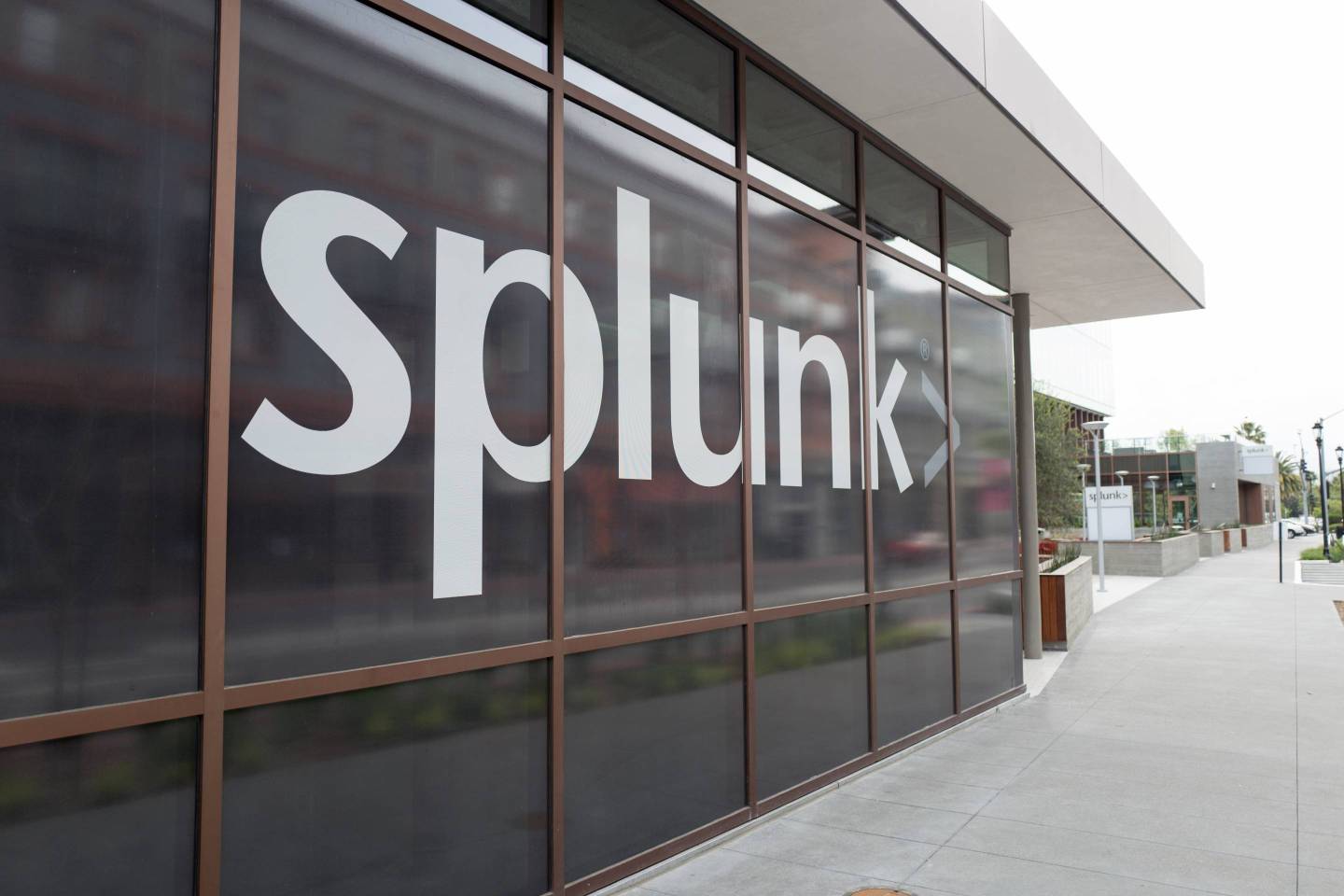
Signage for operational intelligence company Splunk, in the Silicon Valley town of San Jose, California, April 7, 2017. (Photo via Smith Collection/Gado/Getty Images).Smith Collection—Gado Getty Images

Splunk, a San Francisco-based firm that provides data analytics, said Monday it plans to buy the 4-year-old startup Phantom Cyber for $350 million in cash and stock. If the deal clears regulatory review, it will be the company’s biggest ever (SPLK).

For Splunk, the acquisition is a no-brainer. Phantom’s products help automate the work of IT security staff, many of whom use Splunk’s software to triage incidents within their security operations centers.

Haiyan Song, who heads Splunk’s security markets group, tells Fortune that “automation is becoming more and more important because of the shortage in professional capabilities,” referring to a talent deficit that continues to plague the cybersecurity industry. “You need to adapt defense at machine speed,” she says.

Splunk and Phantom first partnered in 2016 as part of an initiative to more tightly integrate their products. That same year Phantom made a big splash at the annual RSA Conference, the cybersecurity industry’s biggest event, when it placed first in a notable startup competition.

Song said the acquisition was “the natural next step for us to join forces.”

For Splunk, security remains big—and growing—part of its business. The company brought in $950 million in revenue last year, roughly 40% to 50% of which derived from its security offerings, as CEO Douglas Merritt noted on a third quarter earnings call in November.

Overall, Splunk’s revenues grew 42% last year compared to its prior fiscal year, when it brought in $668.4 million.

Splunk’s security-related sales have been a major growth factor in recent years. On a 2015 earnings call, David Conte, Splunk’s chief financial officer, said that security accounted for about 40% of Splunk’s business, doubling its contribution to the firm’s total revenue in just two years.

“We have seen security go from, again what was a couple years ago 20%, 25% to consistently 40% of the business,” Conte said at the time, as recorded in a transcript of the call on the finance site Seeking Alpha.

Earlier that year, in July 2015, Splunk completed a $190 million acquisition of Caspida, a cybersecurity firm that sold user behavior analytics tools, which parse large data sets for patterns and anomalies. The purchase—formerly Splunk’s biggest—helped to expand Splunk’s security product line.

With the purchase of Phantom, Splunk is clearly seeking to keep up the momentum by planting its flag in the security orchestration and automation segment, a hot category of the cybersecurity market.

The deal works out well for Phantom, too. After Phantom’s most recent fundraising round in January 2017, the company was privately valued at just under $100 million, including a total of about $23 million in venture capital raised, per data provided by Pitchbook, a VC industry tracker.

Phantom’s investors include Blackstone Group, the private equity giant, and In-Q-Tel, the venture capital arm of the U.S. Central Intelligence Agency.

Song said the deal, which is expected to close by the first half of the year, represents a “shift in our industry, in how security needs to be done”; it signals, in other words, businesses’ dawning realization that humans are increasingly going to have to rely on machines to augment their responses to digital break-ins and data breaches.


About the Author
Robert Hackett
By Robert Hackett
Instagram iconLinkedIn iconTwitter icon
See full bioRight Arrow Button Icon

Latest in Tech

Fei-Fei Li, the "Godmother of AI," says she values AI skills more than college degrees when hiring software engineers for her tech startup.
AITech
‘Godmother of AI’ says degrees are less important in hiring than ‘how quickly can you superpower yourself’ with new tools
By Nino PaoliDecember 12, 2025
1 hour ago
C-SuiteFortune 500 Power Moves
Fortune 500 Power Moves: Which executives gained and lost power this week
By Fortune EditorsDecember 12, 2025
2 hours ago
BLM
Cybersecurityfraud
Black Lives Matter leader in Oklahoma City indicted on claims she used funds for vacations, groceries and real estate
By Sean Murphy and The Associated PressDecember 12, 2025
2 hours ago
broker
BankingData centers
AI data center boom sparks fears of glut amid lending frenzy
By Neil Callanan, Paula Seligson and BloombergDecember 12, 2025
3 hours ago
Donald Trump
AIElections
AI is powering Trump’s economy, but American voters are getting worried
By Mark Niquette, Nancy Cook and BloombergDecember 12, 2025
3 hours ago
SuccessHow I made my first million
Hinge CEO says he bribed students with KitKats to get the $550 million-a-year business off the ground: ‘I had to beg and borrow a lot’
By Orianna Rosa RoyleDecember 12, 2025
3 hours ago

Most Popular

placeholder alt text
Success
At 18, doctors gave him three hours to live. He played video games from his hospital bed—and now, he’s built a $10 million-a-year video game studio
By Preston ForeDecember 10, 2025
2 days ago
placeholder alt text
Success
Palantir cofounder calls elite college undergrads a ‘loser generation’ as data reveals rise in students seeking support for disabilities, like ADHD
By Preston ForeDecember 11, 2025
1 day ago
placeholder alt text
Investing
Baby boomers have now 'gobbled up' nearly one-third of America's wealth share, and they're leaving Gen Z and millennials behind
By Sasha RogelbergDecember 8, 2025
4 days ago
placeholder alt text
Economy
Tariffs are taxes and they were used to finance the federal government until the 1913 income tax. A top economist breaks it down
By Kent JonesDecember 12, 2025
7 hours ago
placeholder alt text
Economy
‘We have not seen this rosy picture’: ADP’s chief economist warns the real economy is pretty different from Wall Street’s bullish outlook
By Eleanor PringleDecember 11, 2025
1 day ago
placeholder alt text
Uncategorized
Transforming customer support through intelligent AI operations
By Lauren ChomiukNovember 26, 2025
16 days ago
Rankings
  • 100 Best Companies
  • Fortune 500
  • Global 500
  • Fortune 500 Europe
  • Most Powerful Women
  • Future 50
  • World’s Most Admired Companies
  • See All Rankings
Sections
  • Finance
  • Leadership
  • Success
  • Tech
  • Asia
  • Europe
  • Environment
  • Fortune Crypto
  • Health
  • Retail
  • Lifestyle
  • Politics
  • Newsletters
  • Magazine
  • Features
  • Commentary
  • Mpw
  • CEO Initiative
  • Conferences
  • Personal Finance
  • Education
Customer Support
  • Frequently Asked Questions
  • Customer Service Portal
  • Privacy Policy
  • Terms Of Use
  • Single Issues For Purchase
  • International Print
Commercial Services
  • Advertising
  • Fortune Brand Studio
  • Fortune Analytics
  • Fortune Conferences
  • Business Development
About Us
  • About Us
  • Editorial Calendar
  • Press Center
  • Work At Fortune
  • Diversity And Inclusion
  • Terms And Conditions
  • Site Map

© 2025 Fortune Media IP Limited. All Rights Reserved. Use of this site constitutes acceptance of our Terms of Use and Privacy Policy | CA Notice at Collection and Privacy Notice | Do Not Sell/Share My Personal Information
FORTUNE is a trademark of Fortune Media IP Limited, registered in the U.S. and other countries. FORTUNE may receive compensation for some links to products and services on this website. Offers may be subject to change without notice.