• Home
  • News
  • Fortune 500
  • Tech
  • Finance
  • Leadership
  • Lifestyle
  • Rankings
  • Multimedia
Finance

A Week of Investor Whiplash: What’s Behind the Stock Market’s Volatility

By
David Meyer
David Meyer
Down Arrow Button Icon
By
David Meyer
David Meyer
Down Arrow Button Icon
February 9, 2018, 8:11 AM ET

The last week has been a tumultuous time for global markets.

While many of the world’s top movers and shakers were radiating optimism at Davos just a few weeks ago — back when the markets were busy breaking records on the back of U.S. tax cuts — things went south on Friday last week.

Monday was grim. Tuesday was a bit more positive, but the respite was brief. Then the S&P 500 entered official correction territory — 10% or more down from the peak — on Thursday, and Asian indexes plunged on Friday.

So why did this happen?

Wage increases

The drop appeared to be precipitated by the release of U.S. jobs data last Friday, which showed worker pay was increasing significantly. Economists and traders looked at wage inflation and saw the specter of consumer price inflation, which could in turn increase interest rates if it gets too high. Low interest rates are good for stock markets because when cash and bonds are earning little, equities make a more productive home for people’s money.

As Matthew Klein pointed out in the Financial Times, a more context-heavy view sees wage growth actually slowing a little since the second half of 2016. He also noted that in lower-paid sectors, where wage increases tend to lead to higher spending rather than saving, wage growth was definitely slowing down.

In other words, the wage growth is at the higher end of the spectrum, where people tend to save more if they’re earning more. That’s not to say interest-rate fears aren’t behind the slide — just that traders might be misguided.

Volatility unleashed

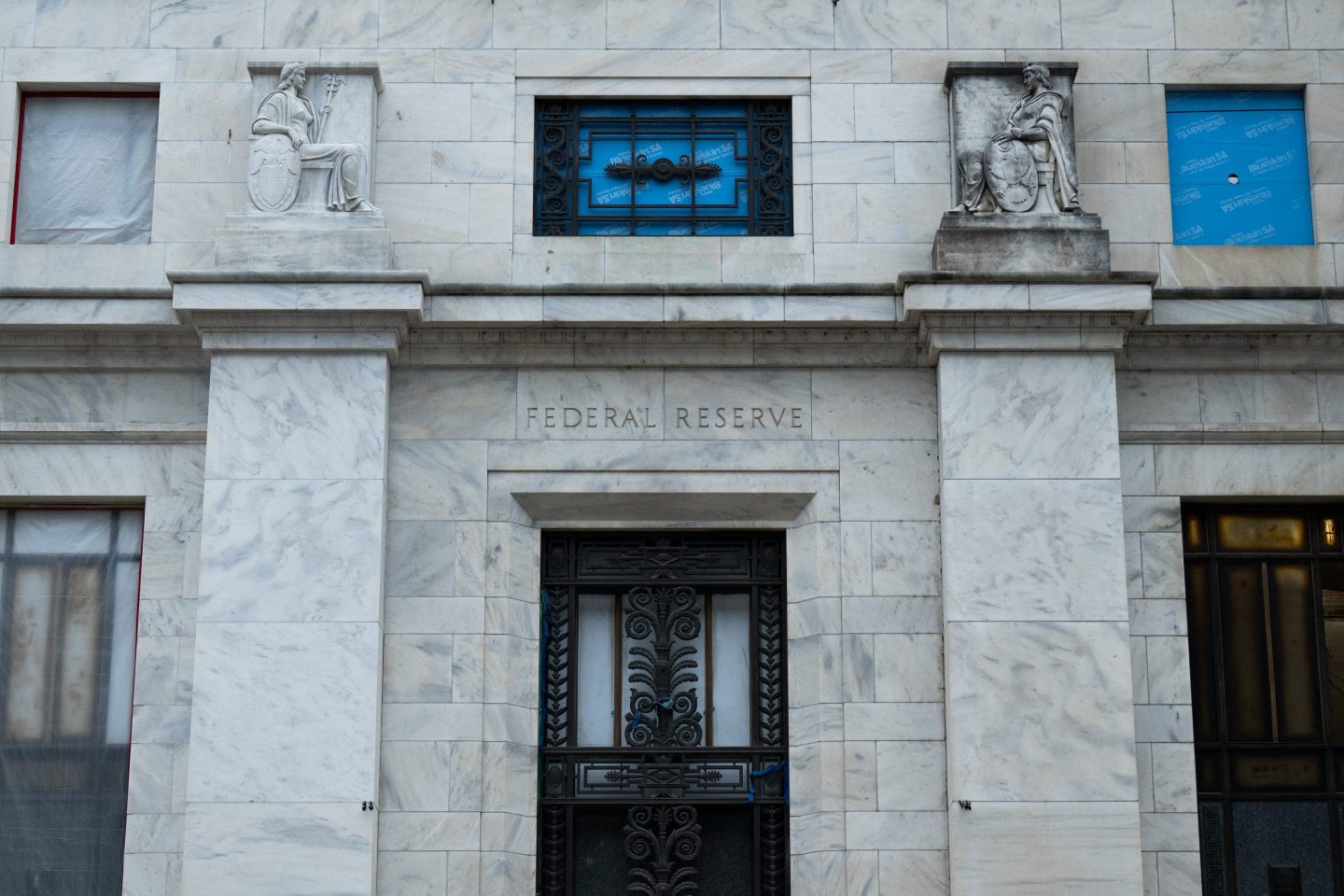
When the financial crisis hit, the Federal Reserve bought loads of treasury bonds and mortgage-backed securities, essentially pumping money into the financial system. In September last year, feeling that the job as done, it started to unwind this massive “quantitative easing” stimulus program by reducing its $4.5 trillion portfolio.

That spelled the end for a lengthy period of artificially low interest rates and suppressed volatility that’s the only reality younger investors and traders know first-hand. That’s the basis of this analysis from Chad Morganlander, a Washington Crossing Advisors portfolio manager interviewed by Bloomberg:

“The reality is, it’s been 10 years, and a lot of people that are in the market today have had 10 years of a Federal Reserve that has artificially repressed volatility. And as they step away from that, reality starts to kick back in. There’s been a 10-year fantasy land that investors have been living in. And that’s a fairy tale that’s about to end.”

What now?

The big question now is whether this correction turns into a bear market (or, if it does so at speed, a full-on crash.)

There have been 10 corrections in the S&P 500 over the last two decades, and only two led to a bear market — that is, where markets lose at least 20% of their value. Those were the dotcom bust and the Great Recession, where the S&P 500 respectively lost almost half and well over half its value.

The Dow just had its worst week since the financial crisis, but it’s far from clear whether we’re heading into bear territory.

Veteran investor Jim Rogers warned Thursday that the next bear market would hurt because “debt is everywhere, and it’s much, much higher now” than before the last crisis. He didn’t say this was it, though.

On the other hand, economic fundamentals seem strong — which is why the Fed began the rollback of quantitative easing last year. As Independent economics editor Ben Chu wrote earlier this week:

“The stock market is not the economy. Stock markets can boom when GDP is stagnant, when wages are flat, when living standards are going nowhere. And they can fall when economies are picking up speed and life, for many people, is getting better. The latter actually describes the current situation.”

The next few days — and weeks — will show whether the market is a real bear, or just grumpy.
About the Author
By David Meyer
LinkedIn icon
See full bioRight Arrow Button Icon

Latest in Finance

Personal Financemortgages
Home equity loan vs. home equity line of credit (HELOC)
By Joseph HostetlerDecember 3, 2025
1 hour ago
picture of two bitcoins
CryptoBitcoin
Bitcoin bounces back more than 10% after brutal week
By Carlos GarciaDecember 3, 2025
2 hours ago
Rich woman lounging on boat
SuccessWealth
The wealthy 1% are turning to new status symbols that can’t be bought—and it’s hurting Dior, Versace, and Burberry
By Emma BurleighDecember 3, 2025
2 hours ago
Greg Abbott and Sundar Pichai sit next to each other at a red table.
AITech Bubble
Bank of America predicts an ‘air pocket,’ not an AI bubble, fueled by mountains of debt piling up from the data center rush
By Sasha RogelbergDecember 3, 2025
3 hours ago
Dell
Personal FinanceWhite House
Why the government is really going to give your baby $1,000, collecting interest until they turn 18
By Moriah Balingit and The Associated PressDecember 3, 2025
5 hours ago
Bessent
BankingFederal Reserve
‘We’re going to veto them’: Bessent backs new rules to give White House more power over Federal Reserve
By Christopher Rugaber and The Associated PressDecember 3, 2025
5 hours ago

Most Popular

placeholder alt text
North America
Jeff Bezos and Lauren Sánchez Bezos commit $102.5 million to organizations combating homelessness across the U.S.: ‘This is just the beginning’
By Sydney LakeDecember 2, 2025
1 day ago
placeholder alt text
Economy
Ford workers told their CEO 'none of the young people want to work here.' So Jim Farley took a page out of the founder's playbook
By Sasha RogelbergNovember 28, 2025
5 days ago
placeholder alt text
North America
Anonymous $50 million donation helps cover the next 50 years of tuition for medical lab science students at University of Washington
By The Associated PressDecember 2, 2025
1 day ago
placeholder alt text
C-Suite
MacKenzie Scott's $19 billion donations have turned philanthropy on its head—why her style of giving actually works
By Sydney LakeDecember 2, 2025
2 days ago
placeholder alt text
Success
Warren Buffett used to give his family $10,000 each at Christmas—but when he saw how fast they were spending it, he started buying them shares instead
By Eleanor PringleDecember 2, 2025
2 days ago
placeholder alt text
Economy
Elon Musk says he warned Trump against tariffs, which U.S. manufacturers blame for a turn to more offshoring and diminishing American factory jobs
By Sasha RogelbergDecember 2, 2025
1 day ago
Rankings
  • 100 Best Companies
  • Fortune 500
  • Global 500
  • Fortune 500 Europe
  • Most Powerful Women
  • Future 50
  • World’s Most Admired Companies
  • See All Rankings
Sections
  • Finance
  • Leadership
  • Success
  • Tech
  • Asia
  • Europe
  • Environment
  • Fortune Crypto
  • Health
  • Retail
  • Lifestyle
  • Politics
  • Newsletters
  • Magazine
  • Features
  • Commentary
  • Mpw
  • CEO Initiative
  • Conferences
  • Personal Finance
  • Education
Customer Support
  • Frequently Asked Questions
  • Customer Service Portal
  • Privacy Policy
  • Terms Of Use
  • Single Issues For Purchase
  • International Print
Commercial Services
  • Advertising
  • Fortune Brand Studio
  • Fortune Analytics
  • Fortune Conferences
  • Business Development
About Us
  • About Us
  • Editorial Calendar
  • Press Center
  • Work At Fortune
  • Diversity And Inclusion
  • Terms And Conditions
  • Site Map

© 2025 Fortune Media IP Limited. All Rights Reserved. Use of this site constitutes acceptance of our Terms of Use and Privacy Policy | CA Notice at Collection and Privacy Notice | Do Not Sell/Share My Personal Information
FORTUNE is a trademark of Fortune Media IP Limited, registered in the U.S. and other countries. FORTUNE may receive compensation for some links to products and services on this website. Offers may be subject to change without notice.