• Home
  • Latest
  • Fortune 500
  • Finance
  • Tech
  • Leadership
  • Lifestyle
  • Rankings
  • Multimedia

Trendingnow

1

'The demographic dividend of the last 40 years is ending': J.P. Morgan says the world is running out of the two things that kept interest rates down

2

Jensen Huang made his $172 billion fortune on AI chips. His family's $75 million gift to Vanderbilt argues art decides what technology is for

3

The $39 trillion U.S. national debt isn’t as high as Japan’s and Singapore’s relative to economy size—and yet it's still worse somehow

1

'The demographic dividend of the last 40 years is ending': J.P. Morgan says the world is running out of the two things that kept interest rates down

2

Jensen Huang made his $172 billion fortune on AI chips. His family's $75 million gift to Vanderbilt argues art decides what technology is for

3

The $39 trillion U.S. national debt isn’t as high as Japan’s and Singapore’s relative to economy size—and yet it's still worse somehow
Commentary

It’s Impossible to Prevent Wildfires. So How Do We Prepare?

By
Susan Prichard
Susan Prichard
and
Bethany Cianciolo
Bethany Cianciolo
Down Arrow Button Icon
By
Susan Prichard
Susan Prichard
and
Bethany Cianciolo
Bethany Cianciolo
Down Arrow Button Icon
October 19, 2017, 5:39 PM ET
Multiple Wildfires Continue To Ravage Through California Wine Country
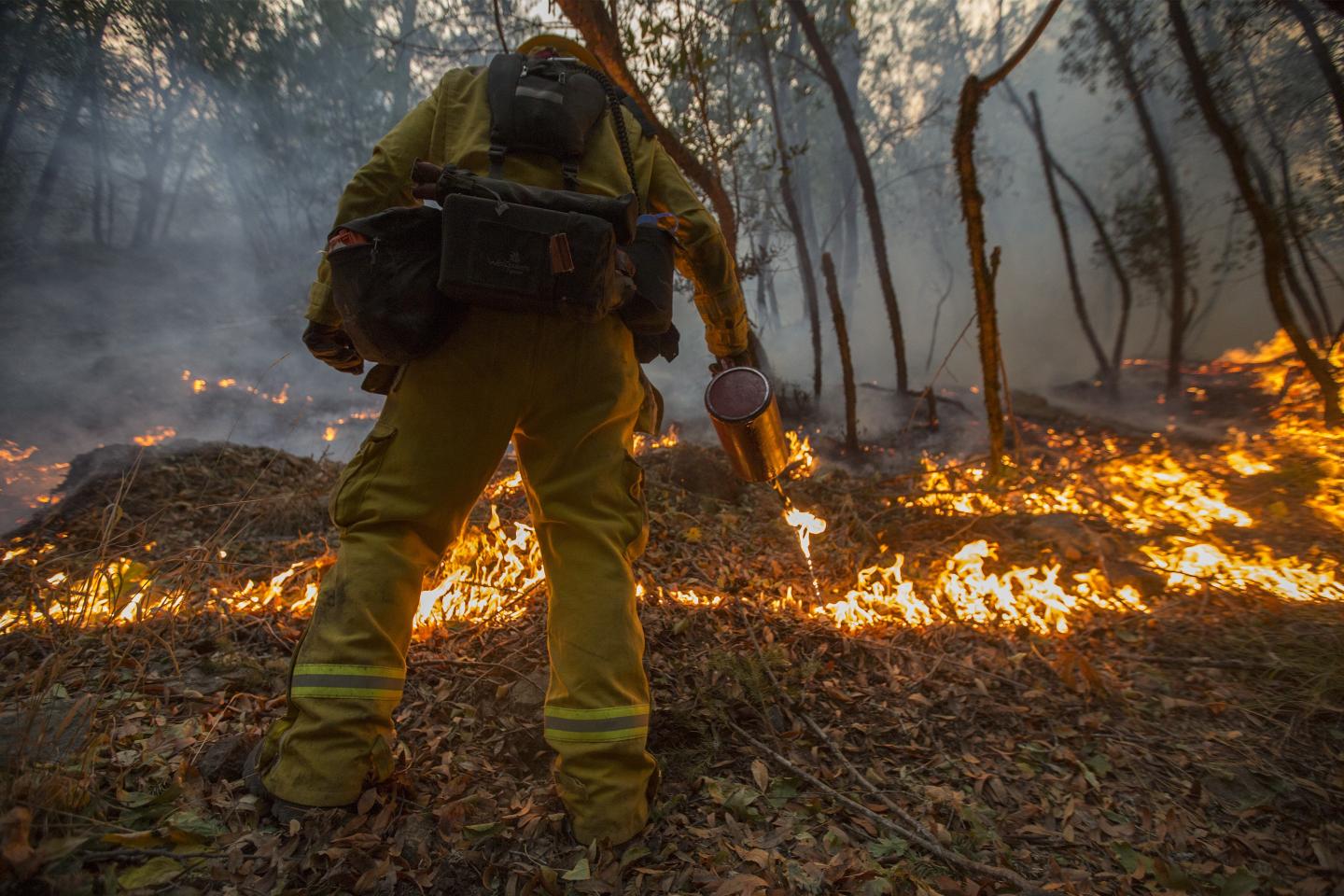
SANTA ROSA, CA -OCTOBER 15: A firefighter uses a drip torch to set a backfire to protect houses in Adobe Canyon during the Nuns Fire on October 15, 2017 near Santa Rosa, California. At least 40 people were killed while many are still missing, and at least 5,700 buildings have been destroyed since wildfires broke out a week ago. (Photo by David McNew/Getty Images)David McNew Getty Images
Add Fortune on Google for similar content.

“Are we done with wildfires around here?” a 6th-grade student asked me in 2015 as we sat around a campfire one wet September day and discussed our most recent summer of wildfires. As a fire ecologist for the University of Washington and a full-time resident of a small community in eastern Washington, I hesitated. After suffering through two consecutive wildfire seasons in 2014 and 2015 in which massive wildfires changed the local landscape and consumed homes of some of the kids in the camp, part of me longed to say yes, but I knew better.

As a fire ecologist, I study fire-adapted ecosystems. In many parts of the western United States, fire is not only essential to the survival of many plants and animals, but also inevitable. The native oak woodlands of northern California are an excellent example of fire adaptations. Historically, frequent fires consumed accumulated fuel (fallen leaves, grasses, shrubs, and coarse wood) and maintained light fuel accumulations that generally supported low-intensity surface fires. Some oak trees could be top-killed by fire, but they sprouted vigorously and also regenerated from acorns in the open spaces created by fire. The fire-maintained oak woodlands supported a high diversity of grassland plants, many of which are uncommon or rare today, thanks to less frequent, higher-intensity fires. After decades of fire exclusion in the oak woodlands of northern California, accumulated fuels and vegetation have created conditions for much more intense and damaging fire events.

Even in the age of modern fire suppression, there is no way that we can completely fire-proof landscapes when prolonged drought, strong winds, and ignitions collide. With a rapidly warming climate, the conditions for explosive fire growth are only increasing. At the same time, more and more people are moving out of urban environments to more rural, fire-prone places.

Resilience is defined as the ability of a system to quickly recover from a disturbance. Even though people tend to use language of fires as destructive or catastrophic, the recovery and renewal of vegetation and habitat is often astounding. In the near absence of fire, many landscapes where fire was once a frequent visitor now have heavy accumulations of live and dead vegetation that can contribute to severe wildfire events. Across landscapes, vegetation is also more continuous than it was historically and can facilitate contagious fire spread. Restoration of fire-adapted ecosystems such as oak and pine woodlands involves reducing fuels—including understory plants, dead leaves, and downed wood—(often with prescribed fire) and promoting vegetation that survive or quickly recover following fire.

As communities, we can also can take many steps to become fire adapted. Programs such as FireWise and the Fire Adapted Communities Learning Network offer proven ways to reduce fuels around our homes and communities and make structures less likely to burn. Taking lessons from fire-adapted ecosystems, many Firewise practices involve reducing flammable vegetation and fuels around homes to reduce the chance that fire starts and spreads. Building and maintaining homes to be protected from airborne embers is also essential and includes using fire-resistant roofing materials, screening ventilation and crawl spaces, and designing siding, decks, and porches to be less receptive to burning embers.


From neighborhood fuel reduction projects, to building ordinances, to how homes are evaluated for fire insurance, to emergency funding for future firefighting, we must do a better job at preparing for wildfires. Local and state governments should invest in managed fuel breaks around communities (areas with reduced fuels that can assist in fire suppression), emergency alert systems, safe evacuation routes, underground power lines, and communication towers with backup power. Finally, as much of northern California has recently experienced, smoke impacts are serious. Public investments in weathering extended periods of smoke are also needed—from air filtration systems, preparation for increased hospital visitations, to places of safe refuge for smoke-sensitive individuals. The Fire Adapted Communities Learning Network offers training materials for developing community fire adaptation action plans and addresses many of these issues.

After pausing to consider the 6th grader’s question, I answered honestly: In fire-prone ecosystems, it isn’t a question of if fire returns, but when and how. The campers and I then got to work clearing pine needles and wood from one of their tent areas to learn how to reduce hazardous fuels around their homes. For all of us, adapting to fire will reap dividends as we face upcoming wildfire seasons.

Susan Prichard, Ph.D., is a research scientist at the University of Washington’s School of Environmental and Forest Sciences.

About the Authors
By Susan Prichard
See full bioRight Arrow Button Icon
By Bethany Cianciolo
See full bioRight Arrow Button Icon
Add Fortune on Google for similar content.

Latest in Commentary

Finance
Lorem ipsum dolor sit amet, consectetur adipiscing elit, sed do eiusmod tempor incididunt ut labore et dolore magna aliqua. Ut enim ad minim veniam
By Fortune Editors
October 20, 2025
Finance
Lorem ipsum dolor sit amet, consectetur adipiscing elit, sed do eiusmod tempor incididunt ut labore et dolore magna aliqua. Ut enim ad minim veniam
By Fortune Editors
October 20, 2025
Finance
Lorem ipsum dolor sit amet, consectetur adipiscing elit, sed do eiusmod tempor incididunt ut labore et dolore magna aliqua. Ut enim ad minim veniam
By Fortune Editors
October 20, 2025
Finance
Lorem ipsum dolor sit amet, consectetur adipiscing elit, sed do eiusmod tempor incididunt ut labore et dolore magna aliqua. Ut enim ad minim veniam
By Fortune Editors
October 20, 2025
Finance
Lorem ipsum dolor sit amet, consectetur adipiscing elit, sed do eiusmod tempor incididunt ut labore et dolore magna aliqua. Ut enim ad minim veniam
By Fortune Editors
October 20, 2025
Finance
Lorem ipsum dolor sit amet, consectetur adipiscing elit, sed do eiusmod tempor incididunt ut labore et dolore magna aliqua. Ut enim ad minim veniam
By Fortune Editors
October 20, 2025

Most Popular

Finance
Lorem ipsum dolor sit amet, consectetur adipiscing elit, sed do eiusmod tempor incididunt ut labore et dolore magna aliqua. Ut enim ad minim veniam
By Fortune Editors
October 20, 2025
Finance
Lorem ipsum dolor sit amet, consectetur adipiscing elit, sed do eiusmod tempor incididunt ut labore et dolore magna aliqua. Ut enim ad minim veniam
By Fortune Editors
October 20, 2025
Finance
Lorem ipsum dolor sit amet, consectetur adipiscing elit, sed do eiusmod tempor incididunt ut labore et dolore magna aliqua. Ut enim ad minim veniam
By Fortune Editors
October 20, 2025
Finance
Lorem ipsum dolor sit amet, consectetur adipiscing elit, sed do eiusmod tempor incididunt ut labore et dolore magna aliqua. Ut enim ad minim veniam
By Fortune Editors
October 20, 2025
Finance
Lorem ipsum dolor sit amet, consectetur adipiscing elit, sed do eiusmod tempor incididunt ut labore et dolore magna aliqua. Ut enim ad minim veniam
By Fortune Editors
October 20, 2025
Finance
Lorem ipsum dolor sit amet, consectetur adipiscing elit, sed do eiusmod tempor incididunt ut labore et dolore magna aliqua. Ut enim ad minim veniam
By Fortune Editors
October 20, 2025
Fortune Secondary Logo
Rankings
  • 100 Best Companies
  • Fortune 500
  • Global 500
  • Fortune 500 Europe
  • Most Powerful Women
  • World's Most Admired Companies
  • See All Rankings
  • Lists Calendar
Sections
  • Finance
  • Fortune Crypto
  • Features
  • Leadership
  • Health
  • Commentary
  • Success
  • Retail
  • Mpw
  • Tech
  • Lifestyle
  • CEO Initiative
  • Asia
  • Politics
  • Conferences
  • Europe
  • Newsletters
  • Personal Finance
  • Environment
  • Magazine
  • Education
Customer Support
  • Frequently Asked Questions
  • Customer Service Portal
  • Privacy Policy
  • Terms Of Use
  • Single Issues For Purchase
  • International Print
Commercial Services
  • Advertising
  • Fortune Brand Studio
  • Fortune Analytics
  • Fortune Conferences
  • Business Development
  • Group Subscriptions
About Us
  • About Us
  • Press Center
  • Work At Fortune
  • Terms And Conditions
  • Site Map
  • About Us
  • Press Center
  • Work At Fortune
  • Terms And Conditions
  • Site Map
  • Facebook icon
  • Twitter icon
  • LinkedIn icon
  • Instagram icon
  • TikTok icon
  • YouTube icon

Latest in Commentary

alex
CommentaryEntrepreneurship
I sold my startup for millions without a single dollar in revenue. Here’s why that’s the point
By Alexander Kardos-NyheimJuly 25, 2026
3 hours ago
craig
CommentaryPharmaceutical Industry
Big pharma’s patent cliff meets a new biotech Cold War: We need to outrun China, not outlaw it
By Craig GarthwaiteJuly 24, 2026
22 hours ago
tim
Commentarysmartphones and mobile devices
NYU Stern pricing expert: There’s a hidden ‘AI tax’ hitting Apple, Dell — and your next phone
By Srikanth JagabathulaJuly 24, 2026
23 hours ago
nyse
CommentaryEconomics
AI doesn’t end scarcity. It relocates it
By François Candelon, Paul-Louis Andres and Augustin ManchonJuly 24, 2026
1 day ago
Can Bangkok future-proof itself against the heat?
CommentaryThailand
Can Bangkok future-proof itself against the heat?
By Curtis S. Chin and Ella TanJuly 23, 2026
2 days ago
mm
CommentaryLeadership
Michael Muthukrishna: The ‘lone genius’ myth is wrong and it’s holding back your business
By Michael MuthukrishnaJuly 23, 2026
2 days ago

Most Popular

'The demographic dividend of the last 40 years is ending': J.P. Morgan says the world is running out of the two things that kept interest rates down
Economy
'The demographic dividend of the last 40 years is ending': J.P. Morgan says the world is running out of the two things that kept interest rates down
By Eleanor PringleJuly 24, 2026
1 day ago
Jensen Huang made his $172 billion fortune on AI chips. His family's $75 million gift to Vanderbilt argues art decides what technology is for
Big Tech
Jensen Huang made his $172 billion fortune on AI chips. His family's $75 million gift to Vanderbilt argues art decides what technology is for
By Sydney LakeJuly 23, 2026
2 days ago
The $39 trillion U.S. national debt isn’t as high as Japan’s and Singapore’s relative to economy size—and yet it's still worse somehow
Economy
The $39 trillion U.S. national debt isn’t as high as Japan’s and Singapore’s relative to economy size—and yet it's still worse somehow
By Sasha RogelbergJuly 23, 2026
2 days ago
Current price of oil as of July 24, 2026
Personal Finance
Current price of oil as of July 24, 2026
By Joseph HostetlerJuly 24, 2026
1 day ago
The millennial generation has split, new Fed research shows: Those over 35 are edging toward boomer-style wealth, while everyone else falls behind
Real Estate
The millennial generation has split, new Fed research shows: Those over 35 are edging toward boomer-style wealth, while everyone else falls behind
By Nick LichtenbergJuly 22, 2026
3 days ago
Turns out Dead Internet Theory was right: AI agents are eating the Web, growing by nearly 8,000% and rewiring the Internet's business model
AI
Turns out Dead Internet Theory was right: AI agents are eating the Web, growing by nearly 8,000% and rewiring the Internet's business model
By Mia OsmonbekovJuly 23, 2026
2 days ago

© 2026 Fortune Media IP Limited. All Rights Reserved. Use of this site constitutes acceptance of our Terms of Use and Privacy Policy | CA Notice at Collection and Privacy Notice | Do Not Sell/Share My Personal Information
FORTUNE is a trademark of Fortune Media IP Limited, registered in the U.S. and other countries. FORTUNE may receive compensation for some links to products and services on this website. Offers may be subject to change without notice.