• Home
  • News
  • Fortune 500
  • Tech
  • Finance
  • Leadership
  • Lifestyle
  • Rankings
  • Multimedia
Commentary

How Trump Could Get His Way With the Paris Agreement

By
Steve Cohen
Steve Cohen
Down Arrow Button Icon
By
Steve Cohen
Steve Cohen
Down Arrow Button Icon
September 25, 2017, 12:08 PM ET

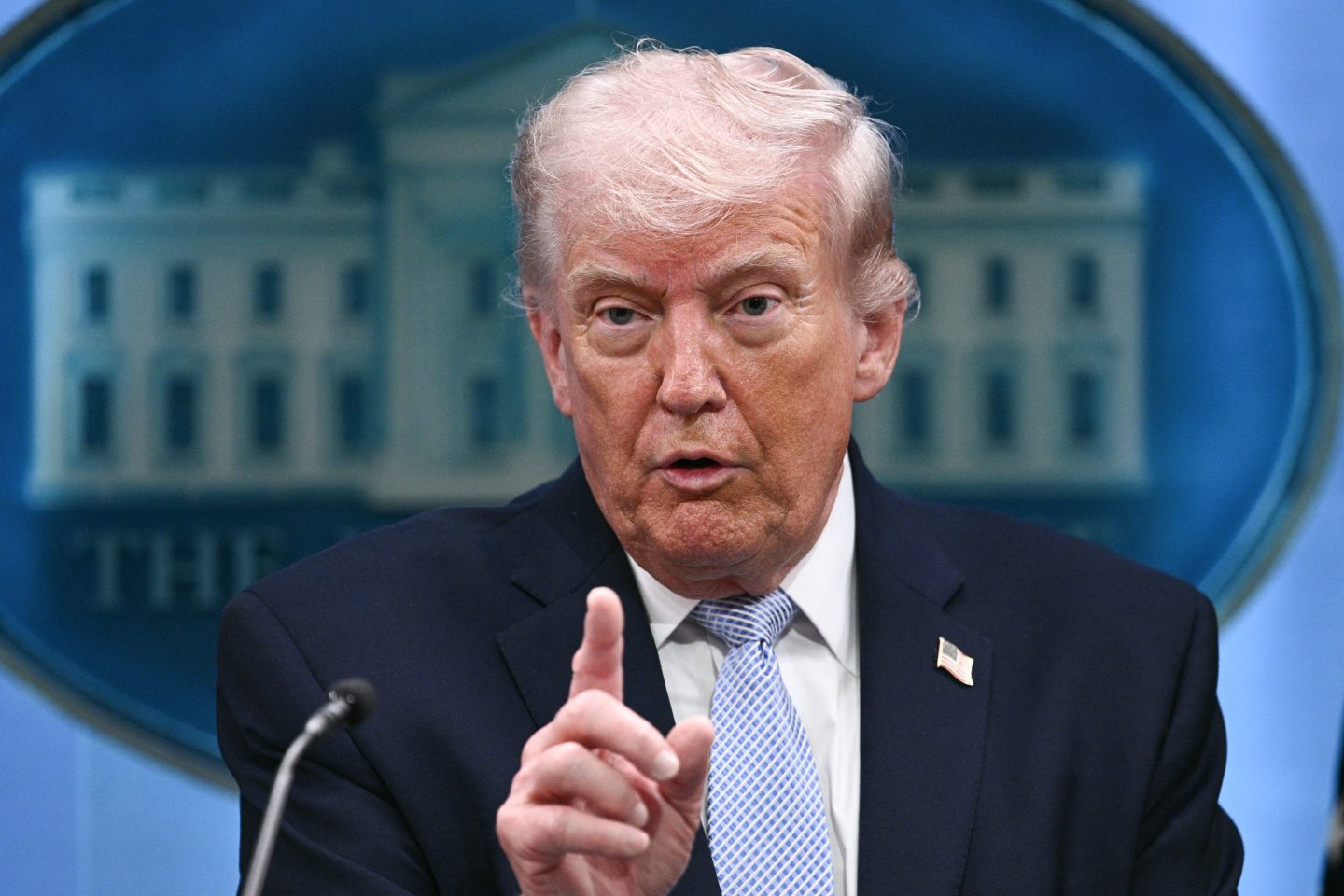
On June 1, President Donald Trump declared that the U.S. was pulling out of the Paris climate accord. In the build-up to his Rose Garden announcement some analysts feared that this would start a process of unraveling the historic agreement.

Instead the opposite took place. The entire world and many U.S. corporations, states, and cities doubled down on their greenhouse gas reduction pledges. Trump created an easy to understand, highly visible common enemy. Michael Bloomberg built a U.S. coalition that would more than meet America’s reduction targets. China saw an opportunity to replace the U.S. as a leader of the world’s effort to combat climate change. Trump and his team became irrelevant to the global discussion of climate change.

Recently there have been some rumors that under the right conditions, the U.S. might reengage in the global effort to reduce greenhouse gases. However, as Trump’s Press Secretary Sarah Sanders tweeted on Sept. 16: “Our position on the Paris agreement has not changed. @POTUS has been clear, US withdrawing unless we get pro-America terms.”

It’s not clear what is anti-American about the climate agreement. The agreement asks each sovereign nation to set its own greenhouse gas reduction targets and report on those targets every five years. In the case of the U.S., our own Supreme Court has already defined greenhouse gases under the Clean Air Act as dangerous pollutants that must be regulated by the Environmental Protection Agency. Our own law is mandatory; the Paris agreement is voluntary.

The other part of the Paris agreement is a vague provision that starting in 2020 a $100 billion-a-year fund will be established to help developing nations address climate change. It does not say how much anyone should contribute to the fund, or the form that this contribution will take. It might be possible for the U.S. contribution to take the form of investments by U.S. corporations in renewable energy and energy efficiency in the developing world. It could take the form of reforestation efforts by non-governmental organizations that help absorb carbon dioxide. It could even take the form of an investment in carbon capture and storage technology to allow fossil fuels to be part of the future energy mix.

The agreement is very vague on the form and function of the fund, and what might be counted as a national “contribution.” A fund definition that explicitly calls for public-private partnership might allow Trump to claim he made a deal that would allow for a more pro-American approach to climate policy.

It would be best if the U.S. continued to engage in the global effort to reduce greenhouse gases, but it is unlikely that other nations care about bringing the Trump administration back to the negotiating table. They know that America will meet its greenhouse gas reduction targets with or without the White House. Trump is like the class bully who announces he’s not coming to the prom. The rest of the class figures the party will be more fun without him.

Steve Cohen is the executive director of Columbia University’s Earth Institute and professor in the practice of public affairs at Columbia’s School of International and Public Affairs.

About the Author
By Steve Cohen
See full bioRight Arrow Button Icon

Latest in Commentary

Steve Milton is the CEO of Chain, a culinary-led pop-culture experience company founded by B.J. Novak and backed by Studio Ramsay Global.
CommentaryFood and drink
Affordability isn’t enough. Fast-casual restaurants need a fandom-first approach
By Steve MiltonDecember 5, 2025
17 hours ago
Paul Atkins
CommentaryCorporate Governance
Turning public companies into private companies: the SEC’s retreat from transparency and accountability
By Andrew BeharDecember 5, 2025
17 hours ago
Matt Rogers
CommentaryInfrastructure
I built the first iPhone with Steve Jobs. The AI industry is at risk of repeating an early smartphone mistake
By Matt RogersDecember 4, 2025
2 days ago
Jerome Powell
CommentaryFederal Reserve
Fed officials like the mystique of being seen as financial technocrats, but it’s time to demystify the central bank
By Alexander William SalterDecember 4, 2025
2 days ago
Rakesh Kumar
CommentarySemiconductors
China does not need Nvidia chips in the AI war — export controls only pushed it to build its own AI machine
By Rakesh KumarDecember 3, 2025
3 days ago
Rochelle Witharana is Chief Financial and Investment Officer for The California Wellness Foundation
Commentarydiversity and inclusion
Fund managers from diverse backgrounds are delivering standout returns and the smart money is slowly starting to pay attention
By Rochelle WitharanaDecember 3, 2025
3 days ago

Most Popular

placeholder alt text
Economy
Two months into the new fiscal year and the U.S. government is already spending more than $10 billion a week servicing national debt
By Eleanor PringleDecember 4, 2025
2 days ago
placeholder alt text
Success
‘Godfather of AI’ says Bill Gates and Elon Musk are right about the future of work—but he predicts mass unemployment is on its way
By Preston ForeDecember 4, 2025
2 days ago
placeholder alt text
Success
Nearly 4 million new manufacturing jobs are coming to America as boomers retire—but it's the one trade job Gen Z doesn't want
By Emma BurleighDecember 4, 2025
2 days ago
placeholder alt text
Success
Nvidia CEO Jensen Huang admits he works 7 days a week, including holidays, in a constant 'state of anxiety' out of fear of going bankrupt
By Jessica CoacciDecember 4, 2025
2 days ago
placeholder alt text
Real Estate
‘There is no Mamdani effect’: Manhattan luxury home sales surge after mayoral election, undercutting predictions of doom and escape to Florida
By Sasha RogelbergDecember 4, 2025
1 day ago
placeholder alt text
Economy
Tariffs and the $38 trillion national debt: Kevin Hassett sees ’big reductions’ in deficit while Scott Bessent sees a ‘shrinking ice cube’
By Nick LichtenbergDecember 4, 2025
2 days ago
Rankings
  • 100 Best Companies
  • Fortune 500
  • Global 500
  • Fortune 500 Europe
  • Most Powerful Women
  • Future 50
  • World’s Most Admired Companies
  • See All Rankings
Sections
  • Finance
  • Leadership
  • Success
  • Tech
  • Asia
  • Europe
  • Environment
  • Fortune Crypto
  • Health
  • Retail
  • Lifestyle
  • Politics
  • Newsletters
  • Magazine
  • Features
  • Commentary
  • Mpw
  • CEO Initiative
  • Conferences
  • Personal Finance
  • Education
Customer Support
  • Frequently Asked Questions
  • Customer Service Portal
  • Privacy Policy
  • Terms Of Use
  • Single Issues For Purchase
  • International Print
Commercial Services
  • Advertising
  • Fortune Brand Studio
  • Fortune Analytics
  • Fortune Conferences
  • Business Development
About Us
  • About Us
  • Editorial Calendar
  • Press Center
  • Work At Fortune
  • Diversity And Inclusion
  • Terms And Conditions
  • Site Map

© 2025 Fortune Media IP Limited. All Rights Reserved. Use of this site constitutes acceptance of our Terms of Use and Privacy Policy | CA Notice at Collection and Privacy Notice | Do Not Sell/Share My Personal Information
FORTUNE is a trademark of Fortune Media IP Limited, registered in the U.S. and other countries. FORTUNE may receive compensation for some links to products and services on this website. Offers may be subject to change without notice.